


Moving Day Rescue: A Guide to First and Last Month Rent Assistance
Moving Day Rescue: A Guide to First and Last Month Rent Assistance
When the Cost of Moving In Stands Between You and a Home
First and last month rent assistance is financial help that covers the upfront rent payments a landlord requires before you move in — typically one month’s rent paid in advance, plus a matching amount held until you leave.
Here’s what you need to know quickly:
- What it covers: First month’s rent, last month’s rent, and sometimes a security deposit (equal to roughly one month’s rent)
- Who provides it: Federal programs, state agencies, nonprofits, and community organizations
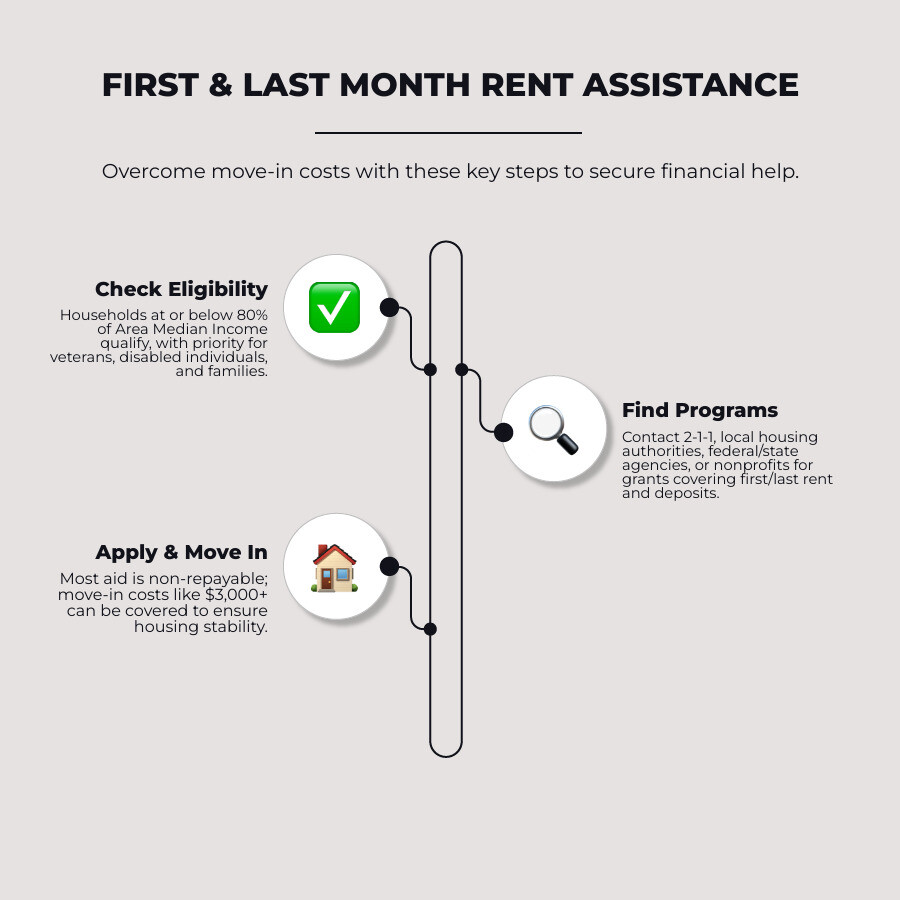
- Who qualifies: Generally households at or below 80% of Area Median Income (AMI), with priority often given to veterans, people with disabilities, and families
- How to find it: Call 2-1-1, contact your local housing authority, or connect with a nonprofit like LifeSTEPS
- Does it need to be repaid? Most programs are grants — no repayment required
For veterans transitioning to civilian life, moving into a stable home is often the most important first step. But that first step has a price tag. Between first month’s rent, last month’s rent, and a security deposit, move-in costs can easily reach $3,000 or more — before you’ve spent a single night in your new home.
More than 23 million American households already spend over half their income on rent. For recently discharged veterans navigating an unfamiliar civilian landscape, that financial barrier can feel impossible to clear alone.
The good news: real help exists, and you don’t have to figure it out by yourself.

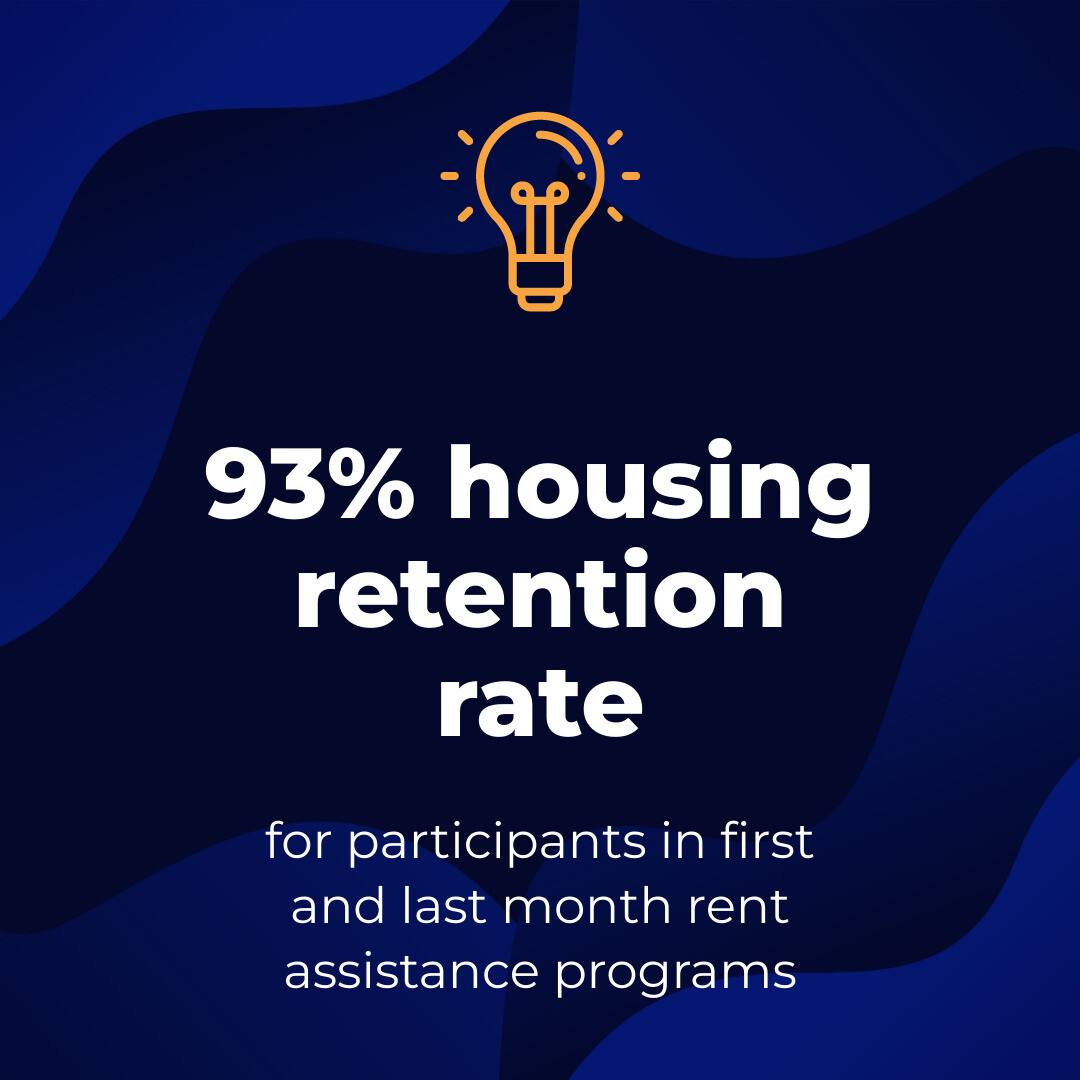
LifeSTEPS provides housing stability services across California, connecting residents — including veterans — with the resources they need to move in and stay housed. With a 93% housing retention rate, the support goes well beyond a one-time payment.
LifeSTEPS currently provides services in California only.
First and last month rent assistance terminology:
Understanding First and Last Month’s Rent Assistance
When we talk about first and last month rent assistance, we are referring to the financial bridge that helps people move from housing insecurity into a stable home. In the competitive California rental markets—from Los Angeles to San Diego—landlords almost always require significant cash upfront.
This assistance typically targets the “move-in barrier.” For many, the monthly rent might be affordable, but coming up with $4,000 or $5,000 all at once is a different story. This help is vital because it prevents homelessness before it starts. By covering these initial costs, programs ensure that individuals don’t have to choose between a roof over their head and other essentials like food or medical care.
Who Is Eligible for These Programs?
Eligibility for first and last month rent assistance varies depending on the specific program, but there are common threads. In our experience working with residents in Riverside, Irvine, and across Southern California, most programs use the following criteria:
- Income Limits: Most assistance is reserved for those making 80% or less of the Area Median Income (AMI). Some programs, like the Housing Choice Voucher program, may prioritize those at 50% or 30% AMI.
- Housing Status: Priority is often given to those currently experiencing homelessness, those at immediate risk of eviction, or those living in unsafe conditions.
- Special Populations: Many programs designate funds specifically for veterans, individuals with disabilities, or families with children.
- Residency: You generally must live in the service area (such as San Diego County or LA County) to qualify for local funds.
Government Programs Providing Assistance
Several federal and state-level initiatives provide the backbone for rental support in California.
Emergency Rental Assistance (ERA)
While much of the initial COVID-era funding has been utilized, the ERA program has provided over $46 billion nationally to support housing stability. These programs have made over 10 million assistance payments to renters. In many California jurisdictions, residual funds or similar state-level programs continue to offer help with move-in costs to prevent eviction.
Section 8 and Housing Choice Vouchers
The Housing Choice Voucher program is a major resource. While it primarily helps with monthly rent, some local public housing agencies (PHAs) offer specialized tracks that help with security deposits and initial rent, often reducing a tenant’s move-in cost to just 30% of their income.
CalWORKs Homeless Assistance
For families in California, CalWORKs Homeless Assistance provides one-time payments to help with permanent housing. This can include first month’s rent and security deposits for eligible families.
ESG and TANF
The Emergency Solutions Grant (ESG) and Temporary Assistance for Needy Families (TANF) are federal pots of money distributed locally. They are frequently used by county agencies in places like Riverside and Orange County to help households transition into permanent housing.

Nonprofit Organizations That Can Help
Nonprofits are often the “boots on the ground” when it comes to distributing first and last month rent assistance.
- LifeSTEPS: We focus on holistic housing stability. Through our partnership with programs like the Family Self-Sufficiency (FSS) program, we help clients, particularly veterans, move toward permanent stability and even homeownership. Our unique approach contributes to our 93% housing retention rate.
- United Way / 2-1-1: Every year, the 2-1-1 system receives more requests for housing help than any other service. In 2019 alone, they made 5 million connections to housing resources. By calling 2-1-1 in Orange County or San Diego, you can find localized lists of charities currently holding funds.
- Catholic Charities and Salvation Army: These organizations often have “emergency assistance” funds that can be applied toward a first month’s rent or a deposit, depending on local availability.
- Shelter Inc.: Specifically serving parts of Northern California, they provide Rental & Deposit Assistance to help families avoid the trauma of homelessness.
Application Requirements and Documentation
To receive first and last month rent assistance, you’ll need to be organized. Most agencies will ask for:
- Proof of Income: Pay stubs, benefit letters (like VA disability or Social Security), or tax returns for the last 60 days.
- Identification: Government-issued ID for all adult members of the household.
- Lease Agreement: A copy of the proposed lease or a letter of intent from the landlord.
- Hardship Documentation: A brief explanation of why you need the assistance (e.g., recent job loss, medical emergency, or transitioning from service).
- Landlord Information: The landlord must usually be willing to provide a W-9 form, as payments are almost always sent directly to them, not to you.
How to Find Local Programs in California
If you are in Southern California or the Bay Area, start your search locally.
- Los Angeles: The LA County Rent Relief Program is a primary starting point for those in the metro area.
- San Diego: Check the Rental Assistance – County of San Diego page for current voucher and deposit help.
- Riverside: The Riverside County Department of Public Social Services manages several housing-related aid programs.
- Orange County: Use the 2-1-1 Orange County portal to filter for “move-in assistance.”
Alternative Options for Move-In Costs
If traditional grants for first and last month rent assistance are unavailable, don’t lose hope. There are other ways to bridge the gap.
Security Deposit Guarantees
Some programs offer a “guarantee” rather than cash. This is essentially an insurance policy for the landlord. Instead of paying a $2,000 deposit, you might pay a small monthly fee, and the program guarantees the landlord that any damages will be covered.
Landlord Negotiations
We often encourage residents to talk directly with landlords. Some may be willing to take the security deposit in installments over the first three months of the lease. Always get these agreements in writing.
CalAIM Support
For those eligible for Medi-Cal, the CalAIM program can sometimes provide “Community Supports” which include housing transition services and security deposit assistance. This is a vital resource for individuals with complex health needs who are moving into stable housing.
Timelines: How Long Does It Take?
Patience is necessary, but speed is often required in the rental market.
- Urgent Cases: Some crisis-based nonprofits can issue a check in 24–48 hours, though this is rare.
- Standard Process: Most government and large nonprofit programs take 2 to 4 weeks to process an application, plus an additional 3–5 business days for the check to reach the landlord.
It is highly recommended to start the application process before you sign a lease if possible, or as soon as you have a letter of intent from a landlord.
Can I Get Retroactive Assistance?
Generally, most programs do not provide retroactive assistance for costs you have already paid. They prefer to pay the landlord directly before the move-in occurs. However, some emergency programs may reimburse you if you can prove you used money meant for other essentials (like utilities) to cover the rent. Always keep your receipts and check our guide on private renting deposits for more details.
What to Do If Your Application Is Denied
A denial isn’t necessarily the end of the road.
- Ask Why: Was it a lack of documentation or were you over the income limit?
- Appeal: Many government programs have an appeal process if you believe your income was calculated incorrectly.
- Seek Other Sources: If one nonprofit is out of funds, another might have just received a new grant. Funding cycles often reset quarterly or annually.
- Check Veteran-Specific Aid: For our veteran community, programs like veterans help with security deposits may have different eligibility rules than general public programs.
Income Limits and Special Priorities
Most first and last month rent assistance programs prioritize “vulnerable populations.” This usually includes:
- Veterans: Often served through SSVF (Supportive Services for Veteran Families).
- Families with Children: Prioritized to ensure children have a stable environment for school.
- Seniors and Disabled Individuals: Those on fixed incomes who are most at risk of homelessness.
Repayment: Grant vs. Loan
The vast majority of the programs we connect residents with are grants. This means you do not have to pay the money back. However, some “community loan funds” do exist. These offer interest-free loans for move-in costs that you pay back over a year or two. Always clarify this with your caseworker before signing the assistance agreement.
The Long-Term Impact of Housing Stability
Providing first and last month rent assistance is about more than just a check. It is about the ripple effect of stability. When a person is stably housed, they are more likely to maintain employment, manage their health, and see their children succeed in school.
At LifeSTEPS, we see this every day. Our first month rent and security deposit help is paired with wraparound services like financial literacy and social support. This is why we maintain a 93% retention rate. We don’t just help you get the keys; we help you keep them.
Frequently Asked Questions
Q: Can I get help with a pet deposit? A: Most standard government programs, like the Lummi Nation Housing Authority or specific HUD grants, specifically exclude pet deposits and application fees. However, some private nonprofits may cover them if they are a barrier to housing.
Q: Do I need to be a citizen to apply? A: While federal Section 8 requires citizenship or eligible immigration status, many local community-funded programs do not require proof of citizenship to provide emergency aid.
Q: How much assistance can I get? A: This varies wildly. Some tribal authorities cap aid at $1,000, while some county programs in high-cost areas like Irvine or San Diego may provide up to $3,000 or $6,000 depending on household size.
Taking the Next Step Toward Your New Home
Moving into a new home should be a time of excitement, not a source of “deposit drama.” If you are struggling to gather the funds for first and last month rent assistance, you are not alone. Millions of Americans face this same hurdle every year.
By utilizing resources like 2-1-1, local housing authorities, and the support services provided by LifeSTEPS, you can overcome the financial barriers to entry. Whether you are a veteran looking for a fresh start or a family seeking a safer neighborhood, the help is out there.
For more information on how we support housing stability and education across California, explore our programs and services. We are committed to helping our neighbors transition from surviving to thriving.
LifeSTEPS currently provides services in California only. For more information, please visit our website


