


Roof Over Your Head: Navigating Housing for Low Income Families
Why Finding Housing for Low Income Families Feels So Hard — And What Actually Helps
Housing for low income families in California is more accessible than many people realize, thanks to several federal and state programs designed to close the gap between what families earn and what safe housing costs.
Here are the main options available:
- Section 8 (Housing Choice Vouchers) — A federal voucher program that helps cover rent in private-market housing. Your local Public Housing Agency (PHA) pays a portion of your rent directly to the landlord.
- Public Housing — Government-owned rental units managed by local housing agencies, with rent set at roughly 30% of your adjusted monthly income.
- Subsidized Rental Housing — Private apartments where the government pays owners to charge reduced rents to qualifying low-income tenants.
- Specialized Vouchers — Programs like HUD-VASH for veterans, Mainstream Vouchers for people with disabilities, and Emergency Housing Vouchers for those facing homelessness.
For veterans transitioning to civilian life, programs like HUD-VASH combine rental assistance with VA support services — making them one of the most effective paths to stable housing.
The challenge isn’t that help doesn’t exist. It’s knowing where to look, what you qualify for, and how to navigate the process — especially when waiting lists can stretch for months or longer.
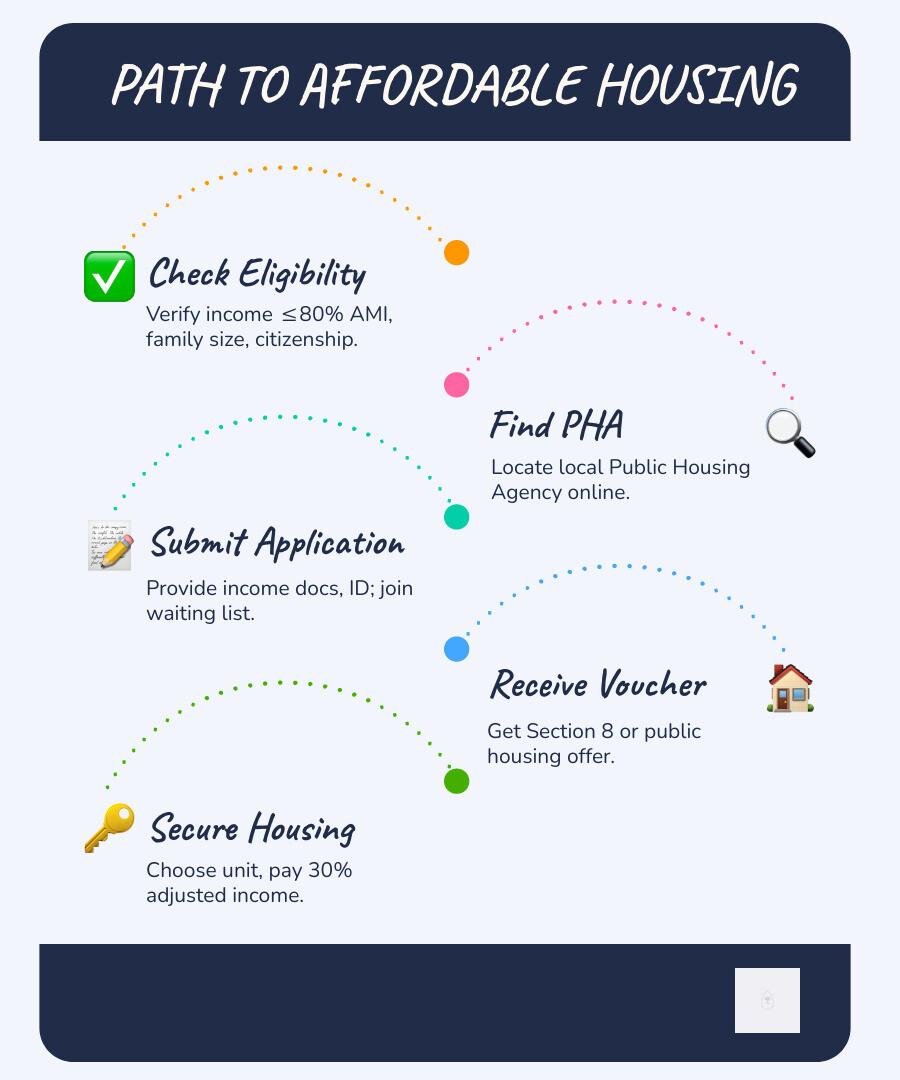
This guide walks you through every step, from eligibility to application to keeping your housing long-term.
LifeSTEPS currently provides services in California only.
Housing for low income families terms at a glance:
Core Programs for Housing for Low Income Families

When we talk about finding a permanent home, it is important to understand that “affordable housing” isn’t just one thing. It is a collection of different tools designed to help people at various income levels. In California, where the cost of living is notoriously high, these programs are a lifeline for nearly 3.3 million households nationwide who rely on some form of federal assistance.
The Public Housing Program is one of the oldest forms of assistance. Managed by local Housing Agencies (HAs), these units range from high-rise apartments to scattered single-family homes. Currently, approximately 970,000 households live in public housing units across the United States.
Another major pillar is the Section 8 housing overview, which shifts the focus from government-owned buildings to the private market. This program allows families to find their own place, provided the landlord agrees to participate and the rent is within reasonable limits.
Understanding the Housing Choice Voucher (HCV)
The Housing Choice Voucher Program (HCV) is the federal government’s major initiative for assisting very low-income families, the elderly, and the disabled. What makes it unique is the element of choice. Unlike public housing, you aren’t assigned a unit. You can choose any housing that meets the requirements of the program—be it a townhouse, a single-family home, or an apartment.
The role of the local Public Housing Agency (PHA) is to act as the middleman. They verify your eligibility, inspect the property to ensure it meets health and safety standards, and then pay a subsidy directly to the landlord. You, as the tenant, are responsible for paying the difference between the actual rent and the amount subsidized by the program. This flexibility is vital in places like San Diego or Riverside, where family needs can vary greatly.
Public Housing and Subsidized Rental Options
While vouchers offer mobility, traditional public housing provides stability within managed communities. These developments are maintained by local agencies to ensure they remain “decent, safe, and sanitary.” In some cases, these agencies even offer homeownership opportunities or employment training to help residents move toward self-sufficiency.
Subsidized rental housing is a third option where HUD provides funds directly to private apartment owners. In exchange, these owners offer lower rents to low-income tenants. You can often find these by looking for the “HUD” or “Affordable” label on apartment complexes. For example, the Oak Ridge Housing Authority manages units where residents pay about 30% of their income for rent and utilities, showing how localized management can create high-quality living environments.
Eligibility and the Application Process

Getting into housing for low income families starts with a single word: eligibility. HUD establishes income limits based on the Median Family Income (MFI) for your specific area. Because it costs more to live in Irvine than in other parts of the country, the income limits in Orange County will be higher than in more rural areas.
Generally, there are two main tiers:
- Low-income: 80% of the Area Median Income (AMI).
- Very low-income: 50% of the Area Median Income (AMI).
By law, PHAs must provide 75% of their vouchers to applicants whose incomes do not exceed 30% of the area median income. Beyond income, agencies look at family size, U.S. citizenship or eligible immigration status, and “tenant suitability”—meaning they will check your references to ensure you’ll be a good neighbor.
How Rent is Calculated for Housing for Low Income Families
One of the biggest reliefs for families entering these programs is the “30% rule.” Your rent is generally based on your “adjusted” monthly income. To find this, the PHA takes your gross annual income and subtracts specific allowances:
- $480 for each dependent.
- $400 for any elderly family member or person with a disability.
- Allowances for some medical and childcare expenses.
The Total Tenant Payment (TTP) is usually the highest of the following: 30% of your monthly adjusted income, 10% of your gross monthly income, or a minimum rent set by the local agency (usually between $25 and $50). This formula ensures that as your income fluctuates, your rent remains manageable.
Navigating Waiting Lists and Selection Preferences
If we’re being honest, the hardest part of the process is the wait. Demand for housing for low income families almost always exceeds the supply. This leads to waiting lists that can be closed for years. However, PHAs often use a “preference” system to move the most vulnerable people to the top.
Common preferences include:
- Families who are currently homeless or living in substandard housing.
- Veterans and their families.
- Families paying more than 50% of their income in rent.
- Victims of domestic violence.
When you apply, it is crucial to document these circumstances. A veteran in Los Angeles, for instance, might receive a significant boost in their application points, drastically shortening their wait time. Always keep your contact information updated with the PHA; if they send a notification and you don’t respond, you could be dropped from the list.
Specialized Support for Vulnerable Groups in California
California offers specialized programs for those who need more than just a roof. For example, the LAHD Housing Programs in Los Angeles facilitate the development of supportive rental housing that pairs a home with on-site services.
For our veterans, the HUD-VASH program is a game-changer. It combines the rental assistance of a Section 8 voucher with case management and clinical services provided by the Department of Veterans Affairs (VA). We have seen how this “Housing First” approach—providing a home without preconditions—leads to much higher stability. In fact, in some California programs, 95% of veteran residents remain stably housed once they have these supports in place.
Other specialized vouchers include:
- NED (Non-Elderly Disabled): For people under 62 with disabilities.
- Mainstream Vouchers: Specifically for non-elderly persons with disabilities who are transitioning out of institutional settings or are at risk of homelessness.
- FYI (Foster Youth to Independence): For youth aged 18-24 who are leaving foster care.
Local Resources for Housing for Low Income Families
Each county in California has its own flavor of assistance. The Riverside Housing Authority manages programs across one of the fastest-growing regions in the state, while the San Diego Housing Commission offers a robust directory of affordable rentals.
In Southern California, the City of Irvine maintains its own affordable housing initiatives to ensure that workers can live near their jobs. If you are anywhere in the state, the California HUD resources page is the best starting point to find your local agency.
Overcoming Challenges and Finding Immediate Help
Even with a voucher, the road isn’t always smooth. Finding a landlord who accepts Section 8 can be a challenge, though California law protects tenants from discrimination based on their source of income.
We focus heavily on the transition to stability. One of the biggest hurdles to moving into a new home is the security deposit. Through the CalAIM program, we are able to provide deposit assistance—typically one month paid in advance—to help eligible families get over that initial financial wall. This kind of targeted support is why we see a 93% housing retention rate among the families we serve. We don’t just want to get you into a home; we want to make sure you can stay there.
| Assistance Type | Best For | Typical Timeline |
|---|---|---|
| Emergency Shelter | Immediate crisis/Homelessness | Same day (if available) |
| Eviction Prevention | Families behind on rent | 1-4 weeks |
| Section 8 Voucher | Long-term private rental | Months to years (Waitlist) |
| Public Housing | Long-term managed unit | Months to years (Waitlist) |
Reporting Issues and Protecting Tenant Rights
As a tenant in housing for low income families, you have rights. Your home must meet NSPIRE standards, which are HUD’s updated criteria for physical inspections to ensure units are safe and healthy. If your landlord refuses to make essential repairs, or if you feel you are being treated unfairly because of your race, religion, or disability, you can file a complaint directly through HUD’s office of Fair Housing and Equal Opportunity.
Frequently Asked Questions about Low-Income Housing
How long are the waiting lists for Section 8?
Waiting lists vary wildly by location. In high-demand areas like Los Angeles or San Diego, lists can be several years long or even closed to new applicants. It is often recommended to apply to multiple PHAs in different areas to increase your chances.
Can I apply for housing assistance if I have a criminal record?
Yes. While PHAs do conduct criminal background checks, a record is not an automatic disqualification. Agencies generally look for specific types of recent violent or drug-related activity. Many programs now use a more holistic “suitability” review rather than a flat “no.”
What documentation do I need for my PHA application?
You will typically need:
- Birth certificates and Social Security cards for all household members.
- Tax returns and recent pay stubs.
- Bank statements.
- Contact information for current and previous landlords.
- Proof of any “preference” status (e.g., veteran discharge papers or a letter from a shelter).
Conclusion
At LifeSTEPS, we believe that a stable home is the foundation for everything else—health, employment, and education. Our unique collaboration with programs like the Family Self-Sufficiency (FSS) initiative helps our clients, including veterans, not just find a rental, but actually move toward homeownership.
Our impact goes beyond just four walls. We are proud to see a 97% literacy improvement in our Summer Reading programs and have helped students secure $2.1M in scholarships to pursue higher education. When a family is no longer worried about where they will sleep, they can finally focus on where they are going.
If you are ready to take the next step toward stability, we invite you to learn more info about our services or contact us for support. We are here to help you navigate the system and find the “roof over your head” that your family deserves.
LifeSTEPS | Phone: (916) 965-2110 | LifeSTEPS Official Website
LifeSTEPS currently provides services in California only.


