


The Best Income Based Apartments for Beginners
The Best Income Based Apartments for Beginners
What Are Income Based Apartments and Who Qualifies?
Income based apartments are rental homes where your eligibility and rent are tied to how much your household earns — specifically as a percentage of the Area Median Income (AMI) set by HUD each year.
Here is a quick overview of what you need to know:
| Key Factor | What It Means |
|---|---|
| Who qualifies | Households earning 30%–80% of the local Area Median Income (AMI) |
| How rent is set | Fixed below market rate based on local income guidelines |
| Common AMI thresholds | 50% (very low income) or 80% (lower income) per HUD |
| Vouchers accepted? | Yes — housing vouchers like Section 8 can often be applied |
| Student restrictions | Full-time students are generally not eligible unless they meet exemptions |
| Minimum income required | Usually at least 2.5x the monthly rent |
| How to apply | Through individual properties or your local Public Housing Agency (PHA) |
For veterans transitioning to civilian life, finding stable housing is often the single most important first step toward long-term self-sufficiency. Yet navigating affordable housing options can feel overwhelming — different programs, different income thresholds, and different application rules at every property.
The good news? Income-based housing in California is more accessible than many people realize. Whether you are in the Los Angeles area, San Diego, Riverside, or the Bay Area, there are income-restricted communities designed to provide quality homes at rents that reflect what you actually earn.
LifeSTEPS supports residents in these communities with wrap-around services — from education and financial literacy to deposit assistance through the CalAIM program — helping people not just find housing, but stay in it. In fact, LifeSTEPS communities maintain a 93% housing retention rate, reflecting the real difference that human-centered support makes.
This guide walks you through everything — how eligibility works, how to apply, what to expect, and how to find listings near you in California.
Understanding Income Based Apartments and Eligibility
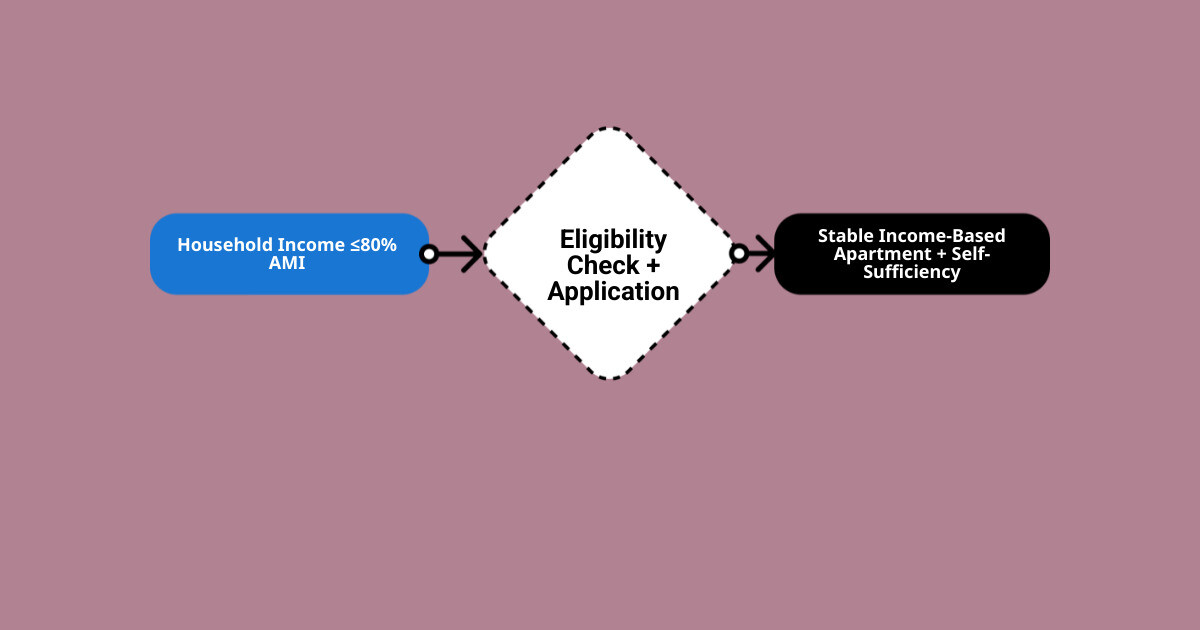
When we talk about income based apartments, we are usually referring to properties that receive government funding to keep rents low. The most important term to learn is Area Median Income (AMI). This is the “middle” income for a specific county.
HUD (the Department of Housing and Urban Development) updates these limits every year. As of May 2026, HUD sets two primary benchmarks:
- Lower Income Limits: Set at 80% of the local median income.
- Very Low-Income Limits: Set at 50% of the local median income.
To see if you qualify, you must compare your total household income against these local limits. For example, if you are looking for Income Restricted Housing Near Me/ in a city like Los Angeles, you would check the Affordable Rental Housing – LAHD guidelines to see the exact dollar amounts for your household size.

How Income Based Apartments Differ from Subsidized Housing
It is a common mistake to think that “income-based” and “subsidized” mean the same thing. While both are affordable, they work differently:
- Subsidized Housing (Section 8/Public Housing): In these programs, your rent is usually calculated as exactly 30% of your adjusted monthly income. If your income goes down, your rent goes down.
- Income-Restricted Apartments (LIHTC): Most modern income based apartments use the Low-Income Housing Tax Credit (LIHTC) program, also known as Section 42. In these communities, the rent is a fixed amount set below market rate. It does not change every time your paycheck changes, but it is much cheaper than a standard apartment.
Communities in places like the City of Irvine often feature these Income Restricted Rentals/ that look and feel just like market-rate luxury complexes but are reserved for those meeting the AMI requirements.
Calculating Your Household Income and AMI Limits
To determine your eligibility, we look at your gross annual income — that is your total income before taxes. This includes:
- Wages and salaries
- Tips and bonuses
- Social Security or disability benefits
- Child support or alimony
- Interest from assets
Household size is the other half of the equation. A single person has a lower income limit than a family of four. For those searching for Low Income Elderly Housing Near Me/, it is important to include all sources of retirement income when checking against the 2026 HUD updates.
The Application Process for Affordable Housing in California
Applying for income based apartments is more detailed than a standard rental application because the property manager must prove to the government that you qualify.
In areas like San Diego, the process usually begins by contacting the property directly or working through the San Diego Housing Commission. Because these units are in high demand, we recommend starting with a Buyers Guide Low Income Apartments San Diego/ to understand the local landscape.
Common Restrictions and Student Rules
There are a few “gotchas” in the application process:
- The Full-Time Student Rule: Under Section 42, a household made up entirely of full-time students often does not qualify for income based apartments. There are exceptions, such as for single parents or those who were formerly in foster care, but it is a strict rule to be aware of.
- Minimum Income Requirements: While there is a maximum income you can’t exceed, most landlords also require a minimum income to ensure you can pay the rent. This is typically 2.5 times the monthly rent.
If you are a senior, you might find more flexible terms in a Low Income Senior Housing Guide/ that addresses fixed-income scenarios.
Required Documents for a Successful Application
To move quickly when a unit becomes available, have these documents ready in a folder:
- Identification: Birth certificates and Social Security cards for every member of the household.
- Proof of Income: The last 2–3 months of pay stubs and your most recent tax returns.
- Asset Verification: 6 months of bank statements for all accounts.
- Military Service: If you are a veteran, your DD Form 214 is essential for accessing veteran-specific units.
Benefits of Living in Income-Restricted Communities
The biggest benefit of income based apartments is obviously the lower rent, but the advantages go much deeper. These communities are designed to be stable environments where people can thrive.
At LifeSTEPS, we have seen that when housing is affordable, residents can focus on other goals. This focus is why we see a 93% housing retention rate across the properties we serve. Additionally, we help bridge the gap for new residents through the CalAIM program, which can provide deposit assistance by paying one month of rent in advance for the security deposit.

Amenities and Utilities in Income Based Apartments
Don’t let the “low income” label fool you. Many new income based apartments in California include:
- Energy Star Appliances: These help keep your monthly electricity bills low.
- Included Utilities: Many properties bundle water, sewer, and trash into the rent.
- Community Spaces: Fitness centers, computer labs, and community rooms are standard in many Riverside affordable rentals.
For those with specific needs, these communities often offer units designed for Low Income Housing For Elderly And Disabled/, featuring wheelchair accessibility and modified kitchens.
Education and Youth Support Programs
We believe that stable housing is the foundation for education. In the communities we serve, we provide robust afterschool and literacy programs.
The results speak for themselves:
- 97% Literacy Improvement: Our Summer Reading programs consistently help children stay on track or get ahead for the next school year.
- $2.1M in Scholarships: We help residents pursue higher education to break the cycle of poverty and move toward self-sufficiency.
| Support Program | Measurable Outcome |
|---|---|
| Summer Reading | 97% Literacy Improvement |
| Housing Support | 93% Resident Retention Rate |
| Higher Education | $2.1 Million in Scholarships Awarded |
| Financial Stability | Collaboration with FSS for Homeownership |
Finding Your New Home in Southern California and the Bay Area
If you are ready to start your search, focus on the major hubs where these developments are most common: Los Angeles, San Diego, Riverside, Irvine, and Natomas.
You can search California low-income rental listings to find properties currently accepting applications. Many of these properties operate on a “lottery” or “waiting list” basis, so it pays to apply to multiple locations at once.
Resources for Seniors and Veterans
Seniors and veterans often have access to “Permanent Supportive Housing.” These are income based apartments that come with on-site case management and wellness support.
For veterans, many of whom may have a disabling condition, these units are often subsidized by HUD-VASH vouchers, meaning the veteran pays a very small portion of their income toward rent. If you need a home quickly, look for a Low Income Senior Housing No Waiting List Guide/ or search specifically for Senior Living Apartments Based On Income Near Me/.
Frequently Asked Questions about Income-Restricted Housing
Can I use a Section 8 voucher at these properties?
Yes! Most income based apartments (LIHTC properties) are required by law to accept Section 8 vouchers. The voucher will cover a portion of the fixed rent, and you will pay the remainder.
What happens if my income increases after I move in?
In most cases, you will not be evicted if your income goes up. The LIHTC program generally allows you to stay as long as you were qualified at the time you moved in. However, you may need to pay a higher rent if the property has different “tiers” of affordability.
Are utilities included in the monthly rent?
It depends on the property. Most include water, sewer, and garbage. You are usually responsible for your own electricity and internet, though some newer developments are beginning to include high-speed internet as a standard amenity.
Conclusion
Finding the right income based apartments is about more than just a cheap place to live; it’s about finding a community that supports your growth. At LifeSTEPS, our mission is to provide the human-centered support that turns an apartment into a stable home.
Through our collaboration with programs like FSS (Family Self-Sufficiency), we help our clients — including veterans and seniors — transition from stable rental housing to the ultimate goal of homeownership and total independence.
Whether you are just starting your journey or looking for a long-term place to retire, the resources in California are there to help you succeed. We invite you to learn more about our programs and services and how we can support your path to stability.
For media inquiries, contact: bex@lifestepsusa.org
LifeSTEPS currently provides services in California only.


