


The Best Veteran Resources for Housing That You Might Not Know About
The Best Veteran Resources for Housing That You Might Not Know About
Why So Many Veterans Struggle to Find Housing — And Where to Get Help
Veteran resources for housing exist at the federal, state, and local level — and knowing which ones apply to your situation can make a real difference. Here is a quick overview of the main options available:
- HUD-VASH — Rental vouchers paired with VA case management for eligible veterans
- SSVF (Supportive Services for Veteran Families) — Rapid re-housing and homelessness prevention for very low-income veterans
- Grant and Per Diem (GPD) — Up to two years of transitional housing with support services
- VA Homelessness Prevention — 24/7 support via the National Call Center for Homeless Veterans (1-877-4AID-VET)
- State and local programs — Including California-specific resources and nonprofit wrap-around services
Leaving the military means losing more than a job. It often means losing a sense of identity, a built-in community, and a daily structure that gave life meaning. For many veterans, that loss creates a gap that civilian life is not always equipped to fill.
The numbers reflect this. On average, 4.4% of people experiencing homelessness in Canadian cities are veterans — and the picture in the United States is similarly sobering. Many veterans living without stable housing are also managing mental health challenges, physical disabilities, or substance use issues that make finding and keeping a home even harder.
The good news is that a growing network of programs — from federal housing vouchers to local nonprofit services — is specifically designed to help veterans get back on their feet. This guide walks through the most important ones, so you know exactly where to look.
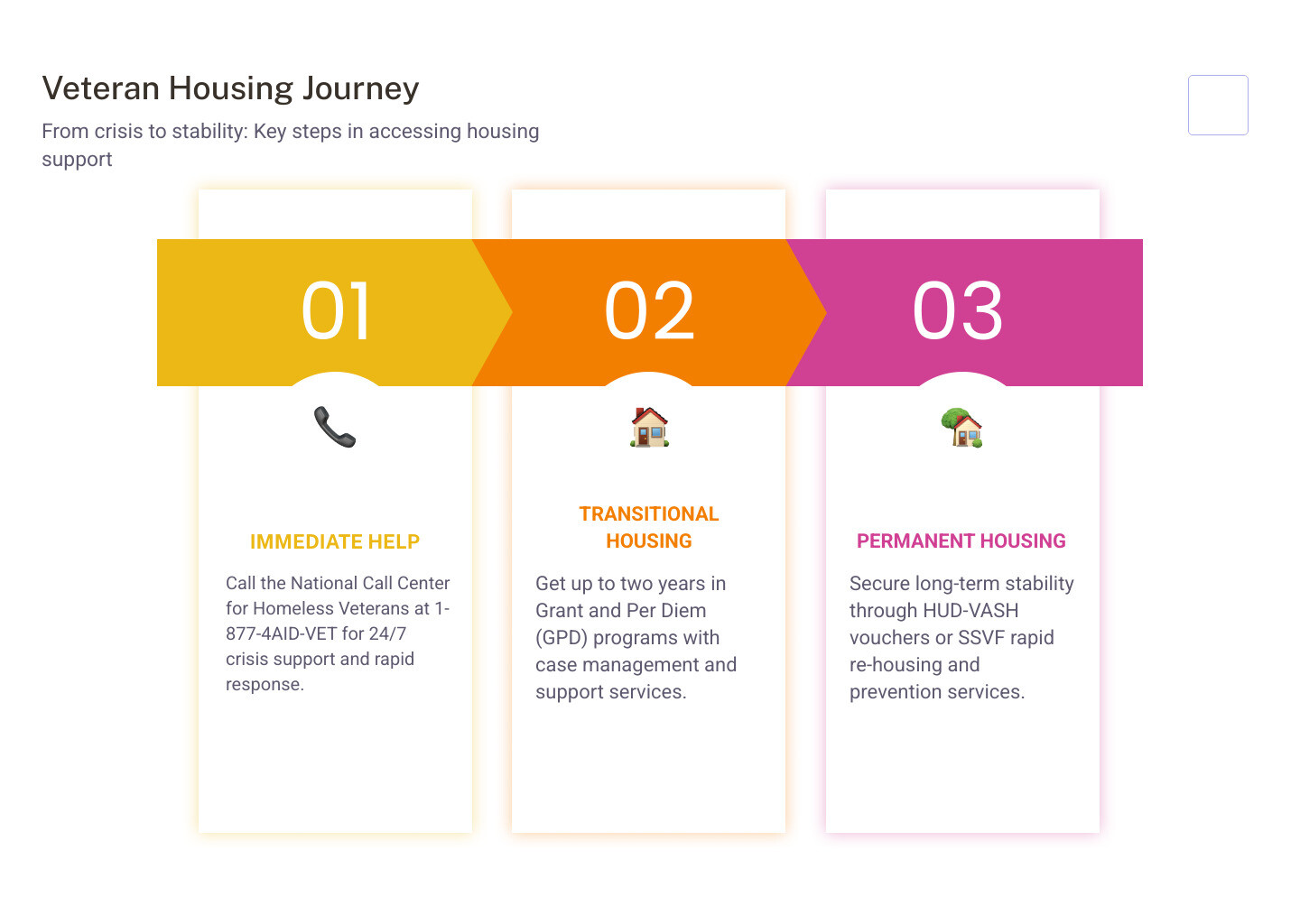
Veteran resources for housing vocabulary:
Federal Veteran Resources for Housing and Support
When it comes to veteran resources for housing, the federal government provides the largest foundation of support. These programs are designed to address different stages of housing need, from those currently on the street to those who just need a little help to keep their current apartment.
One of the most effective tools is the HUD-VASH program. This is a collaborative effort between the Department of Housing and Urban Development (HUD) and the Department of Veterans Affairs (VA). It combines HUD’s Housing Choice Voucher (HCV) rental assistance with case management and clinical services provided by the VA. Essentially, the government helps pay the rent while a case manager helps the veteran navigate healthcare and other needs. You can learn more about how these vouchers are managed through the HUD-VASH Operating Requirements.
Another heavy hitter is the Grant and Per Diem (GPD) program. This provides funding to community agencies that offer transitional housing. If you aren’t quite ready for an independent apartment but need a safe place to stay for up to two years while you get your ducks in a row, GPD is a fantastic option. For a full list of what the VA offers, check out their VA Housing Assistance page.
Eligibility for HUD-VASH and SSVF
Eligibility can sometimes feel like a maze, but there are a few general rules. For HUD-VASH, you generally need to be a veteran who is eligible for VA health care and is experiencing homelessness. A big win in recent years is that veterans with “Other Than Honorable” (OTH) discharges may now be eligible for these vouchers.
For the SSVF program, the focus is on “very low-income” veteran families. This means your household income usually needs to be below 50% of the area’s median income. If you are unsure where to start, the best first step is to use the VA Medical Center Locator to find a homeless coordinator near you.
Specialized Veteran Resources for Housing Stability
Sometimes, a full voucher isn’t necessary, but a small boost is. This is where “shallow subsidies” come in. Under the SSVF umbrella, these subsidies provide a modest amount of financial help for up to two years to help low-income veterans stay in their homes.
Rapid re-housing is another specialized approach. It’s exactly what it sounds like: getting someone into permanent housing as quickly as possible without making them “earn” it through sobriety or employment first. This “Housing First” model is proven to be more effective because it’s much easier to work on your health or find a job when you have a front door that locks. You can find more details on these programs at Supportive Services for Veteran Families.

Understanding the Veteran Homelessness Program (VHP) Framework
While we focus on California, it is helpful to look at successful frameworks like the Veteran Homelessness Program (VHP). This model uses two main “streams” to tackle the problem. The first is the Services and Supports Stream, which focuses on direct aid like rent supplements. The second is the Capacity Building Stream, which helps organizations get better at what they do through research and data collection.
Understanding the terminology used by these professionals can help you advocate for yourself. Resources like the Homelessness Glossary for Communities explain the technical side of these directives. Additionally, knowing the market rent in your area is vital for calculating what kind of help you might get. You can look up local data at the CMHC Housing Market Information Portal.
Rent Supplement Calculations and Eligibility
In many modern veteran programs, rent supplements are calculated based on a “30% rule.” This means the veteran is expected to contribute 30% of their gross monthly household income toward rent, and the program covers the rest (up to a certain limit).
To be eligible, household income must not exceed specific thresholds. These are often based on the Low income measure (LIM) thresholds. For example, if a veteran in a high-cost city like San Francisco has a monthly income of $3,000 and the rent is $2,400, their 30% contribution would be $900, leaving a potential supplement of $1,500.
Wrap-Around Services for Veteran Resources for Housing
Housing is the first step, but it’s rarely the only one. “Wrap-around services” are the extra layers of support that keep a person housed. This includes:
- Mental Health Support: Counseling for PTSD or depression.
- Prevention: Help with utility bills or minor home repairs to prevent eviction.
- Indigenous Supports: Culturally appropriate services for Indigenous veterans.
- Client Support: Assistance with basic needs like groceries or furniture when moving in.
These services are often delivered through partnerships between the government and local nonprofits. For more on how these services are structured, see the Homelessness Glossary for Communities.
California-Specific Housing Programs for Veterans
In California, we have unique challenges due to the high cost of living, but we also have some of the most robust veteran resources for housing in the country. We focus our efforts in areas like Los Angeles, San Diego, and the Bay Area, where the need is greatest.
One critical resource is the CalAIM program. We utilize this to provide deposit assistance for veterans transitioning into stable homes. We understand that coming up with the first month’s rent plus a security deposit is a massive hurdle. That’s why we often help with one month paid in advance to ensure a smooth move-in.
Our approach works. We are proud to share that we maintain a 93% housing retention rate for the individuals we serve. This means that once we help a veteran find a home, they almost always stay there. For a broader look at state benefits, visit California Veteran Services Housing Benefits.
Navigating Local Support in the Bay Area and Southern California
If you are in Los Angeles, San Diego, Riverside, or the Bay Area, local support is available. Each of these regions has specific coordinators who understand the local rental market. Whether you are looking for an apartment in Irvine or need support in your local community, we work to connect you with the right local agencies. You can find more info about our programs and services to see how we operate in your specific California community.
Achieving Homeownership through Veteran Resources for Housing
While many programs focus on rental assistance, we believe in the dream of homeownership too. We collaborate with programs like the Family Self-Sufficiency (FSS) program to help veterans move beyond subsidized housing.
Through financial literacy training and escrow savings accounts, veterans can build the capital needed for a down payment. We’ve seen how this changes lives—moving from the risk of homelessness to the pride of owning a home. Read more about how we help people achieve this at Building a brighter future through homeownership (please note that the client’s first name has been changed).
Employment and Legal Aid for Housing Retention
Keeping a home often requires a steady income and legal protection. If you are facing an unfair eviction, legal aid is your best friend. Organizations like Stateside Legal and the ABA Home Front provide free or low-cost legal help specifically for military members and veterans.
| Feature | Transitional Housing (GPD) | Permanent Supportive Housing (HUD-VASH) |
|---|---|---|
| Duration | Up to 24 months | Long-term/Permanent |
| Main Goal | Stabilization and transition | Long-term stability and independence |
| Support Level | High (often on-site) | Variable (case management) |
| Cost | Usually free or very low cost | 30% of income |
Career Transition Resources
Finding a career that fits your military skills is a huge part of housing stability. The Department of Labor’s Veterans’ Employment and Training Service (DOL-VETS) is a great place to start. They offer the Homeless Veterans’ Reintegration Program, which is the only federal grant focused exclusively on getting homeless veterans back to work.
Programs like Helmets to Hardhats also help veterans transition into high-paying careers in the construction trades. For more employment tools, visit the Veterans’ Employment and Training Service.
Frequently Asked Questions about Veteran Housing
How is veteran service confirmed for housing programs?
To access most veteran resources for housing, you’ll need to prove your service. This is usually done through your DD214 discharge papers. For some specific programs, you might need to fill out a Confirmation of Veteran service form or work with the VA to verify your status. While some emergency wrap-around services allow for “self-attestation” (you stating you are a veteran) to get immediate help, long-term rent supplements will require formal paperwork.
What are wrap-around services?
Wrap-around services are the “glue” that holds a housing plan together. They include everything from substance use treatment and mental health counseling to help with social integration. The idea is to treat the whole person, not just the housing status. You can find more examples at Supportive Services for Veteran Families.
Can veterans with OTH discharges get housing help?
Yes! This is a common myth. While a Dishonorable discharge might limit some benefits, many veterans with “Other Than Honorable” (OTH) or General discharges are still eligible for HUD-VASH and SSVF services. If you’ve been told “no” in the past, it’s worth asking again, as rules have become more inclusive. Check the latest VA Housing Programs updates for more info.
Conclusion
At LifeSTEPS, we believe that every veteran deserves a safe place to call home. Our human-centered support is designed to meet you where you are, whether you need immediate deposit assistance through CalAIM or long-term help through the FSS program.
We are proud of our impact in California:
- 93% housing retention rate for our clients.
- 97% literacy improvement through our Summer Reading programs for families.
- $2.1M in scholarships awarded to help our residents reach higher education.
If you or a veteran you know is struggling with housing in Los Angeles, San Diego, or the Bay Area, please reach out. LifeSTEPS | Phone: (916) 965-2110 | https://lifestepsusa.org and let us help you find the stability you earned through your service.


