


How Much Do Support Services Coordinators Really Make?
Understanding the Financial Reality of a Support Services Coordinator Role
If you’re considering a career as a support services coordinator salary varies widely based on location, experience, and employer, but here’s what you need to know:
Quick Salary Overview:
- United States Average: $39,440 per year ($18.96/hour)
- Typical U.S. Range: $27,000 to $56,000 annually
- Canada Average: C$52,500 per year (C$41k – C$66k range)
- Entry-Level: Around $27,000 – $40,000 per year
- Experienced Professionals: $44,600 – $70,000+ per year
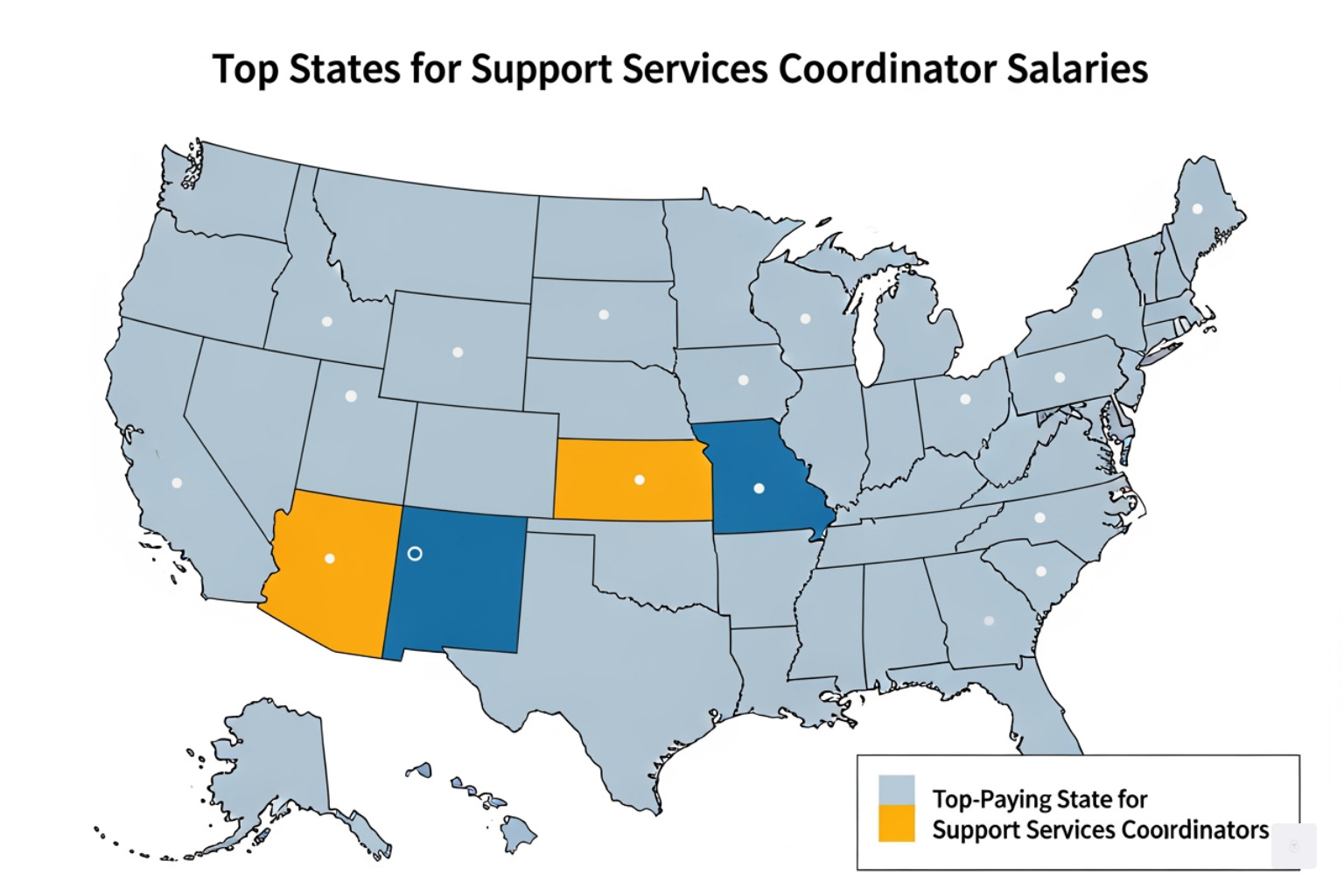
- Top-Paying Locations: New York ($71,763), California ($47,245), Nevada ($42,688)
Support services coordinators play a vital role in helping individuals and families achieve stability and self-sufficiency. Whether you’re working with veterans transitioning to civilian life, seniors navigating healthcare, or families seeking housing stability, this career offers meaningful impact alongside competitive compensation.
The salary you can expect depends on several key factors: your years of experience, where you work, your education level, and the type of organization employing you. For example, coordinators in high-cost states like New York and California typically earn more than the national average, while those with advanced degrees or management responsibilities can command salaries above $70,000.
Beyond base pay, most support services coordinators receive comprehensive benefits packages. According to recent data, 87-95% receive medical insurance, 84-86% get dental coverage, and 68-69% have vision benefits. Many positions also offer bonuses, profit sharing, and the satisfaction of making a measurable difference in people’s lives.
This guide breaks down everything you need to know about support services coordinator salaries—from national averages to specific factors that influence your earning potential, plus actionable strategies to increase your income in this rewarding field.
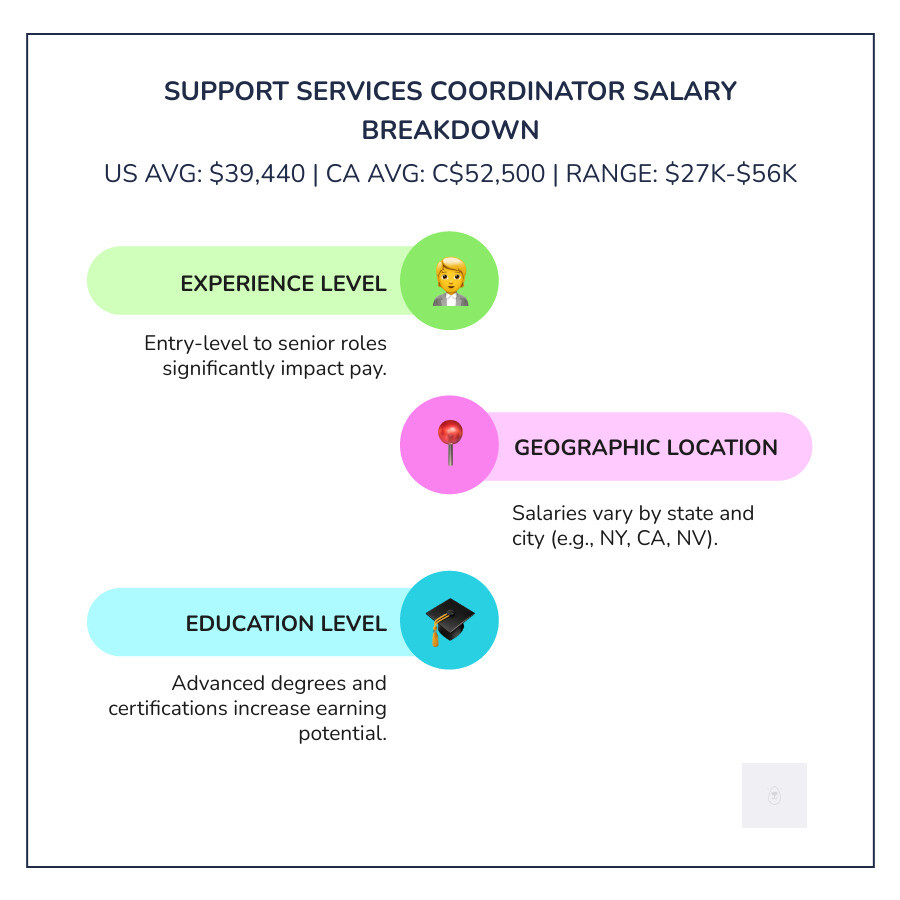
Important support services coordinator salary terms:
What is the Average Support Services Coordinator Salary?
Understanding the average support services coordinator salary provides a crucial starting point for anyone considering this fulfilling career path. While national averages give us a general idea, it’s important to dig into the specifics, including hourly rates, total compensation, and the benefits packages that often accompany these roles.
Salary in the United States
In the United States, the average support services coordinator salary is approximately $39,440 per year. This translates to an average hourly rate of about $18.96. However, this is just an average, and the typical salary range for this role generally falls between $27,000 and $56,000 annually. This broad range highlights the significant impact of various factors, which we’ll explore in detail.
Looking at the percentile breakdown, we see that:
- The 10th percentile earns around $27,000 per year.
- The 25th percentile earns about $32,000 per year.
- The 75th percentile earns roughly $47,000 per year.
- The 90th percentile can reach up to $56,000 per year.
This data suggests that while entry-level positions might start at the lower end, experienced professionals can certainly achieve salaries in the mid-to-upper $50,000s. We’ve also observed a positive trend in earnings, with the average support services coordinator salary increasing by $7,918 over the last ten years, from $31,522 in 2014 to $39,440 in 2025. This indicates a growing recognition and value for the important work performed by support services coordinators. For more detailed insights into salary trends, you can refer to the Support Services Coordinator Salary Overview – Zippia.
Salary in Canada
For our neighbors to the north, the average support services coordinator salary in Canada is projected to be C$52,500 in 2025. This is comparable to the average for a general Service Coordinator, which is C$51,213. The salary range for Service Coordinators in Canada typically spans from C$41,000 to C$66,000 per year. While these figures provide a good benchmark, it’s worth noting that salaries in Canada can also vary significantly by province and major metropolitan areas.
Understanding Total Compensation
When we talk about compensation, it’s not just about the base salary. Total compensation often includes a range of benefits and sometimes additional monetary components like bonuses or profit sharing. These elements can significantly improve the overall value of a support services coordinator’s package.
Common health benefits are a cornerstone of total compensation for most support services coordinator roles. Our research indicates a strong prevalence of these benefits:
- Medical Insurance: Between 87% and 95% of support services coordinators receive medical benefits. This is a critical component, offering peace of mind and access to healthcare.
- Dental Insurance: Roughly 84% to 86% of professionals in this role are provided with dental coverage, ensuring oral health is also taken care of.
- Vision Insurance: About 68% to 69% benefit from vision coverage, which is essential for maintaining good eyesight, particularly for roles that involve extensive computer work or detailed record-keeping.
Beyond health benefits, some roles may also offer:
- Bonuses: While not universally present, bonuses can range from a few hundred dollars to several thousand, depending on individual or company performance.
- Profit Sharing: In some organizations, especially those with a for-profit structure, employees might share in the company’s profits, adding another layer to their total earnings.
Understanding this full picture of total compensation is vital when evaluating job offers, as a seemingly lower base salary might be offset by a robust benefits package, making the overall offer more attractive.
Key Factors That Influence Your Earning Potential
Just like a well-tended garden yields a bountiful harvest, a career as a support services coordinator offers increasing rewards with cultivation. Several key factors significantly influence your earning potential in this vital field. Let’s explore how experience, location, and education can shape your support services coordinator salary.
How Experience Level Affects Your Pay
Experience is a powerful determinant of your support services coordinator salary. As you gain more years in the field, your expertise grows, and so does your value to an organization.
- Entry-level: For those just starting out, an entry-level support services coordinator salary typically ranges from $27,000 to $40,000 per year. This phase is crucial for building foundational skills and understanding the nuances of the role. For example, an entry-level Support Coordinator can expect an annual salary around $28,600.
- Early-career (1-4 years): With a few years under your belt, your earnings begin to climb. Early-career professionals (1-4 years of experience) can see average total compensation around $18.64 per hour, which translates to roughly $38,771 annually (based on a 40-hour week).
- Mid-career (5-9 years): As you move into a mid-career stage, your experience becomes even more valuable. Professionals with 5-9 years of experience can expect an average total compensation around $22.58 per hour, or approximately $47,000 annually.
- Senior-level: Highly experienced support services coordinators often command the highest salaries. Senior-level professionals can earn an average of $46,500 annually. Furthermore, gaining management experience, such as overseeing junior coordinators, can significantly increase your earning potential, pushing salaries well over $70,000 in some cases. This progression reflects the increasing responsibilities, complex problem-solving, and leadership skills developed over time.
The Impact of Geographic Location
Where you choose to work plays a substantial role in your support services coordinator salary. Salaries can vary dramatically from state to state and even city to city, largely due to differences in the cost of living and regional demand for skilled professionals.
While our research highlights several high-paying states across the U.S., we at LifeSTEPS are particularly focused on California, where we serve communities across the state, including Los Angeles, San Diego, and San Francisco.
- California: Our data indicates that California is one of the higher-paying states for Support Coordinators, with an average salary of $47,245. This places it significantly above the national average, reflecting both the high cost of living in many parts of the state and the strong demand for skilled professionals in social services.
- Highest Paying Cities within California: Major metropolitan areas within high-paying states typically offer even more competitive salaries, often to reflect a higher cost of living. For instance, New York City is noted for having a very high average annual salary for a Support Coordinator at $71,763. We can infer that cities like Los Angeles, San Diego, and San Francisco, with their similar economic landscapes and high costs of living, would also offer salaries at the higher end of the California average, if not exceeding it. The demand for dedicated support services coordinators in these vibrant communities is consistently high, particularly within organizations committed to helping residents achieve housing stability and self-sufficiency.
When considering your career path, researching the local market conditions and cost of living adjustments in areas like Los Angeles, San Diego, and San Francisco is crucial. A higher salary in a high-cost area might not always translate to greater purchasing power, but it certainly indicates a robust job market and competitive compensation.
Does Education Level Change Your Support Services Coordinator Salary?
Absolutely! Your education level can significantly impact your support services coordinator salary. While many entry-level positions may only require a high school diploma or equivalent, advancing your education can open up higher earning potential and open doors to more specialized or leadership roles.
- High School Diploma: For those entering the field with a high school diploma, the focus will be on gaining practical experience and demonstrating strong foundational skills. Salaries at this level will typically align with the lower end of the entry-level range.
- Bachelor’s Degree Impact: A bachelor’s degree, particularly in fields like social work, psychology, public health, or a related discipline, is often preferred and can lead to a higher starting salary. It also provides a deeper theoretical understanding of human behavior, social systems, and effective intervention strategies, which are invaluable in this role.
- Advanced Degrees (MSW): Pursuing an advanced degree, such as a Master of Social Work (MSW), can dramatically increase your income potential and qualify you for more senior, specialized, or supervisory positions. These roles often involve complex case management, program development, and clinical oversight, which command higher salaries.
- Specialized Certifications: Beyond formal degrees, obtaining specialized certifications can also boost your earnings. Certifications in areas like case management, mental health first aid, or specific advocacy skills demonstrate a commitment to professional development and a specialized skill set that employers value.
- Increased Income Potential: The more you invest in your education and professional development, the more you can expect your support services coordinator salary to grow. This is particularly true in the social services sector, where expertise and specialized knowledge directly translate into better outcomes for the individuals and families we serve.
A Day in the Life: Responsibilities and Essential Skills
Imagine a day where every interaction contributes to someone’s journey toward stability and independence. That’s the reality for a support services coordinator. The role is dynamic, demanding, and incredibly rewarding, requiring a unique blend of administrative prowess, empathetic understanding, and practical problem-solving. It’s truly more than just a job; it’s a calling to make a tangible difference in our communities.

Typical Job Responsibilities
The daily tasks of a support services coordinator are diverse, often involving direct interaction with residents and strategic coordination behind the scenes. Our work at LifeSTEPS exemplifies many of these responsibilities, focusing on empowering individuals and families in their journey to self-sufficiency.
- Client Support and Advocacy: We act as a primary point of contact for residents, offering guidance, emotional support, and advocating on their behalf to access necessary resources. This might involve listening to their challenges, understanding their goals, and helping them articulate their needs to various service providers.
- Resource Navigation: A significant part of our role is connecting residents with the right resources. This includes everything from housing assistance programs, employment opportunities, educational services, and healthcare providers to food banks and legal aid. We help individuals cut through red tape and access the support they deserve.
- Case Management: We manage individual cases, which involves assessing needs, developing personalized service plans, monitoring progress, and adjusting strategies as necessary. This ensures that each resident receives custom support to meet their unique circumstances.
- Developing Workshops: To foster independence and life skills, we often develop and facilitate workshops on relevant topics. These can range from financial literacy and budgeting, job search skills, and healthy living practices to parenting support and digital literacy. Our goal is to equip residents with the tools they need to thrive.
- Fostering Educational and Youth Success: We are committed to breaking cycles of poverty through education. This includes youth-focused initiatives like our Summer Reading programs, which have achieved a 97% improvement in literacy, and providing access to higher education by helping residents secure over $2.1 million in scholarships.
- Connecting Residents to Health Services: Promoting well-being is paramount. We actively connect residents to vital health services, including physical and mental health support, substance abuse programs, and preventative care. Our Community Health Program, for example, has demonstrated significant impact, reducing hospitalizations and saving $1.1 million annually per site in healthcare costs.
- Supporting Housing Stability (93% Retention): A core focus of our work is ensuring housing stability. We are proud of our 93% housing retention rate, which is a testament to the comprehensive support we provide. This includes helping residents understand their leases, steer landlord-tenant issues, and access rent or deposit assistance, often through programs like CalAIM.
- Administrative Duties: Behind every successful client interaction is a layer of administrative work. This includes maintaining accurate records, documenting interactions, preparing reports, and managing program data to ensure compliance and track outcomes.
These responsibilities highlight our commitment to human-centered support and measurable outcomes. To learn more about how we make a difference, explore our programs and services.
The Most Valuable Skills for Success
To excel as a support services coordinator, a diverse set of skills is essential. These aren’t just buzzwords; they are the practical abilities that enable us to effectively serve our communities and empower residents.
Here are the top 5 skills that are most valuable for a support services coordinator salary and success:
- Communication (Verbal and Written): This is the bedrock of our work. We must be able to communicate clearly, empathetically, and effectively with residents from diverse backgrounds, colleagues, and external partners. Whether explaining complex program requirements, de-escalating a tense situation, or writing detailed case notes, strong communication ensures understanding and builds trust.
- Problem-Solving: Every day presents unique challenges. A support services coordinator must possess excellent problem-solving skills to identify root causes, brainstorm creative solutions, and implement effective strategies to overcome obstacles that residents face. This often requires quick thinking and resourcefulness.
- Empathy and Compassion: At the heart of support services is a genuine desire to help others. Empathy allows us to understand and share the feelings of our residents, while compassion drives us to act with kindness and care. These qualities are crucial for building rapport and fostering a supportive environment.
- Organization and Time Management: With multiple cases, deadlines, and responsibilities, being highly organized and managing time effectively is non-negotiable. We must prioritize tasks, maintain meticulous records, and ensure that all necessary steps are taken in a timely manner to serve residents efficiently.
- Customer Service: While our residents are not “customers” in the traditional sense, the principles of excellent customer service are highly applicable. This involves being responsive, respectful, patient, and proactive in meeting their needs, ensuring they feel valued and heard throughout their journey with us.
These skills, combined with a passion for community impact, are what truly define an effective support services coordinator and contribute to their long-term success and earning potential.
How to Increase Your Salary as a Support Services Coordinator
We understand that a fulfilling career also means fair compensation. While the work of a support services coordinator is inherently rewarding, there are proactive steps you can take to increase your support services coordinator salary and advance your career. It’s about strategic growth, continuous learning, and recognizing your value.
Advancing Your Education and Skills
One of the most direct paths to a higher support services coordinator salary is through enhancing your education and skill set.
- Pursuing Advanced Degrees: As discussed earlier, a bachelor’s degree can open more doors, and an advanced degree like a Master of Social Work (MSW) can significantly boost your earning potential. These degrees equip you with deeper theoretical knowledge and practical skills for complex case management, program leadership, and clinical interventions.
- Gaining Relevant Certifications: Look for certifications that are highly valued in the social services sector. These could include certifications in specific areas like mental health support, substance abuse counseling, family advocacy, or specialized case management. These credentials demonstrate expertise and a commitment to best practices.
- Attending Specialized Training: Beyond formal certifications, participating in specialized training workshops and seminars can keep your skills sharp and introduce you to new methodologies. This includes training in areas like crisis intervention, trauma-informed care, or systems-advocacy, which are crucial for effective support services.
- Systems-Advocacy Training: Understanding and navigating complex systems (e.g., housing, healthcare, legal) is a key part of the support services coordinator role. Training in systems-advocacy empowers you to better assist residents in overcoming systemic barriers and can make you an invaluable asset to any organization.
By continuously investing in your knowledge and abilities, you become a more skilled and indispensable professional, directly influencing your salary trajectory.
Gaining Strategic Experience
Experience isn’t just about the number of years you’ve worked; it’s about the quality and strategic nature of that experience.
- Seeking Management Roles: Moving into a supervisory or management position is a clear way to increase your support services coordinator salary. These roles come with added responsibilities, such as team leadership, program oversight, and strategic planning, which are compensated accordingly.
- Overseeing Junior Staff: If a formal management role isn’t immediately available, look for opportunities to mentor or oversee junior support services coordinators. This demonstrates leadership potential and the ability to guide others, valuable skills that can lead to promotions and higher pay.
- Specializing in a High-Demand Area: Developing expertise in a niche or high-demand area can also make you more valuable. For example:
- Veteran Services: Specializing in supporting veterans, particularly in areas like housing and employment, is a critical need.
- Senior Support: As the population ages, expertise in supporting seniors with healthcare, housing, and social engagement is increasingly vital.
- Youth Services: Focusing on youth development, educational support (like our 97% literacy improvement in Summer Reading programs), and family reunification can be a specialized and impactful path.
- FSS Program Coordination: For organizations like LifeSTEPS, specializing in programs like the Family Self-Sufficiency (FSS) program, which helps residents achieve homeownership and economic independence, offers unique opportunities for growth and specialized compensation.
By strategically shaping your experience, you can position yourself for higher-paying roles and greater impact.
The Role of Employer and Negotiation
Sometimes, increasing your support services coordinator salary isn’t just about what you know or what you’ve done, but also where you work and how you advocate for yourself.
- Researching Pay Scales by Industry: Different industries and types of organizations may offer varying pay scales for the same role. For instance, government agencies or larger non-profits might have different salary structures compared to smaller community-based organizations. Researching these differences can help you target employers that align with your salary expectations.
- Negotiating Your Initial Offer: Never underestimate the power of negotiation. When presented with a job offer, be prepared to discuss your salary expectations based on your research, experience, and skills. A well-reasoned negotiation can often result in a higher starting salary.
- Considering a Move to a Higher-Paying Employer: If you’ve gained significant experience and skills but find your current employer’s salary ceiling is limiting, it might be time to consider a move. Higher-impact nonprofits, particularly those with strong funding and a commitment to competitive compensation, can offer greater financial rewards.
- High-Impact Nonprofits: Organizations like LifeSTEPS, which demonstrate measurable outcomes (e.g., 93% housing retention, $2.1M in scholarships, $1.1M saved annually per site through health programs), often attract dedicated professionals and recognize their value through competitive compensation and robust benefits. We believe in investing in our team members who drive such profound community impact.
Your skills and dedication are valuable. By being proactive in your professional development, strategic in your experience choices, and confident in your negotiations, you can significantly increase your support services coordinator salary and build a thriving career.
Conclusion: More Than a Paycheck—A Career with Impact
We’ve explored the intricate landscape of the support services coordinator salary, from national averages to the profound impact of experience, geographic location (especially in California’s vibrant communities like Los Angeles, San Diego, and San Francisco), and education. We’ve seen that while the average salary in the U.S. hovers around $39,440 annually, with a range typically between $27,000 and $56,000, these figures can fluctuate significantly. Factors like advanced degrees, specialized certifications, and management experience can push earnings higher, often well into the $70,000+ range for seasoned professionals in high-demand areas.
But beyond the numbers, a career as a support services coordinator is truly about making a tangible difference in people’s lives. It’s a role rooted in human-centered support, where every interaction contributes to empowering individuals and families to achieve stability and self-sufficiency. At LifeSTEPS, we witness this impact daily—from helping residents secure stable housing with our 93% retention rate, to fostering educational success through our Summer Reading programs and scholarship initiatives, and improving community health outcomes.
This isn’t just a job; it’s a calling to build stronger, more resilient communities. If you are passionate about empowering residents and fostering self-sufficiency, and you thrive in a dynamic environment where your skills in communication, problem-solving, and empathy are highly valued, then exploring a career in service coordination might be your next rewarding step. We invite you to consider a path where your work contributes directly to measurable outcomes and transforms lives, one step at a time.
LifeSTEPS, 3247 Ramos Cir, Sacramento, CA 95827 | Phone: (916) 965-2110 | https://lifestepsusa.org


