


Don’t Pack Your Bags Yet: The Ultimate Guide to Rental Assistance Programs
Don’t Pack Your Bags Yet: The Ultimate Guide to Rental Assistance Programs
When the Rent Is Due and the Money Isn’t There: What California Renters Need to Know
Rental assistance social services are programs that help renters cover housing costs — including back rent, utilities, and security deposits — when they face financial hardship or eviction risk.
Here are the main ways to get help quickly:
- Call 211 — connects you to local housing and rental assistance resources across California
- Check California’s housing and homelessness programs — state-administered aid for low-income renters
- Search Find Help — find programs by zip code in minutes
- Contact your county’s social services department — such as LA County Rent Relief or San Diego County rental assistance
- Veterans can access additional programs through HUD-VA partnerships and nonprofit supportive housing
Housing costs in California are among the highest in the country. For veterans transitioning to civilian life, that pressure hits especially hard. You may be dealing with a gap in income, an unexpected expense, or simply the disorienting shift from structured military life to navigating bills on your own.
The good news: there is real, meaningful help available. Federal and state programs have collectively distributed over $46 billion in emergency rental assistance since the pandemic, making more than 10 million payments to renters at risk of losing their homes. The 211 network alone made over 9.1 million referrals for housing and utility help in 2025.
You don’t have to figure this out alone — and you don’t have to pack your bags yet.
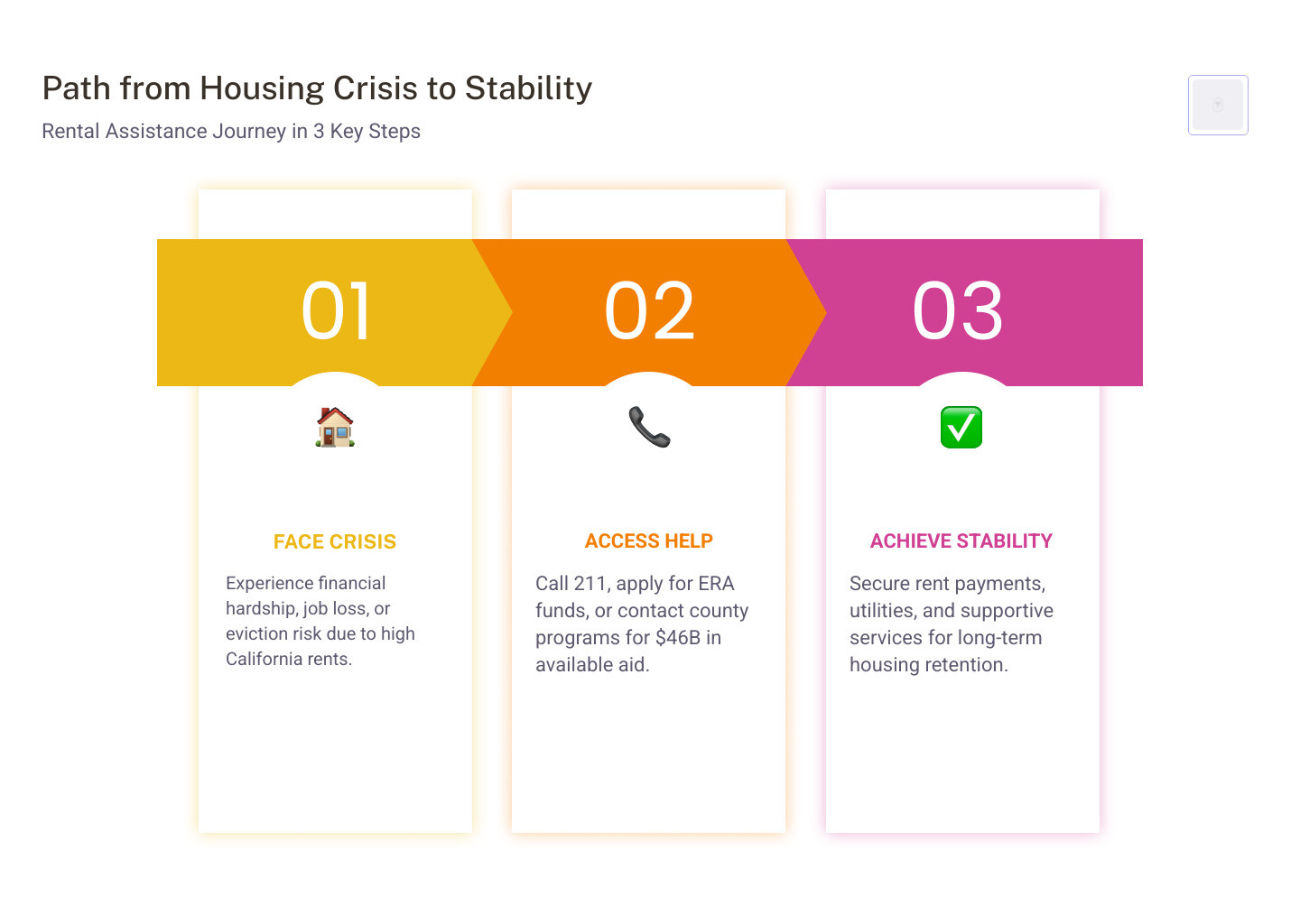
Simple rental assistance social services word guide:
Understanding Federal and State Rental Assistance Social Services
Navigating government funding can feel like trying to read a map in the dark, but the Treasury’s Emergency Rental Assistance (ERA) programs have been a lighthouse for millions. As of April 2026, these programs have collectively provided communities with over $46 billion to support housing stability.
The program was rolled out in two phases: ERA1, which provided $25 billion for financial assistance and housing stability services, and ERA2, which added another $21.55 billion. While the period of performance for ERA2 technically ended in late 2025, many participating governments in California continue to leverage these funds to prevent evictions. These programs haven’t just been about writing checks; they’ve driven lasting reforms in how rental assistance social services are delivered, ensuring that aid reaches those who need it most.
In California, these federal dollars are often distributed through local initiatives like the LA County Rent Relief Program. These programs are designed to be equitable, often prioritizing households with the lowest incomes or those who have been unemployed for long periods.
Federal oversight remains strict to ensure these funds are used correctly. There are clear reporting mechanisms for fraud, waste, or discrimination. If you believe a program is acting unfairly, you can report concerns to the local disbursing agency or the Treasury Office of Inspector General. Civil rights protections are also a cornerstone of these services; any found discrimination can lead to the deferral or denial of federal funding for that program.
Who Qualifies for Rental Assistance Social Services?
Eligibility isn’t a one-size-fits-all calculation. Most programs use the Area Median Income (AMI) to determine who qualifies. Generally, households earning 80% or less of the AMI are eligible, but many programs prioritize those at or below 50% or even 30% AMI.
To qualify for most rental assistance social services, you typically need to meet three main criteria:
- Financial Hardship: You must demonstrate a loss of income or significant increase in expenses (like medical bills) that makes it difficult to pay rent.
- Housing Instability: You must show you are at risk of experiencing homelessness or housing instability, often evidenced by a past-due rent notice or an eviction summons.
- Residency: You must live in the area served by the program, such as being a resident of the area covered by San Diego County rental assistance.
Documentation is the “key” to unlocking these funds. You will likely need to provide:
- Proof of identity (government-issued ID).
- A copy of your current lease or rental agreement.
- Income verification (pay stubs, tax returns, or benefit letters).
- Documentation of the hardship (an eviction notice or utility shut-off letter).
Navigating Rental Assistance Social Services for Veterans and Seniors
For specific groups, the path to stability often involves more than just a rent check. Veterans, for instance, face unique challenges. We recognize that for a veteran, housing is the foundation for health, income, and community. In our specialized veteran support programs, we see a 95% housing retention rate among veteran residents. This is achieved by pairing stable homes with integrated services.
Seniors also require specialized attention. Many are on fixed incomes and may need disability accommodations or “low-barrier” housing that doesn’t require them to navigate stairs or complex digital application portals.
| Feature | Short-Term Crisis Aid | Permanent Supportive Housing |
|---|---|---|
| Primary Goal | Prevent immediate eviction | Long-term stability for vulnerable groups |
| Duration | Usually 3 to 18 months | Indefinite with lease |
| Support Services | Referrals and one-time help | On-site counseling, healthcare, and peer support |
| Best For | Temporary financial shocks | Veterans with disabilities or chronically homeless seniors |
Local Resources and Application Processes in California
If you are standing in your kitchen wondering what to do next, the first step is often the 211 network. In 2025 alone, the 211 network made over 19 million referrals to help and resources, with 9.1 million of those specifically for housing, homelessness, and utility bills. It is a confidential, expert service that operates 24/7.
In Southern California, local governments have established robust portals. For instance, the Riverside County rental assistance program and the City of Irvine rental assistance initiatives provide localized support.

When you apply, keep the timeline in mind. While some emergency programs can process applications quickly, others may take 30 to 60 days depending on the volume of requests. Many California programs now offer status tracking through online portals, so you don’t have to spend hours on hold to find out where your application stands. Language access is also a priority; most California agencies provide applications and support in multiple languages, including Spanish, Mandarin, and Tagalog.
Beyond Rent: Comprehensive Support for Housing Stability
At LifeSTEPS, we believe that staying in your home is about more than just the four walls; it’s about the life you build inside them. This is why rental assistance social services are often part of a larger “wraparound” support system.
One major hurdle for many is the security deposit. Through the CalAIM program, we can help with deposit assistance, typically covering one month paid in advance to help you secure a new, stable environment. But our support doesn’t stop at the front door.
Housing stability is inextricably linked to education and personal growth. We are proud to share that our youth programs have seen a 97% literacy improvement through summer reading initiatives. Furthermore, we’ve helped students reach for the stars by awarding $2.1 million in scholarships for higher education. When a family is stable, the children can focus on their books rather than where they will sleep.

We also assist with:
- Utility Assistance: Helping pay for electricity, water, and gas arrears to keep the lights on.
- Energy Assistance: Connecting you with programs like LIHEAP for long-term bill reduction.
- Eviction Prevention: Providing more info about eviction prevention to help you understand your legal rights as a tenant.
Our human-centered approach has led to a 93% housing retention rate. We don’t just want to help you through this month; we want to help you achieve long-term self-sufficiency and even homeownership.
Frequently Asked Questions about Rental Assistance
What documentation is typically required to apply for rental assistance?
You will generally need a government-issued ID, a signed lease agreement, proof of income (like a W-2 or pay stubs), and a “notice to quit” or eviction notice from your landlord. If you are applying for utility help, have your most recent past-due bill ready.
How long does the application process take for California programs?
Timelines vary by county. In high-demand areas like Los Angeles or San Diego, the review process can take 30 to 45 days. However, if you have an active court date for eviction, many programs have “expedited” tracks to help you before your hearing.
Can rental assistance cover utility arrears and security deposits?
Yes. Most federal and state-funded rental assistance social services are designed to cover “housing-related expenses.” This includes rent arrears, current rent, utility arrears, and, in many cases, security deposits—especially through programs like CalAIM which can provide one month paid in advance for a deposit.
Conclusion
Facing a housing crisis is one of the most stressful experiences a person can endure, but the systems in place today are more robust than ever. With a 93% housing retention rate, we have seen that with the right combination of financial aid and human-centered support, stability is possible.
Whether you are a veteran looking for a supportive community or a family trying to bridge a gap after a job loss, these resources are for you. You have earned the right to a safe, stable home. For more info about our programs and services, we encourage you to explore our resources or contact us for more information.
We are here to walk beside you on the path to self-sufficiency. Don’t pack those bags just yet—help is a click away.
LifeSTEPS currently provides services in California only.


