


Finding the Funds to Keep Your Front Door Locked
Finding the Funds to Keep Your Front Door Locked
When the Rent Is Due and the Money Isn’t There
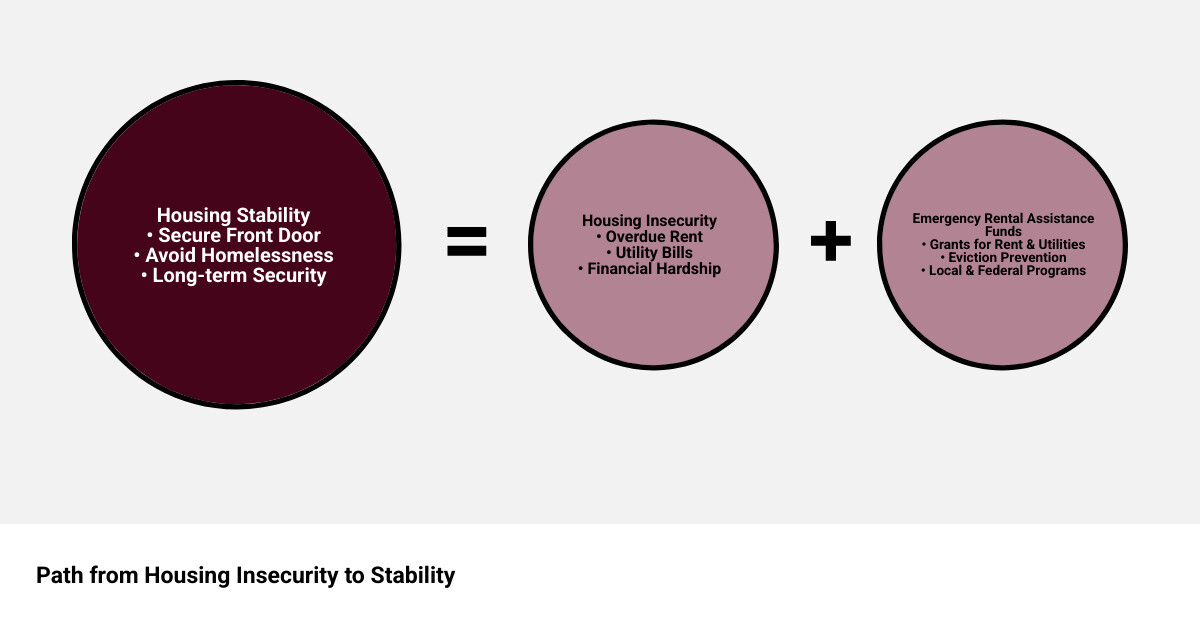
Emergency rental assistance funds are grants — not loans — that help renters cover overdue rent, utility bills, and other housing costs when they can’t afford to pay.
Here is a quick look at where to start:
- Call 211 — the top resource for housing help in the U.S., connecting millions of people each year to local rental assistance programs
- Search your city or county — most ERA funds were distributed locally, so your best options are often nearby
- Check income eligibility — most programs serve households at or below 80% of the Area Median Income (AMI)
- Gather your documents — a current lease, proof of income, and evidence of hardship are typically required
- Act quickly — available funds are limited, and processing can take several weeks
If you are a veteran transitioning to civilian life, housing instability can feel like one more battle. You are not alone. Finding and keeping stable housing is one of the hardest parts of that transition — and one of the most important.
The numbers make that clear. Across the U.S., 211 receives more requests for housing help than for any other type of assistance. In 2019 alone, 211 services made 5 million connections to resources for people facing homelessness or housing insecurity. The COVID-19 pandemic made an already difficult housing landscape even harder for millions of Americans, including veterans rebuilding their financial footing after service.
The good news: real help exists. Federal, state, and local programs have provided over $46 billion in emergency rental assistance since 2021 — and many California-based programs remain active today.
LifeSTEPS currently provides services in California only.
Easy emergency rental assistance funds word list:
- first month rent security deposit assistance
- help with security deposit and 1st months rent
- help with bond and deposit
Understanding Federal and State Emergency Rental Assistance Funds
When the world slowed down in 2020, the federal government stepped in with a massive financial safety net. This net was woven from two primary pieces of legislation: the Consolidated Appropriations Act of 2021 (which created ERA1) and the American Rescue Plan Act of 2021 (which created ERA2). Together, these programs funneled billions of dollars into communities to ensure that a temporary loss of income didn’t lead to a permanent loss of a home.
For many of our neighbors in California, these emergency rental assistance funds were the difference between a locked front door and a night on the street. At LifeSTEPS, we have seen how these funds act as a bridge, moving people from a moment of crisis toward long-term emergency rent assistance and self-sufficiency.
How ERA1 and ERA2 Supported Housing Stability
The U.S. Treasury Department didn’t just write checks to individuals; they distributed over $46 billion to states, territories, local governments, and Tribal nations. This localized approach meant that the money could be managed by people who understood the specific needs of their own communities—whether that was in the high-rent districts of San Francisco or the growing neighborhoods of Riverside.
The impact of these programs is hard to overstate:
- 10 million assistance payments: These payments went directly to landlords and utility companies on behalf of struggling renters.
- Eviction prevention: By covering back rent (arrears), the programs stopped the eviction process before it could even reach a courtroom.
- Equitable recovery: The Treasury reported that these funds were particularly effective in supporting low-income renters and renters of color, who were disproportionately affected by the economic downturn.
By focusing on those at the highest risk, the official ERA impact metrics show a historic decline in eviction filings compared to pre-pandemic years. It proved that when we invest in housing stability, we invest in the health of the entire community.
The Current Status of Federal Funding
While the initial surge of federal funding was a lifeline, it is important to know that these programs have specific expiration dates. The “period of performance” for ERA2 funds generally runs through September 30, 2025. This means that while some areas have already exhausted their funds, others are in a “closeout” phase where they are processing the final remaining dollars.
In California, this transition means the focus has shifted from state-wide portals to local city and county administration. If you are looking for help today, you need a guide to finding rent relief near you that focuses on your specific zip code. Many local governments in San Diego and Los Angeles are still leveraging the last of these federal dollars or have transitioned to state-funded programs to keep the support flowing.
Eligibility and Coverage for Emergency Rental Assistance Funds
One of the most common questions we hear is: “Do I qualify?” While every local program has its own quirks, the federal government set a baseline that most California programs still follow. The goal is to help those who are most vulnerable to losing their housing.
Generally, emergency rental assistance funds are reserved for households that meet three main criteria:
- Income Limits: Your household income must typically be at or below 80% of the Area Median Income (AMI). In high-cost areas like San Francisco, this number might be higher than you expect, so it is always worth checking.
- Financial Hardship: You must be able to show that you have experienced a financial hardship, such as a loss of a job, reduced hours, or significant medical expenses.
- Housing Instability: You must demonstrate that you are at risk of homelessness or housing instability, which can often be shown by a past-due rent notice or a utility shut-off warning.
Qualifying for Emergency Rental Assistance Funds
Beyond the basic income requirements, many programs prioritize households that are at the greatest risk. For example, if your income is below 50% of the AMI or if someone in your home has been unemployed for 90 days or more, your application might be moved to the front of the line.
We often work with veterans who are navigating these exact challenges. For a veteran, financial instability can be a hurdle to the stability they earned through their service. Our California renters emergency help guide emphasizes that having a valid lease and being a U.S. citizen or “qualified non-citizen” are standard requirements for these funds.
How to Apply for Emergency Rental Assistance Funds
The application process can feel overwhelming, but being prepared makes it much smoother. Think of it like a checklist for your future stability. You will generally need:
- Proof of Identity: A government-issued ID.
- Proof of Income: Pay stubs, tax returns, or a letter from an employer.
- Lease Agreement: A signed document showing how much you owe and to whom.
- Evidence of Hardship: An eviction notice, a late rent letter, or utility bills showing a past-due balance.
Many modern programs use secure verification tools like ID.me to prevent fraud and ensure the money goes to those who truly need it. If you are feeling stuck, our step-by-step guide to free rent assistance can help you gather what you need before you hit “submit.” Processing can take a few weeks, so the best time to apply was yesterday—the second best time is right now.
Navigating Rental Assistance in California
California has been a leader in creating its own protections and funding pools to supplement federal efforts. The California Department of Housing and Community Development (HCD) managed a massive state-wide program that assisted over 371,000 households and distributed more than $4.7 billion. While that state-wide portal has largely closed to new applications, the infrastructure it built remains.
Through legislation like Senate Bill 91, California ensured that emergency rental assistance funds were distributed fairly. This included protections for tenants that prevented landlords from evicting them while their application was still being processed. For a more comprehensive guide to California emergency rental assistance, it is essential to look at how your specific city is handling its remaining allocations.
Local Programs in Los Angeles and San Diego
In Southern California, the scale of the need led to the creation of robust local programs.
- Los Angeles: The LA County Rent Relief Program has been a vital resource, focusing on high-need areas where renters are most at risk of displacement. If you are finding help with rent in Los Angeles, you will find that the city and county often run separate but complementary programs.
- San Diego: The San Diego County Rental Assistance programs have utilized federal dollars to help thousands of families. They often prioritize those with an active eviction notice to prevent immediate homelessness.
In the Bay Area, San Francisco has its own ERAP (SF ERAP) which focuses on the unique challenges of one of the most expensive rental markets in the country. No matter where you are in California, the key is to look for “Option B” programs—these are locally administered programs that have their own application portals and rules.
Security Deposit Assistance and CalAIM
At LifeSTEPS, we know that sometimes the barrier isn’t just the monthly rent—it’s getting into a home in the first place. This is where your guide to rental aid for deposits becomes so important. Through the CalAIM program, we are able to help eligible individuals with housing transition services.
This support can include:
- Security Deposits: Helping you cover that large upfront cost.
- First Month’s Rent: We can often provide 1 month paid in advance for deposit assistance to help you secure a lease.
- Utility Set-up: Ensuring the lights and water are on the day you move in.
Our focus is on long-term success. We are proud to share that our participants have a 93% housing retention rate. This means that once we help someone get into a home, they almost always stay there. By combining financial aid with human-centered support, we help people build a foundation that lasts.
Immediate Resources and Legal Protections for Renters
If you are facing an immediate crisis—like a notice on your door or a shut-off tag on your meter—you don’t have weeks to wait for a federal grant. You need help today. Fortunately, there are “first responder” resources for housing emergencies that every renter should know about.
Programs like eviction prevention programs and lifelines are designed to step in when the situation is urgent. These might not always provide a $10,000 grant, but they can provide the legal advice or the few hundred dollars needed to stop a crisis from escalating.
Contacting 211 for Housing Emergencies
We cannot say it enough: Call 211. This is the most effective way to find out what is happening in your neighborhood right now. 211 operators have a real-time database of local charities, churches, and government offices that have “ready-to-go” funds.
In 2019, 211 services made over 5 million connections to housing resources. Whether you need a local food pantry to save money for rent or a referral to a last minute guide to financial help, 211 is the gateway. It is free, confidential, and available 24/7. It is the best starting point for anyone who isn’t sure where to turn next.
Understanding Your Rights Against Eviction
Financial help is only one side of the coin; legal protection is the other. Many renters don’t realize that they have rights under federal and state law that protect them from aggressive or deceptive practices.
- FDCPA (Fair Debt Collection Practices Act): If a debt collector (including some lawyers or agencies collecting back rent) is harassing you or being deceptive, they are breaking the law.
- Tenant Screening: You have the right to see your tenant screening report and dispute any errors. An incorrect eviction filing on your record can make it nearly impossible to find a new home.
- Legal Aid: Most major California cities have legal aid societies that provide free help to low-income renters.
Our eviction prevention services overview highlights that a “notice to quit” is not the same as an eviction order from a judge. You have time to seek help, and in many cases, programs can negotiate with your landlord to keep you in your home.
Frequently Asked Questions about Emergency Rental Assistance
Navigating emergency rental assistance funds can feel like learning a new language. Here are the most common questions we hear from people trying to find their way.
| Feature | Federal ERA (Treasury) | Utility Assistance (LIHEAP) |
|---|---|---|
| Primary Use | Back rent, future rent, and utilities | Heating and cooling bills |
| Income Limit | Usually 80% AMI or lower | Usually 150% of federal poverty level |
| Duration | Up to 18 months (total) | Seasonal or one-time emergency |
| Application | Local city/county portal | Local community action agency |
Is the federal ERA program still accepting applications?
It depends on where you live. While the state-wide “Housing Is Key” portal in California is closed, many local cities (like Los Angeles and San Diego) received their own direct allocations from the Treasury. Some of these programs are still active, while others open in “windows” when new funding becomes available. Always check your local county housing authority website for the most current status.
What expenses can emergency rental assistance cover?
The funds are surprisingly flexible. They can cover:
- Past-due rent (arrears) dating back to March 2020.
- Future rent (usually in 3-month increments).
- Utility and home energy costs (electricity, gas, water, trash).
- Other housing-related expenses, such as relocation costs or hotel stays if you were displaced.
How do I find help if I have an eviction notice?
If you have a physical eviction notice, time is of the essence. Call 211 immediately and mention that you have an “active notice.” This often moves you into a priority category for local funds. You should also contact a legal aid organization to ensure your rights are being protected during the court process.
Conclusion
At LifeSTEPS, we believe that a stable home is the foundation for everything else—health, education, and a sense of belonging. Our mission is to provide the human-centered support that turns a house into a permanent home. We don’t just help with the paperwork; we walk alongside our clients as they transition to self-sufficiency.
Our results speak for themselves. We maintain a 93% housing retention rate among the people we serve. But our impact goes beyond just keeping the lights on. We are invested in the future of our communities:
- Education: We have seen a 97% literacy improvement through our Summer Reading programs.
- Higher Ed: We have awarded over $2.1M in scholarships to help residents reach their academic goals.
- Veteran Stability: Through collaboration with programs like FSS (Family Self-Sufficiency), we help veterans move from renting to the dream of homeownership.
If you are struggling to make ends meet, these programs were created for you. Whether you need first month rent and security deposit assistance or just a bit of guidance on where to turn, there is a path forward. You’ve fought your battles; let us help you win this one for your home.
LifeSTEPS currently provides services in California only.


