


The Essential Guide to the Health & Wellbeing Coach Role
The Essential Guide to the Health & Wellbeing Coach Role
What a Health & Wellbeing Coach Actually Does (And Why It Matters)
A health & wellbeing coach is a personal guide who helps you make real, lasting changes to your lifestyle — covering everything from nutrition and sleep to stress management and physical activity.
Here’s the quick answer:
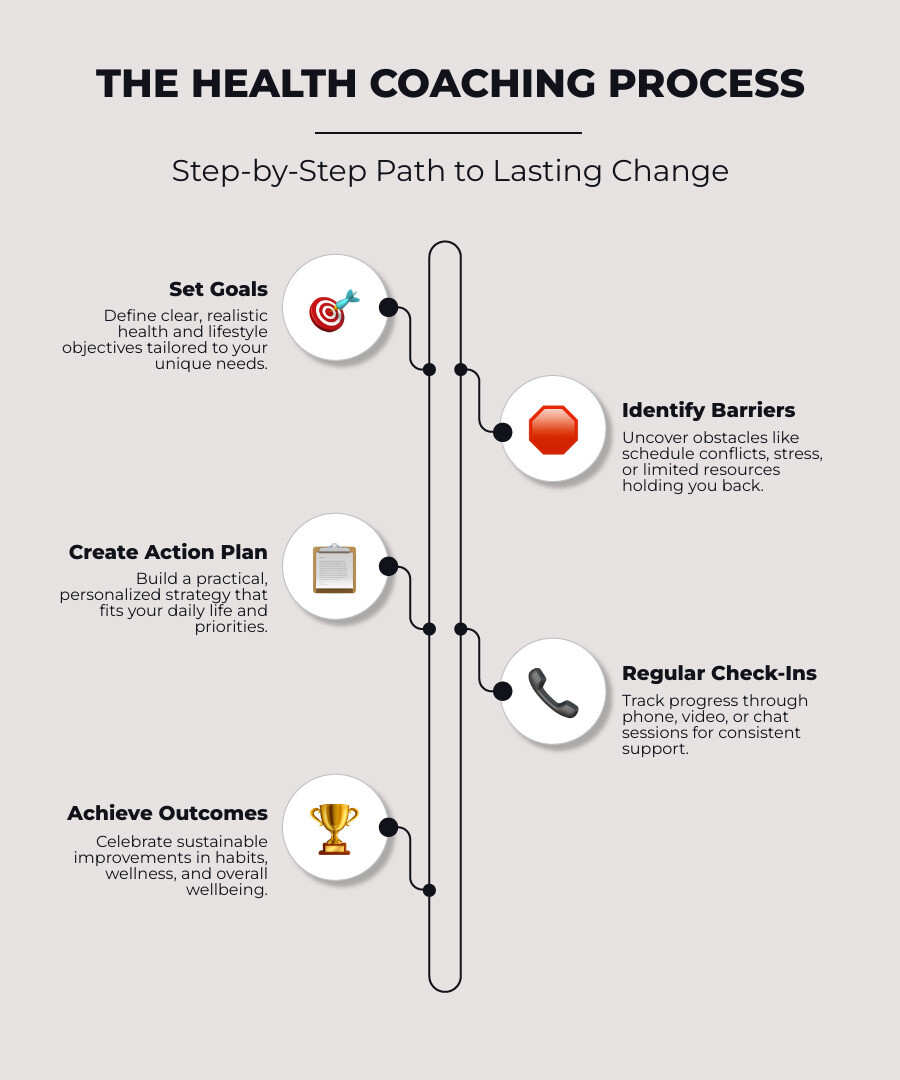
- A health & wellbeing coach helps you set goals, identify what’s blocking you, and build a realistic plan
- They focus on your life — your schedule, your barriers, your priorities
- They don’t tell you what to do — they help you figure out what works for you
- Sessions typically run over at least three months, with regular check-ins by phone, video, or chat
- They address not just personal habits, but also social factors like food access, stress, and life transitions
For veterans transitioning to civilian life, those challenges can feel overwhelming — new routines, new pressures, and often very little support. A health & wellbeing coach can be the steady, non-judgmental partner that helps you move forward, one step at a time.
Think of it this way: your doctor tells you to eat more vegetables. But if you’re working two jobs and don’t know where to start, how do you actually do that? That’s exactly the gap a health & wellbeing coach fills — not by lecturing you, but by asking the right questions and helping you build a plan that fits your real life.
Easy health & wellbeing coach glossary:
What is a Health & Wellbeing Coach?
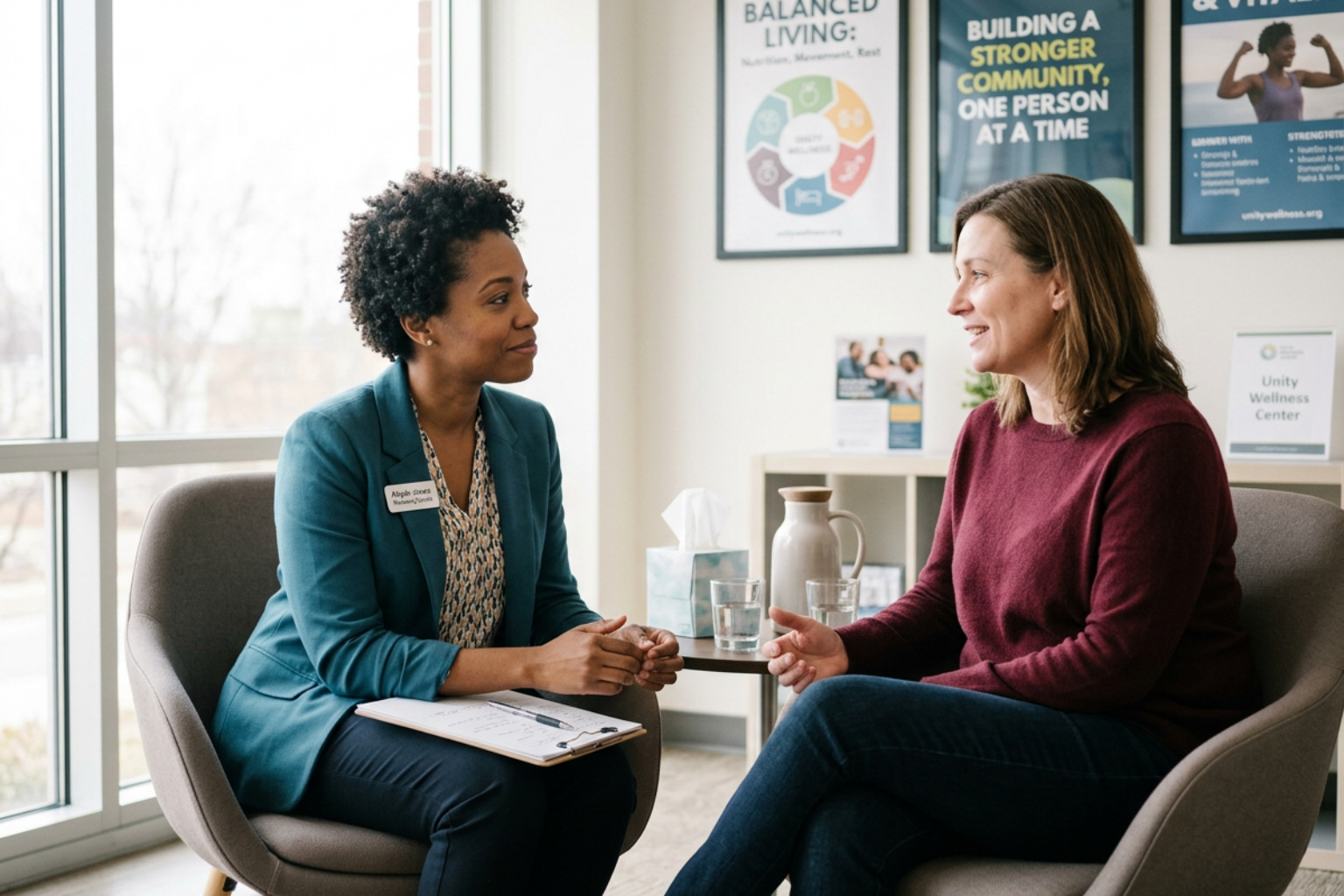
At its core, a health & wellbeing coach serves as your personal health guide, mentor, and supporter. Unlike a doctor who might spend fifteen minutes with you to diagnose a condition, a coach walks alongside you for the long haul. They help you unlock your best self by focusing on lifestyle changes that improve both physical and emotional health.
In many cases, a primary care provider may suggest working with a coach to help you meet specific medical goals, such as lowering blood pressure or managing weight. We see this as a partnership: the doctor provides the “what” (the medical goal), and the coach helps you figure out the “how” (the daily habits).
Defining the Scope of Practice
A health & wellbeing coach provides non-clinical support. This means they don’t prescribe medication or diagnose illnesses. Instead, they use “reflective questioning” to help you find your own answers. If you’re looking for an integrative health coach near me, you’re looking for someone who builds your “self-efficacy”—your belief in your own ability to succeed. They aren’t there to give orders; they are there to help you build sustainable habits that last a lifetime.
Addressing Social Drivers of Health
We know that health isn’t just about willpower. Often, the environment we live in creates hurdles. A coach helps you navigate “social drivers of health.” For example, if you are experiencing food insecurity, it’s hard to follow a strict diet. If your neighborhood lacks sidewalks, finding safe exercise options becomes a challenge.
Coaches help you look at the big picture, including self-care priorities and community resources, to ensure your plan is actually doable in your current situation.
The Daily Impact of a Health and Wellness Coach
What does a coach actually do all day? Their day is filled with active listening and strategy. They help clients move through a health coaching assessment to see where they currently stand. From there, they act as an accountability partner.
On a daily basis, a coach might:
- Help a client break a large goal into tiny, manageable “action plans.”
- Identify barriers (like lack of time or childcare) and brainstorm workarounds.
- Conduct regular check-ins to celebrate wins and troubleshoot setbacks.
- Provide education on nutrition and physical activity without being overbearing.
Supporting Youth through a Health & Wellbeing Coach
In California, there is a growing movement to support our younger generation. Through the Certified Wellness Coach Website, we see a new role emerging to support youth behavioral health. These coaches provide non-clinical services like wellness promotion, screenings, and care coordination. They are often the first line of defense, offering crisis referrals and helping kids navigate the stresses of school and home life.
Navigating Life Transitions with a Health & Wellbeing Coach
Life transitions are when our health often takes a backseat. Whether it’s military family support during a deployment, the chaos of new parenting, or the shift into retirement, these moments are stressful. A medical life coach or wellness coach helps you maintain your health through relocation stress and changing roles, ensuring you don’t lose yourself in the transition.
Key Benefits and Evidence-Based Outcomes
The results of coaching aren’t just “feel-good” metrics; they are measurable. Research shows that working with a coach can lead to significant improvements in blood pressure, cholesterol management, and blood sugar levels.
| Feature | Health & Wellbeing Coach | Traditional Medical Advice |
|---|---|---|
| Primary Focus | Behavioral change and lifestyle | Diagnosis and treatment |
| Duration | Long-term (3-6+ months) | Short, periodic visits |
| Approach | Collaborative goal-setting | Directive instructions |
| Social Factors | Addresses barriers like food/housing | Focuses primarily on clinical data |
Long-Term Behavioral Change
Most people can stick to a diet for a week. The challenge is sticking to it for a year. This is why many medical coaching services suggest a 90-day foundation. This period allows for true habit modification and resilience building. Working with a private health coach ensures that when life gets hard, you have a system in place to stay on track.
Workplace and Organizational Wellness
Organizations are increasingly investing in employee wellbeing. By hiring a business coach for health coaches or implementing wellness programs, companies see better stress regulation and improved biometric outcomes among their staff. It’s a win-win: employees feel better, and the organization thrives.
Professional Pathways and Certification in California
If you’re looking to become a coach, the path is rigorous. High-quality credentials like NASM (National Academy of Sports Medicine) or the NBHWC (National Board for Health & Wellness Coaching) are the gold standard. In fact, 100% of NFL and NBA teams trust NASM-credentialed professionals.
For those interested in the details of training, you can check the NASM FAQ or look into the More Information on Board Certification provided by the NBME.
California’s Certified Wellness Coach (CWC) Initiative
California is leading the way in making these services accessible. As of January 1, 2025, Certified Wellness Coach (CWC) services are billable as a Medi-Cal benefit under the Children & Youth Behavioral Health Initiative (CYBHI). This is a massive step in ensuring that youth behavioral health support isn’t just for those who can afford it out-of-pocket. You can learn more about how this works via the Fee Schedule program.
Financial Incentives and Scholarships
To build this workforce, California offers the Wellness Coach Scholarship Program. Eligible students can receive up to $35,000 in exchange for a 12-month service obligation in California. Additionally, employer support grants help organizations hire and retain these vital professionals.
Frequently Asked Questions about Health Coaching
How does coaching differ from therapy?
While both involve talking and personal growth, therapy often focuses on healing past trauma or treating diagnosable mental health conditions. Health coaching is “forward-facing”—it focuses on setting goals and changing current behaviors to reach a future health state.
Are health coaching services covered by insurance in California?
Yes, increasingly so! With the recent CMS approval, many CWC services are now covered under Medi-Cal for youth. Some private insurers also offer “wellness credits” or reimbursements for board-certified coaches.
How long does a typical coaching program last?
While you can have a single consultation, real change usually takes time. Most programs last between 3 to 6 months, with some clients choosing to keep a coach for a year or more to navigate different life stages.
Conclusion
At LifeSTEPS, we understand that health is the foundation of stability. Whether we are helping a veteran achieve homeownership or supporting a family in transition, the principles of coaching—setting goals, identifying barriers, and building resilience—are at the heart of what we do.
We are proud of our community impact, including a 93% housing retention rate for those we serve. By focusing on measurable outcomes and human-centered support, we help Californians move toward self-sufficiency. From our 97% literacy improvement in summer reading programs to providing over $2.1M in scholarships, we believe in investing in people.
If you are ready to take the next step in your journey, we invite you to Discover our programs and services.
LifeSTEPS | Phone: (916) 965-2110 | lifestepsusa.org
LifeSTEPS currently provides services in California only.


