


The Golden Years, Golden Deals: Finding Low-Income Senior Housing
Who Qualifies for Senior Housing Low Income — and What Are Your Options?
Senior housing low income programs help older adults on fixed incomes find safe, stable, and affordable places to live. Here is a quick overview of the main options available:
- HUD Section 202 — Affordable apartments for seniors 62+ earning less than 50% of the Area Median Income (AMI)
- Section 8 Housing Choice Vouchers — Rental assistance you can use at participating private landlords
- Low-Income Housing Tax Credit (LIHTC) properties — Apartments with capped rents for seniors earning up to 50–60% AMI
- Public housing — Government-owned units with income-based rents
- Shared housing and co-ops — Lower-cost alternatives with added social benefits
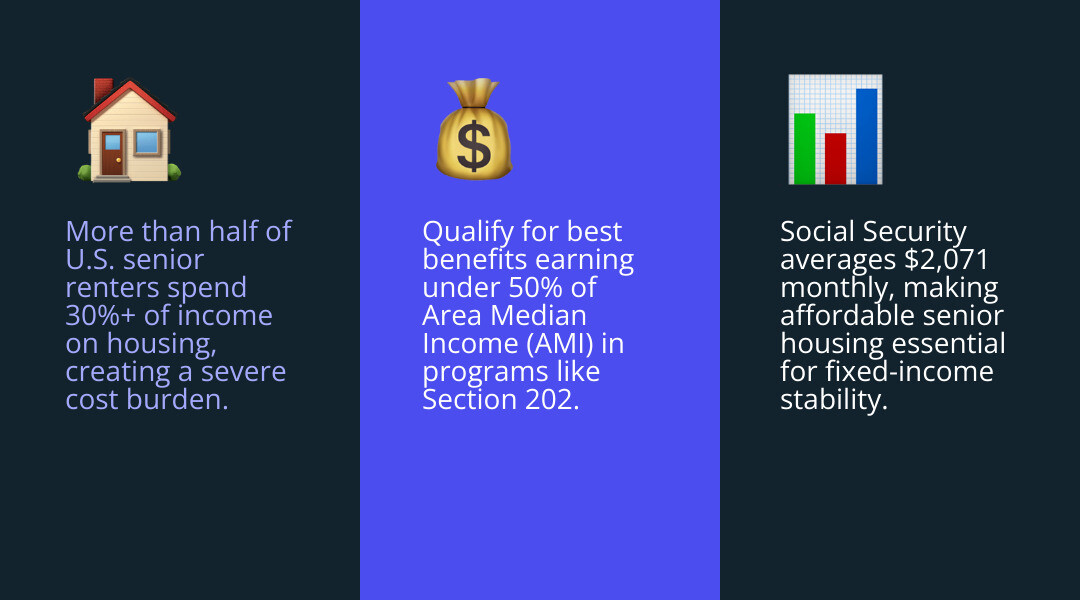
To qualify for most programs, you generally need to be 62 or older (55+ for some communities) and earn below 80% of your local AMI — with the best benefits reserved for those under 50%.
Housing costs are squeezing millions of older Americans. More than half of senior renters in the U.S. spend 30% or more of their monthly income on housing — a threshold experts call a “housing cost burden.” For veterans transitioning to civilian life, or anyone living on a fixed income like Social Security (which averages just $2,071 per month in 2026), finding affordable housing is not just a financial challenge — it is a matter of stability and dignity.
The good news is that real options exist. Federal programs, state resources, and affordable senior housing in California can make a meaningful difference — and knowing where to look is the first step.
LifeSTEPS currently provides services in California only.
Easy Senior housing low income word list:
- affordable independent living facilities
- cheap assisted living facilities
- cheap assisted living facilities near me
Understanding Eligibility for Senior Housing Low Income
Navigating affordable housing can feel like learning a new language. However, at its heart, eligibility for low income elderly housing is built on a few core pillars: how much you make, how old you are, and where you live.

The “Golden Rule” of housing affordability is the 30% rule. This means that a household should aim to spend no more than 30% of its gross monthly income on housing costs, including rent and utilities. When a senior spends more than that, they are considered “cost-burdened,” which often leads to difficult choices between paying rent or buying groceries and medication. With more than 58% of senior renters currently facing this burden, understanding how programs calculate eligibility is vital.
Income Limits and HUD Standards
The Department of Housing and Urban Development (HUD) sets specific income limits every year based on the Area Median Income (AMI). These limits vary significantly depending on your county. For example, in 2025, the “very low-income” limit for a single person in Maricopa County was $39,300, while in high-cost areas of California like Los Angeles or San Diego, these numbers are adjusted upward to reflect local living costs.
Generally, HUD categorizes applicants into three tiers:
- Low Income: Earning less than 80% of the AMI.
- Very Low Income: Earning less than 50% of the AMI.
- Extremely Low Income: Earning less than 30% of the AMI.
Most federal information for senior citizens emphasizes that the most substantial subsidies are reserved for those in the “very low” and “extremely low” categories. If your primary income is Social Security, you likely fall into one of these brackets.
Age and Disability Requirements
Age is the second major qualifying factor. While many private “active adult” communities start at age 55, most federal subsidy programs, such as Section 202, specifically require at least one member of the household to be 62 years or older.
However, there is an important exception for those with disabilities. Many low-income senior apartments also open their doors to younger adults (often 18+) who have documented physical or developmental disabilities. If you or a loved one are in this situation, our affordable housing disabled seniors guide provides deeper insights into how these specific programs operate to ensure accessibility and safety.
Federal and State Programs for Senior Housing Low Income
Once you know you qualify, the next step is identifying which “bucket” of funding or program fits your lifestyle. California offers a variety of paths, ranging from large-scale apartment complexes to individual vouchers you can take to a private landlord.
For residents in areas like Riverside or Irvine, local resources such as Senior Resources – Housing.LACounty.gov can provide a direct line to current openings and county-specific assistance.
HUD Section 202 Supportive Housing
The Section 202 program is perhaps the most famous “senior-only” housing initiative. HUD provides capital advances to private, non-profit organizations to finance the construction of these buildings. Because these are non-profit-led, the focus is often heavily on supportive services.
Residents in Section 202 housing typically pay exactly 30% of their adjusted income for rent. If you make $1,500 a month, your rent would be roughly $450. These communities often feature on-site coordinators who help seniors arrange for transportation, meals, and even light housekeeping. For a deeper dive into how to find these specific properties, check out our low income senior housing guide.
Housing Choice Vouchers and LIHTC
If you don’t want to live in a dedicated “senior building,” the Section 8 Housing Choice Voucher (HCV) program might be a better fit. This program gives you a voucher that pays a portion of your rent to any private landlord who accepts it. The catch? The waitlists for Section 8 can be years long in cities like San Diego or Los Angeles.
Alternatively, many newer affordable senior housing California developments use the Low-Income Housing Tax Credit (LIHTC). Unlike Section 8, where the subsidy follows the person, in LIHTC properties, the subsidy is tied to the apartment. The rents are capped at a specific dollar amount based on the AMI (often 50% or 60% AMI limits). For instance, a property might limit its residents to those earning up to $52,140 for a single person, ensuring that middle-to-low-income seniors aren’t priced out of their neighborhoods.
Creative and Alternative Affordable Housing Options
Traditional apartments aren’t the only way to find a deal. As the “Silver Tsunami” of retiring baby boomers grows, creative housing models are becoming more popular across California.
These options often provide more than just a roof; they offer a cure for the social isolation that many seniors face when living alone. You can unlock affordable independence options for senior living that won’t break the bank by looking beyond the standard high-rise.
Shared Housing and Roommate Matching
Shared housing is exactly what it sounds like: two or more seniors living in a large home, each with their own bedroom but sharing common areas like the kitchen and living room. This can save a senior an average of $750 per month compared to renting a solo apartment.
Non-profit services often facilitate “roommate matching,” where social workers screen participants and conduct background checks to ensure safety. This is a fantastic way to find low cost senior independent living while gaining a built-in social circle and someone to share the utility bills with.
Virtual Communities and Multigenerational Living
A “Virtual Retirement Community” allows you to stay in your current home while paying a small annual fee (often around $1,200/year) to access a network of support. These “villages” provide transportation to doctor appointments, social mixers, and vetted contractors for home repairs.
Additionally, multigenerational living is making a massive comeback. Many families are choosing to move in together, with grandparents helping with childcare in exchange for housing stability. This “mutual benefit” model is a cornerstone of senior living affordable housing strategies that focus on family unity.
Navigating the Application Process for Senior Housing Low Income
Applying for Senior housing low income is rarely a “one-and-done” task. It requires patience, organization, and a bit of strategy.
Section 8 vs. Section 202: A Quick Comparison
| Feature | Section 8 (Vouchers) | Section 202 (Supportive) |
|---|---|---|
| Who pays the landlord? | Public Housing Authority (PHA) | HUD (via non-profit) |
| Where can you live? | Any landlord who accepts it | Specific senior-only buildings |
| Portability | Can move with you | Tied to the building |
| Support Services | Usually none | On-site coordinators |
| Income Limit | Usually 50% AMI | 50% AMI |
To start your journey, we recommend using our low income senior housing no waiting list guide to see if any local properties have immediate openings—though be prepared, as “no waitlist” is rare in California.
Managing Waitlists and Documentation
When you find a property you like, get on the waitlist immediately. Some waitlists are “open,” meaning anyone can apply, while others are “closed” and only open for a few days every year.
Pro-Tip: Always ask about “priority status.” You may move up the list faster if you are a veteran, currently homeless, or being displaced by a natural disaster. Keep all your documents ready: Social Security award letters, bank statements, and a valid ID. For a localized search, the near me guide to affordable senior apartments can help you identify Public Housing Authority (PHA) portals in your specific California county.
Finding Local Resources in California
If you are looking for senior living apartments based on income near me, start with these regional hubs:
- Los Angeles: Check the LACDA Project-Based Voucher listings.
- San Diego: Visit the San Diego Housing Commission (SDHC) website for affordable rental listings.
- Riverside & Irvine: Use local city housing departments which often maintain lists of income-restricted senior complexes like those in Natomas or Irvine.
Supportive Services and Financial Stability
At LifeSTEPS, we believe that housing is only the foundation. To truly thrive, seniors need supportive services that help them maintain that housing for the long haul.
We are proud to highlight that our approach leads to a 93% housing retention rate. By connecting residents with the right resources, we ensure that a temporary financial hiccup doesn’t lead to an eviction. For those needing help with initial costs, we can sometimes tie deposit assistance (typically 1 month paid in advance) to programs like CalAIM, helping seniors move into affordable homes for seniors without the stress of a massive upfront payment.
Budgeting on a Fixed Income
In 2026, the average Social Security benefit is $2,071. While that might sound like a lot in some parts of the country, in California, it requires careful management. Successful budgeting often involves:
- Utilizing In-Home Supportive Services (IHSS) for help with laundry and meals.
- Accessing energy assistance programs to lower utility bills.
- Choosing housing where utilities are included in the rent.
Learning to retire rich and live cheap is about maximizing every dollar through these often-overlooked community benefits.
Veteran and Disability Support
Veterans have access to a unique tool: the HUD-VASH voucher. This combines Section 8 rental assistance with case management and clinical services provided by the Department of Veterans Affairs (VA).
For seniors with disabilities, permanent supportive housing is the gold standard. These units are designed with accessibility in mind—think elevators, walk-in showers, and emergency pull-cords. Programs like those offered by various non-profits in San Diego and Los Angeles focus on low income housing for elderly and disabled individuals, ensuring that physical limitations never stand in the way of a comfortable home.
Frequently Asked Questions about Senior Housing
Does Medicare or Medicaid cover housing costs?
Generally, no. Medicare does not pay for “room and board” in independent or assisted living. However, in California, the Medi-Cal program (Medicaid) may cover the care services provided within certain facilities, even if it doesn’t pay the rent itself.
How long are the typical waitlists for low-income apartments?
In California, waitlists can range from six months to several years. It is common for seniors to apply to 5–10 different buildings at once to increase their chances of a call-back.
Can I use Social Security to pay for senior housing?
Absolutely. Most low-income housing programs count Social Security (SSI or SSDI) as valid income. Since your rent is often capped at 30% of that check, it remains the most common way seniors afford their apartments.
Conclusion
Finding Senior housing low income in California is a journey that requires persistence, but the rewards—stability, community, and peace of mind—are worth the effort. At LifeSTEPS, we are committed to the human-centered support that makes these transitions possible.
Our impact goes beyond just housing. We are dedicated to lifelong learning and community growth, as seen in our 97% literacy improvement in our summer reading programs and the $2.1M in scholarships we’ve helped facilitate for residents. Whether you are a veteran seeking a fresh start or a senior looking to find low-cost senior independent living options, you don’t have to navigate this path alone.
Visit our website for more information: LifeSTEPSusa.org
LifeSTEPS currently provides services in California only.


