


How to Secure Low-Income Veteran Housing Near You
How to Secure Low-Income Veteran Housing Near You
How HUD-VASH Helps Veterans Access Affordable Housing
HUD-VASH is a federal program that combines rental assistance with supportive services to help homeless veterans find and keep stable housing. Here is a quick overview of how it works:
What HUD-VASH offers:
- A Housing Choice Voucher (HCV) that covers the gap between what you can afford and market rent
- Case management and clinical services through the VA
- Access in all 50 states, including California
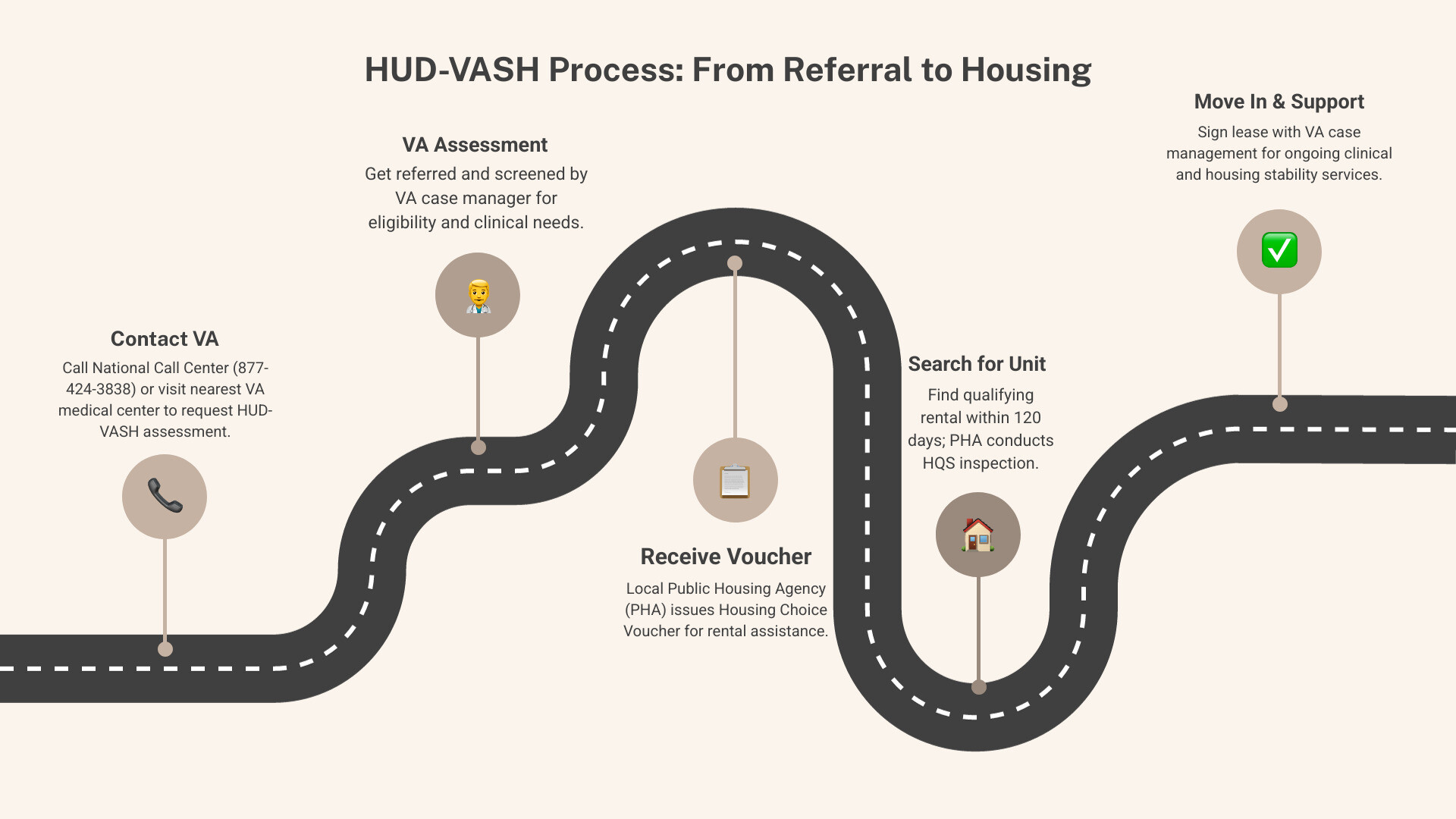
How to access HUD-VASH in 4 steps:
- Contact your nearest VA medical center and ask about HUD-VASH
- Get referred and assessed by a VA case manager
- Receive your voucher from a local Public Housing Agency (PHA)
- Find a qualifying rental unit and move in
If you are a veteran who is homeless or at risk of losing housing, you can also call the National Call Center for Homeless Veterans at 877-424-3838, available 24/7.
Since 2008, HUD has awarded over 116,000 HUD-VASH vouchers nationwide. Right now, more than 110,000 are being administered by over 700 PHAs — with 81,000 actively under lease. The program has become one of the most effective tools available for ending veteran homelessness.
For veterans transitioning out of service and into civilian life, navigating housing systems can feel overwhelming. This guide breaks it all down so you know exactly what to do next.
Understanding the HUD-VASH Program and How It Works
At its core, the HUD-VASH program is a collaborative effort between two major federal departments: the U.S. Department of Housing and Urban Development (HUD) and the U.S. Department of Veterans Affairs (VA). While HUD provides the funding for rental vouchers, the VA provides the essential case management and clinical services that help veterans stay housed long-term.
In California, where the cost of living in areas like San Diego, Los Angeles, and Riverside can be incredibly high, this program serves as a vital lifeline. Unlike standard Housing Choice Vouchers (HCV), which often have years-long waiting lists, HUD-VASH vouchers are specifically set aside for veterans. This means the path to a permanent home is often faster and more direct for those who have served.

The program operates under the “Housing First” model. This philosophy suggests that people are better able to address other life challenges—such as finding a job or managing a health condition—once they have a safe, stable place to live. By providing a Permanent Housing For Veterans, we can create a foundation for total wellness.
To learn more about the formal structure of these benefits, you can view the Official HUD-VASH Program Overview.
Who is Eligible for hud-vash?
Eligibility for the HUD-VASH program is determined primarily by the VA. To qualify, a veteran must generally meet three main criteria:
- Homeless Status: The veteran must meet the legal definition of homeless, which includes living in a place not meant for human habitation, staying in an emergency shelter, or facing imminent loss of housing.
- VA Health Care Eligibility: Typically, the veteran must be eligible for VA health care services. However, recent updates have expanded access. For example, veterans with Other Than Honorable (OTH) discharges are now often eligible for these vouchers, which is a major step forward in ensuring no one is left behind.
- Clinical Need for Case Management: Because this is a supportive housing program, the VA looks for veterans who would struggle to maintain housing without professional support. This might include those dealing with physical disabilities, mental health challenges, or substance use recovery.
Participating in the program requires an agreement to work with a VA case manager. This partnership is what makes the program so successful; it isn’t just about paying the rent—it’s about providing the Supportive Housing Veterans Complete Guide to ensure the veteran thrives.
Income Limits and Screening for hud-vash Participants
While the VA handles the clinical side, the local Public Housing Agency (PHA) handles the financial side. The PHA will screen applicants for two primary things:
- Income Limits: The veteran’s household income must not exceed 50% of the Area Median Income (AMI) for the county where they want to live. Interestingly, the standard HCV rule that requires 75% of new vouchers to go to “extremely low-income” families (those at 30% AMI) does not apply to HUD-VASH, giving the program more flexibility to help a wider range of veterans.
- Criminal Background: Unlike regular vouchers, PHAs are prohibited from screening HUD-VASH applicants for most criminal history. The only mandatory disqualification is if a household member is subject to a lifetime registration requirement under a state sex offender registration program.
This lower barrier to entry is designed to help those who have struggled the most. If you are looking for more details on general assistance, check out our guide on Veteran Rent Assistance Programs.
Step-by-Step Guide to Applying for Veteran Housing Assistance
The journey from homelessness to a new apartment involves several key players. We often see veterans who are unsure where to start, but the process is actually a very structured hand-off between the VA and the PHA.
Step 1: The Initial Contact Your first move should be to contact the VA. You can do this by visiting a VA Medical Center (VAMC) or a Community-Based Outpatient Clinic (CBOC) in cities like Irvine or Riverside. If you can’t get there in person, call the National Call Center for Homeless Veterans at 877-424-3838.
Step 2: The Clinical Assessment A VA social worker or case manager will meet with you to determine your eligibility. They will look at your housing history, your health needs, and your willingness to participate in case management. If they determine you are a good fit, they will refer you to the local PHA.
Step 3: The Voucher Briefing Once the PHA receives the referral, they will invite you to a briefing. This is where you learn the “rules of the road”—how much rent the voucher covers, how to find a landlord, and what your responsibilities are as a tenant.
Step 4: The Housing Search With your voucher in hand, you begin looking for a place. In high-demand markets like San Diego or Los Angeles, finding a landlord who accepts vouchers can take time. Fortunately, HUD-VASH provides a longer search window than regular vouchers.
For more localized help, you can search for Veteran Rent Assistance Near Me.
Navigating the Public Housing Agency (PHA) Process
The PHA is your administrative partner during your tenancy. They are responsible for making sure the unit you choose is safe and that the rent is fair.
- The 120-Day Search: While standard vouchers often give you 60 days to find a home, HUD-VASH rules typically grant an initial 120-day search period. This extra time is crucial in the competitive California rental market.
- HQS Inspections: Before you can move in, the PHA must conduct a Housing Quality Standards (HQS) inspection. They check for things like working smoke detectors, proper plumbing, and safe electrical systems.
- Security Deposits: One of the biggest hurdles is the upfront cost. At LifeSTEPS, we work with programs like CalAIM to help veterans with these costs. Specifically, we can help secure the required 1 month of rent paid in advance for deposit assistance. This is a gamechanger for someone moving off the streets with no savings.
Understanding these steps is key to Government Assistance For Homeless Veterans. If you are struggling with the initial move-in costs, read our resource on Veterans Help With Security Deposit.
Supportive Services and Portability Rules
The “secret sauce” of the HUD-VASH program is the ongoing support. You aren’t just handed a key and left alone. A VA case manager will visit you regularly to help you stay on track.
What Supportive Services Look Like
Supportive services are tailored to what you need. For a veteran like Robert (whose name has been changed), this meant help setting up medical appointments for a chronic back injury and connecting with a local support group for PTSD. Other services include:
- Mental health and substance use counseling
- Financial literacy and budgeting help
- Job training and placement assistance
- Crisis intervention
These services are often delivered at VAMCs or clinics. For a deeper look at these resources, visit the VA Homeless Programs Resource.
Portability: Can You Move?
“Portability” is the ability to take your voucher and move to another area. Under HUD-VASH, portability works a little differently than regular Section 8:
- Within the Catchment Area: You can generally move anywhere as long as your current VA case manager can still provide services to you.
- Outside the Catchment Area: If you want to move to a different county or even a different state, the receiving area must have an available HUD-VASH voucher and a VA case manager who can take you into their caseload.
This ensures that you never lose the supportive services that are vital to your stability. If you need a temporary place to stay while waiting for a voucher, you might consider Transitional Housing For Veterans.
Funding Impact and Landlord Opportunities
The hud-vash program is an investment that pays off. As of April 2026, the program continues to see expanded funding because it works. In 2024 alone, HUD awarded approximately $40 million for over 3,500 additional vouchers.
| Feature | HUD-VASH Voucher | Standard Housing Choice Voucher |
|---|---|---|
| Referral Source | VA Medical Center | PHA Waiting List |
| Case Management | Required (VA) | Not Required |
| Search Time | 120 Days (Initial) | 60 Days (Initial) |
| Income Targeting | Exempt from 75% ELI Rule | Subject to 75% ELI Rule |
| Screening | Sex Offender Registry Only | Full Criminal/Credit Screening |
The Role of the Landlord
Landlords are the backbone of this program. Without property owners in Riverside or Irvine willing to participate, the vouchers are just pieces of paper. Fortunately, there are many benefits for landlords, including:
- Reliable Payments: The government portion of the rent is direct-deposited every month.
- Pre-Screened Tenants: Veterans are already working with the VA, meaning there is a professional point of contact if any issues arise.
- Low Vacancy Rates: With so many veterans looking for housing, units rarely stay empty for long.
Tribal HUD-VASH
It is also important to note the Tribal HUD-VASH program, which provides rental assistance and supportive services specifically to Native American veterans who are homeless or at risk of homelessness on or near reservations and other tribal areas. This ensures that our indigenous heroes receive the same level of care and dignity.
Frequently Asked Questions about HUD-VASH
How long is the initial housing search period?
Under HUD-VASH operating requirements, the initial term of the voucher must be at least 120 days. This is twice as long as the 60 days typically allowed for standard vouchers, giving veterans a better chance to find a suitable home in tight markets.
Can I move my voucher to a different county?
Yes, this is called “porting.” However, because HUD-VASH requires case management, the area you move to must have a VA medical center with an available case management slot. You must coordinate this move with your current VA case manager before you sign a new lease.
Does the program support veterans with families?
Absolutely. HUD-VASH is not just for individual veterans. The voucher amount is based on the size of the entire household, and the VA provides supportive services that can benefit the whole family unit.
Conclusion
At LifeSTEPS, we believe that every veteran deserves a place to call home. Our commitment to the veteran community is reflected in our 93% housing retention rate, a statistic we are incredibly proud of. We don’t just help people find an apartment; we help them build a life.
Through our collaboration with programs like the Family Self-Sufficiency (FSS) initiative, we help veterans move beyond subsidized housing toward the goal of true homeownership. We also provide critical “gap” services, such as our Summer Reading program which has seen a 97% literacy improvement among the children in our communities, and we have awarded over $2.1M in scholarships to help residents reach their educational goals.
If you are a veteran in California, we are here to support you. Whether it’s through LifeSTEPS Supportive Services or helping you navigate the CalAIM deposit assistance process, our team is dedicated to your success.
Visit our website to learn more: LifeSTEPS
LifeSTEPS currently provides services in California only.


