


The Ultimate List of Eviction Prevention Grants and Legal Aid
The Eviction Crisis Is Real — Here’s Where to Find Help
Eviction prevention grants are funding programs that help low-income renters — including veterans — stay housed by covering legal aid, rental arrears, and supportive services. Here are the most important ones to know:
- HUD Eviction Protection Grant Program (EPGP) — Funds free legal assistance for tenants earning 80% or below Area Median Income (AMI) who are at risk of or facing eviction
- Emergency Rental Assistance (ERA) — State and local programs that cover rent and utility arrears (note: ERA2 has ended; check the CFPB interagency housing portal for current alternatives)
- SSVF (Supportive Services for Veterans and Families) — VA-funded grants for rapid rehousing and eviction prevention specifically for veterans
- Illinois Homeless Prevention Program — State-level assistance capped at six months of rent or mortgage value (contact your state’s equivalent agency)
- HUD-VASH — Permanent supportive housing vouchers for veterans, functioning similarly to Section 8
The scale of the eviction crisis in the United States is hard to overstate. Each year, 7.6 million tenants face the threat of losing their home, and 3.9 million are formally evicted through a court order. Millions more are pushed out through informal means — lockouts, threats, and pressure — that never appear in any court record.
For veterans transitioning to civilian life, housing instability hits especially hard. The loss of military structure, combined with financial pressure and unfamiliar systems, can make it difficult to know where to turn or what help even exists.
The good news: targeted eviction prevention grants and legal aid programs can make a real difference. As of September 2024, EPGP grantees alone have helped over 44,000 households — with 92% seeing a measurable benefit after receiving legal services.
This guide breaks down the programs available, who qualifies, and how to access support before a crisis becomes a displacement.
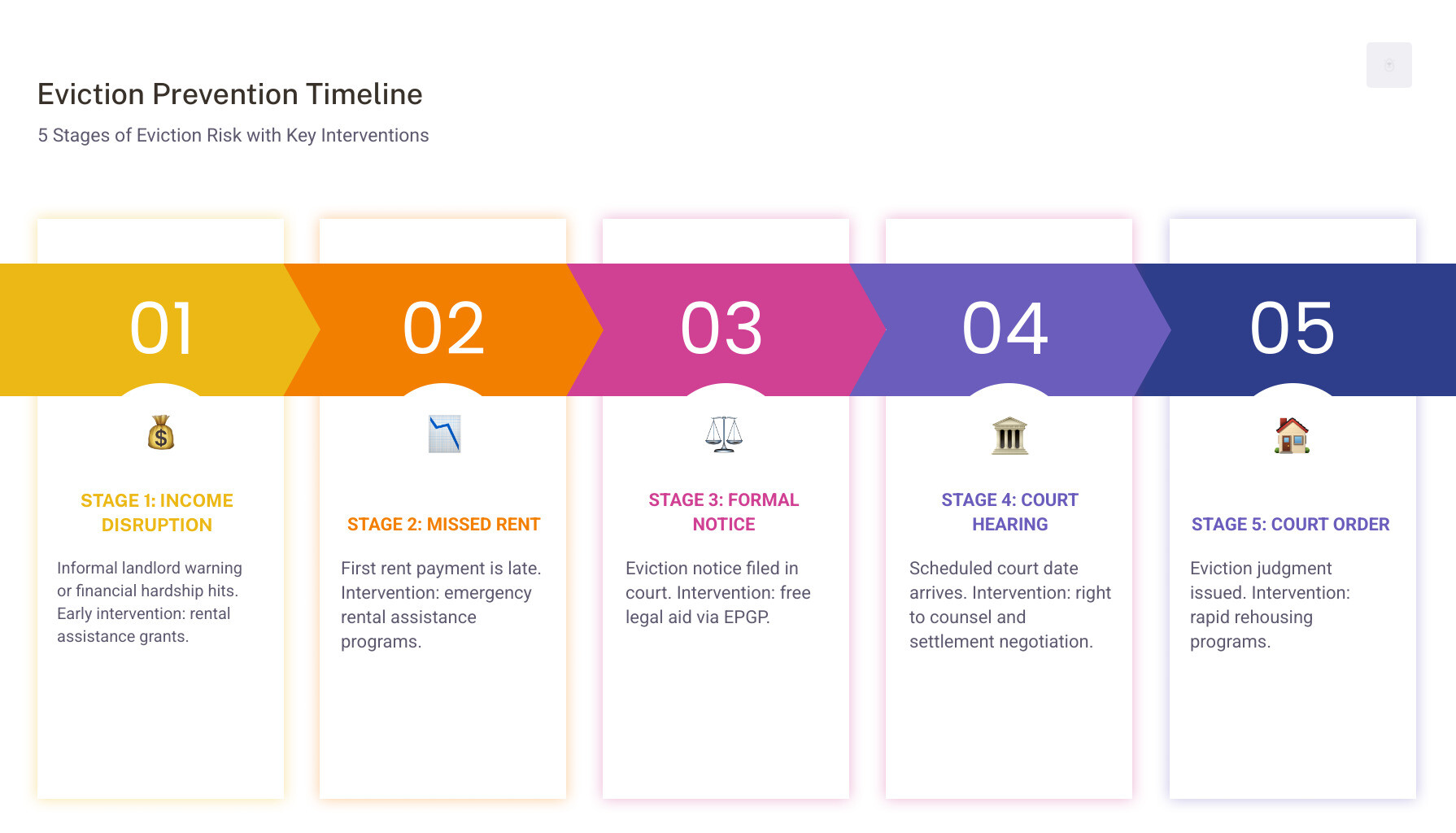
Must-know eviction prevention grants terms:
Understanding Federal Eviction Prevention Grants and the EPGP
When we talk about federal efforts to keep people in their homes, the Eviction Protection Grant Program (EPGP) is the heavy hitter. Launched by HUD in 2021, it was the first federal program of its kind specifically designed to provide no-cost legal assistance to low-income tenants.
The logic is simple but powerful: in eviction court, about 83% of landlords have a lawyer, while only 4% of tenants do. That “legal aid gap” is a major reason why so many families end up on the street. EPGP aims to level the playing field.
The program has been a massive success, but the demand is staggering. In the most recent funding cycle, over 230 applicants requested more than $234 million in grants — that is nearly six times the amount of money actually available. This shows just how much our communities in Los Angeles, San Diego, and the Bay Area need these resources.
As of late 2024, EPGP grantees have served over 44,000 households across the country. The results are heartwarming: 92% of households who received these legal services saw a measurable benefit. Whether it was staying in their home, getting more time to move, or having their eviction records sealed, these grants provided a lifeline when it was needed most.

How to Qualify for Eviction Prevention Grants
To benefit from eviction prevention grants like the EPGP, there are a few key eligibility bars you need to clear. Generally, these programs are designed for “low-income” households, which HUD defines as those earning 80% or less of the Area Median Income (AMI).
However, you don’t necessarily need to have a formal court summons in your hand to seek help. Many of these grants allow for early intervention. You might qualify if you are at risk of displacement due to:
- A sudden loss of income or medical emergency.
- An informal “notice to quit” or a warning from your landlord.
- Living in a high-eviction area where displacement is common.
We believe that getting help early is the best way to stay stable. If you wait until the sheriff is at the door, your options become much narrower. By accessing eviction prevention services the moment you realize you can’t make rent, you increase your chances of a positive outcome.
Integrating Eviction Prevention Grants with Supportive Services
At LifeSTEPS, we have seen that a roof over your head is just the beginning. True housing stability requires a holistic approach. That is why we integrate housing support with other vital services.
For example, we work with the CalAIM program to provide deposit assistance for those transitioning into new homes. This is a critical piece of the puzzle because even if you find an affordable apartment, the “move-in costs” (first month, last month, and security deposit) can be an impossible barrier for someone starting over.
Our commitment to our clients shows in the data: we maintain a 93% housing retention rate. This means that nearly everyone we help get into a home is still there a year later. We achieve this by looking at the whole person, not just their rent check.
This human-centered support extends to the next generation too. We know that children in stable homes do better in school. Our Summer Reading program has seen a 97% literacy improvement among participating youth. Furthermore, we have helped students secure over $2.1 million in scholarships to pursue higher education. When a family doesn’t have to worry about an eviction notice, they can finally start dreaming about a college degree.
Top California Programs for Rental Assistance and Stability
While federal grants provide the framework, much of the actual help happens at the local level. If you live in one of our service areas like Los Angeles, San Diego, San Francisco, Riverside, or Irvine, there are specific programs you should look into.
The state also utilizes Homeless Housing, Assistance and Prevention (HHAP) grants to fund local jurisdictions. These funds are flexible and allow cities to create programs that fit their specific needs, whether that is emergency shelters or long-term rental subsidies.
For our veteran neighbors, the California Department of Veterans Affairs (CalVet) is an essential resource. They offer advocacy and assistance that can be paired with federal grants to ensure those who served our country aren’t left behind.
| City | Program Name | Primary Focus |
|---|---|---|
| Los Angeles | EAPE Program | Emergency cash assistance for CalWORKs families at risk of homelessness. |
| San Diego | Eviction Prevention Program (EPP) | Legal representation and education for tenants facing eviction. |
| San Francisco | SF ERAP | Financial assistance for rent arrears and move-in costs for high-risk households. |
| Riverside | CARES | Support for housing stability and emergency financial needs. |
| Irvine | State & Federal Grants | Local administration of emergency housing vouchers and stability services. |
Specialized Housing Support for Veterans and Families
Veterans often face unique challenges when it comes to housing. Transitioning from the structured environment of the military to the private rental market can be overwhelming. In California, there are specialized eviction prevention grants and housing resources designed to help veterans and their families stay housed.
The gold standard for veteran housing is the “Housing First” model. This philosophy prioritizes getting people into stable housing as quickly as possible without preconditions, then pairing housing with supportive services that help households stay stable.
Two major programs support this work:
- SSVF (Supportive Services for Veterans and Families): VA-funded grants awarded to community nonprofits. These funds can help with past-due rent, utilities, and other costs that can quickly trigger eviction risk.
- HUD-VASH: A partnership between HUD and the VA that provides a housing voucher (similar to Section 8) paired with VA case management.
For California veterans, the California Department of Veterans Affairs can be a helpful starting point for navigation and referrals.
Accessing Veteran-Specific Eviction Prevention Grants
Accessing these resources often starts through a local VA clinic or through a community-wide coordinated entry system. Coordinated entry is a shared process used by housing providers to prioritize help for people with the highest needs.
If you are unsure where to start, you can use the CFPB’s housing counselor search tool to find HUD-approved counseling support.
The Role of Legal Aid in Preventing Displacement
It is a hard truth: the law is complicated. When a landlord files an eviction, they are starting a legal process that moves very fast. Without a lawyer, most tenants feel like they have already lost before they even step into the courtroom.
This is why “Right to Counsel” is such a big deal. Several cities in California are moving toward making legal representation a right for tenants, just like it is for people accused of crimes.
When a tenant has an advocate, the outcomes change drastically. Data from the EPGP shows that when tenants receive extensive representation:
- Over 80% preserve their tenancy or prevent an eviction filing from ever happening.
- Fewer than 5% actually end up being evicted or displaced.
- Legal teams can negotiate settlements that waive back rent or give the family months of extra time to find a new place.
Legal aid isn’t just about winning in court; it’s about “record sealing.” An eviction on your record is like a “scarlet letter” that makes it almost impossible to rent a decent apartment in the future. A good lawyer can often get that record sealed so one mistake doesn’t haunt a family for a decade.
If you are facing a legal threat, you should contact the Legal Services Corporation to find free legal help in your area.
Frequently Asked Questions about Eviction Prevention
What is the Eviction Protection Grant Program (EPGP)?
The EPGP is a federal program managed by HUD that provides funds to legal aid organizations and nonprofits. These organizations then use the money to provide free legal services to low-income tenants who are at risk of eviction. It is designed to bridge the gap between landlords who have lawyers and tenants who do not.
Can I still apply for ERA2 rental assistance?
No. The period of performance for ERA2 (the second round of Emergency Rental Assistance) has officially ended. Grantees can no longer use those specific funds to assist renters. However, you should check the CFPB’s interagency housing portal to find current local programs that may have replaced ERA2 with different funding sources.
How do legal services help prevent an eviction?
Lawyers help in several ways. They can identify if a landlord is following the law (many evictions are filed improperly). They can negotiate with the landlord to create a payment plan for back rent. They can also represent you in court to ensure your rights are protected, and if you do have to move, they can negotiate for more time or a “neutral reference” so you can rent again.
Conclusion
At LifeSTEPS, we believe that every person deserves a stable place to call home. Whether you are a veteran transitioning to civilian life or a family facing a temporary financial crisis, eviction prevention grants and legal aid are essential tools to keep our communities whole.
Our mission is about more than just “preventing homelessness.” It is about providing human-centered support that allows people to thrive. With a 93% housing retention rate, we know that when you combine financial aid with compassionate case management, lives change.
If you are in Los Angeles, San Diego, San Francisco, Riverside, or Irvine and need help, please explore the resources we have discussed. You can also apply for eviction prevention support directly through our programs.
We are all in this together, and help is available.
LifeSTEPS | lifestepsusa.org


