


Unlock Your Front Door with FSS Homebuyer Education
Unlock Your Front Door with FSS Homebuyer Education
From Renter to Owner: What FSS Homebuyer Education Classes Can Do for You
FSS homebuyer education classes are structured courses that prepare Housing Choice Voucher (HCV) participants to transition from renting to owning a home — combining financial skills training with a certificate that lenders and down payment assistance programs require.
Here is a quick overview of how they work:
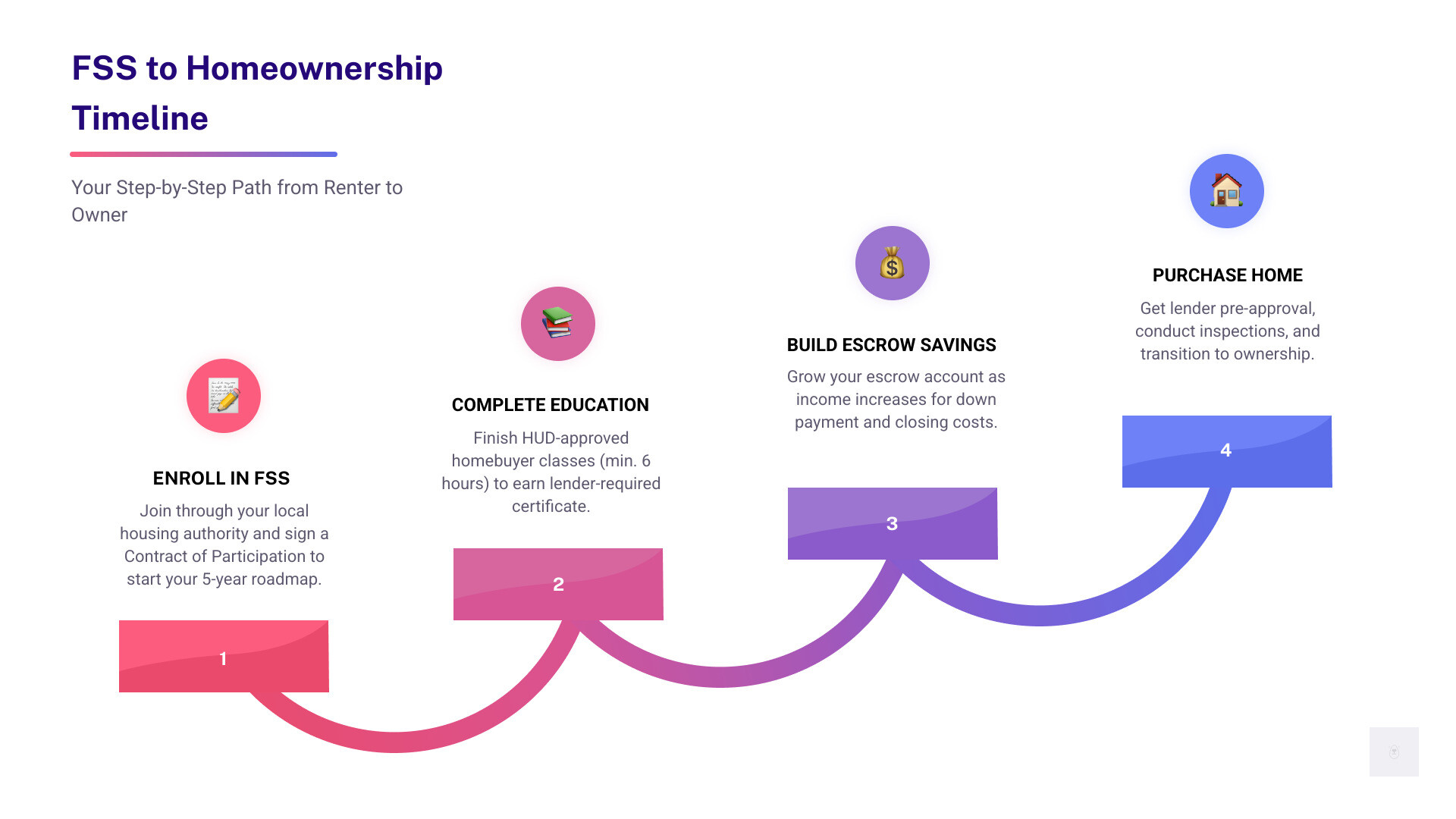
- Enroll in the FSS program through your local housing authority
- Complete a HUD-approved homebuyer education course (minimum 6 hours in a classroom setting, or self-paced online with a one-on-one counseling session)
- Earn your certificate of completion is required by most mortgage lenders and down payment assistance programs
- Build savings through your FSS escrow account as your income grows
- Work with a HUD-certified housing counselor to prepare for lender pre-approval and purchase
If you are a veteran working toward stability and long-term homeownership, this path is designed for people exactly like you. The FSS program does not just hand you a certificate, it builds the financial foundation underneath it. Your escrow account grows as your earnings grow, and that money can go directly toward a down payment, closing costs, or inspection fees when you are ready.
The process takes planning. FSS coordinators recommend completing homebuyer education at least two years before your target purchase date so you have enough time to build savings and strengthen your credit. Starting early is one of the most important moves you can make.
What is the Family Self-Sufficiency Program?
The Family Self-Sufficiency (FSS) program is a HUD-backed initiative designed to help families in subsidized housing increase their earnings and build lasting assets. For many of our neighbors in Los Angeles, San Diego, and Riverside, FSS is the primary bridge between receiving rental assistance and achieving the dream of homeownership.
When you join the program, you sign a Contract of Participation. This isn’t just paperwork; it’s a five-year roadmap to independence. You’ll work with a coordinator to set specific goals, such as obtaining suitable employment or becoming independent from welfare assistance. As explained in the HUD training on 1.2 What is FSS?, the program is voluntary and focuses on empowering you to take control of your financial future.
At LifeSTEPS, we see how this human-centered support changes lives. By coordinating with local housing authorities, we help participants navigate the complexities of goal setting and asset building. Whether you are a veteran or a family looking for stability, the FSS program provides the structure needed to move from a place of “getting by” to a place of “getting ahead.”
The Role of FSS Homebuyer Education Classes in Your Journey
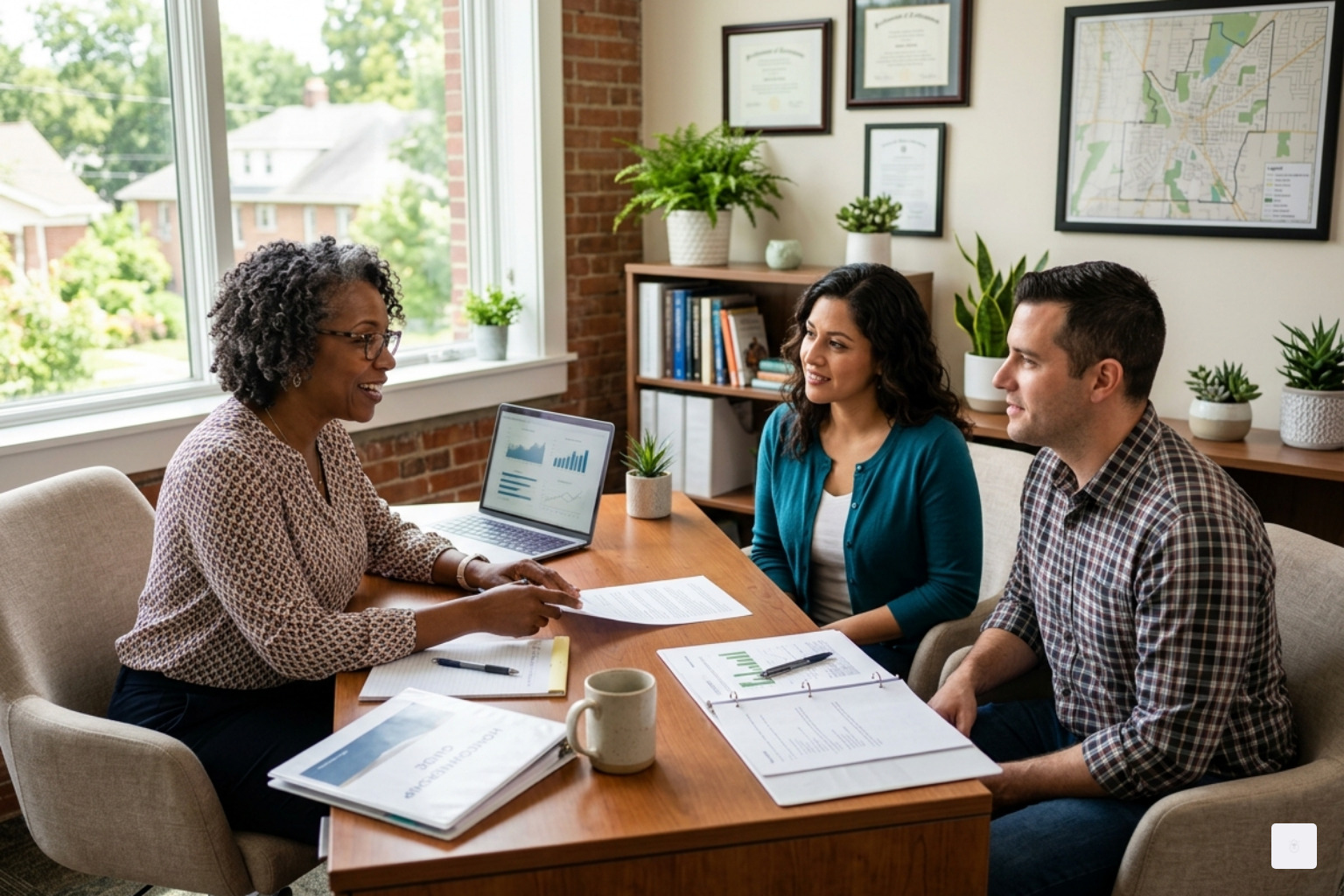
You might wonder why you need to go back to the “classroom” to buy a house. The truth is, the American mortgage system is complex. FSS homebuyer education classes serve as your guidebook. These classes are typically provided by HUD-certified housing counseling agencies and are designed to ensure you aren’t just buying a home, but keeping it for the long term.
These courses come in different flavors to fit your busy life:
- In-Person/Zoom Workshops: Often a minimum of 6 to 8 hours, spread over a few days or a full Saturday.
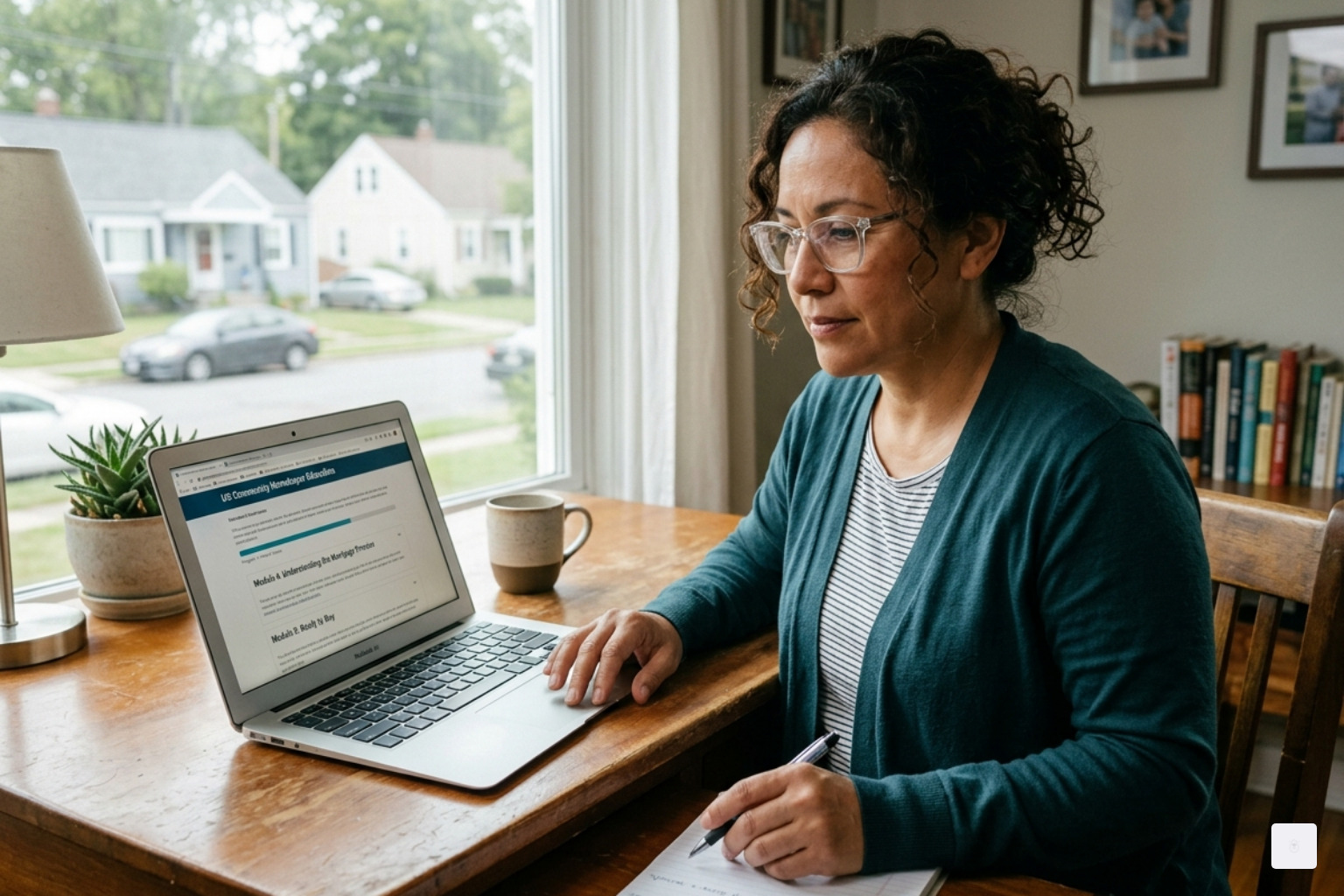
- Online Self-Paced Courses: Programs like Finally Home! Homebuyer Education allow you to learn at your own speed through interactive modules.
Once you finish the course and pass the required quizzes (usually with a score of 70% or higher), you receive a certificate of completion. This piece of paper is gold—it’s often a mandatory requirement for first-time homebuyer loans and local down payment assistance programs in California.
Why FSS Homebuyer Education Classes are Mandatory
Education is mandatory because it significantly reduces the risk of foreclosure. Research shows that buyers who complete these courses are more likely to stay on top of their mortgages and maintain their homes. According to Module 5.3: Homeownership and Other Housing Transitions, education helps participants understand the “true cost” of owning, which includes property taxes, insurance, and the occasional leaky roof.
Lenders also want to see that you understand the 4 Cs of credit: Capital, Capacity, Collateral, and Credit history. By completing FSS homebuyer education classes, you prove to the bank that you are a low-risk, informed borrower.
Curriculum Covered in FSS Homebuyer Education Classes
The curriculum is comprehensive. You won’t just talk about paint colors; you’ll dive deep into the mechanics of finance. Topics usually include:
- Budgeting and Credit: How to polish your credit score and manage a household budget.
- Mortgage Shopping: Understanding fixed vs. adjustable rates and how to avoid predatory lending.
- The Search: How to work with a Realtor and what to look for during a home inspection.
- Home Maintenance: Planning for repairs so they don’t become financial emergencies.
| Feature | Online (e.g., Finally Home!) | In-Person/Classroom |
|---|---|---|
| Duration | Self-paced (approx. 6-8 hours) | Minimum 6 hours |
| Flexibility | High – 24/7 access | Fixed schedule |
| One-on-One | Required 1-hour follow-up | Often included in class |
| Cost | Usually $70 – $100 | Often free or low-cost ($30) |
| Interaction | Digital quizzes/videos | Group discussion |
Leveraging the FSS Escrow Account for Homeownership
The “secret sauce” of the FSS program is the escrow account. In traditional subsidized housing, when your income goes up, your rent goes up, and you might feel like you can’t get ahead. FSS changes that.
As your earnings increase and your portion of the rent rises, the housing authority takes a portion of that increase and deposits it into a special savings account for you. This is called “escrow.”
For participants working with the Family Self-Sufficiency – SDHC – San Diego Housing Commission, this account becomes a powerful tool. By the time you graduate from the FSS program, you could have thousands of dollars saved. This money can be used for:
- Down Payments: Covering the initial cost of the home.
- Closing Costs: Paying the fees associated with finalizing the loan.
- Interim Disbursements: Sometimes, you can even access a portion of the funds early for specific goals, like repairing a car needed for work or paying for tuition.
Eligibility and Steps to Transition from Renting to Owning
Transitioning to homeownership is a marathon, not a sprint. In California locations like Irvine, Riverside, and San Diego, the market is competitive, so being prepared is vital.
Key Eligibility Requirements:
- Compliance: You must be in the FSS program and in compliance for at least one year.
- Employment: Most programs require at least one adult in the household to have one year of continuous full-time employment.
- First-Time Buyer Status: You generally cannot have owned a home in the last three years.
- Income Limits: Your income must fall within the “low to moderate” range for your specific county.
The Step-by-Step Process:
- Step 1: Counseling. Connect with a group like the First-Time Homebuyer – Fair Housing Council of Riverside County to get a baseline of your credit and finances.
- Step 2: Education. Complete your FSS homebuyer education classes and get your certificate.
- Step 3: Pre-Approval. Meet with an approved lender to see how much home you can afford.
- Step 4: The Hunt. Find a home that meets your needs and fits your budget.
- Step 5: Closing. Use your FSS escrow and any available down payment assistance to “unlock your front door.”
Frequently Asked Questions about FSS Homeownership
How do I find a HUD-approved housing counseling agency?
You can find a list of approved agencies on the HUD website or by asking your FSS coordinator. In California, many local nonprofits and housing authorities are certified to provide these services. Always ensure the agency is “HUD-Certified” to make sure your certificate will be accepted by lenders.
Can I use my Section 8 voucher for mortgage payments?
Yes! In many areas, including through the Tampa Housing Authority (as a reference for the model), there is a “Section 8 Homeownership Option.” This allows eligible families to use their monthly voucher subsidy toward a mortgage payment instead of rent. You must typically be an FSS graduate or a long-term participant to access this.
What happens to my escrow if I don’t buy a home?
If you graduate from the FSS program by meeting your employment and welfare-independence goals, the escrow money is yours to keep, regardless of whether you buy a home. You can use it for market-rate rental deposits, a new car, or your children’s education. However, if you leave the program without graduating, you may forfeit the funds.
Conclusion
At LifeSTEPS, we believe that everyone deserves a stable place to call home. Our mission is to provide human-centered support that leads to measurable outcomes—like our 93% housing retention rate and our commitment to providing over $2.1M in scholarships to help our residents reach their full potential.
By participating in FSS homebuyer education classes, you aren’t just learning about interest rates; you are investing in your family’s future. We are proud to collaborate with programs that empower veterans and families across California to achieve self-sufficiency.
If you’re ready to start your journey, reach out to your local housing authority and ask about FSS enrollment. Your front door is waiting to be unlocked.
LifeSTEPS currently provides services in California only.


