


10 Cheaper Alternatives to Affordable Senior Independent Living
10 Cheaper Alternatives to Affordable Senior Independent Living
When Senior Independence Costs Too Much: What You Need to Know
Affordable independent living for seniors is housing designed for older adults who can live on their own — without daily medical care — at a cost that fits a modest or fixed income. Here are the most common lower-cost options available:
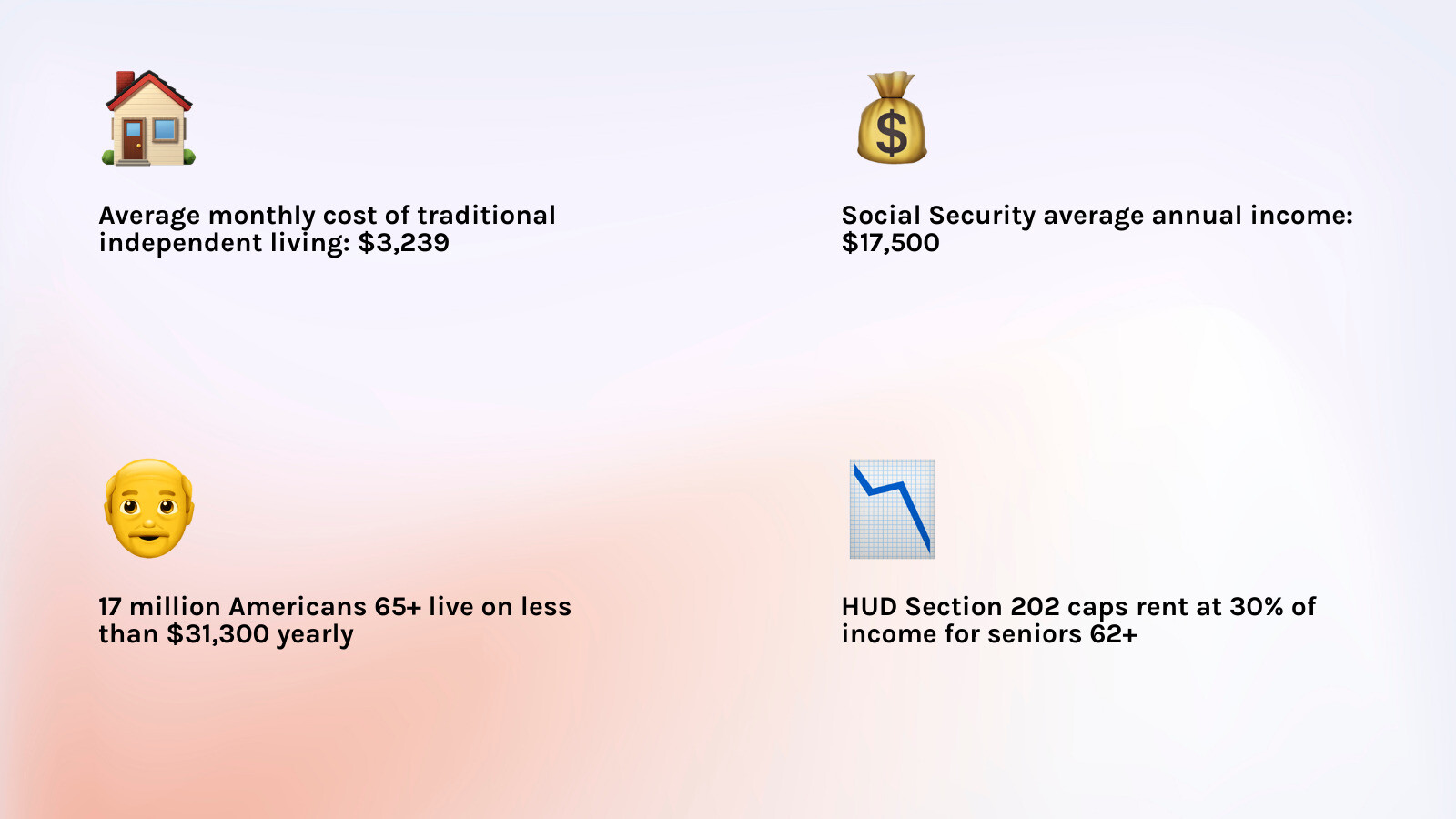
- HUD Section 202 housing — rent capped at 30% of your income, for adults 62+
- Section 8 Housing Choice Vouchers — subsidized rent in private housing
- Low-Income Housing Tax Credit (LIHTC) apartments — income-restricted units with below-market rents
- Senior co-ops — buy a share in a community for long-term stability at lower monthly costs
- Shared housing / roommate matching — split costs with a vetted housemate
- Virtual retirement communities — stay in your home with community support, often under $1,200/year
- Adult family homes — small licensed group homes with shared costs
- Accessory Dwelling Units (ADUs) — a separate unit on a family member’s property
- Multigenerational living — move in with family, with home modifications for accessibility
- Nonprofit-managed apartments — mission-driven communities with below-market rents
The challenge is real. Over 17 million Americans aged 65 and older are living on less than $31,300 a year. The average monthly cost of a standard independent living community runs around $3,239 — and for many seniors, especially veterans transitioning to civilian life, that number is simply out of reach on Social Security alone, which averages just over $17,500 annually.
This guide breaks down 10 genuine alternatives — and how to access them in California.
LifeSTEPS currently provides services in California only.
Terms related to affordable independent living for seniors:
Understanding the Costs of Independent Living for Seniors
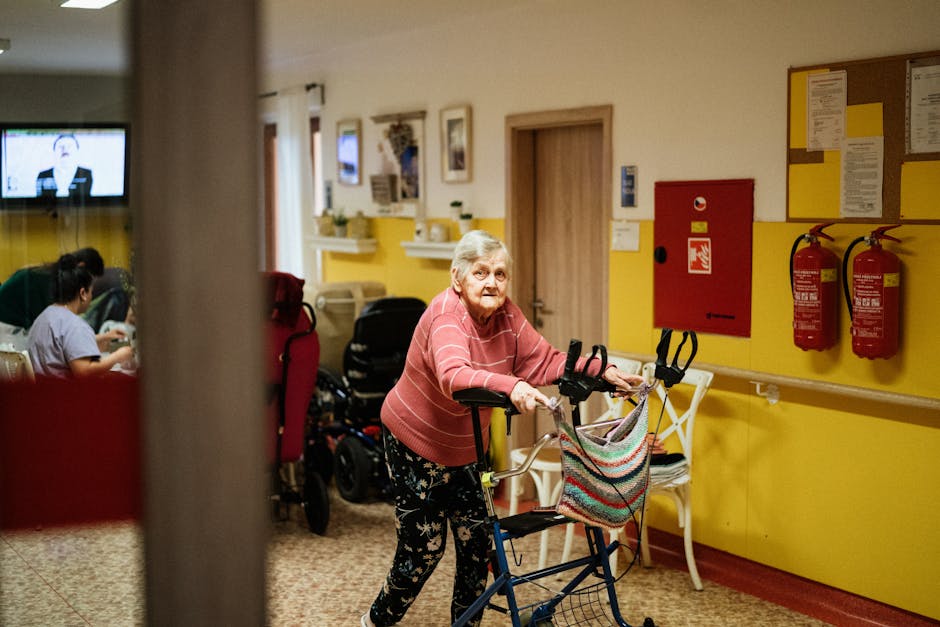
When we talk about the price of aging, the numbers can be startling. While the median cost of independent living sits at $3,239 per month, these prices fluctuate wildly based on where you live in California. In high-demand areas like San Francisco or Irvine, you might see monthly fees climbing toward $4,000, while more inland areas like Riverside or parts of Bakersfield might offer options closer to $1,500.
However, the “sticker price” of rent is only one part of the equation. According to a recent study, a couple retiring today will need about $285,000 just to cover expected medical expenses throughout their retirement. This financial pressure makes finding low-income senior housing guide resources essential for those who want to maintain a maintenance-free lifestyle and social engagement without draining their nest egg.
Traditional independent living typically includes:
- Private apartments (studios to two-bedrooms).
- Communal dining options.
- Housekeeping and laundry services.
- Social calendars and fitness centers.
- Security and emergency call systems.
For many, these amenities justify the cost. But for the 6.4 million seniors living below the federal poverty level, we must look toward more creative, subsidized, or shared models to ensure everyone has a safe place to call home.
Qualifying for affordable independent living for seniors via HUD
The Department of Housing and Urban Development (HUD) provides the most robust safety net for seniors through the Section 202 Supportive Housing for the Elderly program. This program is a cornerstone of low-income elderly housing because it specifically targets households where at least one person is 62 or older.
Under Section 202, your rent is strictly capped. You generally pay only 30% of your adjusted gross income toward rent, and the government covers the rest. To qualify, your household income must typically be less than 50% of the local Area Median Income (AMI). In California’s diverse economy, these limits change by county. For example, the income limit for a single occupant in an affordable community might be around $31,350, while a couple might be capped at $35,800.
10 Cheaper Alternatives to Traditional Independent Living
If a traditional $3,200-a-month community isn’t in the cards, don’t lose hope. There are several innovative and time-tested ways to find affordable homes for seniors that offer community and safety at a fraction of the price.
1. Shared Housing and Roommate Matching
Shared housing is making a major comeback. By sharing a home, seniors can split the cost of utilities and rent while gaining built-in social interaction. Online roommate matching platforms and local home-sharing programs help pair seniors with compatible roommates. On average, hosts can earn $850 a month by renting out a spare room, while renters save roughly $750 compared to a one-bedroom apartment.
2. Accessory Dwelling Units (ADUs)
Often called “granny flats,” ADUs are small, self-contained homes built on the same lot as a main house. This allows seniors to live near family while maintaining their own kitchen, bathroom, and privacy. The AARP provides a helpful guide to building an ADU which highlights how these units can be customized with grab bars and no-step entries for safer aging.
3. Senior Cooperatives
In a co-op, you don’t “rent” or “own” a specific unit in the traditional sense; instead, you buy a share in a corporation that owns the building. This model, often found through the Senior Cooperative Foundation’s website, offers long-term housing stability and a vote in how the community is managed. While there is an initial investment, monthly fees are often lower than market-rate apartments.
4. Virtual Retirement Communities
If you love your current home but need the social and support network of a retirement village, look into the Village to Village Network. For a small annual fee (often under $1,200), members get access to volunteer transportation, grocery delivery, and social events without ever having to move.
5. Adult Family Homes
Also known as residential care homes, these are licensed private residences that house a small group of seniors (usually six or fewer). They offer a more intimate, home-like setting where residents share meals and common areas. Because the costs are spread across the group, it can be significantly cheaper than a large-scale facility.
6. Multigenerational living
Moving in with family is the oldest form of “senior living.” To make this work, we recommend open discussions about expectations and potential home modifications. This arrangement is often mutually beneficial, providing seniors with companionship and families with help around the house or with grandchildren.
7. Nonprofit-Managed Apartments
Various nonprofit organizations manage thousands of units specifically for low-income seniors. These communities often feature on-site service coordinators who help residents navigate healthcare and social services.
8. ECHO Housing
Elder Cottage Housing Opportunity (ECHO) units are small, temporary modular homes placed in the backyard of a host family’s house. They are designed to be removed once they are no longer needed, providing a flexible and affordable way to keep loved ones close.
9. Section 8 Housing Choice Vouchers
Low-income seniors can apply for housing choice payment vouchers. While there are often long waiting lists, these vouchers allow you to find your own housing—be it a townhouse or apartment—and pay only a portion of the rent based on your income.
10. Home Sharing Programs
Local nonprofit programs focus on matching seniors experiencing financial uncertainty with stable roommates. This model emphasizes safety through background checks and “match meetings” overseen by social workers.
Finding affordable independent living for seniors in California
California offers unique challenges and resources for those seeking affordable senior housing California. In Los Angeles, programs focus on shared housing and high-density affordable developments. San Diego offers several income-restricted units through various nonprofit housing providers, while the Bay Area utilizes adaptive reuse projects to turn old buildings into veteran-specific housing.
If you are searching for low-income elderly housing near me, your local PHA (Public Housing Agency) is the best place to start. They maintain the lists for Section 8 and Section 202 properties in Riverside, Irvine, and Bakersfield.
Financial Planning for affordable independent living for seniors
Planning for the future requires a clear-eyed look at your monthly budget. We recommend starting with an estimate of your Social Security benefits. While the Social Security Administration recently provided a cost of living adjustment, these increases are often offset by rising healthcare and grocery costs.
| Housing Type | Estimated Monthly Cost | Primary Funding Source |
|---|---|---|
| Traditional Independent Living | $1,500 – $4,000+ | Private Pay / Savings |
| HUD Section 202 | 30% of Income | Federal Subsidy |
| Shared Housing | $500 – $900 | Private Pay / Social Security |
| Virtual Community | $50 – $100 | Membership Fees |
| Adult Family Home | $2,000 – $5,000 | Private Pay / Medicaid Waivers |
To bridge the gap, many seniors look into long-term care insurance. This is a supplementary plan designed to cover costs that standard health insurance won’t. For veterans, the VA offers “Aid and Attendance” benefits, which provide additional monthly payments to help cover the cost of care for those who are housebound or need assistance with daily activities. You can find more details in our senior-living-affordable-housing guide.
Steps to Evaluate and Apply for Senior Housing
Finding the right spot is about more than just the price tag; it’s about the “feel” of the community. When touring potential homes, keep a checklist:
- Safety Features: Are there grab bars in the bathrooms? Is the building wheelchair accessible?
- Staff Professionalism: Do the staff members seem engaged and respectful?
- Resident Interaction: Are people out and about, or does the building feel empty?
- Dining: If meals are provided, ask to try one. Is the food nutritious and appealing?
The application process for low-income senior housing no waiting list guide options can be rigorous. You will need to provide:
- Proof of age (Birth certificate).
- Social Security card.
- Income verification (Bank statements, tax returns).
- Background check authorization.
We suggest contacting your local Area Agency on Aging early. They can help you manage waitlists, which for some HUD properties can range from 1.5 to 2 years.
Frequently Asked Questions
What is the difference between Section 8 and Section 202?
Section 8 (Housing Choice Vouchers) is a portable benefit that you can take to any private landlord who accepts it. Section 202 is “project-based,” meaning the subsidy is tied to a specific apartment building designed specifically for seniors aged 62 and older.
How do income limits work for subsidized senior housing?
Income limits are based on the Area Median Income (AMI). Most programs require you to be “Very Low Income” (50% of AMI) or “Extremely Low Income” (30% of AMI). These numbers are updated annually by HUD and vary significantly between a city like San Francisco and a region like Riverside.
Can veterans use benefits for independent living?
Yes. Veterans and their spouses can often access the VA Aid and Attendance benefit or Housebound allowance. These funds can be added to your pension to help pay for independent living or shared housing costs. Additionally, certain permanent supportive housing projects are dedicated exclusively to veterans.
Conclusion
At LifeSTEPS, we believe that every senior deserves a stable, dignified place to live. Our mission is to provide human-centered support and resources to help individuals achieve self-sufficiency. We are proud of our 93% housing retention rate and our commitment to the community, which includes a 97% literacy improvement in our youth programs and over $2.1M in scholarships awarded to help the next generation.
Through our collaboration with programs like CalAIM, we provide critical support such as deposit assistance—covering 1 month paid in advance to help seniors transition into stable homes. We also work with programs like FSS to help clients, including veterans, achieve the dream of homeownership.
Take the case of Maria (whose name has been changed). Living on a fixed income in Los Angeles, Maria struggled to find a safe apartment after her rent spiked. By working with a service coordinator and accessing low-cost-senior-independent-living resources, she was able to secure a Section 202 unit. Today, Maria is not just housed; she is a leader in her building’s garden club, proving that with the right support, independence is always within reach.
LifeSTEPS | lifestepsusa.org
LifeSTEPS currently provides services in California only.


