


The Ultimate Guide to Government Homeowner Relief and Assistance Programs
The Ultimate Guide to Government Homeowner Relief and Assistance Programs
When You Need Help Keeping or Buying a Home: What a Homeownership Relief Program Actually Covers
A homeownership relief program is a government-funded initiative that helps households avoid foreclosure, catch up on mortgage payments, cover property taxes, or access down payment assistance. Here is a quick overview of your main options:
- Federal programs – The Homeowner Assistance Fund (HAF) provided $9.96 billion nationwide to help homeowners impacted by COVID-19. Most state programs have now closed or nearly exhausted their funds.
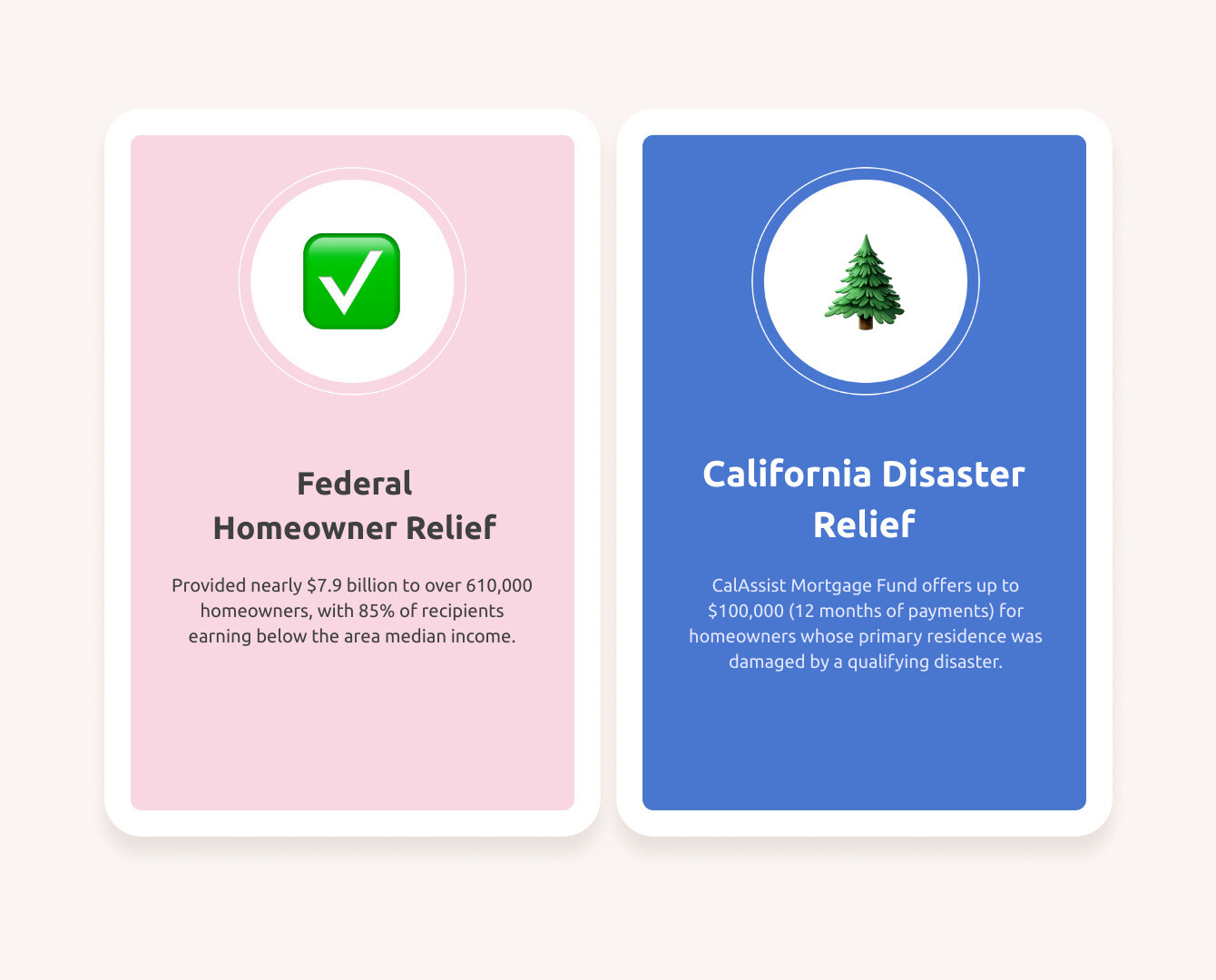
- California disaster relief – The CalAssist Mortgage Fund offers up to $100,000 (12 months of payments) for homeowners whose primary residence was damaged or destroyed by a qualifying disaster.
- Local programs – County and city programs, like Chicago’s Cook County Homeowner Relief Fund, have offered one-time payments to households hit by sudden cost increases.
- Proposed federal grants – The Home of Your Own Act of 2025 proposes $30,000 grants for first-time buyers earning up to 120% of area median income.
Millions of Americans have needed help at some point. Through September 2025, the federal HAF program alone delivered nearly $7.9 billion in assistance to more than 610,000 struggling homeowners — 85% of whom earned below the area median income. For veterans transitioning to civilian life, the path to stable housing can feel especially uncertain. Knowing which programs exist, and whether you qualify, is the first step.
This guide breaks down the landscape clearly — from federal funds to California-specific programs — so you can find the right support for your situation.
Homeownership relief program terms you need:
Navigating Your Options: How to Find a Homeownership Relief Program

When financial challenges arise, finding a homeownership relief program that fits your exact needs can feel overwhelming. Programs generally fall into two categories: local relief (administered by cities, counties, or local non-profits) and federal relief (funded by the federal government and administered by states or territories).
To qualify for most programs, you will need to meet specific eligibility criteria, which often include:
- Proof of occupancy (the home must be your primary residence).
- Income limits tied to your county’s Area Median Income (AMI).
- Documentation of financial hardship (such as job loss, medical bills, or natural disaster impacts).
If you are looking to buy rather than save an existing home, exploring Homeownership Assistance and Low Income Homeownership Programs can open doors to down payment grants and specialized mortgage products.
The Role of the Federal Homeowner Assistance Fund (HAF) as a National Homeownership Relief Program
Established under the American Rescue Plan Act of 2021, the federal Homeowner Assistance Fund allocated $9.961 billion to prevent mortgage delinquencies, defaults, foreclosures, and utility displacements. Codified under 15 USC 9058d: Homeowner Assistance Fund, this massive federal effort was designed to support the country’s most vulnerable populations.
According to data compiled by the Homeowner Assistance Fund — NCSHA, the program has achieved remarkable milestones:
- Over 549,000 homeowners were assisted through June 2024.
- By September 2025, HAF delivered nearly $7.9 billion to more than 610,000 struggling families, expending 95% of its total allocation.
- The program prioritized equity: 85% of recipients had incomes below the Area Median Income (AMI), with 51% earning less than 50% of their local AMI.
- Demographic outreach was highly effective, with 40% of beneficiaries identifying as Black and 19% identifying as Latino.
State-Level Implementation and Program Status
Because HAF was distributed federally but managed locally, state-by-state variations emerged. Each state designed its own portal, rules, and timelines. Some states closed their portals early after quickly exhausting funds, while others established waitlists or periodically reopened applications as remaining funds were reallocated.
For example, the Oregon Housing and Community Services : Homeowner Assistance Fund : Homebuyers & Homeowners : State of Oregon program offered up to $50,000 in mortgage relief to eligible households but operated strictly on a first-completed, first-served basis.
In California, the HAF allocation funded the highly successful California Mortgage Relief Program. As these pandemic-era federal programs wind down, prospective buyers and struggling owners must look to alternative grants. To explore what is currently active near you, consult The 2026 Guide to Every First Home Loan Grant.
California’s Disaster Recovery and Mortgage Relief Initiatives

California homeowners face unique environmental and financial challenges. From devastating wildfires to severe winter flooding, natural disasters can instantly disrupt housing stability. Fortunately, the California Housing Finance Agency (CalHFA) and state-backed programs like the California Mortgage Relief Program provide critical lifelines for disaster survivors.
California’s CalAssist: A State-Level Homeownership Relief Program for Disaster Survivors
In response to the increasing frequency of natural disasters, Governor Newsom’s February 2026 expansion of the CalAssist Mortgage Fund significantly boosted aid for survivors of recent declared disasters.
This major policy shift expanded the safety net in several key ways:
- Four-Fold Payment Increase: The relief period expanded from 3 months to 12 months of mortgage payments.
- Higher Maximum Cap: Maximum assistance jumped from $20,000 to $100,000 per household.
- Proven Impact: The program has already paid $6.5 million to 793 recipients, with substantial funding remaining to help survivors rebuild.
- Updated Income Eligibility: Income limits were raised to reflect California’s high cost of living. For instance, the limit is now $281,400 in Los Angeles County and $255,000 in Butte County.
These funds are paid directly to mortgage servicers and are entirely non-repayable, allowing survivors to focus on rebuilding their lives without accumulating additional debt.
ReCoverCA Homebuyer Assistance Program
For low-to-moderate-income families whose homes were destroyed by disasters, rebuilding in high-risk zones is not always the safest option. The ReCoverCA Homebuyer Assistance program, funded by HUD Community Development Block Grant – Disaster Recovery (CDBG-DR) grants, takes a different approach by helping families relocate to safer, lower-risk areas.
Key features of ReCoverCA include:
- Substantial Financial Aid: Offers up to $350,000 for survivors of 2017/18 fires and up to $300,000 for survivors of 2023/24 floods.
- Forgivable Loan Structure: Operates as a zero-interest loan that is fully forgiven over time, provided the recipient maintains the new property as their primary residence.
- Geographic Focus: Restricts purchases to safer, lower-risk fire and flood zones within California, ensuring long-term physical and financial security for relocated families.
Localized Relief Programs: Lessons from Cook County and Chicago
While California remains our primary focus, looking at localized programs in other parts of the country offers valuable lessons on how local governments can step in when federal funds dry up.
A prime example is the Cook County Homeowner Relief Fund in Illinois. This $15 million program was designed to provide rapid, one-time payments of $1,000 to approximately 14,000 households that experienced sudden, substantial property tax increases. Administered by a third-party platform called AidKit, the program utilized a streamlined two-phase application process to minimize applicant burden. The application portal officially closed on October 31, 2025, demonstrating how targeted municipal relief can provide quick, short-term stabilization.
Alternative Local Resources for Financial Hardship
Once emergency funds close, residents must rely on permanent local infrastructure. In Cook County, homeowners are directed to the Assessor’s Office for property tax exemptions or the Treasurer’s Office for delinquent tax payment plans.
Similarly, the Chicago Department of Housing maintains permanent programs such as:
- Emergency Heating Repair Program: Repairing or replacing primary home heating systems during winter.
- Small Accessible Repairs for Seniors (SARFS): Providing safety and accessibility modifications for low-income seniors.
In California, similar localized infrastructure exists. Homeowners in Southern California can access localized support through the San Diego Housing Commission First-Time Homebuyer Programs or the housing division of the Housing | County of Riverside, CA. Additionally, those utilizing housing choice vouchers can explore options like Section 8 Homeownership to transition from renting to owning.
Future Outlook: Federal Legislation and First-Time Buyer Grants
As local and state pandemic-era relief funds wind down, legislative attention has shifted toward long-term homeownership assistance. The most notable proposal is the H. R. 2064: Home of Your Own Act of 2025.
If passed, this bill would authorize $6.7 billion annually from fiscal years 2026 through 2030 to establish a national homeownership grant program.
Key details of the proposed Home of Your Own Act include:
- $30,000 One-Time Grants: Available to eligible first-time homebuyers to cover down payments, closing costs, or pre-occupancy repairs.
- Occupancy Requirement: Homeowners must occupy the home as their primary residence for at least 60 months (5 years), or face proportional repayment requirements.
- Income Limits: Capped at 120% of Area Median Income (or 150% in high-cost areas).
- Mandatory Education: Applicants must complete an approved financial counseling course prior to receiving funds. For a deeper look at qualifying with moderate earnings, see A Practical Guide to Homeownership Assistance for Moderate Income.
Comparing Key Homeowner Relief and Assistance Programs
| Program / Bill | Maximum Assistance | Primary Purpose | Key Eligibility Criteria |
|---|---|---|---|
| Federal HAF | Varies by state (up to $50k in some states) | Mortgage and utility reinstatement | COVID-19 hardship; income below 150% AMI |
| California CalAssist | Up to $100,000 (12 months of payments) | Mortgage relief for natural disaster survivors | Primary residence destroyed/uninhabitable; County AMI limits |
| Home of Your Own Act (Proposed) | $30,000 | Down payment & closing cost grants | First-time buyer; income below 120% AMI; 5-year occupancy |
Frequently Asked Questions about Homeowner Relief
What is the difference between federal HAF and local relief programs?
Federal HAF (Homeowner Assistance Fund) programs are large-scale, federally funded initiatives established under the American Rescue Plan Act to address pandemic-related financial hardships. Local relief programs are funded and run by city or county governments (or local non-profits) to address localized issues, such as sudden property tax hikes, emergency home repairs, or local natural disasters.
Who qualifies for California’s expanded CalAssist mortgage relief?
To qualify for the expanded CalAssist Mortgage Fund, you must be a California homeowner whose primary residence was damaged, destroyed, or rendered uninhabitable by a qualifying declared natural disaster. You must also meet county-specific income limits (such as $281,400 in Los Angeles County) and have your mortgage with a participating servicer.
How do first-generation homebuyer programs work?
First-generation programs target buyers whose parents or guardians have never owned a home (or lost their home to foreclosure). A prime example of this model is Rhode Island’s First-Generation Homebuyer RI | RIHousing pilot, which provides $25,000 in down payment assistance. The assistance is structured as a 0% interest loan that is completely forgiven after 5 years of primary residency, provided the buyer completes HUD-approved homebuyer education.
Conclusion
Navigating the path to stable housing requires the right resources, education, and community support. At LifeSTEPS, we walk alongside individuals transitioning to stable housing and self-sufficiency. Through our collaboration with programs like the Family Self-Sufficiency (FSS) initiative, we empower clients—including veterans—to build the financial foundations necessary for homeownership.
Our commitment to California communities is reflected in our measurable impact:
- We maintain a 93% housing retention rate across our housing programs.
- We offer deposit assistance (including 1 month paid in advance) specifically tied to the CalAIM program.
- We support the next generation through $2.1 million in academic scholarships and have achieved a 97% literacy improvement rate through our Summer Reading program.
Transitioning from renting to owning is a journey. To see how these programs change lives, read about how we help clients take control of their financial futures in our guide on LifeSTEPS Housing and FSS Programs (note: client first names have been changed to protect privacy).
LifeSTEPS currently provides services in California only.


