


A – Z Guide to Thriving in Place
A – Z Guide to Thriving in Place
What “Thriving in Place” Really Means — And Why It Matters
Thriving in place is the idea that people — whether seniors, veterans, families, or individuals with disabilities — can live safely, independently, and with dignity in their own homes and communities, rather than being displaced or institutionalized.
It’s more than just staying put. It means having the housing stability, health support, and social connections needed to genuinely flourish where you are.
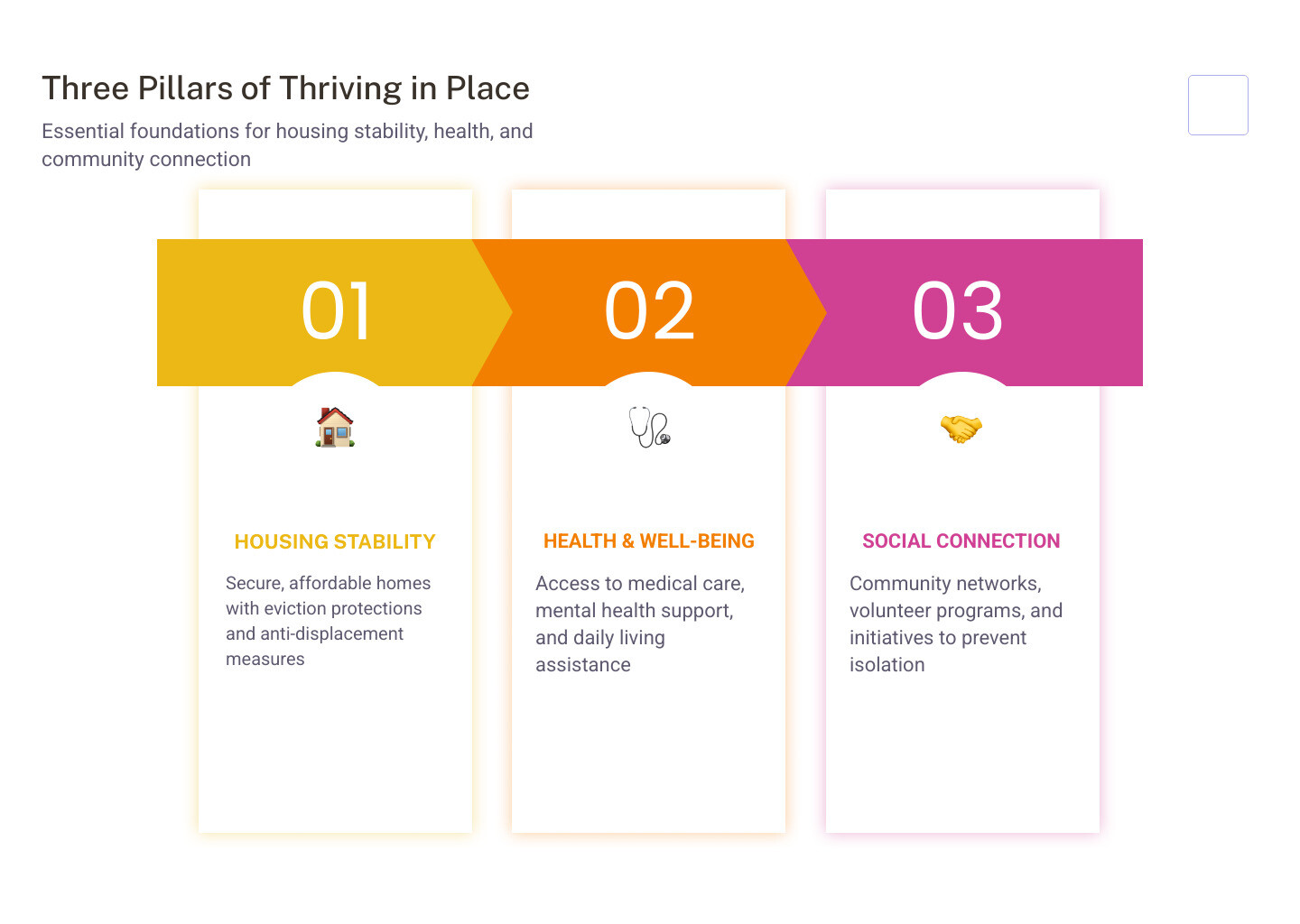
Here’s a quick breakdown of what thriving in place looks like in practice:
- Housing stability — Secure, affordable housing with protections against eviction and displacement
- Health and well-being — Access to medical care, mental health support, and daily living assistance
- Social connection — Community ties, volunteer networks, and programs that prevent isolation
- Economic security — Financial resources, employment support, and self-sufficiency tools
- Inclusive community design — Accessible spaces and services that work for everyone, regardless of age or ability
For veterans transitioning to civilian life, thriving in place can be especially meaningful. It’s the difference between simply surviving — couch-surfing, bouncing between temporary options — and building a real, stable foundation in a community that supports you.
Organizations like LifeSTEPS work with residents across California to make that kind of stability possible, combining housing support, resident services, and education programs into a holistic approach to community well-being.
This guide walks through everything you need to know — from the different ways thriving in place is defined, to real strategies, programs, and ways to get involved.
Defining Thriving in Place Across Different Contexts
While the term is often used in the context of aging, thriving in place is a broad concept that applies to anyone facing the risk of displacement or instability. In urban settings like Los Angeles or San Diego, it often focuses on anti-displacement strategies—ensuring that long-term residents aren’t forced out by rising costs. In these areas, Neighborhood Flourishing: A Place-Based Approach suggests that we must look at the neighborhood as a complex system. When we improve the living environment, we address the root causes of instability rather than just providing temporary relief.
In the professional world, thriving in place refers to finding growth and fulfillment within a current role. However, for our purposes in social services, it is about the “nested systems” approach mentioned by The RSA. This means integrating economic, social, and natural perspectives to create a community where everyone has the agency to succeed. Whether it is through inclusive rural placemaking or urban resilience programs, the goal remains the same: creating a space where people feel they belong and can contribute.
Thriving in Place for Seniors and People with Disabilities
For older adults and those with disabilities, thriving in place is often synonymous with resident services for aging in place. It is about more than just safety; it’s about independence. Statistics show that a significant portion of the senior population lives alone, putting them at risk of becoming homebound without proper intervention.
We focus on support for older adults to age in place by providing:
- Accessibility Modifications: Ensuring homes can accommodate mobility aids.
- Chronic Condition Management: Helping residents navigate health challenges so they can stay home longer.
- Social Isolation Prevention: Creating opportunities for adults to gather, such as in a circle of chairs for chatting, to foster mental well-being.
Housing Stability and Anti-Displacement Strategies
True thriving in place cannot happen without a secure roof over one’s head. In high-cost areas like Irvine or Riverside, future affordable housing initiatives are critical. We advocate for tenant protections and complete communities in San Diego that prioritize long-term affordability.
Strategies include:
- Shared-Equity Models: Prioritizing community-owned housing to keep residents in their neighborhoods.
- Rental Assistance: Providing the “bridge” needed during tough times to prevent eviction.
- Incentivizing Production: Using land-use decisions to encourage the building of more affordable units.
Core Strategies for Thriving in Place
To make thriving in place a reality, we utilize a three-pronged approach: Protect, Preserve, and Produce. We protect tenants from unfair displacement, preserve the affordable housing that already exists, and produce new units to meet growing demand.
A key part of this in California is the CalAIM program. Through this initiative, we are able to offer deposit assistance to help individuals transition into permanent housing. We typically mention one month paid in advance for deposit assistance to help bridge the gap for those moving toward self-sufficiency. This is especially vital for homelessness solutions in Riverside and other Southern California hubs.
Supportive Services and Wraparound Care
Housing is the foundation, but supportive services are the walls and roof. We believe in improving access to healthcare services by bringing the experts to the residents.
Our wraparound care includes:
- Case Management: Helping residents set and achieve self-sufficiency goals.
- Medical Equipment Exchanges: Providing walkers or wheelchairs to support hospital-to-home transitions.
- Veteran Stability: Collaborating with programs like FSS to help veterans move from transitional housing to homeownership.
- Mental Health Support: Offering local consultations to reduce the barriers of travel and cost.
For example, consider David (name changed), a veteran who had been bouncing between temporary shelters. Through our interdepartmental collaboration, he received both housing placement and employment training. Today, David is not just “housed”—he is thriving, having recently celebrated six months at a steady job.
Education and Youth Development
We know that for a community to thrive long-term, we must invest in the next generation. Our afterschool programs are designed to empower youth and provide them with the tools they need for higher education.
The impact of these programs is measurable and significant:
- 97% Literacy Improvement: Our Summer Reading program ensures children don’t fall behind during the break.
- $2.1M in Scholarships: We provide financial pathways to help students reach their dreams of a college degree.
- Youth Empowerment: By providing a safe space for learning and growth, we help break the cycle of generational poverty.
Measuring Success and Real-World Impact
How do we know if thriving in place efforts are working? We look at the data. We are proud to maintain a 93% housing retention rate across our programs. This means that nearly all the individuals we serve are able to stay in their homes and avoid returning to instability.
In areas like Los Angeles, tracking supportive housing progress is essential. We use data-driven dashboards to monitor five-year change metrics, allowing us to see where we are succeeding and where we need to adapt our strategies.
Economic and Social Benefits of Thriving in Place
When people thrive in place, the entire community wins. There are clear economic benefits, such as reduced costs for emergency services and institutional care. Socially, it builds “social capital”—the connections and trust between neighbors that make a community resilient.
- Cost Savings: In-home support is significantly less expensive for taxpayers than institutionalization.
- Workforce Readiness: Stable housing allows residents to focus on job training and employment.
- Community Cohesion: Programs that encourage neighbors to help neighbors lead to happier, healthier lives for everyone involved.
Frequently Asked Questions about Thriving in Place
How does thriving in place differ from just “aging in place”?
While “aging in place” often focuses on the physical safety and basic needs of seniors, thriving in place is more holistic. It’s about active participation in the community. It means not just being “safe” in a house, but feeling connected, valued, and having the resources to pursue dreams and hobbies, regardless of age. Thriving is about the quality of life, not just the location of it.
What are the biggest challenges to thriving in place?
The road to thriving in place isn’t always easy. Funding sustainability is a constant hurdle, as many programs rely on grants that may not be permanent. Additionally, the sheer lack of affordable housing in California makes it difficult to scale efforts. Data limitations can also make it hard to track long-term health outcomes, though we are constantly working to improve our metrics.
How can individuals get involved in thriving in place initiatives?
There are many ways to support these efforts!
- Volunteer: Many programs rely on “neighbors helping neighbors” for things like grocery runs or tech support.
- Donate: Contributions to housing programs can help fund deposit assistance or essential home kits.
- Advocate: Support local policies that protect tenants and encourage the production of affordable housing in your city.
Conclusion
At LifeSTEPS, our mission is to provide the human-centered support that turns a house into a home and a neighborhood into a community. By focusing on housing retention, self-sufficiency, and education, we help residents across California build stable, fulfilling lives. Thriving in place isn’t just a goal; it’s a way of ensuring that every person has the opportunity to live with dignity and joy.
LifeSTEPS currently provides services in California only.
Thriving in place terms you need:
- adult education programs
- community integration programs
- empowerment through education


