


Comparing Low Income Rentals for Seniors in Your Neighborhood
Comparing Low Income Rentals for Seniors in Your Neighborhood
Why Finding the Right Low Income Housing for Seniors with Disabilities Matters in 2026
Low income housing for seniors with disabilities comes in several forms, each with different eligibility rules, rent structures, and support services. Here is a quick overview of the main options:
| Housing Type | Who It’s For | How Rent Is Set | Key Feature |
|---|---|---|---|
| HUD Section 202 | Seniors 62+ (some under 62 with disability) | 30% of adjusted income | On-site service coordinators |
| HUD Section 811 | Adults with disabilities | 30% of adjusted income | Supportive services |
| Housing Choice Vouchers | Very low-income seniors and disabled individuals | 30% of adjusted income | Use in private market |
| LIHTC Properties | Low-income seniors and disabled residents | Based on area median income | Mixed-income communities |
| Public Housing | Low-income families, elderly, disabled | 30% of adjusted income | PHA-managed properties |
Finding stable, affordable housing is one of the most urgent challenges facing older adults and people with disabilities today. By July 2026, waitlists for federally subsidized senior housing in many California communities stretch for months or even years. Meanwhile, the cost of private rentals continues to rise well beyond what most fixed-income seniors can afford.
The stakes are especially high for veterans transitioning to civilian life who are also managing age-related conditions or service-connected disabilities. According to data from supportive housing providers, more than half of unsheltered veterans are seniors, 56% live with a disability, and 72% are extremely low-income — a combination that makes accessing the right housing program both urgent and complicated.
Understanding which programs you qualify for, how rent is calculated, and what support services are available can make the difference between stable housing and housing insecurity.
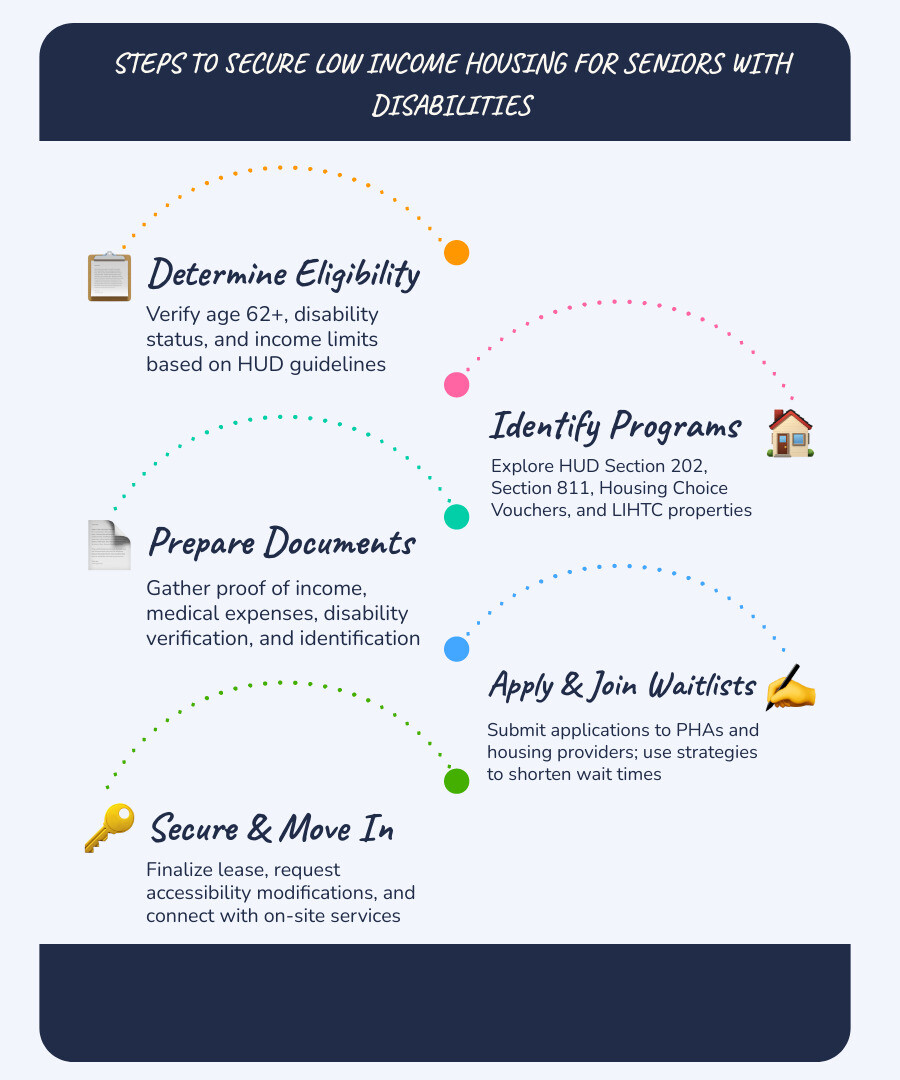
LifeSTEPS currently provides services in California only.
Low income housing for seniors with disabilities terms at a glance:
- low income housing for elderly and disabled
- assisted living for low income disabled adults
- low income assisted living for disabled
Understanding Low Income Housing for Seniors with Disabilities

When searching for low income housing for seniors with disabilities, understanding the baseline eligibility requirements is the first step. Federal and state housing programs use specific criteria to determine who qualifies for subsidized housing. These criteria generally revolve around three core pillars: age, disability status, and household income.
Age Requirements
For most senior-designated housing programs, such as HUD Section 202, the baseline age requirement is 62 years of age or older. However, some developments built with mixed funding sources may set the age threshold at 55. Additionally, certain senior communities allow individuals under the age of 62 to qualify if they have a verifiable physical or developmental disability.
Disability Verification
To qualify under disability-specific guidelines, applicants must provide formal verification of their disability. This is typically established if the individual:
- Receives Social Security Disability Insurance (SSDI) or Supplemental Security Income (SSI).
- Has a physical, mental, or emotional impairment that is expected to be of long-continued and indefinite duration, substantially impedes the ability to live independently, and could be improved by more suitable housing conditions.
- Provides a formal verification letter completed by a licensed medical professional or a state-certified agency.
Income Limits
Subsidized housing programs are strictly tied to Area Median Income (AMI) thresholds, which are updated annually by the U.S. Department of Housing and Urban Development (HUD).
- Extremely Low Income: Households earning 30% or less of the AMI. By law, local Public Housing Authorities (PHAs) must target at least 75% of their Housing Choice Vouchers to applicants in this category.
- Very Low Income: Households earning 50% or less of the AMI. This is the standard cap for programs like Section 202 and Section 811.
- Low Income: Households earning 80% or less of the AMI, which is often the limit for certain Public Housing and Tax Credit properties.
To explore these criteria in greater depth, you can read our comprehensive Affordable Housing for Disabled Seniors Guide.
Key Federal and State Housing Programs
Several federal and state-level initiatives form the backbone of affordable housing in California. These programs are designed to lower rental costs so that vulnerable seniors do not have to choose between paying rent and buying medicine or food.
HUD Section 202 (Supportive Housing for the Elderly)
The Section 202 program provides equity advances to non-profit organizations to finance the construction or rehabilitation of supportive housing for very low-income seniors. It also provides project-based rental assistance to cover the gap between the tenant’s payment (30% of adjusted income) and the cost of operating the property. These communities are specifically designed to help seniors age in place by offering features like ramps, grab bars, and on-site service coordinators.
HUD Section 811 (Supportive Housing for Persons with Disabilities)
Similar to Section 202, the Section 811 program focuses exclusively on low-income adults with disabilities who are at least 18 years old. Section 811 funding allows disabled individuals to live as independently as possible in the community by subsidizing affordable rental units that are paired with voluntary, integrated supportive services.
Low-Income Housing Tax Credit (LIHTC)
The LIHTC program is a federal tax incentive program that encourages private developers to build or rehabilitate affordable rental housing. Instead of direct subsidies, developers receive tax credits in exchange for reserving a portion of the units for low-income households. Many LIHTC properties reserve a specific percentage of their units for seniors aged 55 or 62 and older, as well as set-asides for disabled individuals.
To learn more about how these programs operate in tandem, read our guide on Low Income Housing for Elderly and Disabled. For state-level policy details and resources, you can consult the California Department of Housing and Community Development.
Project-Based vs. Tenant-Based Low Income Housing for Seniors with Disabilities
When navigating the affordable housing system, it is crucial to understand the difference between project-based assistance and tenant-based vouchers. This distinction heavily impacts your mobility, choice, and daily living environment.
- Project-Based Assistance: In this model, the rental subsidy is tied directly to the physical property or a specific apartment unit. If you move out of the building, you leave the subsidy behind. Programs like HUD Section 202 and Section 811 are project-based. These environments are highly beneficial for seniors who want built-in community spaces, on-site service coordinators, and structural accessibility features.
- Tenant-Based Vouchers (Housing Choice Vouchers): Commonly referred to as Section 8, these vouchers are awarded directly to the individual or family. The voucher holder is free to choose any qualifying private-market rental unit where the landlord agrees to participate in the program. This offers maximum mobility, allowing seniors to live closer to family members or specific medical centers.
To help you compare, our team has created The Golden Guide to Senior HUD Housing. Below is a comparison table outlining how these two models function:
| Feature | Project-Based Housing (Section 202/811) | Tenant-Based Vouchers (Housing Choice Vouchers) |
|---|---|---|
| Subsidy Attachment | Tied to the specific building/unit. | Tied to the individual tenant. |
| Mobility | If you move, you lose the rental subsidy. | You can transfer the voucher to another private rental. |
| Search Process | Apply directly to the property management office. | Apply to a local Public Housing Authority (PHA). |
| On-Site Services | Often includes service coordinators and community rooms. | Services must be sourced independently in the community. |
| Physical Design | Typically built with universal accessibility features. | Accessibility depends on the private landlord’s property. |
Specialized Vouchers and Housing Options
For seniors and individuals living with disabilities, standard Housing Choice Vouchers are not the only option. HUD and local PHAs administer several specialized voucher programs designed to address specific vulnerability factors:
- Mainstream Vouchers: These vouchers are designated specifically for non-elderly persons with disabilities who are transitioning out of institutional settings, rapid rehousing programs, or experiencing homelessness.
- Designated Housing Vouchers: These are provided to non-elderly disabled families who would have been eligible for a public housing unit if that housing had not been designated exclusively for elderly occupancy.
- Certain Development Vouchers: These assist non-elderly disabled families who are not currently receiving housing assistance but are affected by specific housing development designation decisions.
For a deeper dive into these specialized vouchers and how to access them, consult our resource on Housing Resources for Disabled.
Comparing Rental Options and Accessibility Features
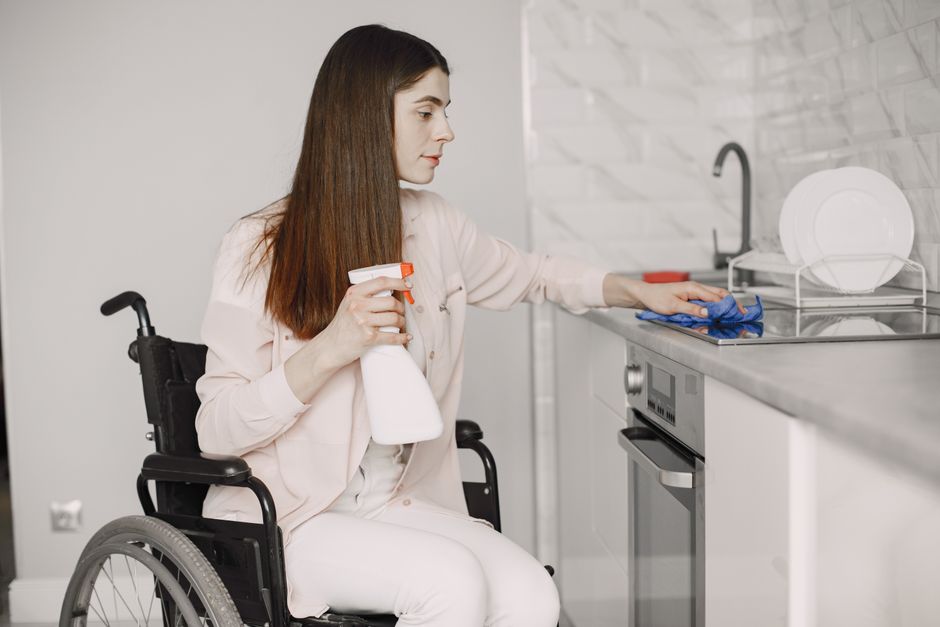
When comparing low income housing for seniors with disabilities, physical accessibility is just as important as financial affordability. An apartment is only truly affordable if it allows you to live safely and navigate your home with dignity.
Physical Accessibility and Universal Design
Modern affordable housing developments built for seniors utilize “universal design” principles. This means the living spaces are inherently accessible to people of all ages and physical abilities. Key features to look for include:
- Zero-Step Entries: No stairs at the building entrance or apartment doorway.
- Wide Hallways and Doorways: At least 32 to 36 inches of clearance to accommodate wheelchairs and walkers.
- Accessible Kitchens: Lowered countertops, roll-under sinks, and easily reachable appliances.
- Safe Bathrooms: Roll-in showers, grab bars installed in the shower and next to the toilet, and raised toilet seats.
- Lever-Style Handles: Door handles and faucets that require a simple push rather than a twisting motion.
Legal Rights: Fair Housing Act and Section 504
Under the federal Fair Housing Act and Section 504 of the Rehabilitation Act, housing providers are legally prohibited from discriminating against applicants or residents based on disability. This includes a legal obligation to provide “reasonable accommodations” and “reasonable modifications.”
- Reasonable Accommodations: Changes to rules, policies, or services. For example, a property must waive a “no-pets” policy for a resident who relies on a trained service dog or an emotional support animal. Another common accommodation is assigning a designated, accessible parking space close to a resident’s front door.
- Reasonable Modifications: Physical changes to the structure of the unit or common areas. In federally funded buildings (like Section 202 properties), the cost of these physical modifications must be covered by the housing provider.
Finding Low Income Housing for Seniors with Disabilities in California
Securing affordable rentals requires connecting with local agencies in your specific geographic area. If you live in Southern California or the surrounding regions, several dedicated resources can assist you:
- Los Angeles County: The City of Los Angeles Department of Aging and local housing authorities manage various senior resources. For targeted disability services and housing search tools, utilize the Los Angeles Housing Department Services.
- San Diego County: The local housing authority administers public housing units and specialized voucher programs. To apply or check waitlist statuses, visit the San Diego County Public Housing portal.
- Riverside County: The local authority provides housing assistance programs, landlord portals, and senior resource listings. You can access their portal directly at the Riverside County Housing Authority.
- Orange County (Irvine): Excellent examples of high-quality, master-planned affordable senior communities exist in this region. To see how these communities combine physical accessibility with beautiful, modern designs, read about affordable housing developer partnerships in Orange County.
Supportive Services and Community Amenities
The best low-income senior housing developments provide more than just four walls and a roof; they offer a supportive community. This holistic approach is essential for helping disabled seniors maintain their independence.
- On-Site Service Coordinators: These professionals assist residents by connecting them with community-based services, helping them fill out benefit paperwork, arranging transportation, and organizing wellness clinics.
- Transportation Assistance: Many senior properties are strategically located near public transit routes or offer dedicated shuttle services to local grocery stores, pharmacies, and medical centers.
- Nutrition and Meal Programs: Some communities feature shared dining halls or partner with local senior centers to provide daily meals, such as “Meals on Wheels” or community lunch programs.
- Social and Recreational Activities: Community rooms frequently host game nights, arts and crafts classes, exercise programs, and educational seminars, which help prevent social isolation.
To learn more about how supportive services can enhance your quality of life, read our article on Low Income Elderly Housing.
How to Apply and Navigate Waitlists
Applying for affordable housing requires patience, organization, and a proactive strategy. Because demand far exceeds supply, waitlists can be long, but taking the right steps can maximize your chances of success.
Step 1: Connect with Local Public Housing Authorities (PHAs)
PHAs administer federal programs like Public Housing and Housing Choice Vouchers. Identify the PHAs in your target counties and check their websites regularly to see which waitlists are open.
Step 2: Gather Your Documentation
When your name reaches the top of a waitlist, you must move quickly to verify your eligibility. Gather and organize the following documents in advance:
- Government-issued photo identification for all household members.
- Social Security cards and birth certificates.
- Proof of income (Social Security award letters, pension statements, bank statements, or tax returns).
- Disability verification forms signed by a medical professional (if applying for specialized housing).
- Rental history and references from previous landlords.
Step 3: Implement Waitlist Strategies
- Apply Widely: If you are willing to relocate, apply to multiple housing authorities and individual project-based properties to increase your chances.
- Keep Information Updated: If your phone number, email, mailing address, or income changes, notify the housing authority or property manager immediately in writing. If they attempt to contact you and receive no response, you will be removed from the waitlist.
- Ask About Preferences: Many PHAs use preference systems that move certain applicants to the top of the list faster. Common preferences include being a local resident, a veteran, elderly, disabled, or currently unhoused.
For more tips on finding open waitlists, refer to our Low Income Senior Housing No Waiting List Guide.
Frequently Asked Questions about Senior Disability Housing
How is rent calculated for low-income senior housing?
For programs like HUD Section 202, Section 811, and Housing Choice Vouchers, rent is generally calculated at 30 percent of your household’s monthly adjusted gross income.
To determine your adjusted income, housing authorities allow specific deductions, including a standard deduction for elderly or disabled households and deductions for out-of-pocket medical expenses that exceed 3% of your annual income. Additionally, if utilities are not included in your rent, you will receive a “utility allowance” deduction to help cover those costs. For a detailed breakdown of these calculations, check out The Essential HUD Low Income Senior Housing Handbook.
What legal protections exist for disabled senior renters?
Disabled senior renters are protected by the federal Fair Housing Act, Section 504 of the Rehabilitation Act, and the Americans with Disabilities Act (ADA). These laws make it illegal for landlords to refuse to rent to you, charge higher rent, or offer different terms because of a physical or mental disability. You also have the right to request reasonable accommodations, such as receiving documents in large print, being allowed a live-in aide, or having grab bars installed in your bathroom.
Can seniors with disabilities have pets or service animals?
Yes. Under the Fair Housing Act, housing providers must allow service animals and emotional support animals (ESAs), even if the property has a strict “no-pets” policy. Furthermore, landlords cannot charge “pet deposits” or monthly “pet rent” for service animals or ESAs, as they are legally classified as assistive devices rather than pets. However, tenants are still responsible for ensuring their animals do not damage the property or disturb other residents.
Conclusion
Securing safe, accessible, and affordable housing is vital for ensuring that seniors with disabilities can live with comfort, dignity, and peace of mind. Navigating the complex world of federal subsidies, tax credit properties, and local housing programs can feel overwhelming, but you do not have to do it alone.
At LifeSTEPS, we are dedicated to providing human-centered support and valuable resources to help individuals transition to stable housing and achieve long-term self-sufficiency. Our supportive services yield real, measurable community impact:
- We maintain an exceptional 93% housing retention rate among the clients we serve, keeping seniors and vulnerable individuals safely housed.
- Through our collaboration with the CalAIM program, we offer crucial deposit assistance — including 1 month paid in advance for deposit assistance — to help clients overcome the financial barriers of moving into a new home.
- Beyond housing, our commitment to community growth is demonstrated by our youth and education initiatives, which have achieved a 97% literacy improvement through our Summer Reading program and awarded over $2.1 million in scholarships to help families break the cycle of poverty.
Whether you are a senior looking for an accessible apartment, a veteran seeking stability, or a family member helping a loved one, we are here to support you on your path forward.
To discover how we can help you or your loved ones, Learn more about our programs and services.
LifeSTEPS currently provides services in California only.


