


How to Get Your Finances Back in Formation
How to Get Your Finances Back in Formation
When the Bills Don’t Stop After the Service Does
Veteran help with bills is available through a range of national and California-specific programs — here’s a quick overview of your main options:
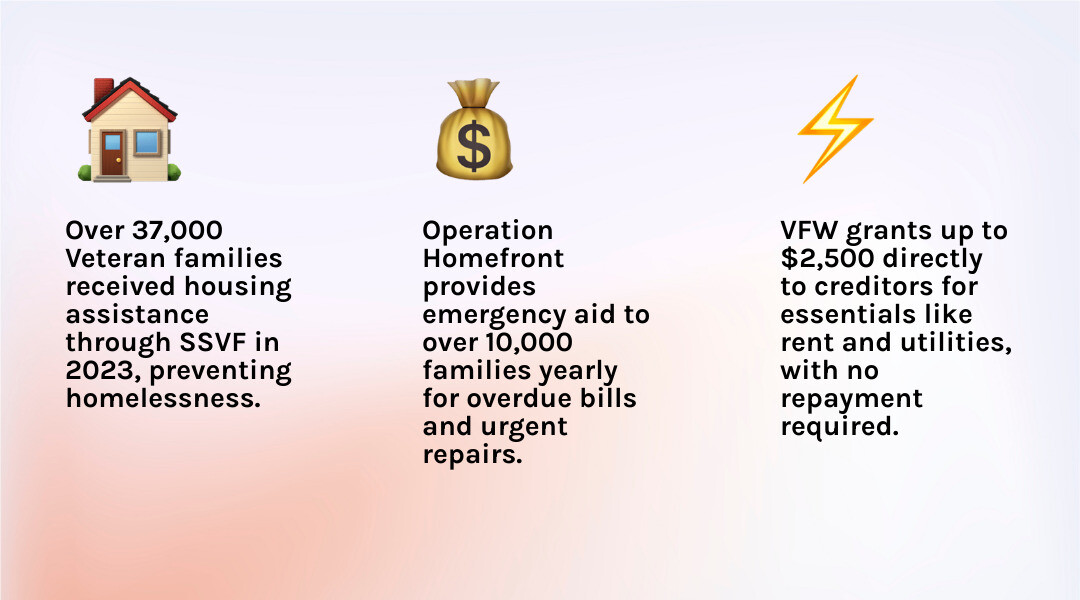
- SSVF (Supportive Services for Veteran Families) — Covers rent, utilities, moving costs, and more for low-income veterans at risk of homelessness
- VFW Financial Assistance — Grants up to $2,500 for daily necessities, paid directly to creditors, no repayment required
- Operation Homefront Critical Financial Assistance — Short-term help with overdue bills and home repairs for active-duty and veteran families
- VA Financial Hardship Assistance — Relief options for VA copay debt, including waivers, repayment plans, and exemptions
- CalAIM (California) — Includes deposit assistance and wraparound support for eligible veterans in California
Coming home from service should feel like a fresh start. But for many veterans, the transition to civilian life brings a wave of financial pressure — overdue bills, housing instability, and gaps in income that can feel impossible to close.
Money problems have a way of compounding fast. A missed utility payment becomes a shutoff notice. A late rent check becomes an eviction threat. Financial stress shows up in sleep, in relationships, and in the ability to plan for the future.
The good news: you don’t have to figure this out alone. There are real programs — some offering grants, not loans — designed specifically to help veterans stabilize their finances and stay housed.
National Programs Offering Veteran Help With Bills

When you are facing a financial crisis, national non-profit organizations and government initiatives are often the first line of defense. These programs focus on providing immediate relief so that a temporary setback doesn’t turn into a permanent struggle.
One of the most effective ways to find veteran help with bills is through Financial Grants – VFW. Their Unmet Needs program provides grants of up to $2,500 to assist with daily necessities. Because these are grants and not loans, no repayment is ever required. To ensure the money goes exactly where it is needed, the VFW pays these funds directly to the creditors (like your utility company or landlord).
Understanding SSVF and Veteran Help With Bills
The Supportive Services for Veteran Families (SSVF) program is a powerhouse for housing stability. To qualify for SSVF, you must generally meet three criteria: you must be a veteran or a member of a veteran family, your income must not exceed 50% of your area’s median income (AMI), and you must be either at risk of losing your permanent housing or scheduled to move into it within 90 days.
SSVF is designed to be comprehensive. It doesn’t just cut a check; it provides case management and benefits advocacy to help you stay on your feet long-term. If you are struggling with housing costs, you can find more info about veteran rent assistance to see how these subsidies work to prevent homelessness.
Emergency Grants and Veteran Help With Bills
For those facing sudden crises—such as a service-connected injury or a difficult deployment—Operation Homefront offers the Critical Financial Assistance program. This initiative targets short-term needs like overdue bills, emergency home repairs, and food.
These programs are vital because they provide “hand-up” support. By addressing the immediate crisis, they allow veterans to focus on finding employment or recovering from health issues. For those who find themselves without a place to stay tonight, there is more info about veteran emergency housing available to help you find shelter fast.
California-Specific Financial Resources for Veterans
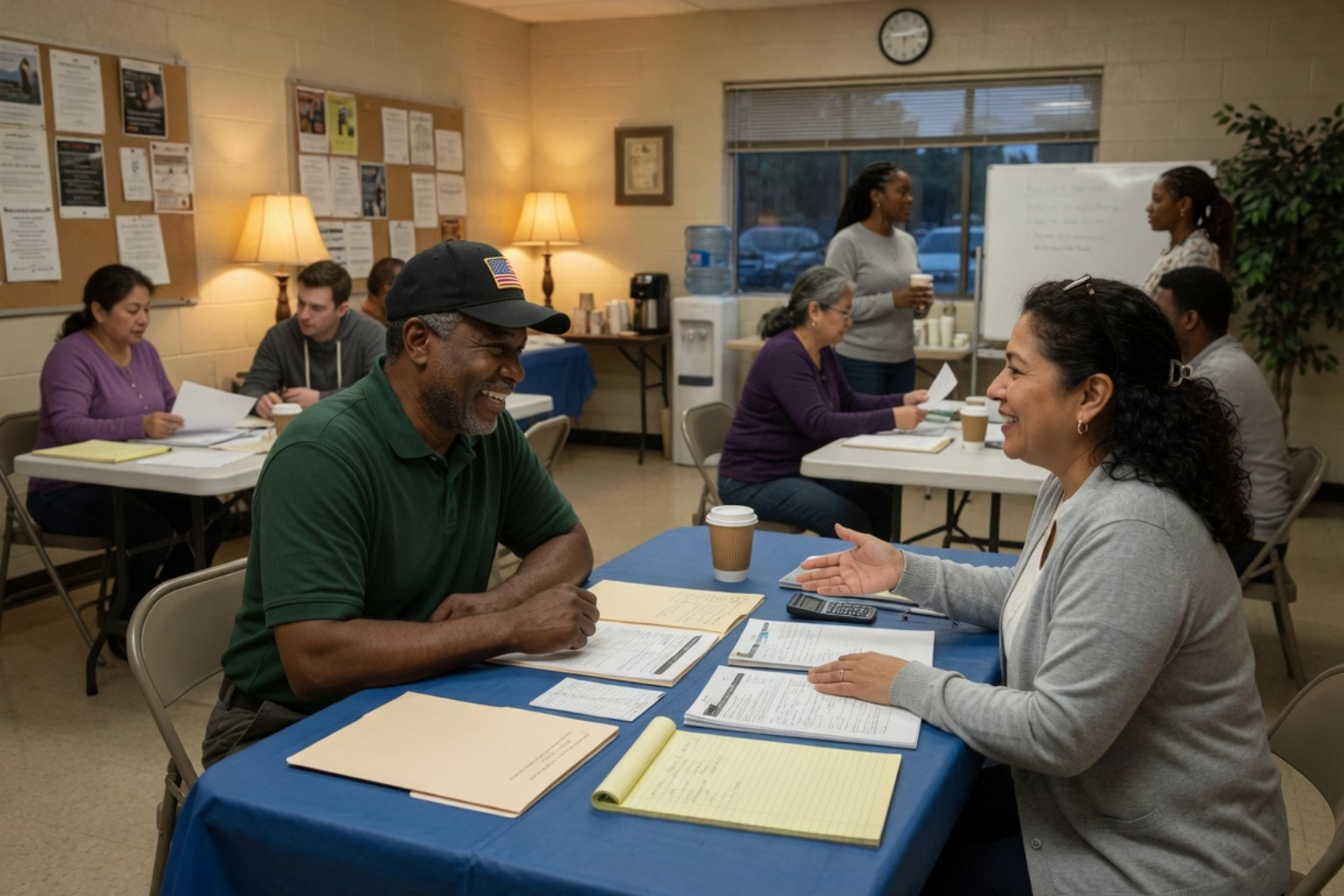
California veterans have access to some of the most robust state-level support systems in the country. From the sun-drenched streets of San Diego to the bustling hubs of Los Angeles and Riverside, local and state resources are tailored to the unique cost of living in the Golden State.
The CalVet Veteran Services Financial Assistance – CA.gov portal is an essential starting point for any California resident who has served. CalVet helps navigate state-specific benefits that can bridge the gap when federal programs aren’t enough.
Housing and Deposit Assistance in California
In high-cost areas like Irvine or San Diego, the initial cost of moving into an apartment—the security deposit and first month’s rent—can be a massive barrier. At LifeSTEPS, we see how these costs impact stability. Through the CalAIM program, we help eligible veterans with deposit assistance.
Securing a home is just the first step; staying there is the goal. We are proud to maintain a 93% housing retention rate among our clients. When veterans get more info about help with security deposits, they often find that having that initial financial hurdle cleared makes the path to self-sufficiency much smoother. Most deposit assistance programs require at least one month of rent paid in advance to secure the unit.
Education and Job Training Benefits
Education is often the best long-term solution for financial stability. The GI Bill remains a cornerstone of veteran support, with the VA dispersing over $11 billion in benefits in FY 2023 alone. These funds cover tuition, housing, and books, allowing veterans to transition into high-paying civilian careers.
In addition to federal aid, we focus heavily on educational outcomes. LifeSTEPS has helped facilitate $2.1M in scholarships for our residents, and our youth programs have seen a 97% literacy improvement in our Summer Reading programs. For those looking to pivot careers, there is more info about job training for veterans that can lead to higher-earning potential and permanent financial relief.
Managing VA Medical Debt and Copay Hardship
Medical expenses are a leading cause of financial stress. If you are struggling to pay your VA copay bills, the worst thing you can do is ignore them. The VA has specific protocols for Request VA Financial Hardship Assistance that can provide immediate relief.
Requesting Hardship Determinations
If your income has suddenly decreased due to job loss or an increase in out-of-pocket family healthcare expenses, you can file VA Form 10-10HS. This form is used to request a hardship determination. If approved, you may be exempted from copays for the remainder of the calendar year.
It is important to note that these exemptions usually apply to healthcare services but may exclude pharmacy medications. For more detailed data on how these payments are structured, you can review scientific research on VA payments.
Avoiding Debt Collection Pitfalls
The timeline for VA debt is strict. If a bill goes unpaid:
- After 30 days: The VA begins adding interest and late fees.
- After 90 days: The debt can lead to benefit offsetting (taking money from your disability or pension checks).
- After 120 days: The debt is transferred to the U.S. Treasury for collection, which can impact your credit score.
To avoid these consequences, you should review and pay your VA copay bill as soon as it arrives. If you can’t pay the full amount, the VA offers repayment plans that typically allow you to pay off the debt over three years.
Essential Steps to Apply for Financial Aid
Applying for veteran help with bills requires organization. Most programs will ask for the same core set of documents to prove your eligibility. Having these ready in a single folder (digital or physical) can speed up your application significantly.
Character of Discharge and Eligibility
A common misconception is that you need an “Honorable” discharge to get any help. While it’s true that some benefits are restricted, many veterans with “Other Than Honorable” (OTH) or “Bad Conduct” (BCD) discharges can still access help through a Character of Discharge (COD) determination.
This is a process where the VA reviews the circumstances of your service to decide if you are eligible for benefits. In many cases, especially regarding homelessness and emergency aid, help is available regardless of discharge status. For complex cases, seeking more info about legal aid for veterans can provide the advocacy needed to navigate these hurdles.
Documentation Checklist for Success
When you’re ready to apply, ensure you have the following:
- DD-214: Your discharge papers are your “golden ticket.”
- Proof of Income: Recent pay stubs or benefit statements.
- Bank Statements: Usually the last two months.
- Utility Bills: Specifically the ones you need help with.
- Proof of Residence: A lease agreement or a letter from a landlord.
- Deployment Orders: If applying for programs like the VFW grant that target deployment-related hardship.
| Requirement | National Programs (e.g., VFW) | California Programs (e.g., CalVet) |
|---|---|---|
| Service Period | Often requires wartime service | Any active duty (varies by program) |
| Income Limit | Varies, usually AMI-based | Strict AMI-based (e.g., 50% for SSVF) |
| Direct Payment | Paid to creditors | Paid to landlord/utility or veteran |
| Residency | Anywhere in U.S. | Must be a California resident |
Frequently Asked Questions about Veteran Help With Bills
Who qualifies for veteran financial assistance programs in California?
Most programs require you to have served in the active military, naval, or air service and to have been discharged under conditions other than dishonorable. For housing-specific aid like SSVF, your income must generally be below 50% of the area median income.
What types of bills can veterans get help with?
Veterans can receive assistance with a wide variety of expenses, including rent, security deposits, electricity, gas, water, car repairs, medical copays, and even moving costs or childcare in certain emergency situations.
How do I apply for Operation Homefront’s Critical Financial Assistance?
You can apply by creating an account on the “My Operation Homefront” portal. You will need to provide your DD-214, proof of income, and the specific bills you are struggling to pay. They prioritize those with service-connected injuries or those currently deployed.
Conclusion
At LifeSTEPS, we believe that the men and women who served our country should never have to face a financial crisis alone. Whether it is through navigating the complexities of the GI Bill or providing direct deposit assistance through the CalAIM program, our goal is to move veterans from crisis to a place of permanent sanctuary.
With our 93% housing retention rate and human-centered support, we are here to help you get your finances back in formation. By utilizing the national and state resources mentioned above, you can find the stability you earned. For more info about supportive services, reach out to see how we can assist in your journey toward self-sufficiency.
Visit our website for more information: LifeSTEPS
LifeSTEPS currently provides services in California only.


