


Uncle Sam Wants You to Have a Home
Uncle Sam Wants You to Have a Home
What You Need to Know About Government Subsidized Housing
Government subsidized housing is a set of federal programs that help low-income individuals and families afford a safe place to live — often by having the government pay a portion of the rent directly to the landlord.
Here is a quick overview of the main programs:
- Public Housing – Rental units owned and managed by local Housing Agencies (HAs), serving roughly 970,000 households nationwide
- Housing Choice Vouchers (Section 8) – Tenant-based vouchers that let you rent from a private landlord, with the government covering part of the cost; over 5 million people currently benefit
- Project-Based Rental Assistance (PBRA) – Subsidies tied to specific privately owned buildings, serving nearly 2 million people in approximately 1.2 million households
- Section 202 – Housing designed exclusively for very low-income adults aged 62 and older
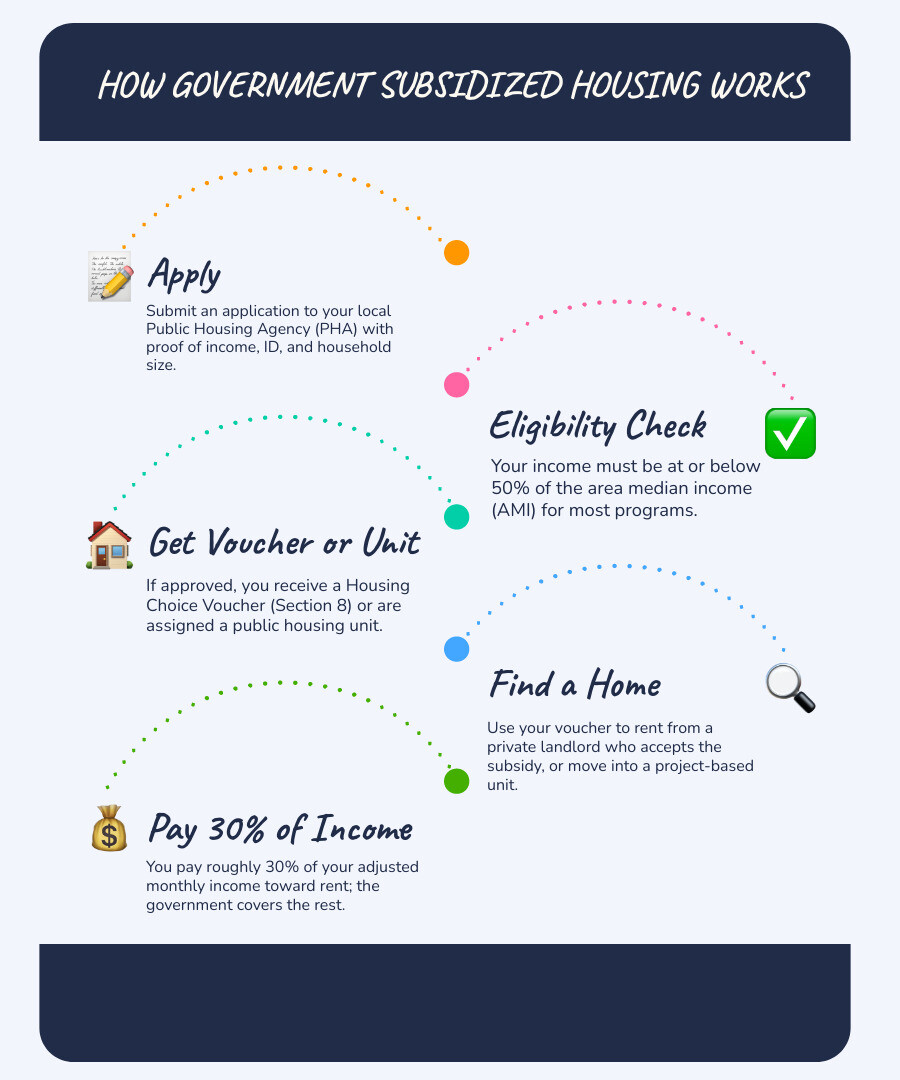
In all of these programs, tenants generally pay around 30% of their adjusted monthly income toward rent, and the government covers the rest.
If you are a recently discharged veteran trying to get stable housing in California, these programs can be a critical first step. The system can feel complicated, but understanding your options is where it starts.
LifeSTEPS currently provides services in California only.
Simple guide to government subsidized housing:
What is Government Subsidized Housing?
At its core, government subsidized housing refers to any housing option where the federal, state, or local government provides financial assistance to keep housing costs affordable for low-to-moderate-income families. In the United States, the primary driver of these programs is the U.S. Department of Housing and Urban Development (HUD).
Rather than a single program, subsidized housing is a patchwork of initiatives designed to ease the financial burden of rent. In most cases, the government pays apartment owners or private landlords directly to reduce the rent for tenants with low incomes. This ensures that vulnerable populations do not have to choose between paying rent and buying food or medicine.
Navigating these programs can feel overwhelming. To help you make sense of it all, we have put together A Simple Guide to HUD Affordable Housing Programs which breaks down the federal landscape.
The Core Purpose of Government Subsidized Housing
The ultimate goal of these programs is poverty alleviation, housing stability, and preventing homelessness. When housing costs consume more than half of a household’s income, a single financial emergency—like an unexpected medical bill or car repair—can lead to eviction. By capping rent at an affordable percentage of household income, subsidized housing provides a stable foundation from which families can build better futures.
This stability is especially critical in high-cost states like California, where the gap between wages and market-rate rent is exceptionally wide. For those seeking localized assistance, exploring California HUD Resources is an excellent way to see how federal dollars are deployed across our state to support local communities.
Major Types of Subsidized Housing Programs
To find the right program, it helps to understand that federal rental assistance generally falls into three main buckets: public housing, tenant-based vouchers, and project-based subsidies.

Public Housing Programs
Public housing consists of rental complexes owned and managed directly by local Housing Agencies (HAs). These properties can range from scattered single-family homes to dedicated apartment buildings. Nationwide, approximately 970,000 households live in public housing units managed by some 3,300 HAs.
To learn more about how this specific program operates under federal guidelines, check out the official HUD Public Housing Program resource. Local HAs act as landlords, handling building maintenance, lease compliance, and tenant selection based on localized community preferences.
Housing Choice Vouchers (Section 8)
The Section 8 Housing Choice Voucher (HCV) program is the nation’s largest tenant-based rental assistance program. Unlike public housing, a tenant-based voucher belongs to the individual or family, not the property. This means you can find a private apartment on the open market, and as long as the landlord agrees to participate in the program and the rent meets HUD guidelines, your voucher will cover the subsidy.
As of late 2024, the HCV program assisted over 5 million people in more than 2.3 million families annually. If you want to understand the ins and outs of using a voucher, our comprehensive Section 8 Housing Rentals Guide provides a step-by-step roadmap for finding participating properties and securing a lease.
Project-Based Rental Assistance (PBRA)
Project-Based Rental Assistance (PBRA) operates differently. Instead of the voucher following the tenant, the subsidy is tied directly to the physical apartment building. Under this model, the federal government contracts directly with private property owners who agree to rent units to low-income tenants at reduced rates.
The PBRA program serves nearly 2 million people in approximately 1.2 million households nationwide. Additionally, local housing authorities can allocate a portion of their standard Section 8 funds as Project-Based Vouchers (PBVs), which currently serve over 500,000 tenants in about 290,000 units. If you move out of a project-based unit, the subsidy stays behind for the next eligible tenant. To understand the strategic differences between these structures, you can read our comparison of various Rental Subsidy Programs.
Eligibility and How Rent is Calculated
Eligibility for government subsidized housing is primarily based on your household’s annual gross income, family size, and citizenship or eligible immigration status. Local housing authorities use HUD-established income limits to determine who qualifies.
HUD sets these limits based on the Median Family Income (MFI) for your specific county or metropolitan area:
- Extremely Low-Income: 30% of the area median income (AMI)
- Very Low-Income: 50% of the area median income (AMI)
- Low-Income: 80% of the area median income (AMI)
Because these limits are tied to local economies, a qualifying income in Los Angeles or San Diego will look very different from a qualifying income in rural areas.
| Program Type | Primary Target Demographics | Standard Rent Calculation Formula | Key Benefit |
|---|---|---|---|
| Public Housing | Low-income families, elderly, & disabled | Highest of 30% adjusted income, 10% gross income, or $25-$50 minimum | Managed directly by local public housing agencies |
| Housing Choice Vouchers (Section 8) | Extremely & very low-income households | 30% of adjusted monthly income (tenant pays the rest up to a payment standard) | High portability; choose your own private landlord |
| Project-Based Rental Assistance (PBRA) | Low-income families and individuals | 30% of adjusted monthly income | Stable, long-term affordable units in private developments |
| Section 202 Supportive Housing | Very low-income seniors (62+) | 30% of adjusted monthly income | On-site supportive services and age-friendly design |
Calculating Your Total Tenant Payment
Once you are deemed eligible, your rent is determined using a formula called the Total Tenant Payment (TTP). By law, your rent will be the highest of the following options:
- 30% of your monthly adjusted income (gross income minus allowable deductions)
- 10% of your monthly gross income
- Welfare rent (if applicable in your jurisdiction)
- A minimum rent set by the local housing authority (typically between $25 and $50)
To make this fair, HUD allows specific deductions from your gross annual income. For example, households receive a $480 deduction for each dependent and a $400 deduction for any elderly family member or person with a disability. Medical expenses and child care costs can also be deducted under specific guidelines. To learn more about maximizing these deductions to keep your rent as low as possible, review our guide on Low Income Rental Assistance.
Navigating the Application Process in California
Applying for government subsidized housing requires preparation, patience, and attention to detail. Because programs are run locally, you must apply through the specific Public Housing Agency (PHA) that operates in the city or county where you want to live.
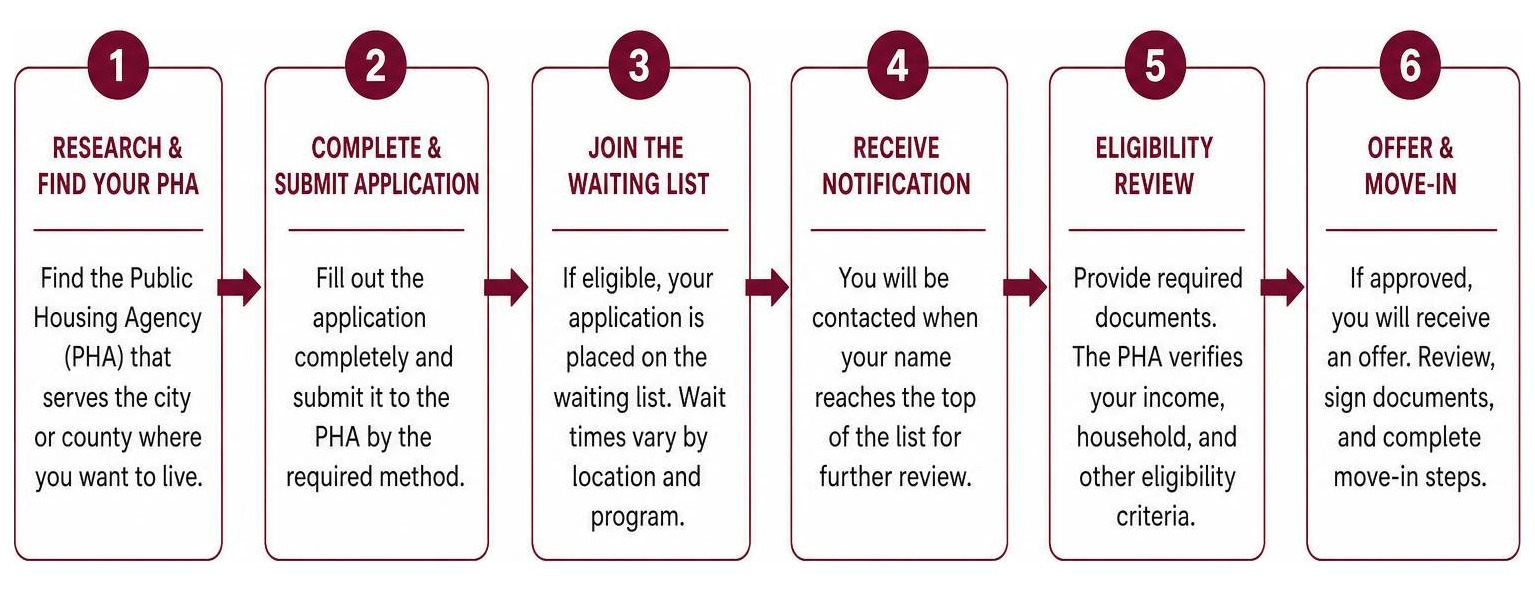
When you apply, you will need to provide extensive documentation, including:
- Birth certificates and Social Security cards for all household members
- Recent tax returns, W-2s, and consecutive pay stubs
- Bank statements and asset verifications
- References from previous landlords to verify tenant suitability
Because demand for affordable housing far outstrips supply, almost all PHAs use waiting lists. Some waiting lists may be closed for years, while others open for only a short window. Many housing authorities use local selection preferences—giving priority to veterans, families experiencing homelessness, or those living in substandard housing.
If you are applying in our California service areas, you should contact the specific local housing authorities directly:
- If you are in Southern California, explore the Los Angeles Housing Programs page to learn about local resources.
- For those near the border or coastal communities, check out the San Diego Affordable Rentals portal.
- Residents in the Inland Empire can apply via the Riverside County Housing Authority home page.
If you want a detailed, step-by-step breakdown of how to prepare for your housing interview and compile your application packet, we highly recommend reading The Ultimate HUD Low Income Housing Application Guide.
Specialized Programs and Funding Sources
While public housing and Section 8 are the most visible programs, the broader landscape of affordable housing relies on a variety of federal funding sources and tax incentives.
The largest driver of new affordable housing construction in the United States is the Low-Income Housing Tax Credit (LIHTC). Created in 1986, the LIHTC program has placed over 3.7 million affordable units in service across more than 54,000 projects. It works by giving private investors a dollar-for-dollar reduction in their federal tax liability in exchange for investing equity into affordable housing developments.
Other critical federal block grants include:
- Community Development Block Grants (CDBG): In FY 2024, CDBG provided $3.3 billion in flexible funding to local jurisdictions to support housing rehabilitation, public services, and economic development.
- HOME Investment Partnerships Program: In FY 2025, the HOME program received $1.25 billion to help local governments build, buy, or rehabilitate affordable housing for rent or homeownership.
For instance, master-planned communities like those in Orange County leverage these funding streams to integrate affordable units directly into high-opportunity neighborhoods. You can see how this works locally by reviewing the Irvine Affordable Housing initiatives.
Government Subsidized Housing for Seniors
Seniors on a fixed income face unique housing challenges. HUD’s Section 202 Supportive Housing for the Elderly is the only federal program dedicated exclusively to very low-income adults aged 62 or older.
Under Section 202, HUD provides interest-free capital advances to private, non-profit developers to construct senior housing. These advances do not have to be repaid as long as the property remains affordable to low-income seniors for at least 40 years. These communities often feature on-site Service Coordinators who help residents coordinate transportation, meals, and light housekeeping so they can age in place safely.
To explore this program in depth, we recommend reading The Ultimate Guide to Government Subsidized Senior Housing as well as The Golden Guide to Senior HUD Housing for practical tips on finding senior-specific communities.
Rural Housing and Other Federal Support
For those living outside major metropolitan areas, the United States Department of Agriculture (USDA) operates its own suite of housing programs. The USDA’s Rural Housing Service provides critical support to rural renters and homebuyers. In FY 2023, this agency provided over $1.5 billion in rental assistance to 228,000 rural renters, while committing $10.6 billion in loans, loan guarantees, and grants to support rural housing stability.
If you are looking to transition from renting to owning a home, federal relief and localized assistance programs can bridge the financial gap. Learn more about these pathways in The Ultimate Guide to Government Homeowner Relief and Assistance Programs.
Frequently Asked Questions About Subsidized Housing
How long can a tenant stay in subsidized housing?
Generally, there is no time limit on how long you can stay in subsidized housing, provided you remain an eligible tenant, comply with your lease terms, and complete your mandatory annual income reexamination. If your household income increases, your rent will be adjusted upward based on the 30% formula.
If your income increases to the point where 30% of your monthly income completely covers the market rent, your subsidy will drop to zero. However, many housing authorities encourage participation in programs like the Family Self-Sufficiency (FSS) program, which allows you to build an escrow account as your earnings grow, helping you transition toward financial independence. For details on how these programs work, read about Housing Authority Programs for Homeownership.
What is the difference between tenant-based and project-based vouchers?
The primary difference is portability:
- Tenant-Based Vouchers (Housing Choice Vouchers): These belong to you. If you decide to move, you can take your voucher with you to a new apartment, even in a different city or state (a process known as portability).
- Project-Based Vouchers: The subsidy is tied to the apartment unit itself. If you move out of a project-based unit, you lose the rental subsidy, and it stays with the physical property to benefit the next low-income tenant who moves in.
What happens if my income exceeds the limit?
If your income rises above the eligibility limit while you are already living in subsidized housing, you will not be immediately evicted. Instead, your rent will gradually increase to match the market rate. Most programs have grace periods or over-income policies that allow families to remain in their homes while they adjust to their new financial situation. This transition period is designed to prevent a “cliff effect,” where a small raise at work leads to a sudden loss of housing.
Conclusion
Securing government subsidized housing is a powerful first step toward long-term stability, but navigating the system requires strong support. At LifeSTEPS, we walk alongside individuals and families as they transition to stable housing and self-sufficiency.
Through our collaborative efforts, we help our clients achieve housing security, boasting an impressive 93% housing retention rate. For those needing immediate transition support, we tie our deposit assistance—which can cover up to one month paid in advance—directly to the CalAIM program.
Our supportive services extend far beyond housing. We are deeply committed to empowering the next generation, achieving a 97% literacy improvement through our Summer Reading program, and awarding over $2.1M in scholarships to help students pursue higher education.

Whether you are a veteran seeking a pathway to homeownership or a family looking for a stable place to call home, we are here to help. Discover how our team can support your journey by exploring the LifeSTEPS Programs and Services page.
Contact: LifeSTEPS | Phone: (916) 965-2110 | LifeSTEPS Website
LifeSTEPS currently provides services in California only.


