Tag Archive for: LifeSTEPS

older adults in affordable California senior apartment community

The Definitive Guide to Senior Apartment Costs & LifeSTEPS CalAIM Aid

What the Cost of Senior Apartments Means for Your Budget

The cost of senior apartments varies widely, but a national median is about $1,678 per month for a seniors-only apartment. Market-rate apartments may cost more based on location, unit size, and amenities. Affordable or subsidized apartments can cost far less because rent is often tied to household income.

Senior apartments are generally for adults who can live independently. They are usually less expensive than independent living communities, which often bundle meals, housekeeping, and activities into higher monthly fees. Before applying, compare the full monthly total: rent, utilities, parking, transportation, and any optional services.

For California residents facing a housing transition, LifeSTEPS supports housing stability through CalAIM services, including 1 month paid in advance for deposit assistance when eligible. LifeSTEPS has achieved a 93% housing retention rate, helping residents maintain stable housing after move-in.

Housing stability can also strengthen whole communities. LifeSTEPS’ afterschool programs have delivered a 97% literacy improvement for Summer Reading, while its higher education support has provided $2.1M in scholarships.

Senior apartment cost tiers including market rate affordable rent and CalAIM deposit aid infographic

Cost of senior apartments vocab explained:

Understanding the Average Cost of Senior Apartments and Living Options

Navigating retirement budgets in 2026 requires understanding how various senior housing models charge for space and support. While the median rent for a standard senior apartment hovers around $1,678 per month, broader market rates generally range from $1,200 to $3,500 monthly depending on the market and property style. In contrast, full-service independent living communities frequently cost $3,200 or more per month, and licensed assisted living facilities average anywhere from $3,500 to upwards of $10,500 per month due to hands-on personal care services.

Subsidized and tax-credit properties offer substantial relief for qualifying older adults. Under federal and state guidelines, rents in subsidized programs are calculated based on household earnings rather than private real estate valuation, making safe housing accessible to those living primarily on Social Security.

Housing Option Typical Monthly Base Cost Care & Service Inclusions Entrance or Buy-In Fees
Subsidized Senior Apartments $244 – $1,305 (or ~30% of adjusted income) Independent living, service coordination, resident activities Standard security deposit only
Market-Rate Senior Apartments (55+) $1,200 – $3,500 Independent living, property maintenance, shared amenities Standard security deposit
Independent Living Communities $2,300 – $4,000+ Bundled dining plans, weekly housekeeping, transportation Standard deposit to modest community fee
Assisted Living Facilities $3,500 – $10,500+ Personal care assistance, medication management, 24/7 staff One-time community fee ($2,000 – $5,000)
Continuing Care Retirement Communities (CCRCs) $4,246+ monthly Lifetime continuum of care (Independent through Skilled Nursing) Large entrance fee (Average ~$490,000)

To review more details on market variations and property tiers, see the Senior Apartment Cost Guide and Pricing Insights 2026 – LatestCost – Real-Time Price Insights or compare residential types via The Cost of Retirement Communities: Compare Your Options.

Key Factors Influencing the Cost of Senior Apartments in California

The price of senior housing is largely determined by physical location, square footage, and property-wide amenities. Across the state, metropolitan regions demonstrate noticeable variations in base pricing:

Exploring statewide directories on Senior Housing Apartments for Rent in California and consulting our comprehensive overview of affordable senior housing california can help families discover budget-aligned options.

Differences Between Subsidized and Market-Rate Senior Apartments

Senior apartments operate under straightforward residential lease agreements rather than long-term healthcare contracts. Unlike Continuing Care Retirement Communities that require substantial lifetime entrance fees averaging nearly $490,000, senior apartments do not charge massive buy-in costs.

Residents in age-restricted communities (typically 55+ or 62+) enjoy complete autonomy, private living quarters, and a maintenance-free lifestyle where property management handles exterior upkeep, structural repairs, and landscaping. Those exploring budget-friendly options can evaluate low cost senior independent living alongside properties highlighted in our guide on 10 cheaper alternatives to affordable senior independent living.

What Expenses and Utilities Are Included in Senior Apartment Rents?

modern barrier-free senior apartment interior living room and kitchen

Understanding what is covered in your monthly lease helps prevent unexpected financial strain. In affordable and subsidized senior apartments, base rent almost universally covers water, sewer, and trash collection services. Many communities also bundle central heating and air conditioning into the contract structure.

In market-rate senior buildings, residents may pay their own electric, gas, and internet accounts, or opt into flat-rate utility packages that simplify monthly budgeting. Optional conveniences—such as reserved covered parking, extra storage units, or pet deposits—are typically itemized separately.
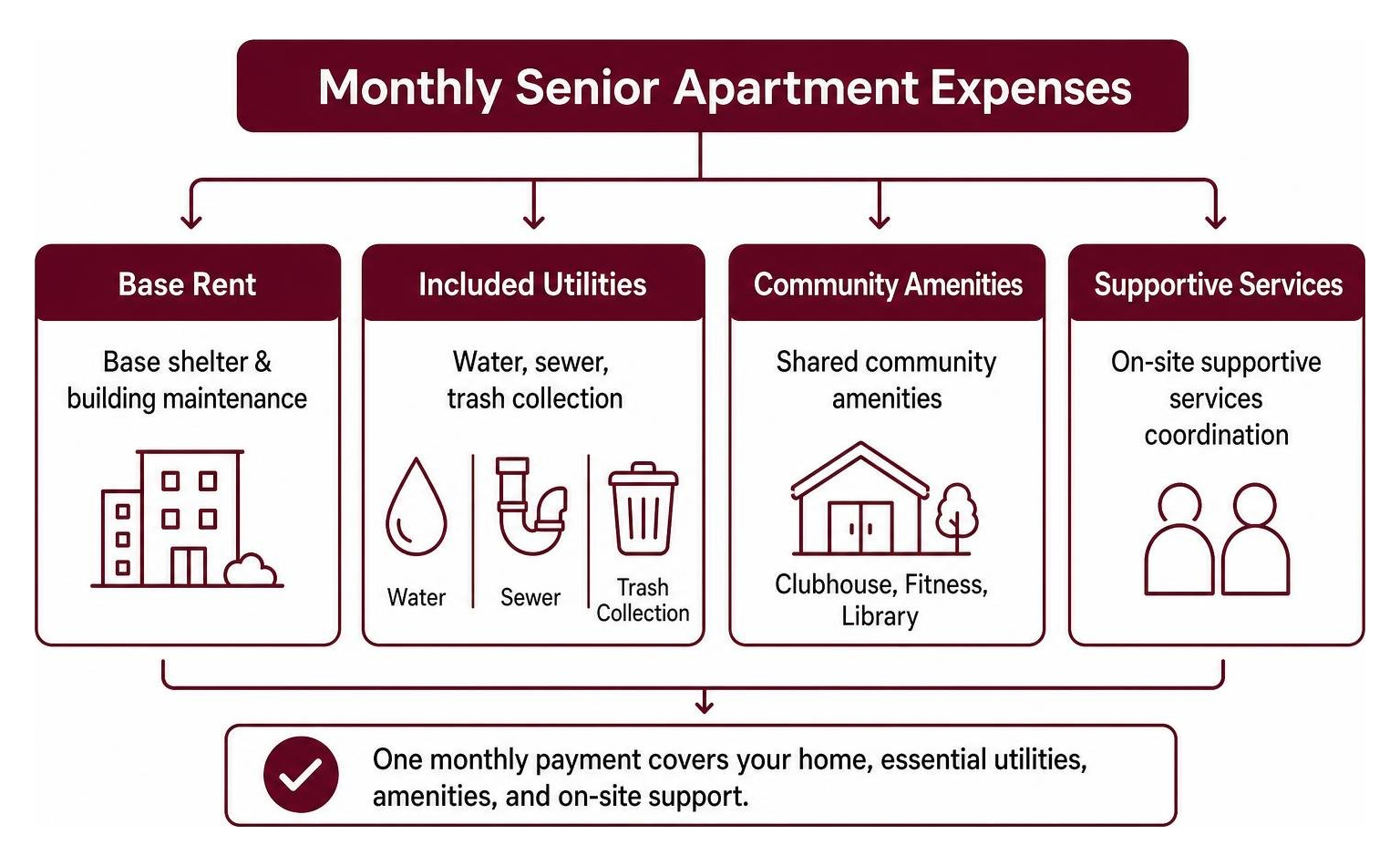
Breakdown of monthly senior apartment expenses showing base rent and included utilities

Supportive Services and Community Amenities

Senior apartment communities are intentionally constructed with universal design standards to promote safe mobility. Standard physical features include barrier-free floor plans, zero-step entryways, wide hallways, lever door handles, and grab bars in bathrooms.

Beyond physical architecture, many properties feature on-site service coordinators who organize wellness lectures, social activities, and educational workshops. Programs such as senior fitness programs and community-wide food baskets for seniors keep residents active and supported. Families researching these service models can review our insights on senior living affordable housing and finding the perfect affordable senior housing near you.

Financial Assistance, CalAIM Support, and California Housing Subsidies

When market rents outpace retirement savings, state and federal safety nets provide meaningful assistance. In California, the Department of Health Care Services administers the CalAIM (California Advancing and Innovating Medi-Cal) initiative. Through CalAIM Community Supports, eligible seniors transitioning out of unstable situations or moving into permanent residences can receive critical assistance.

LifeSTEPS works closely within these frameworks, offering hands-on tenancy transition and housing sustaining services. When individuals qualify, CalAIM can provide 1 month paid in advance for deposit assistance, removing the single largest upfront barrier to securing an apartment.

By combining physical housing placement with individualized case management, LifeSTEPS achieves a 93% housing retention rate, ensuring residents remain stably housed over the long term. Seniors seeking assistance can reference senior housing assistance your roadmap to a new home and learn more about where to find low cost senior apartments without the stress.

How Subsidies and Tax Credits Lower the Cost of Senior Apartments

Government-backed programs make housing affordable by establishing rents below open-market thresholds:

  1. HUD Section 202 and Section 8: These federal programs generally set tenant rent at 30% of adjusted gross income, subsidizing the remaining balance directly to the property owner. Read the ultimate guide to government subsidized senior housing and the essential hud low income senior housing handbook for a full breakdown.
  2. Low-Income Housing Tax Credit (LIHTC): Developers receive tax credits in exchange for designating units to households earning specific percentages (such as 30%, 50%, or 60%) of the Area Median Income (AMI).
  3. Local Housing Authority Vouchers: Housing Choice Vouchers can be applied toward private or designated senior apartment communities, as explained in the golden guide to senior hud housing and our guide on top subsidized senior housing communities you can actually afford.

Those managing physical limitations alongside income restrictions can also consult our guides on low income housing for elderly and disabled and affordable housing disabled seniors guide.

Securing an affordable senior apartment requires proactive planning, as waiting lists can range from several months to a couple of years. Applicants who gather documentation months in advance may be better positioned to respond quickly when housing vouchers or affordable apartment openings become available.

To position yourself effectively across Southern California and the greater Bay Area:

Frequently Asked Questions About Senior Housing Expenses

Are utilities usually included in senior apartment rent?

In federally subsidized properties and many affordable tax-credit developments, essential utilities such as water, sewer, and trash removal are bundled into the rental agreement. Some facilities include gas, central heat, and air conditioning. When electricity is billed separately, properties typically apply a standard utility allowance that lowers the resident’s monthly rent check to balance total household costs. Learn more in our low income senior housing guide.

How does CalAIM assist seniors transitioning into affordable housing?

CalAIM offers Medi-Cal Community Supports designed to help qualifying individuals secure and maintain stable living environments. Key benefits include housing transition navigation, tenancy sustaining services, and 1 month paid in advance for deposit assistance. These services help cover the initial move-in expenses that often create barriers for seniors on limited fixed incomes.

Do affordable senior apartments require large upfront entrance fees?

No. Affordable and market-rate senior apartments do not charge the substantial lifetime entrance fees associated with Continuing Care Retirement Communities (CCRCs), which can exceed several hundred thousand dollars. Senior apartments operate on standard rental agreements requiring only a traditional security deposit and standard application fees upon move-in.

Where can I find income-based senior apartments nearby?

You can search local housing authority databases and check dedicated community listings in our resources on low income elderly housing near me, low income elderly housing, and senior living apartments based on income near me. Additional strategies for locating budget-friendly residences are available in the golden years golden deals finding low income senior housing and retire rich live cheap the best affordable spots for seniors.

Conclusion

Finding safe, comfortable, and affordable senior housing is an essential step in ensuring financial peace of mind during retirement. By understanding the distinction between market-rate rentals, subsidized apartments, and service-rich independent living facilities, seniors and their families can choose a living arrangement that balances personal independence with long-term affordability.

LifeSTEPS remains committed to building vibrant, supportive communities across California. Through targeted housing stability initiatives, CalAIM deposit assistance, and compassionate on-site service coordination, LifeSTEPS maintains an exceptional 93% housing retention rate. Our organization-level focus also empowers future generations through our youth programs, creating a 97% literacy improvement for Summer Reading participants and distributing $2.1M in scholarships to support higher education.

To explore available housing resources and start planning your next steps, browse our comprehensive ultimate affordable senior housing list and review our affordable homes for seniors.

For media inquiries, contact: bex@lifestepsusa.org

LifeSTEPS currently provides services in California only.

LifeSTEPS Participate in First Annual Supportive Housing Week

career development specialist jobs

How to Land Your Dream Career Development Specialist Job

How to Land Your Dream Career Development Specialist Job

What Are Career Development Specialist Jobs (And Is This Career Right for You)?

Career development specialist jobs are roles where professionals help individuals identify career goals, build action plans, and navigate the job search process from start to finish. If you’re exploring this field, here’s a quick snapshot of what to expect:

  • What you’ll do: Career coaching, resume reviews, workshop facilitation, employer outreach, and job placement support
  • Where you’ll work: Universities, nonprofits, government agencies, and workforce development organizations
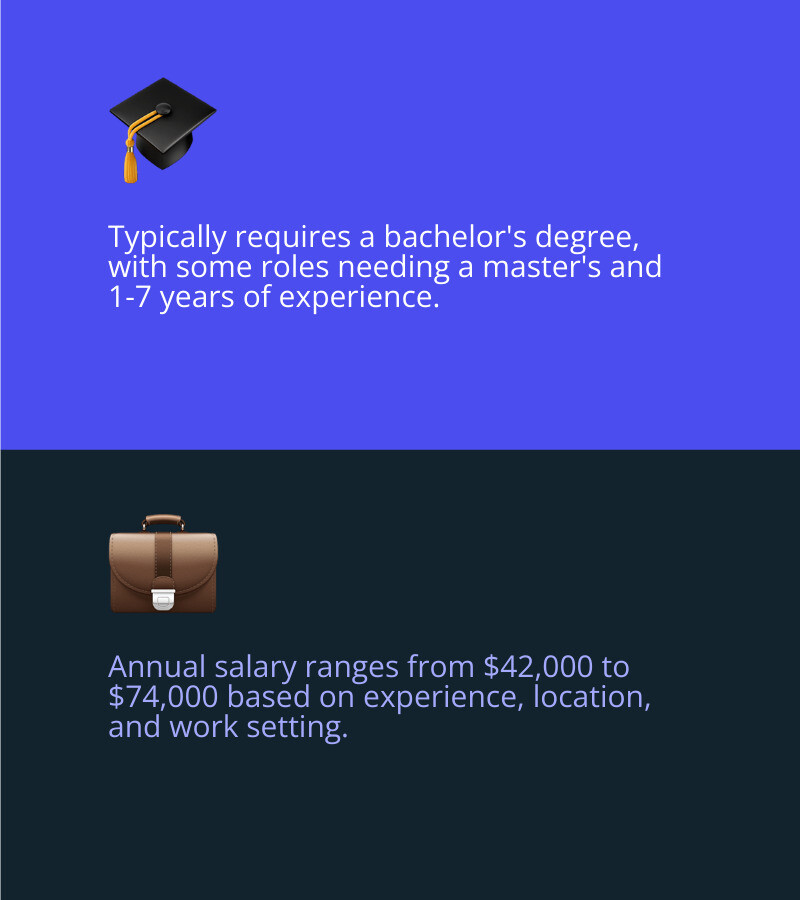
  • What you’ll need: Typically a bachelor’s degree (some roles require a master’s) plus 1-7 years of relevant experience
  • What you’ll earn: Roughly $42,000 to $74,000 per year depending on experience, setting, and location

For veterans transitioning out of military service, stepping into a career development specialist role can be a powerful way to put leadership experience to work while helping others find their footing. The skills built in service — coaching, organizing, communicating under pressure — translate directly into this field.

Career development specialists work across a wide range of settings, from university career centers supporting first-generation college students to nonprofits helping people in underserved communities achieve economic self-sufficiency. The work is hands-on, people-focused, and deeply tied to outcomes that matter.

This guide walks you through everything you need to know to land a role in this growing field.

Overview infographic: career development specialist jobs - duties, qualifications, salary ranges, and work settings - career

LifeSTEPS currently provides services in California only.

Simple guide to career development specialist jobs:

Understanding Career Development Specialist Jobs and Responsibilities

When we look at the core of career development specialist jobs, we see a role that is part counselor, part cheerleader, and part strategist. These professionals are the bridge between a person’s current situation and their future professional aspirations. Whether you are working in a bustling city like Los Angeles or a community hub in Riverside, the mission remains the same: empowering people to take control of their professional lives.

The primary responsibilities usually include:

  • Career Coaching: One-on-one sessions to identify strengths and interests.
  • Resume Reviews: Helping clients translate their life experiences into professional language.
  • Workshop Facilitation: Leading groups through topics like networking or “soft skills” development.
  • Employer Outreach: Building relationships with local businesses to find job openings for clients.

For more details on how these services are structured, you can explore our overview of career development services.

A specialist leading a workshop presentation for a diverse group of adults in a classroom setting - career development

Primary Duties in Workforce Development

In workforce development, the focus is often on economic self-sufficiency. Specialists in this sector work hard on job readiness training, which includes everything from mock interviews to teaching clients how to use modern job search tools.

Once a client is placed in a job, the work doesn’t stop. Retention strategies are a huge part of the job. This might involve checking in with the client after 30, 60, and 90 days to ensure they have the support they need to stay employed. This holistic approach is part of the broader career management process that ensures long-term stability rather than just a quick fix.

Specialized Support for Veterans

In California, there is a significant focus on supporting our veterans. Career development specialists often play a key role in reintegration programs. This includes navigating California’s Alternative Sentencing for Veterans and Service Personnel, which allows eligible veterans suffering from service-related trauma to pursue treatment and career rehabilitation instead of incarceration.

By focusing on education and career potential, specialists help these individuals restore their place in the community. We see this as a vital part of the support system that leads to housing stability and a fresh start.

Key Qualifications and Education Requirements

If you’re looking to apply for career development specialist jobs, your educational background will be the first thing recruiters check. Most entry-level roles require a Bachelor’s degree in counseling, human resources, social work, or education. However, if you are aiming for a leadership role or a position at a major university in San Francisco or San Diego, a Master’s degree is often preferred or even required.

To understand what you’ll be expected to teach others, it’s helpful to review the career development learning outcomes guide, which outlines the milestones clients should reach during their journey.

Essential Skills for Career Development Specialist Jobs

Modern job coaching isn’t just about giving advice; it’s about mastering the tools of the trade. Job postings in the current market highly value:

  • Digital Content Creation: Proficiency in Canva to create promotional flyers or LinkedIn banners.
  • Social Media Savvy: Knowing how to leverage LinkedIn and even Instagram to build a professional brand.
  • AI Literacy: Familiarity with AI job search tools like ChatGPT to help clients optimize their resumes or practice for interviews.
  • Assessment Tools: The ability to administer and interpret a career development assessment to guide a client’s path.

Professional Certifications and Growth

Growth in this field is supported by ongoing education. The National Career Development Association (NCDA) offers certifications that are highly respected in the industry. Pursuing these can help you move from a “Professional” level to an “Advanced Professional” or “Senior” role.

Mapping out your own path is just as important as helping your clients. Check out the career development planning ultimate guide to see how you can structure your own professional ascent.

Comparing Work Settings: Higher Education vs. Nonprofits

Where you work will drastically change your day-to-day life. A university setting feels very different from a community-based nonprofit.

Higher Education Roles and Career Clusters

In universities, specialists often work within “career clusters.” For example, you might specifically advise students in Health Sciences or Government and Public Administration. There is a heavy emphasis on:

  • Academic Retention: Helping students see the link between their degree and their future paycheck.
  • Supporting First-Generation Students: Providing extra guidance for those who are the first in their family to navigate the professional world.
  • Data Analysis: Tracking internship data and employment outcomes to prove the university’s value.
  • Experiential Learning: Connecting classroom theory to the real world, as detailed in our guide on experiential learning and career development.

Community and Nonprofit Impact

In the nonprofit sector, the goal is often more focused on immediate stability and “wrap-around” supports. Here, career development specialist jobs involve helping people overcome barriers like housing instability or a lack of transportation.

Specialists in this setting perform a career development needs assessment to understand the full picture of a client’s life. Success isn’t just a job offer; it’s the client achieving economic self-sufficiency and moving into stable housing. At LifeSTEPS, we take pride in this human-centered approach, which contributes to our 93% housing retention rate among the people we serve.

Salary Expectations and Career Growth in California

California offers some of the most competitive salaries for career development professionals, though the cost of living in hubs like the Bay Area or Irvine is a factor to consider.

Finding Career Development Specialist Jobs in the Golden State

To find the best roles, we recommend looking at specialized job boards like the California Council of Nonprofits or university-specific portals. Networking is also key—many roles in workforce development are filled through professional connections. For more resources on how to navigate the job market yourself, see our tips on how to level up your future: the best resources for career planning.

Based on current data for California-based roles, here is what you can expect:

Experience Level Typical Salary Range Key Requirements
Professional (Entry) $42,100 – $61,000 Bachelor’s Degree, 0-2 years experience
Advanced Professional $51,000 – $74,000 Bachelor’s + 3-5 years or Master’s + 1 year
Specialized/Grant-Funded $47,490 – $71,230 Varies by grant requirements

Beyond the base salary, many organizations offer robust benefits. For example, university roles often include tuition benefits, allowing you to pursue a Master’s degree for free or at a deep discount. Nonprofit roles often provide flexible hybrid work schedules and extensive medical insurance packages.

Frequently Asked Questions about Career Development Specialist Jobs

What is the typical entry-level salary for this role?

In California, entry-level salaries usually start around $42,000 to $45,000. In high-demand areas like San Francisco or Los Angeles, this may be slightly higher to account for the cost of living.

Do I need a Master’s degree to work in a university career center?

While some entry-level “Professional” roles only require a Bachelor’s degree, many universities prefer a Master’s degree in Counseling or Higher Education for their specialist and assistant director positions.

What are the most valued technical skills for career specialists today?

Recruiters are looking for “digital fluency.” This means being able to use LinkedIn for networking, Canva for creating marketing materials, and AI tools to help clients with resume optimization and interview prep.

Conclusion

Landing one of the many career development specialist jobs available today is about more than just having the right degree; it’s about a passion for helping others reach their full potential. Whether you are helping a student find their first internship or assisting a veteran in transitioning to civilian life, your impact is measurable and profound.

At LifeSTEPS, we believe that career success is a pillar of a stable life. We provide essential human-centered support to help Californians achieve housing stability and self-sufficiency. We are proud of our 93% housing retention rate and our commitment to the next generation, having provided over $2.1M in scholarships.

Learn more about our programs

LifeSTEPS currently provides services in California only.
health & wellbeing coach

The Essential Guide to the Health & Wellbeing Coach Role

The Essential Guide to the Health & Wellbeing Coach Role

What a Health & Wellbeing Coach Actually Does (And Why It Matters)

A health & wellbeing coach is a personal guide who helps you make real, lasting changes to your lifestyle — covering everything from nutrition and sleep to stress management and physical activity.

Here’s the quick answer:

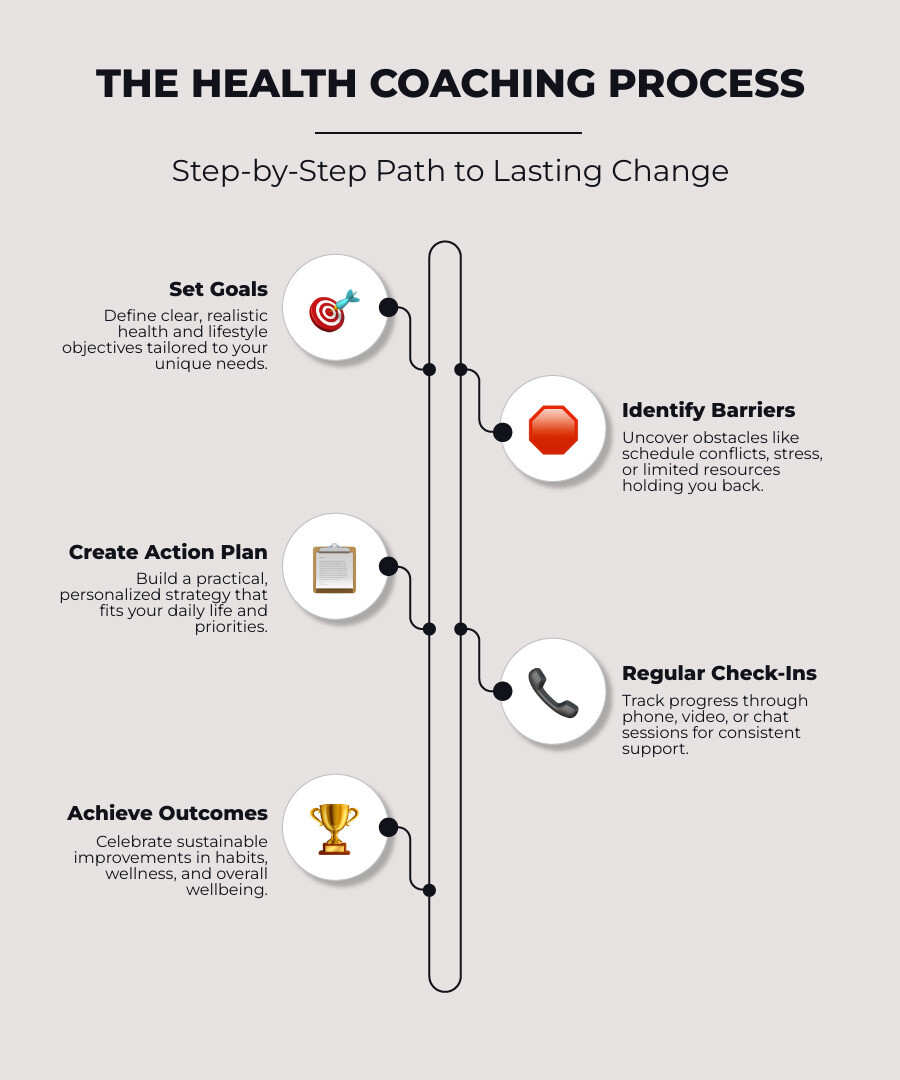
  • A health & wellbeing coach helps you set goals, identify what’s blocking you, and build a realistic plan
  • They focus on your life — your schedule, your barriers, your priorities
  • They don’t tell you what to do — they help you figure out what works for you
  • Sessions typically run over at least three months, with regular check-ins by phone, video, or chat
  • They address not just personal habits, but also social factors like food access, stress, and life transitions

For veterans transitioning to civilian life, those challenges can feel overwhelming — new routines, new pressures, and often very little support. A health & wellbeing coach can be the steady, non-judgmental partner that helps you move forward, one step at a time.

Think of it this way: your doctor tells you to eat more vegetables. But if you’re working two jobs and don’t know where to start, how do you actually do that? That’s exactly the gap a health & wellbeing coach fills — not by lecturing you, but by asking the right questions and helping you build a plan that fits your real life.

Infographic showing the health coaching process: goal setting, barrier identification, action planning, check-ins, outcomes

Easy health & wellbeing coach glossary:

What is a Health & Wellbeing Coach?

professional wellness consultation personal guide physical health - health & wellbeing coach

At its core, a health & wellbeing coach serves as your personal health guide, mentor, and supporter. Unlike a doctor who might spend fifteen minutes with you to diagnose a condition, a coach walks alongside you for the long haul. They help you unlock your best self by focusing on lifestyle changes that improve both physical and emotional health.

In many cases, a primary care provider may suggest working with a coach to help you meet specific medical goals, such as lowering blood pressure or managing weight. We see this as a partnership: the doctor provides the “what” (the medical goal), and the coach helps you figure out the “how” (the daily habits).

Defining the Scope of Practice

A health & wellbeing coach provides non-clinical support. This means they don’t prescribe medication or diagnose illnesses. Instead, they use “reflective questioning” to help you find your own answers. If you’re looking for an integrative health coach near me, you’re looking for someone who builds your “self-efficacy”—your belief in your own ability to succeed. They aren’t there to give orders; they are there to help you build sustainable habits that last a lifetime.

Addressing Social Drivers of Health

We know that health isn’t just about willpower. Often, the environment we live in creates hurdles. A coach helps you navigate “social drivers of health.” For example, if you are experiencing food insecurity, it’s hard to follow a strict diet. If your neighborhood lacks sidewalks, finding safe exercise options becomes a challenge.

Coaches help you look at the big picture, including self-care priorities and community resources, to ensure your plan is actually doable in your current situation.

The Daily Impact of a Health and Wellness Coach

What does a coach actually do all day? Their day is filled with active listening and strategy. They help clients move through a health coaching assessment to see where they currently stand. From there, they act as an accountability partner.

On a daily basis, a coach might:

  • Help a client break a large goal into tiny, manageable “action plans.”
  • Identify barriers (like lack of time or childcare) and brainstorm workarounds.
  • Conduct regular check-ins to celebrate wins and troubleshoot setbacks.
  • Provide education on nutrition and physical activity without being overbearing.

Supporting Youth through a Health & Wellbeing Coach

In California, there is a growing movement to support our younger generation. Through the Certified Wellness Coach Website, we see a new role emerging to support youth behavioral health. These coaches provide non-clinical services like wellness promotion, screenings, and care coordination. They are often the first line of defense, offering crisis referrals and helping kids navigate the stresses of school and home life.

Life transitions are when our health often takes a backseat. Whether it’s military family support during a deployment, the chaos of new parenting, or the shift into retirement, these moments are stressful. A medical life coach or wellness coach helps you maintain your health through relocation stress and changing roles, ensuring you don’t lose yourself in the transition.

Key Benefits and Evidence-Based Outcomes

The results of coaching aren’t just “feel-good” metrics; they are measurable. Research shows that working with a coach can lead to significant improvements in blood pressure, cholesterol management, and blood sugar levels.

Feature Health & Wellbeing Coach Traditional Medical Advice
Primary Focus Behavioral change and lifestyle Diagnosis and treatment
Duration Long-term (3-6+ months) Short, periodic visits
Approach Collaborative goal-setting Directive instructions
Social Factors Addresses barriers like food/housing Focuses primarily on clinical data

Long-Term Behavioral Change

Most people can stick to a diet for a week. The challenge is sticking to it for a year. This is why many medical coaching services suggest a 90-day foundation. This period allows for true habit modification and resilience building. Working with a private health coach ensures that when life gets hard, you have a system in place to stay on track.

Workplace and Organizational Wellness

Organizations are increasingly investing in employee wellbeing. By hiring a business coach for health coaches or implementing wellness programs, companies see better stress regulation and improved biometric outcomes among their staff. It’s a win-win: employees feel better, and the organization thrives.

Professional Pathways and Certification in California

If you’re looking to become a coach, the path is rigorous. High-quality credentials like NASM (National Academy of Sports Medicine) or the NBHWC (National Board for Health & Wellness Coaching) are the gold standard. In fact, 100% of NFL and NBA teams trust NASM-credentialed professionals.

For those interested in the details of training, you can check the NASM FAQ or look into the More Information on Board Certification provided by the NBME.

California’s Certified Wellness Coach (CWC) Initiative

California is leading the way in making these services accessible. As of January 1, 2025, Certified Wellness Coach (CWC) services are billable as a Medi-Cal benefit under the Children & Youth Behavioral Health Initiative (CYBHI). This is a massive step in ensuring that youth behavioral health support isn’t just for those who can afford it out-of-pocket. You can learn more about how this works via the Fee Schedule program.

Financial Incentives and Scholarships

To build this workforce, California offers the Wellness Coach Scholarship Program. Eligible students can receive up to $35,000 in exchange for a 12-month service obligation in California. Additionally, employer support grants help organizations hire and retain these vital professionals.

Frequently Asked Questions about Health Coaching

How does coaching differ from therapy?

While both involve talking and personal growth, therapy often focuses on healing past trauma or treating diagnosable mental health conditions. Health coaching is “forward-facing”—it focuses on setting goals and changing current behaviors to reach a future health state.

Are health coaching services covered by insurance in California?

Yes, increasingly so! With the recent CMS approval, many CWC services are now covered under Medi-Cal for youth. Some private insurers also offer “wellness credits” or reimbursements for board-certified coaches.

How long does a typical coaching program last?

While you can have a single consultation, real change usually takes time. Most programs last between 3 to 6 months, with some clients choosing to keep a coach for a year or more to navigate different life stages.

Conclusion

At LifeSTEPS, we understand that health is the foundation of stability. Whether we are helping a veteran achieve homeownership or supporting a family in transition, the principles of coaching—setting goals, identifying barriers, and building resilience—are at the heart of what we do.

We are proud of our community impact, including a 93% housing retention rate for those we serve. By focusing on measurable outcomes and human-centered support, we help Californians move toward self-sufficiency. From our 97% literacy improvement in summer reading programs to providing over $2.1M in scholarships, we believe in investing in people.

If you are ready to take the next step in your journey, we invite you to Discover our programs and services.

LifeSTEPS | Phone: (916) 965-2110 | lifestepsusa.org

LifeSTEPS currently provides services in California only.