


A Practical Guide to Subsidized Housing for Ages 55+ in California
A Practical Guide to Subsidized Housing for Ages 55+ in California
Why Subsidized Housing for Ages 55+ Matters in California
Subsidized housing 55 and older can help eligible California residents find apartments with income-based rent or below-market rent limits. Many communities are for adults 55+, while some federal senior programs require at least one household member to be 62 or older.
- Who it helps: Older adults with limited income, including transitioning veterans seeking stable civilian housing.
- What is available: Housing Choice Vouchers, HUD-assisted senior apartments, and tax-credit affordable communities.
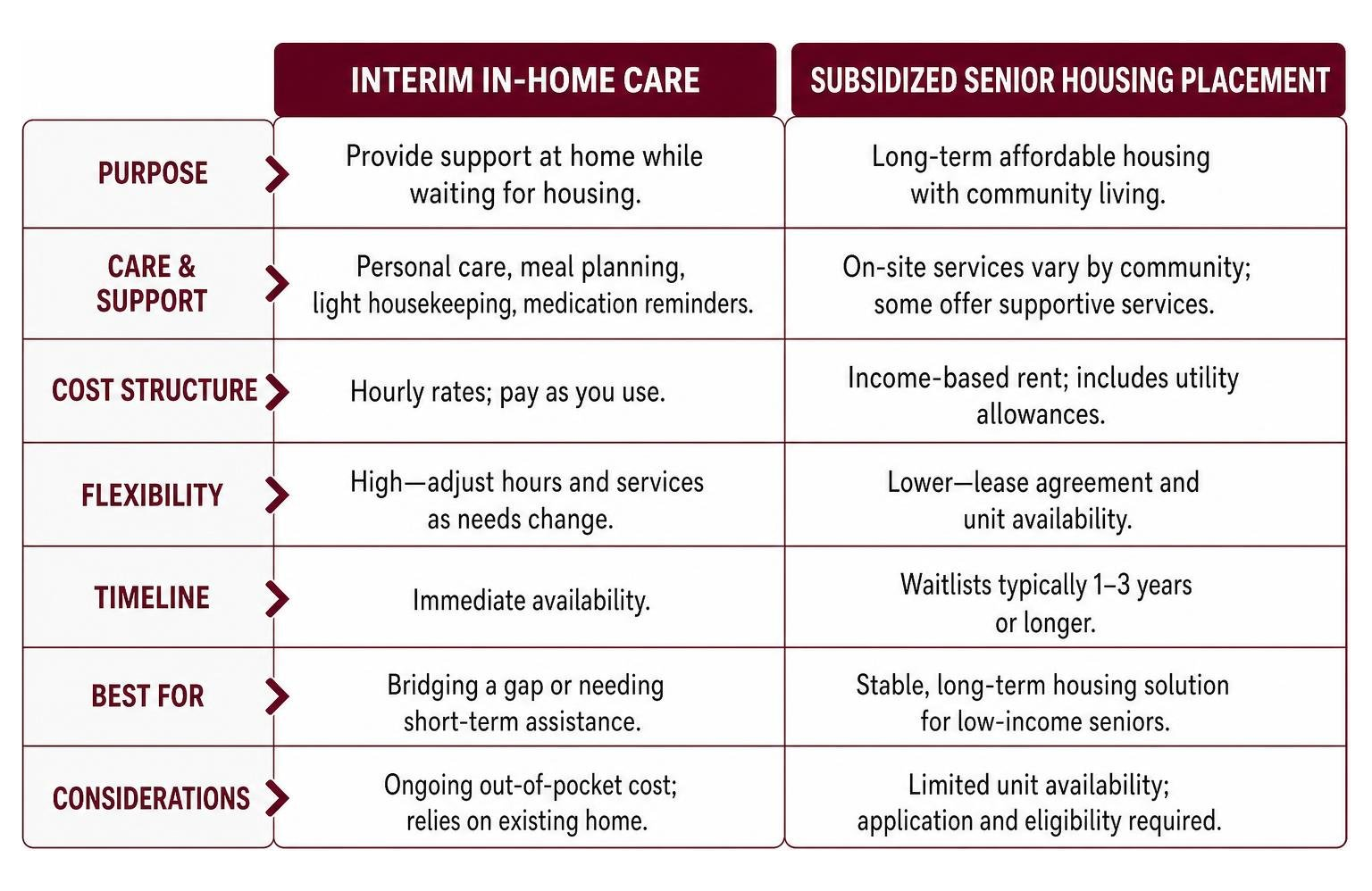
- What to expect: Income and age rules vary by property, and waiting lists often last 1 to 3 years.
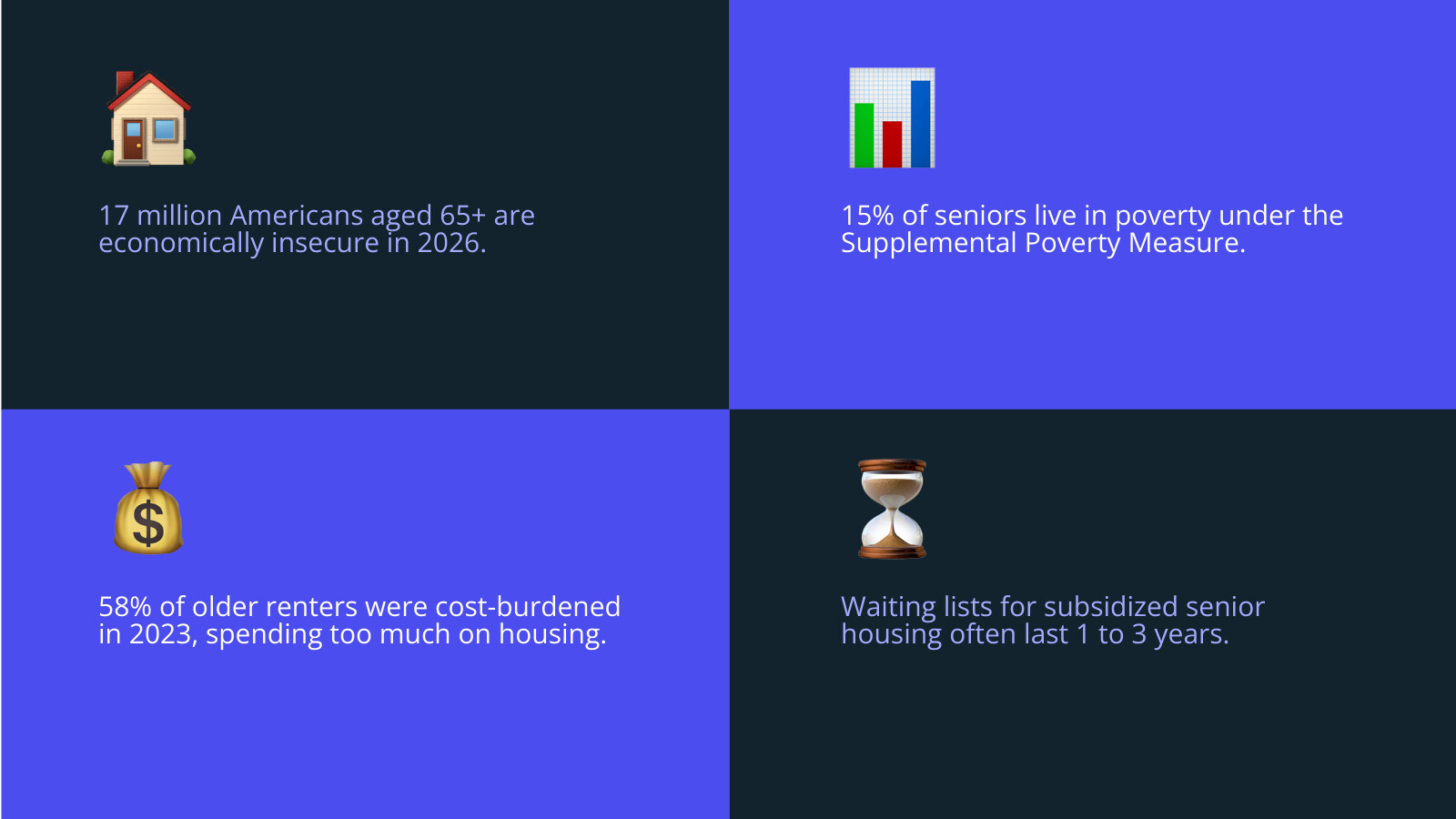
The need is urgent. In 2026, more than 17 million Americans age 65 and older are economically insecure, and the senior poverty rate is about 15% under the Supplemental Poverty Measure. Older renters are especially exposed: 58% were cost-burdened in 2023, meaning housing costs took too much of their income.
LifeSTEPS supports California residents in building housing stability. Its housing programs have a 93% housing retention rate, and CalAIM deposit assistance can provide 1 month paid in advance for eligible households. LifeSTEPS also strengthens communities through afterschool programs, including a 97% literacy improvement for Summer Reading, and more than $2.1M in scholarships supporting higher education.
Learn more about subsidized housing 55 and older:
Major Programs for Subsidized Housing 55 and Older
Finding the right affordable apartment requires understanding the main federal and state assistance programs. While many older adults search for subsidized housing 55 and older, different programs carry unique age requirements, rent calculation methods, and application steps.
The three primary programs operating across California include:
- Section 8 Housing Choice Vouchers: Administered by local Public Housing Authorities (PHAs), Section 8 allows qualifying individuals to rent privately owned apartments. The voucher program caps tenant rent contributions at approximately 30% of adjusted monthly income, while the housing authority pays the remainder directly to the property owner up to local payment standards.
- Section 202 Supportive Housing for the Elderly: Funded through the U.S. Department of Housing and Urban Development (HUD), Section 202 developments are designed specifically for very low-income older adults. Rent is capped at 30% of adjusted gross monthly income. These communities often feature built-in supportive services like on-site service coordinators, meal programs, and accessible bathroom grab bars to promote independent living.
- Low-Income Housing Tax Credit (LIHTC) Properties: LIHTC developments are privately owned properties built using federal tax incentives. Instead of capping rent on individual tenant income, LIHTC apartments set rent limits based on the local Area Median Income (AMI)—typically serving households earning 40%, 50%, or 60% of local AMI. Many LIHTC properties are age-restricted for residents 55 and older.
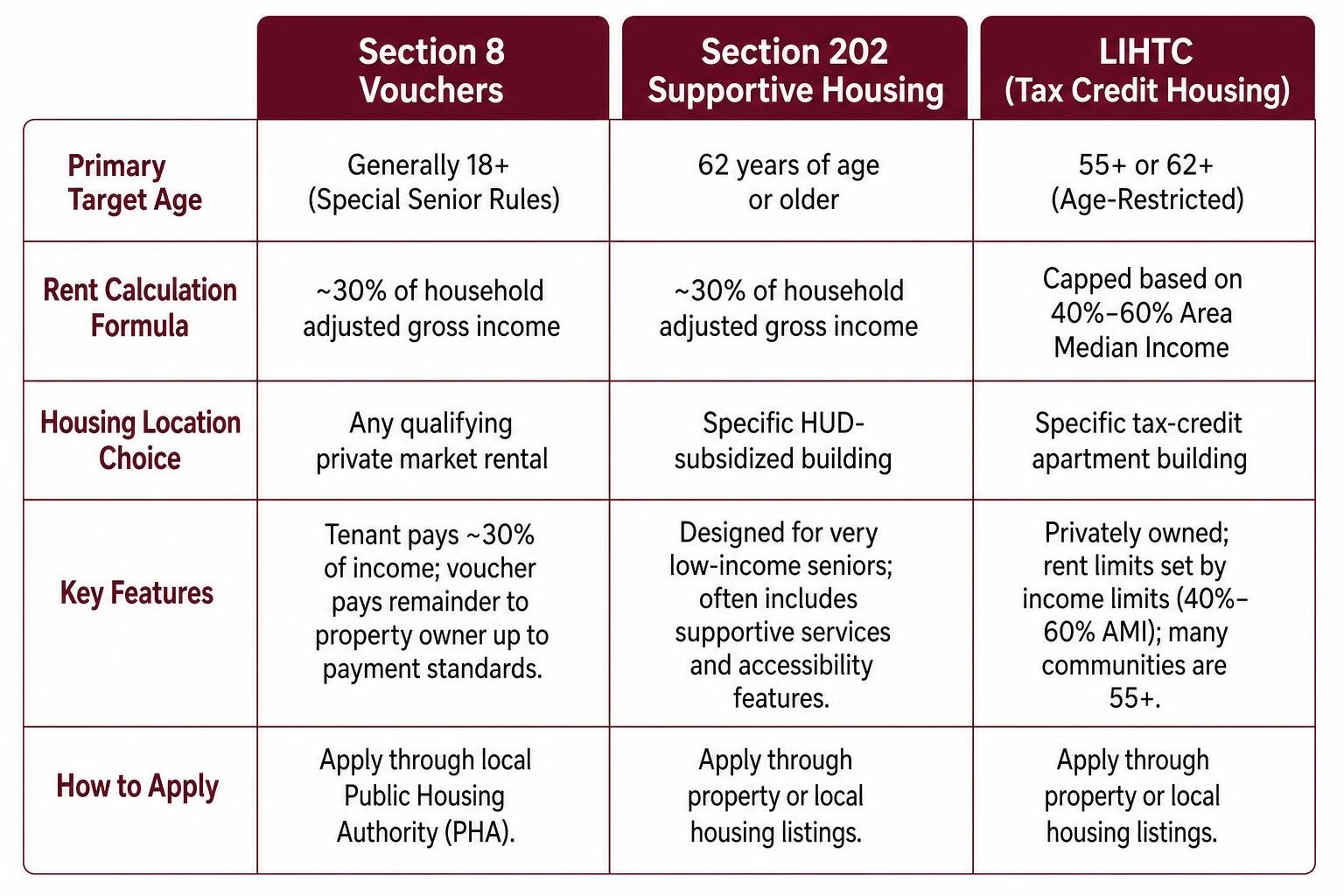
| Feature / Program | Section 8 Vouchers | Section 202 Supportive Housing | Low-Income Housing Tax Credit (LIHTC) |
|---|---|---|---|
| Primary Target Age | Generally 18+ (Special Senior Rules) | 62 years of age or older | 55+ or 62+ (Age-Restricted) |
| Rent Calculation Formula | ~30% of household adjusted gross income | ~30% of household adjusted gross income | Capped based on 40%–60% Area Median Income |
| Housing Location Choice | Any qualifying private market rental | Specific HUD-subsidized building | Specific tax-credit apartment building |
| On-Site Senior Services | Varies by landlord | Included (Coordinators, meal assistance) | Varies (Often active adult amenities) |
| How to Apply | Local Public Housing Authority (PHA) | Direct to property management | Direct to property management |
When searching for options, explore our guide on top subsidized senior housing communities to evaluate property structures in your area.
Qualifications for Subsidized Housing 55 and Older
Eligibility rules ensure assistance reaches households with the greatest economic need. Qualifying criteria depend on household age, income limits, asset values, and legal status.
- Age Eligibility Thresholds: Properties designated under the Housing for Older Persons Act (HOPA) require at least 80% of occupied units to have at least one occupant age 55 or older. Conversely, HUD Section 202 supportive housing generally requires the head of household to be at least 62 years old.
- Area Median Income (AMI) Thresholds: Federal programs classify low-income levels relative to local county AMI benchmarks:
- Extremely Low-Income: Income below 30% of AMI.
- Very Low-Income: Income below 50% of AMI.
- Low-Income: Income below 80% of AMI.
- 2026 HUD Asset Limits: Effective Jan 1, 2026, HUD established a net family asset cap of $105,574 for very low-income senior qualifications. Total assets include bank accounts, real estate equity, and the net cash value of retirement accounts (like 401k funds minus withdrawal penalties). If net assets exceed $5,000, housing providers add either actual investment income or an imputed return rate (typically 0.06%) to annual gross income calculations.
- Mandatory Elderly Deduction: In 2026, HUD provides a $550 mandatory annual deduction for elderly households (where the head or spouse is 62+ or disabled) when determining adjusted income for rent calculations. Medical expenses exceeding 3% of gross income can also be deducted.
- Citizenship Documentation: Applicants must document U.S. citizenship or eligible legal immigration status. Mixed-status families may receive prorated rental assistance.
For additional practical advice on organizing your household documents, see our article on how to snag affordable 55 and older apartments without the stress.
Navigating Waiting Lists and Lotteries
High demand for affordable housing across California means waiting lists typically span from 1 to 3 years. Understanding how property managers process applications can help you navigate the process effectively.

When new developments open or waitlists reopen, housing providers often conduct a random lottery to determine list ordering. Many communities apply local preference rules, prioritizing applicants who currently live or work within the specific municipality or county, as well as veterans transitioning to civilian living.
To ensure your application moves smoothly, review each property’s detailed housing application information packet. Keep past landlord references, credit histories, and income statements neatly structured so you can reply promptly when property staff call your name.
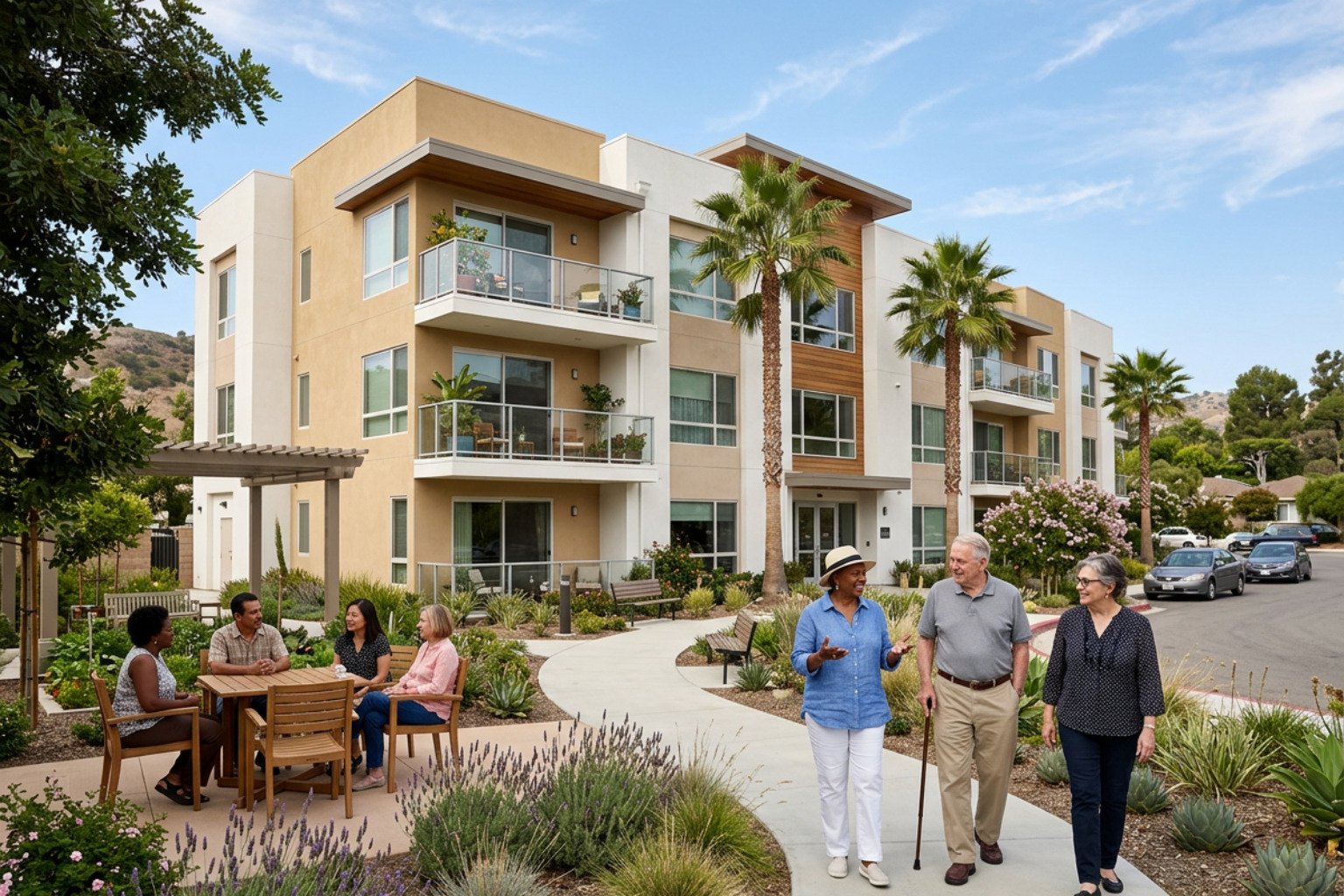
LifeSTEPS supports older adults during housing transitions by providing guidance, housing retention support, and connecting individuals to essential community housing resources.
How to Find and Apply for Low-Income Senior Apartments in California
The application process for subsidized housing 55 and older requires contacting local housing authorities and individual property managers directly.
Key documentation required for your application folder includes:
- Proof of age (driver’s license, birth certificate, or passport)
- Social Security card and recent benefit statements
- Pension statements, 12 months of projected income records, and 6 months of bank records
- Proof of legal residency or citizenship
- Medical expense receipts to claim eligible HUD deductions
Section 8 vouchers may include portability rules that allow a household to move within participating jurisdictions when program requirements are met. Before planning a move, ask the issuing Public Housing Authority about timing, paperwork, payment standards, and whether any initial residency requirements apply.
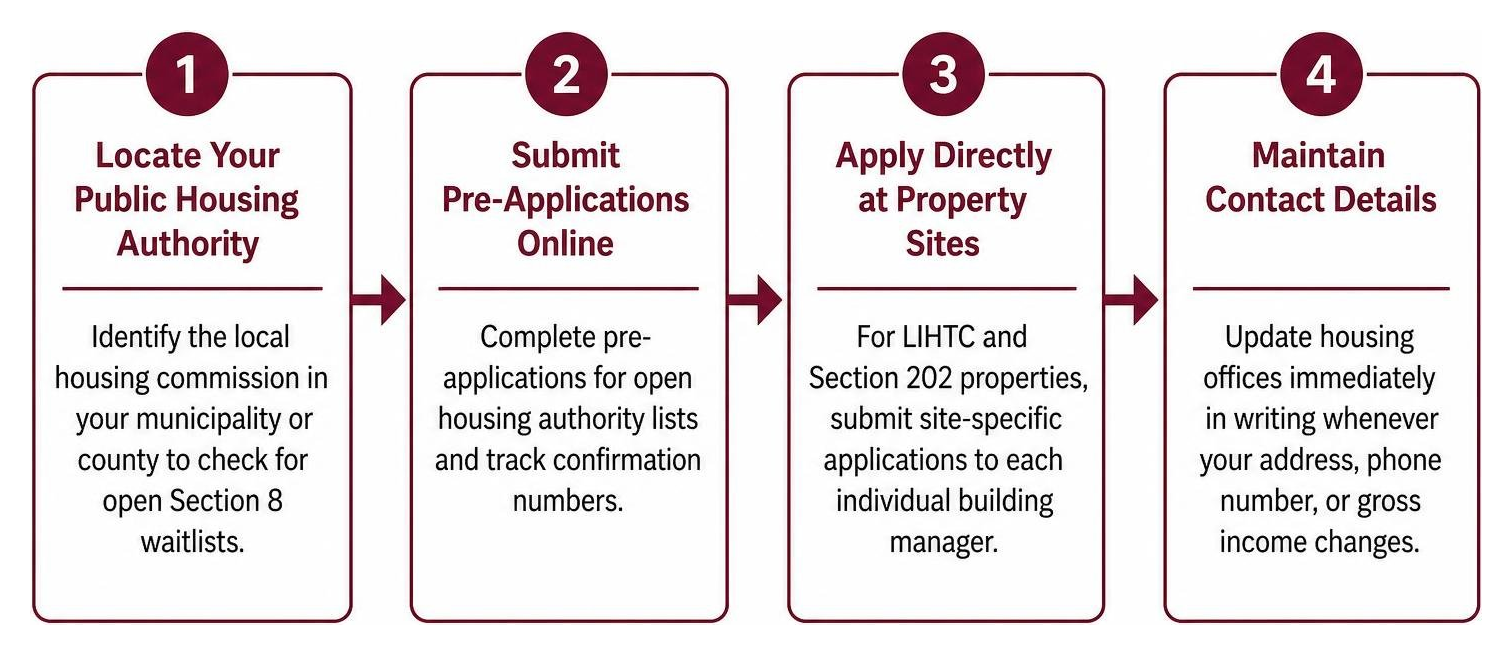
Steps to Apply for Subsidized Housing 55 and Older in California
- Locate Your Public Housing Authority: Identify the local housing commission in your municipality or county to check for open Section 8 waitlists.
- Submit Pre-Applications Online: Complete pre-applications for open housing authority lists and track confirmation numbers.
- Apply Directly at Property Sites: For LIHTC and Section 202 properties, submit site-specific applications to each individual building manager.
- Maintain Contact Details: Update housing offices immediately in writing whenever your address, phone number, or gross income changes.
To explore HUD application procedures in greater detail, consult The Essential HUD Low Income Senior Housing Handbook and review state guidance on determining the best housing option for me through the California Department of Aging.
Regional Housing Search Resources across California Cities
Finding local vacancies is easier when using official public agencies, local housing authority listings, and property management offices for age-restricted affordable communities in California’s major metropolitan areas:
- Los Angeles: Access centralized listings for city and county affordable developments through Los Angeles County senior resources.
- San Diego: Review rental programs and tenant voucher guidance directly with the San Diego Housing Commission.
- Riverside: Check city and county housing authority announcements for income-restricted senior apartment openings, application windows, and waitlist updates.
- Irvine: Review local affordable housing resources and contact property management offices for current age-restricted apartment availability and application requirements.
You can also read our guide on comparing low-income rentals for seniors in your neighborhood for additional evaluation tips.
Living in Subsidized Senior Housing: Recertification and Rent Changes
Once moved into a subsidized apartment, residents must complete an annual income recertification process. Property staff review updated household income, asset balances, and medical expenses to recalculate monthly tenant rent contributions accurately.
LifeSTEPS provides human-centered support to ensure residents maintain long-term stability in their homes. LifeSTEPS achieves a 93% housing retention rate across its supported housing programs. For eligible households transitioning from housing instability, deposit assistance through the CalAIM program can provide 1 month paid in advance to help cover initial security move-in costs.
During housing searches, seniors should prioritize essential physical accessibility features:
- Step-free building entrances and elevator access
- Roll-in showers and sturdy bathroom grab bars
- Lever-style door handles and well-lit walkways
- Proximity to public transit, medical centers, and grocery stores
Frequently Asked Questions About Subsidized Senior Housing
Can my rent change if my income increases after moving in?
Yes. In HUD Section 8 and Section 202 programs, rent is set at roughly 30% of your adjusted monthly income. If your income increases—such as receiving a cost-of-living adjustment (COLA) on Social Security—your rent contribution will be recalculated during annual recertification. In LIHTC properties, rent is capped at a fixed percentage of local Area Median Income; moderate income increases will not raise your rent, provided household income remains within allowable program limits.
Can I use a Section 8 voucher at any apartment in California?
You can use a Section 8 Housing Choice Voucher at any rental property where the landlord accepts voucher payments and the monthly rent falls within the housing authority’s payment standards. Under California law (SB 329), landlords cannot reject applicants solely because they intend to pay rent using a housing voucher.
How does the lottery process work for affordable senior communities?
When a new age-restricted property opens its waitlist, management collects pre-applications during a specified window. All eligible applications are assigned a random lottery number. Applicants are placed on the waiting list in order of their lottery rank, with priority given to candidates qualifying for local preference rules.
Conclusion
Finding safe, comfortable, and independent senior living is achievable with accurate information and persistence. While waiting lists require patience, programs like Section 8, Section 202, and LIHTC offer long-term financial stability for older adults across California.
LifeSTEPS remains dedicated to empowering communities and helping residents achieve self-sufficiency. In addition to housing retention support, LifeSTEPS builds stronger communities through afterschool initiatives—achieving a 97% literacy improvement in Summer Reading programs—and has awarded over $2.1M in higher education scholarships.
For media inquiries, contact: bex@lifestepsusa.org.
To learn more about community resources and supportive housing assistance, explore LifeSTEPS programs and services or contact LifeSTEPS today.
LifeSTEPS currently provides services in California only.


