


How to Get Emergency Rent Support Before the Landlord Knocks
How to Get Emergency Rent Support Before the Landlord Knocks
When Rent Is Overdue and Time Is Running Out
Emergency rent support is short-term financial assistance that helps renters pay overdue or upcoming rent — and sometimes utilities or security deposits — to avoid eviction and homelessness.
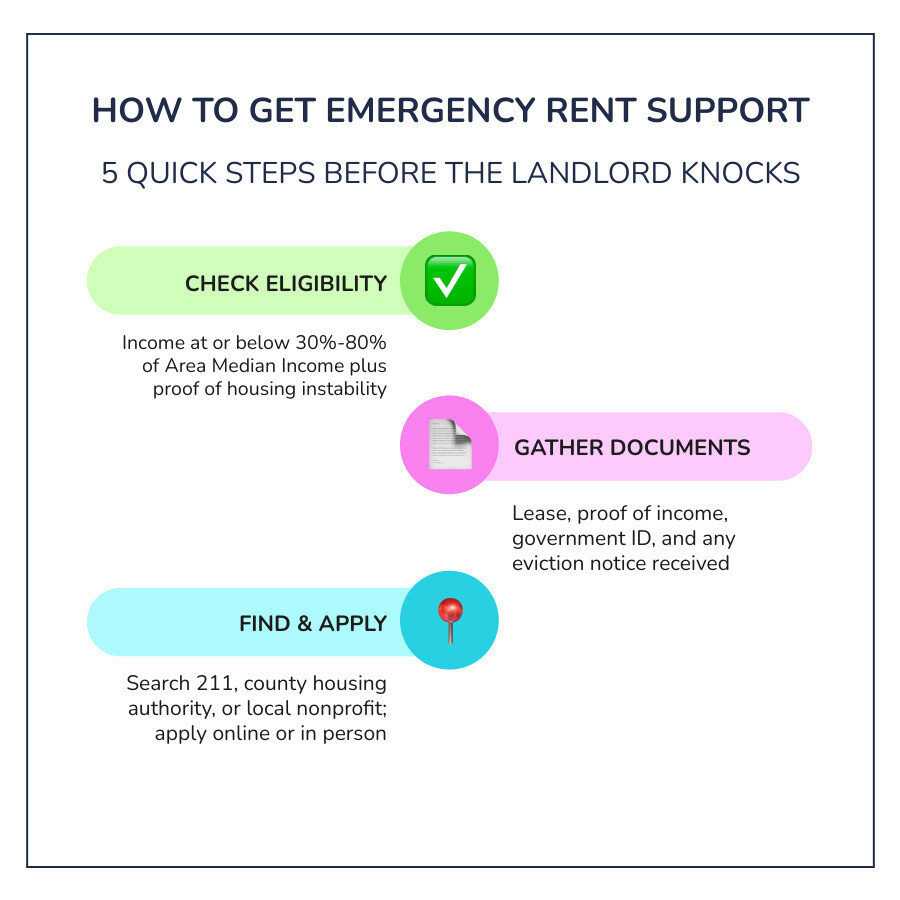
Here is how to get help quickly:
- Check your eligibility — Most programs require income at or below 30%–80% of Area Median Income and proof of housing instability.
- Gather your documents — You will typically need a lease, proof of income, a government-issued ID, and any eviction notice you have received.
- Find a local program — Search through 211, your county housing authority, or a local nonprofit serving your area.
- Submit your application — Apply online or in person through an approved program partner or community service center.
- Follow up — A case manager will usually review your file, contact your landlord, and may schedule a unit inspection before funds are released.
Rent is rising fast — and for many Californians, one missed paycheck is all it takes to fall behind. For veterans transitioning to civilian life, that gap can come even sooner. Job loss and eviction are among the top reasons veterans report becoming homeless, according to housing service data. The financial pressure is real: even short gaps in income can quickly lead to housing loss.
The good news is that help exists. Federal Emergency Rental Assistance programs have collectively provided communities over $46 billion to support housing stability for renters across the country. Local programs, nonprofit organizations, and state agencies have distributed those funds to households in crisis — covering rent arrears, future rent, utilities, and in some cases security deposits.
This guide walks you through exactly what emergency rent support covers, who qualifies, how to apply in California, and what to expect at every step of the process.
LifeSTEPS currently provides services in California only.
Emergency rent support further reading:
Understanding Emergency Rent Support and Who Qualifies
When a household faces a sudden financial shock—whether from a medical emergency, job transition, or unexpected auto repair—staying current on rent can feel like an impossible task. Emergency aid acts as a critical safety net, offering temporary financial assistance to bridge the gap and keep families securely housed.
To ensure these resources reach those who need them most, programs establish specific eligibility criteria designed to measure both financial need and the immediate risk of housing instability. We understand that navigating these rules can feel overwhelming when you are worried about keeping a roof over your head. However, understanding how these programs evaluate applications is the first step toward securing your home.

Generally, to qualify for emergency housing support, you must demonstrate that:
- Someone in your household qualifies for unemployment benefits or has experienced a significant reduction in household income.
- You are facing an active risk of experiencing homelessness or housing instability (which can be demonstrated by a past-due rent notice, utility shut-off warning, or eviction notice).
- Your total household income falls below a specific threshold determined by your local county.
For those looking to explore the foundational structure of these programs, you can Learn more about emergency rental assistance to see how federal and state initiatives coordinate to protect vulnerable tenants.
Income Limits and Household Size Requirements
Eligibility for emergency rent support is heavily tied to the household size and the local Area Median Income (AMI). Federal guidelines prioritize households with extremely low incomes—typically defined as those earning at or below 30% to 50% of the AMI. However, many programs in California extend eligibility up to 80% of the AMI to accommodate the state’s exceptionally high cost of living.
Because the cost of living varies dramatically from county to county, a household of three in Los Angeles County will have a different income limit than a household of three in Riverside County or San Diego County.
The table below outlines typical income thresholds and maximum assistance structures across major California service areas:
| Household Size | Area Median Income (AMI) Tier | Typical Annual Income Limit (Southern CA) | Maximum Standard Assistance |
|---|---|---|---|
| 1 Person | Extremely Low (30% AMI) | ~$28,000 | Up to 12 months of rent/utilities |
| 2 People | Very Low (50% AMI) | ~$46,000 | Up to 12 months of rent/utilities |
| 3 People | Low Income (80% AMI) | ~$74,000 | Up to 9-12 months of rent/utilities |
| 4 People | Low Income (80% AMI) | ~$82,000 | Up to 9-12 months of rent/utilities |
Note: Actual income limits fluctuate annually and are precisely calculated by the U.S. Department of Housing and Urban Development (HUD) for each specific county.
Eligible Expenses Covered by Emergency Rent Support
Emergency rental assistance is versatile, designed to address the multiple financial pressures that contribute to housing instability. Depending on the local program funding guidelines, assistance can cover several types of housing-related costs:
- Rent Arrears: This is the most common use of funds. Programs pay back-rent directly to landlords to clear outstanding balances and stop eviction proceedings.
- Future Rent: Some programs provide short-term forward-facing rent payments (often up to 3 months at a time) to help a household stabilize while a tenant regains employment or recovers from an illness.
- Utility Bills: Unpaid water, gas, electricity, and trash services can lead to shut-offs, making a home uninhabitable. Many emergency funds allow for the direct payment of utility arrears.
- Security Deposits and Fees: For households forced to relocate due to an emergency, some programs provide help with move-in costs.
If you are currently looking for a new place to live but lack the upfront cash to secure the lease, you can read this comprehensive Guide to securing help for deposits and initial rent.
How to Apply for Rental Assistance in California
For California renters, navigating the application process requires preparation, patience, and a clear understanding of local county resources. Because the state’s local jurisdictions administer their own allocations of state and federal funds, there is no single “one-size-fits-all” application portal. Instead, your location determines which agency or nonprofit partner you must contact.

To make sure your application moves through the pipeline as quickly as possible, it is essential to understand the regional landscape. For a deep dive into state-specific rules and regional programs, consult the Complete guide to California emergency rental assistance.
Gathering Your Required Documentation
The number one reason applications for emergency rent support are delayed or denied is missing documentation. When programs are flooded with requests, case managers must prioritize files that are complete and ready for verification.
Before you log into an application portal or visit a community service center, gather the following documents:
- Identity Verification: Government-issued photo IDs for all adult household members, and birth certificates or school records for minors.
- Lease Agreement: A current, signed lease agreement that clearly states your monthly rent amount and the names of all occupants. If you do not have a formal lease, some programs accept landlord-signed certification forms or proof of consistent rent payments.
- Income Proof: Pay stubs for the last 30 days, tax returns, W-2s, or benefit award letters (such as SSI, SSDI, or Unemployment Insurance) for all adults in the home.
- Eviction Notice or Past-Due Notice: A formal notice from your landlord (such as a 3-day or 15-day notice to pay or quit) or a ledger showing the exact balance of rent arrears.
- Utility Statements: Copy of unpaid utility bills if you are requesting utility assistance.
If you are facing an active eviction threat and need to act immediately, review this step-by-step guide on How to access emergency eviction prevention services.
Finding Local Emergency Rent Support Programs
In California, programs are localized to ensure that funds are distributed according to county-specific needs.
- Los Angeles County: The county frequently launches targeted phases of aid. For instance, the Phase II tenant-initiated application cycle allows tenants to apply directly for grants of up to six months of relief, with a maximum of $15,000 per unit. To check active application windows and submit your interest, visit the LA County Rent Relief Program.
- Riverside County: Residents can access localized rental and utility assistance through county-administered programs. To see if you qualify and to submit an inquiry, visit the Riverside County Rental Assistance portal.
- Other Counties: If you reside in San Diego County, Irvine, Natomas, or the Bay Area, local housing authorities and community action agencies serve as your direct pathway to aid. To locate a local program operating right in your neighborhood, you can Find free rent assistance near you.
What to Expect and Your Rights as a Renter
Submitting your application is a major milestone, but it is just the beginning of the verification process. Understanding what happens behind the scenes can help ease the anxiety of waiting and ensure you are prepared when a program representative contacts you.
During the application review, program administrators will verify your income, cross-reference your lease agreement, and reach out to your landlord to confirm the outstanding balance. Maintaining open communication with your landlord during this time is incredibly important—many programs require landlords to sign a participation agreement before funds can be directly disbursed to them.
For expert tips on managing this waiting period and keeping your landlord informed, refer to this Expert help to avoid eviction today.
Timelines, Unit Inspections, and Case Management
The timeline for processing emergency rental aid varies widely based on local funding levels and application volume. Some applicants receive approval within a few weeks, while others in high-demand areas may wait longer.
Here is a typical breakdown of the step-by-step process:
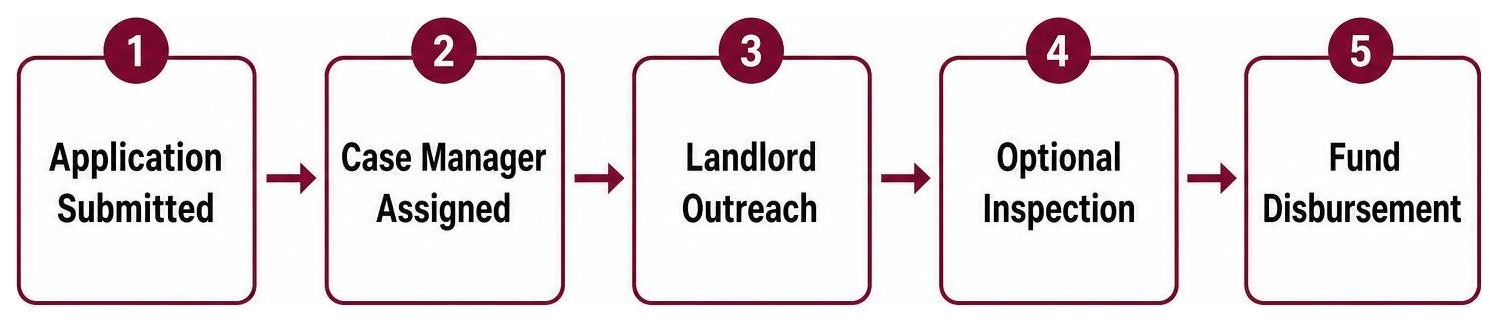
- Case Manager Assignment: Once your application is received, a dedicated case manager will review your documents. If anything is missing, they will contact you. Respond immediately to avoid your file being closed.
- Landlord Participation: The program will contact your landlord to secure their tax forms (W-9) and a signed agreement to accept the payment and halt any pending eviction actions.
- Unit Inspection (Optional): Some federally funded programs require a basic housing quality inspection to ensure the property is safe and habitable before public funds are paid out.
- Disbursement: Once approved, payments are almost always sent directly to the landlord or utility provider. Funds are rarely paid directly to the tenant.
If you have already received an official eviction notice, you must act with extreme urgency. Be sure to read the Guide to rental assistance with an eviction notice to understand how to leverage pending applications in housing court.
Special Considerations for Evictions, Disasters, and Veterans
Certain emergency situations qualify for expedited processing or specialized funding streams.
If your housing instability is the result of a federally declared natural disaster—such as a wildfire or flood—disaster case management programs can often bypass standard waiting lists to secure immediate emergency shelter and relocation assistance.
For military veterans, dedicated funding is available to prevent homelessness and ease the transition to civilian housing. Organizations like Swords to Plowshares, for example, have directed millions of dollars to support veterans with rent, eviction prevention, emergency housing, utilities, and groceries. If you or a loved one served in the military, you can access specialized resources by visiting Emergency housing for veterans.
Renter Rights, Eviction Protections, and Legal Aid
Many renters do not realize that they have legal protections while their rental assistance application is pending. In many California jurisdictions, landlords are legally discouraged or restricted from evicting tenants for nonpayment of rent if the tenant has an active, pending application for emergency rent relief.
If your landlord threatens to evict you or refuses to cooperate with an emergency rent program, you should immediately connect with a local legal aid organization. Legal aid attorneys can help you understand your rights, draft formal responses to landlord notices, and represent you in eviction diversion programs.
To find free or low-cost legal representation in your area, consult the Ultimate list of eviction prevention grants and legal aid.
Frequently Asked Questions About Rental Aid
Struggling with rent can bring up many complex legal and financial questions. Here are clear answers to some of the most common questions renters ask when looking for support.
What happens if funding for local programs is paused or closed?
Because emergency rental programs rely on finite pools of federal, state, and local money, it is common for programs to temporarily pause applications when funding runs low. For example, local program administrators in high-demand areas occasionally close intake portals to process backlogs.
If your local program is closed, do not lose hope. You can explore alternative resources, such as local community action agencies, religious charities, or county-specific emergency funds. You can also monitor the status of national allocations through the Federal Emergency Rental Assistance Program to see if new funding cycles are on the horizon.
Can I get help with security deposits and first month’s rent?
Yes. Many emergency programs recognize that preventing homelessness often requires helping families move into sustainable, affordable homes.
In California, eligible individuals transitioning to stable housing can access deposit assistance through the CalAIM program. This program can help cover move-in costs, including paying 1 month in advance for deposit assistance. For a detailed breakdown of how to apply for these specific relocation funds, read about First month rent and security deposit assistance.
Is citizenship required to receive emergency housing assistance?
No. Most emergency rental assistance programs—including those funded by federal allocations—do not require proof of U.S. citizenship or legal residency to qualify.
Furthermore, receiving emergency rent help is not considered a public charge, meaning it will not negatively impact your path to legal residency or citizenship. For official federal guidelines on non-citizen eligibility and housing resources, consult the USAGov emergency rent assistance guide.
Conclusion: Securing Long-Term Housing Stability
While emergency rent support provides a vital lifeline during a crisis, true peace of mind comes from long-term housing stability and self-sufficiency.
At LifeSTEPS, we walk alongside individuals and families as they transition from emergency situations to stable, thriving lives. Our human-centered support services are designed to address the root causes of housing insecurity. Through our dedicated eviction prevention programs, we are proud to maintain a 93% housing retention rate among the clients we serve.
We believe that housing stability is the foundation upon which families build successful futures. That is why we pair our housing support with holistic community programs, including:
- CalAIM Program Integration: Connecting eligible individuals with vital health and housing transition services, including first month’s rent and security deposit assistance.
- Afterschool Programs: Providing safe, educational environments where children can thrive while parents work.
- Literacy Improvement: Our Summer Reading program boasts a 97% literacy improvement rate, ensuring the next generation has the tools they need to succeed.
- Higher Education Scholarships: We have awarded over $2.1 million in scholarships to help residents break the cycle of poverty and achieve their dreams.
Whether you reside in Southern California (such as Los Angeles, San Diego, or Riverside) or the Bay Area, we are here to help you build a stable foundation.
If you are ready to take the next step toward permanent housing security, Explore LifeSTEPS eviction prevention services.
For assistance, contact: LifeSTEPS | Phone: (916) 965-2110 | LifeSTEPS
LifeSTEPS currently provides services in California only.


