


The Grandparent’s Guide to Affordable Housing for Elderly Folks
Why Finding the Right Resources for Senior Housing Matters
Resources for senior housing can be hard to navigate — especially when you’re juggling health needs, a fixed income, and a growing list of options that all sound similar.
Here are the main types of resources available to seniors today:
- Government programs — HUD Section 202, public housing, Housing Choice Vouchers (Section 8)
- State and local programs — California Department of Aging, county-level rental assistance, Aging and Disability Resource Centers (ADRCs)
- Stay-at-home support — in-home care services, home modification programs, reverse mortgages
- Community search tools — online directories listing thousands of senior living communities with pricing and reviews
- Emergency assistance — eviction prevention funds, emergency shelter referrals, elder abuse protections
Most seniors qualify for more than one program. The key is knowing where to look — and starting early, since many programs have long waitlists.
Whether you’re a recently discharged veteran working toward stability, a grandparent on a fixed income, or a family member trying to help an aging loved one, the process can feel overwhelming. A two-week waitlist and a two-year waitlist can exist just 40 miles apart. That gap is not unusual — it’s one of the defining features of senior housing in America.
The good news: there are real, proven programs that help. And organizations like LifeSTEPS — which maintains a 93% housing retention rate across its California programs — show what’s possible when people get the right support at the right time.
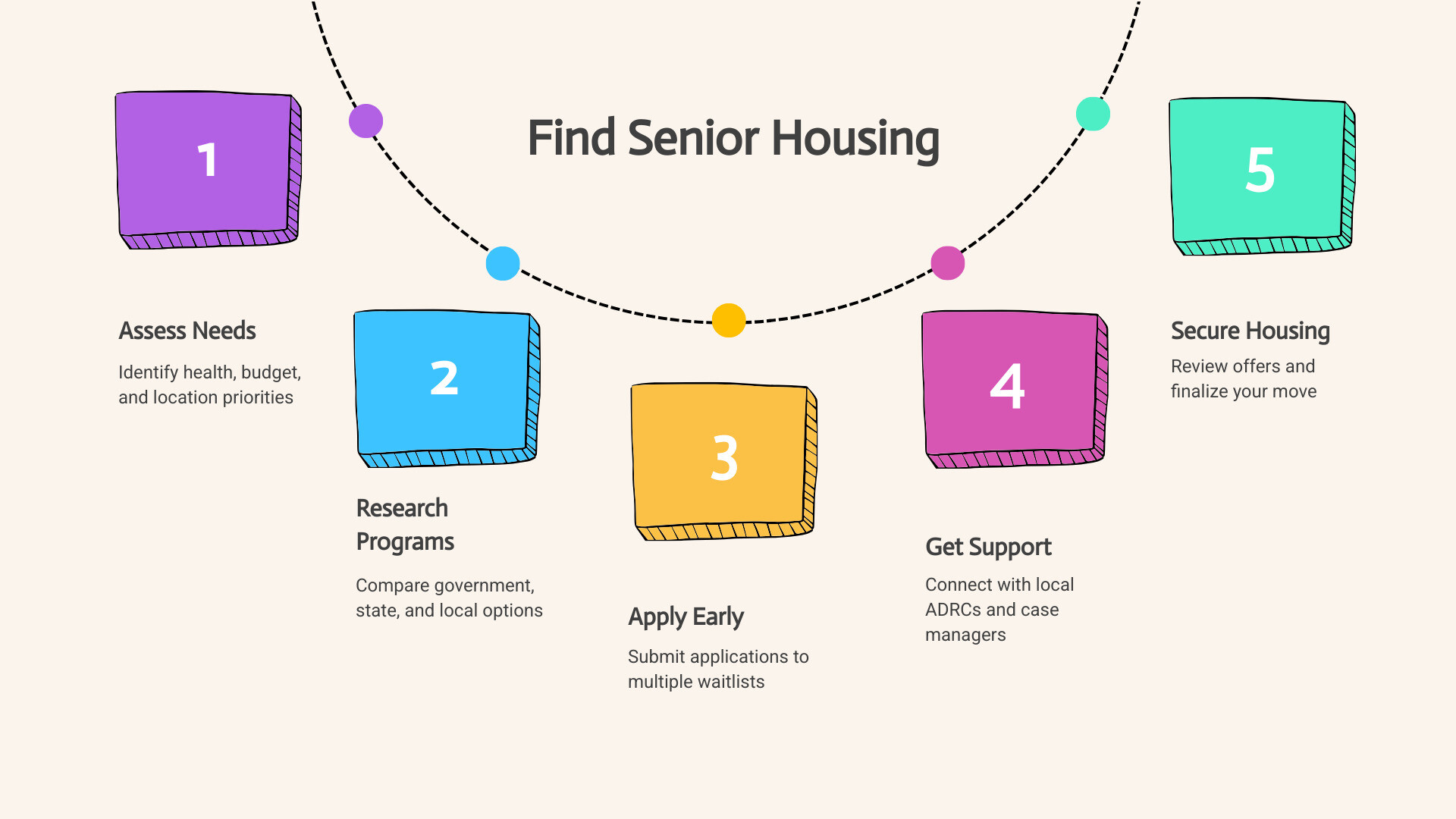
LifeSTEPS currently provides services in California only.
Simple Resources for senior housing glossary:
Understanding Your Options: Types of Senior Housing

As we age, our housing needs naturally shift. What worked beautifully in our 40s or 50s might become a multi-tiered obstacle course of stairs and high-maintenance yards in our 70s and 80s. Understanding the spectrum of senior housing is the first step toward making an informed, happy decision.
For many, the search begins by looking into Low Income Housing for Elderly and Disabled programs. However, before diving into the application processes, it helps to understand what each housing model actually offers.
Independent Living and Senior Apartments
If you are active, healthy, and simply want to ditch the lawnmower and find a community of peers, independent living is often the best fit. These communities are designed specifically for older adults who do not require medical assistance or help with activities of daily living (ADLs) but want a simpler lifestyle.
Senior apartments are restricted to adults aged 55+ or 62+. They often feature age-friendly layouts, such as single-story designs, grab bars in bathrooms, and elevators. Many of these complexes offer social calendars, community rooms, and shared gardens.
To explore localized options, you can search Senior Apartments by City: Search 500+ Locations – Senior Apartment Hub. For those seeking a vibrant, community-oriented lifestyle in Southern California, checking out a nonprofit community can show you how independent living supports a rich social life.
If you want to skip the stress of searching, learning How to Find the Best Senior Apartment Complexes Without the Headache can save you weeks of dead-end phone calls. For those working with tight budgets, exploring Low Cost Senior Independent Living options is a smart way to preserve your retirement savings.
Assisted Living and Memory Care
When daily tasks like cooking, managing medications, or bathing become challenging, assisted living bridges the gap between independence and round-the-clock care. Assisted living facilities provide private or semi-private apartments, communal meals, housekeeping, and personal care support.
For seniors living with Alzheimer’s disease or other forms of dementia, memory care provides a secured environment with specialized staff trained to manage cognitive decline. These programs focus on safety, structured routines, and cognitive engagement.
If you are trying to understand the costs and reviews of these facilities, tools like Find Assisted Living, Memory Care and Senior Living Near Me | A Place for Mom can help you kickstart your research. Additionally, platforms like Assisted Living Prices & Ratings | Senior Living Advisors | Mirador and Assisted Living Cost & Reviews | Senior Living Advisors | Seniorly aggregate real-time pricing data and verified reviews.
For families seeking regional care in Southern California, exploring Assisted Living Facilities in Thousand Oaks provides an excellent look at how localized communities balance care and independence.
Government Programs and Resources for Senior Housing
When market-rate senior housing is financially out of reach, government assistance programs become vital. Navigating these systems requires patience, but the financial relief they provide is life-changing.
Federal Resources for Senior Housing Assistance
The federal government, primarily through the U.S. Department of Housing and Urban Development (HUD), offers several pathways to affordable senior living:
- HUD Section 202 Supportive Housing for the Elderly: This program specifically funds the development of affordable housing for very low-income seniors (aged 62+). Residents in Section 202 properties typically pay 30% of their adjusted income toward rent, with the federal government subsidizing the rest.
- Housing Choice Vouchers (Section 8): This program allows seniors to find their own rental housing on the private market. The local Public Housing Authority (PHA) pays a rent subsidy directly to the landlord, and the senior pays the difference, capped at a percentage of their income.
- Public Housing: Local PHAs own and manage low-income housing developments. Many of these units are specifically reserved for elderly households and people with disabilities.
To understand how these federal programs calculate eligibility based on your Area Median Income (AMI), consult The Golden Guide to Senior HUD Housing and check out our comprehensive Low Income Senior Housing Guide to map out your application strategy.
California State and Local Resources for Senior Housing
California offers robust state and county-level programs designed to help seniors secure stable housing. Because housing markets in California are highly localized, eligibility and waitlists depend heavily on your specific county or city.
If you reside in Southern California, county-specific portals are your best starting point:
- Los Angeles County: The county provides extensive resources, housing locators, and supportive services. You can view their official listings and tools on the Housing.LACounty.gov | Senior Resources page.
- San Diego County: The San Diego Housing Commission offers affordable rental opportunities and voucher programs. Seniors can learn how to apply directly through Rent from SDHC – San Diego Housing Commission.
- Riverside County: Local rental assistance and utility support programs help seniors keep their homes. Detailed application pathways can be found via Rental Assistance Programs | Housing & Human … – RiversideCA.gov.
To see how state-level initiatives tie these local programs together, our guide on Affordable Senior Housing California offers a comprehensive overview of the Golden State’s unique housing landscape.
Staying in Your Own Home and Comparing Communities
For many older adults, the goal is “aging in place” — staying in the comfort of their own home for as long as possible. Doing so safely requires a combination of home modifications, in-home supportive services, and financial planning.
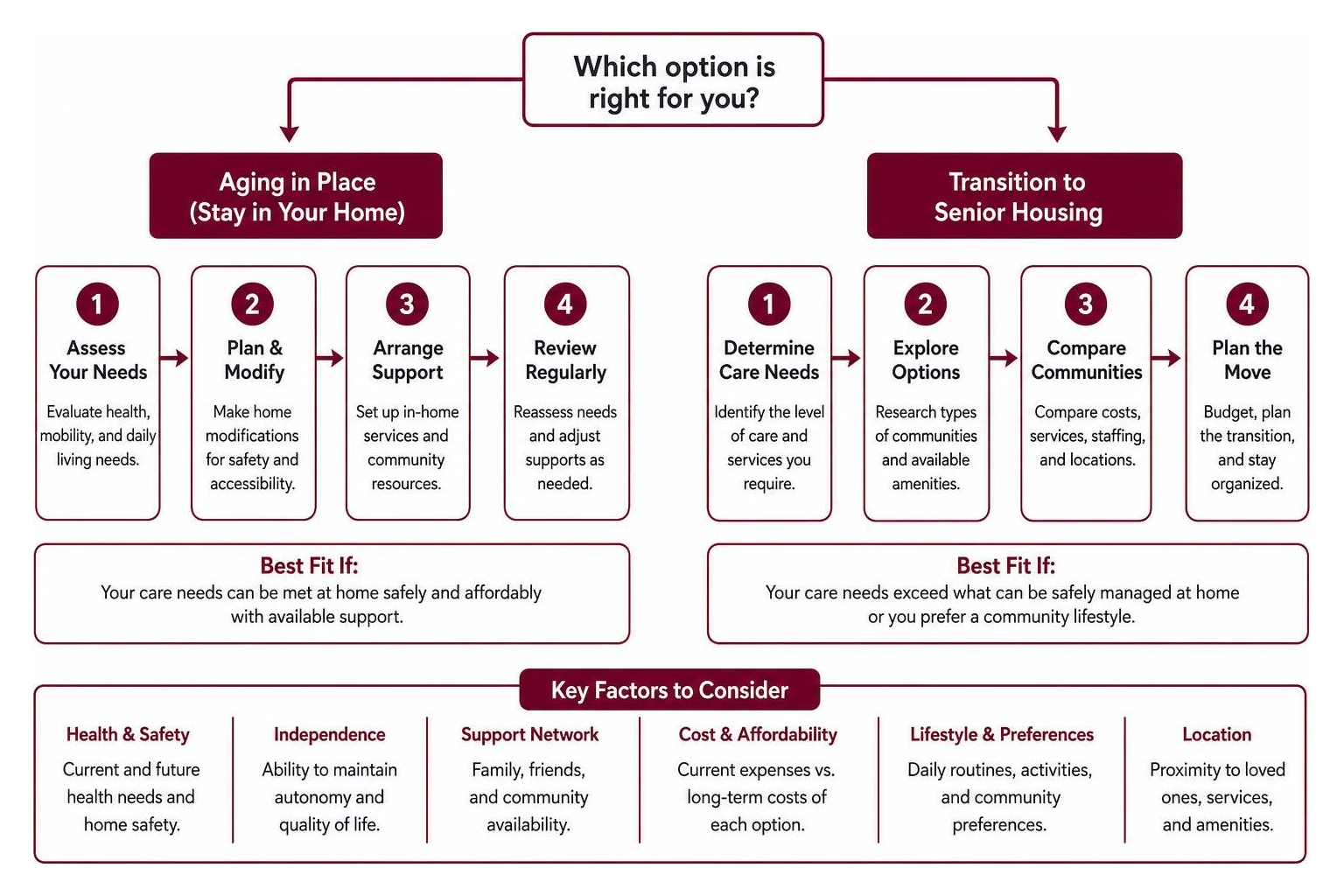
When deciding whether to modify your home or move to a community, it is helpful to use resources like Determine the Best Housing Option For Me provided by the California Department of Aging. If you decide to transition, utilizing independent directories like AgingFine can help you compare staffing ratios and real out-of-pocket costs without sales pressure.
Financial Assistance and Home Modifications
Staying home often requires physical updates to prevent falls and accommodate mobility challenges. Modifications can range from installing simple grab bars and ramp systems to widening doorways and lowering countertops.
To fund these changes, seniors can look into:
- CalAIM (California Advancing and Innovating Medi-Cal): This program offers enhanced care management and community supports. Through CalAIM, eligible seniors can access home modifications and transition services.
- Deposit Assistance: If you are transitioning from unstable housing into a rental, we can help secure deposit assistance. Under the CalAIM program, this includes having 1 month paid in advance for deposit assistance to ease the financial burden of moving.
- In-Home Supportive Services (IHSS): A California state program that pays for home care providers to assist with housecleaning, meal prep, laundry, and personal care, allowing seniors to remain safely at home.
At LifeSTEPS, we believe that with the right support, aging in place is achievable for many. Our initiative, Lifesteps Helps Older Adults Age in Place, works directly with seniors to coordinate these vital resources. You can explore more options in our guide on Financial Assistance for Seniors How to Keep Your Home Sweet Home.
Managing Waitlists and Avoiding Scams
Because affordable senior housing is in high demand, waitlists can range from several months to several years. To protect yourself during this search:
- Apply Widely: Do not limit yourself to one building. Apply to multiple properties and keep a detailed log of every contact.
- Verify Waitlist Status Monthly: Some properties close their waitlists when they get too long, while others open them unexpectedly.
- Guard Your Information: Scammers often target seniors by advertising “fake” low-income apartments to steal application fees and social security numbers. Always verify that a housing agency is HUD-approved or county-sanctioned before handing over personal details.
- Understand Your Rights: The Fair Housing Act protects older adults and people with disabilities from housing discrimination. Landlords must make reasonable accommodations for physical or mental impairments.
For tips on navigating this competitive market, read our Low Income Senior Housing No Waiting List Guide to find immediate opportunities.
Frequently Asked Questions about Senior Housing
Navigating senior housing resources brings up many valid questions. Here are some of the most common queries we receive from seniors and their families.
How do Section 8 vouchers work for older adults?
The Housing Choice Voucher (Section 8) program is designed to keep housing affordable. Once a senior receives a voucher, they find an eligible apartment on the private market. The senior’s share of the rent is capped at approximately 30% of their adjusted monthly income.
The local housing authority pays the remaining balance directly to the landlord. This ensures that even if market rents rise, the senior’s housing costs remain stable and predictable. For a deeper dive into how these subsidies protect your budget, see Rent Subsidies for Seniors Dont Let the Bill Collector Win.
What should families do if a senior faces eviction or homelessness?
If an older adult is at risk of eviction or is currently unhoused, immediate action is required:
- Contact Local Eviction Prevention Programs: Many California counties offer temporary financial assistance to pay back-rent and prevent displacement.
- Reach Out to Legal Aid: Seniors often have legal protections against rapid evictions, especially if they have health conditions.
- Engage Supportive Services: Organizations like LifeSTEPS provide rapid-rehousing support and case management. Across our programs, we maintain a 93% housing retention rate, meaning nearly all the seniors we help transition into housing are able to keep their homes permanently.
For emergency housing strategies, consult our resource on Low Income Elderly Housing.
How can caregivers access local support services?
Caregivers do not have to carry the load alone. California’s network of Aging and Disability Resource Centers (ADRCs) provides free, personalized counseling to help you navigate local services, respite care, and health insurance.
Connecting with these local hubs can give you access to support groups and professional guidance. Learn more about coordinating these services through our guide on Community Resources for Elderly.
Conclusion
Finding the right Resources for senior housing is about securing peace of mind, safety, and a sense of belonging. Whether that means modifying your current home to age in place or moving to an affordable senior apartment complex, you do not have to walk this path alone.
At LifeSTEPS, we are committed to helping older adults build stable, joyful lives. Beyond our 93% housing retention rate and our active participation in the CalAIM program (which provides crucial transition support and 1 month paid in advance for deposit assistance), we focus on the whole family. Through our collaboration with programs like the Family Self-Sufficiency (FSS) program, we help families move toward long-term stability and homeownership.
We also believe in building strong communities from the ground up. Our youth and education initiatives have achieved a 97% literacy improvement in our Summer Reading programs, and we have proudly awarded over $2.1 million in scholarships to help the next generation thrive.
If you are ready to take the next step in your housing journey, explore our resources on Low Cost Senior Independent Living to find the right fit for your family.
For support or inquiries, contact: LifeSTEPS | Phone: (916) 965-2110 | LifeSTEPS
LifeSTEPS currently provides services in California only.


