


Stop Overpaying for Your Apartment Today
Stop Overpaying for Your Apartment Today
Why Finding Low Cost Housing Near Me Feels So Hard — And What to Do About It
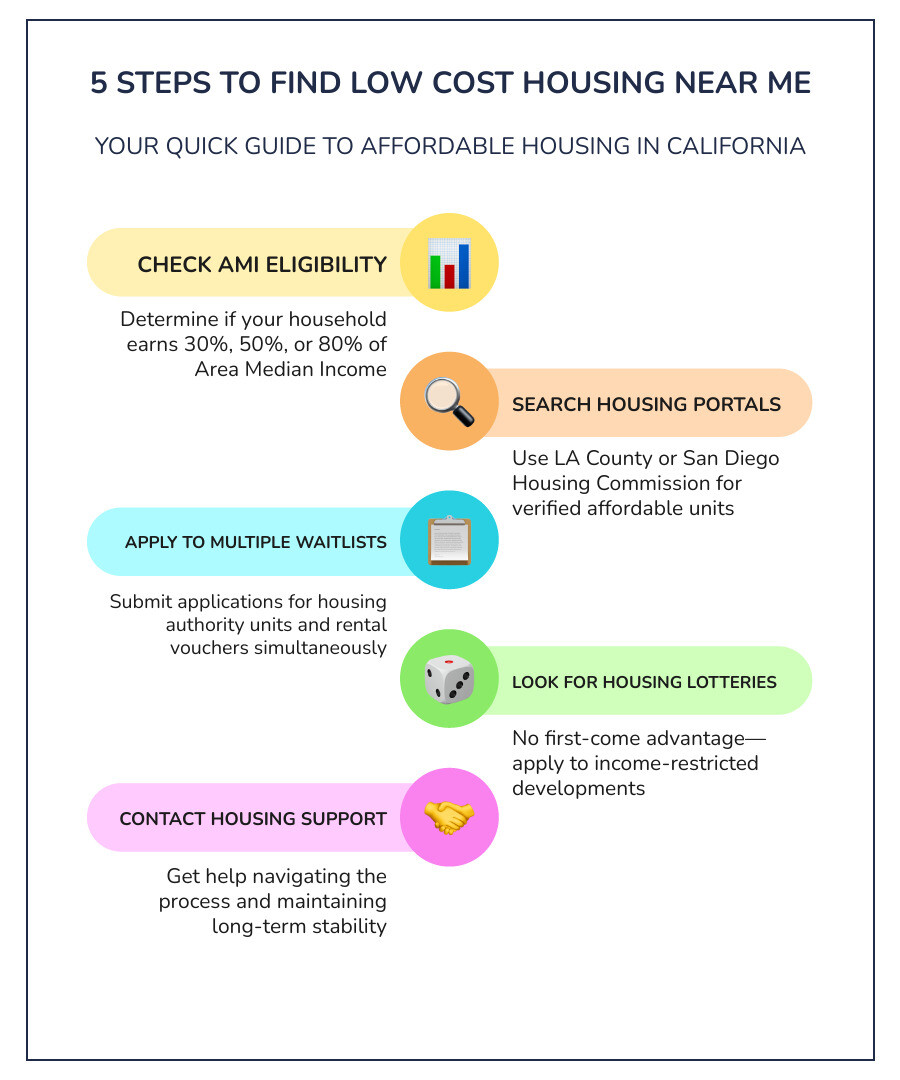
If you’re searching for low cost housing near me, here are the fastest ways to find verified affordable options in California:
- Check your Area Median Income (AMI) eligibility — most affordable housing is open to households earning 30%, 50%, or 80% of the local AMI
- Search local housing authority portals — the Los Angeles County Housing Portal and San Diego Housing Commission list verified affordable units
- Apply to multiple waitlists at once — apply for both housing authority-owned units and rental vouchers simultaneously to improve your chances
- Look for housing lotteries — income-restricted developments regularly open lottery applications with no first-come advantage
- Contact a housing support organization — LifeSTEPS helps California residents navigate the process and maintain long-term housing stability
Rent is taking a bigger and bigger bite out of people’s budgets. For recently discharged veterans trying to get stable in civilian life, that pressure is even sharper. You may be dealing with a new city, a new routine, and no clear roadmap for finding housing you can actually afford.
The good news: a real system exists. From Section 8 vouchers to income-restricted apartments to housing lotteries, there are more options than most people realize. The hard part is knowing where to look and how to qualify.
This guide walks you through every step — so you can stop overpaying and start building real stability.
Terms related to low cost housing near me:
Understanding Low Cost Housing Near Me and How It Works
To successfully navigate the affordable housing market, we first need to understand how these programs are structured. The foundation of almost every housing program in California is a metric known as the Area Median Income (AMI).
The federal government calculates the AMI annually for every county and metropolitan area. Because the cost of living varies wildly between regions, AMI ensures that “affordable” means something specific to your local community.
Eligibility for affordable housing is grouped into specific income brackets based on your household size:
- Extremely Low Income (30% AMI): Households earning at or below 30% of the local median income.
- Very Low Income (50% AMI): Households earning between 31% and 50% of the local median income.
- Low Income (80% AMI): Households earning between 51% and 80% of the local median income.
For example, in high-cost areas of Southern California, the dollar amount for 80% AMI can actually be quite high, meaning many working individuals and families qualify for assistance without realizing it. To get a clear picture of how these limits apply to your neighborhood, you can read our Your Neighborhood Guide to Income-Based Apts for Rent Near Me or consult the official federal guidelines on the California | HUD.gov / U.S. Department of Housing and Urban … portal.

Types of Affordable Housing Options in California
When searching for low cost housing near me, you will run into several distinct programs. Understanding the differences between these options is key to focusing your search on the programs that best fit your immediate and long-term needs.
Public Housing and Section 8 Vouchers
Public housing and Housing Choice Vouchers (often called Section 8) are the primary federal programs designed to help low-income families, seniors, and disabled individuals.
- Public Housing: These are physical properties owned and managed directly by local housing authorities. If you qualify, your rent is typically capped at 30% of your household’s adjusted gross income.
- Section 8 Vouchers: Rather than assigning you to a specific building, Section 8 provides a tenant-based voucher. You are free to find your own rental on the private market, provided the landlord accepts Section 8 and the rent meets HUD’s fair market standards. The voucher covers the difference between 30% of your income and the actual rent.
If you are feeling overwhelmed by the rules of these programs, you are not alone. Getting professional help finding low income housing can save you months of trial and error.
Income-Restricted Apartments and Housing Lotteries
Unlike public housing, income-restricted apartments are privately owned and operated but receive government subsidies or tax credits (such as the Low-Income Housing Tax Credit, or LIHTC). In exchange for these financial incentives, the property owners agree to rent a percentage of their units to households earning below certain AMI thresholds (usually 50% or 80%).
Because demand for these modern, privately managed units is incredibly high, developers often use housing lotteries to distribute vacant apartments fairly. When a new building opens, applicants submit their documentation during a specific window, and winners are selected at random. If you do not win the initial lottery, you are typically placed on a waitlist. You can learn more about how to navigate these opportunities by reading our guide on income restricted housing near me.
| Housing Feature | Section 8 Vouchers | Income-Restricted Apartments |
|---|---|---|
| Who Owns the Property? | Private landlords on the open market | Private developers/companies |
| How is Rent Calculated? | Strictly capped at 30% of your household income | Set flat rates based on AMI brackets (e.g., 50% or 80%) |
| Portability | Yes, you can move and take the voucher with you | No, the affordability is tied directly to the building |
| Application Process | Apply through the local county housing authority | Apply directly to the property management office or lottery |
Specialized Housing Programs and Stability Services
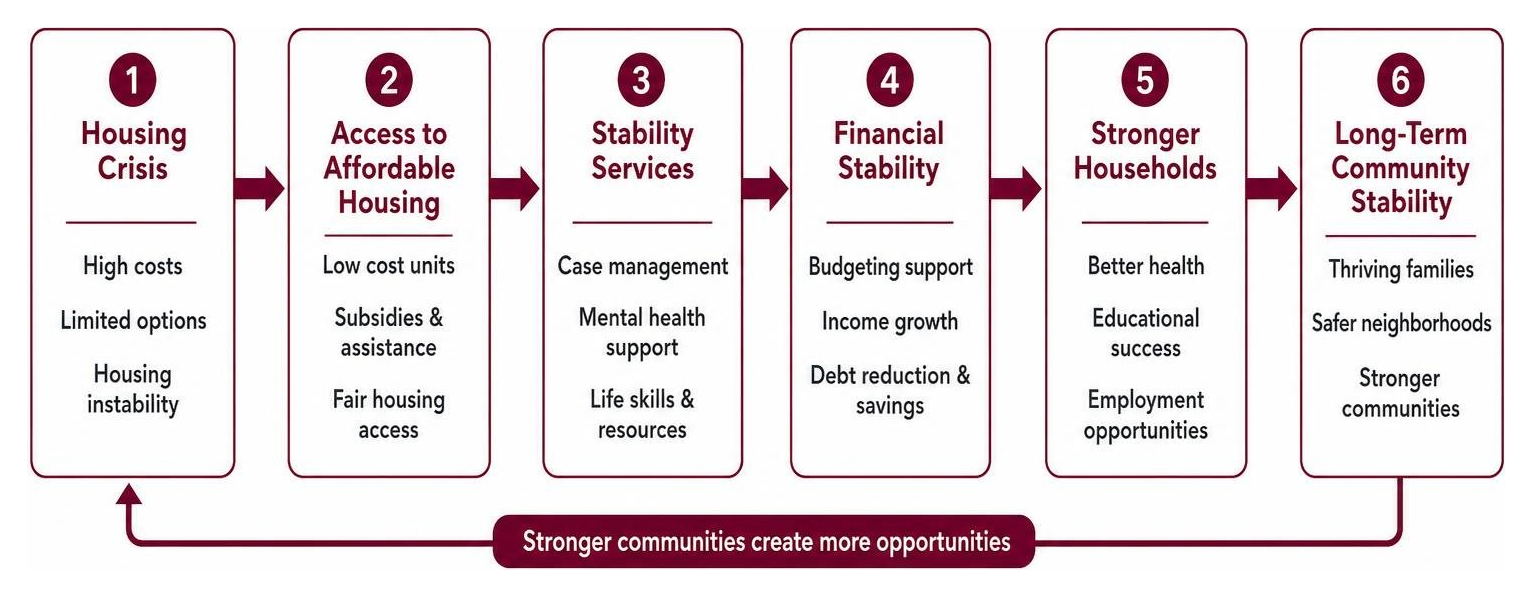
Finding a physical apartment is only half the battle; staying housed and building a stable life is the ultimate goal. At LifeSTEPS, we believe that true housing stability requires a combination of affordable rent, personal support, and financial planning.

How to Search for Low Cost Housing Near Me in California
The search for affordable housing must be highly localized. Here is where to look if you live in our service areas:
- Los Angeles County: Use the official Los Angeles County Housing Portal to search for real-time listings of affordable, subsidized, and special-needs housing.
- San Diego: The San Diego Housing Commission (SDHC) manages over 4,100 affordable rental units and has partnered with private developers to create an additional 23,000 units citywide. You can browse these properties on the San Diego Housing Commission affordable rentals page.
- Riverside: Explore active municipal and regional developments through the Affordable Housing Projects | Housing & Human Services directory.
- Irvine: Check local inclusionary zoning units and city-backed affordable properties on the Affordable Housing resource page.
- Other Regions: For additional regional housing options, you can explore affordable housing communities that offer dedicated support.
Finding Low Cost Housing Near Me with No Waiting List
One of the biggest hurdles in the housing search is the waiting list. In many parts of California, waitlists for Section 8 can remain closed for years. However, there are times when private, income-restricted buildings have immediate openings or open their waitlists for a short period.
To find these opportunities, you must monitor local property management websites directly and keep your application documents ready. For a detailed breakdown of how to locate these rare openings, read our guide on low income housing with no waiting list.
Support for Veterans, Seniors, and Families
Certain populations face unique challenges when trying to secure stable housing. Veterans transitioning to civilian life, seniors living on fixed incomes, and families experiencing sudden financial shocks require specialized programs.
Permanent supportive housing programs combine affordable rent with on-site case management, mental health support, and community building. For those starting from scratch, we recommend checking out the best income-based apartments for beginners.
To help families move into these units, we utilize the CalAIM program to provide critical financial support. Through CalAIM, we can offer deposit assistance—specifically covering 1 month paid in advance for deposit assistance—to ensure that upfront costs do not stand in the way of a safe home. This intensive, human-centered approach is why we proudly maintain a 93% housing retention rate among the participants we serve.
Education and Youth Services for Housing Stability
We know that housing stability is intergenerational. When children have a quiet, supportive place to study, they thrive. That is why our services extend far beyond physical walls to include afterschool programs and higher education support.
Our summer reading initiatives have achieved a 97% literacy improvement among participating youth, helping close the achievement gap for low-income families. Furthermore, we have helped students achieve their dreams of higher education by facilitating $2.1M in scholarships. By investing in the next generation, we help families break the cycle of poverty for good.
Frequently Asked Questions About Affordable Housing
How do I verify if a property is truly affordable and avoid scams?
Unfortunately, housing scams are common. Scammers often copy legitimate listings, lower the price, and ask for wire transfers or application fees before you see the property.
To protect yourself:
- Always verify the listing on official municipal databases like the Los Angeles County Housing Portal.
- Never pay a deposit or application fee in cash, via wire transfer, or through peer-to-peer payment apps before signing a formal lease.
- Deal directly with established property management companies or verified housing authorities.
What legal rights do tenants have if facing eviction?
In California, tenants have strong legal protections. Landlords must follow strict legal procedures to evict a tenant and cannot simply change the locks or throw your belongings out. If you receive an eviction notice, seek free legal aid immediately. Organizations like local legal aid societies can help you understand your rights, defend against wrongful evictions, and negotiate rent repayment plans.
How do income limits (AMI) affect my eligibility?
Your eligibility is determined by comparing your total household gross income against the regional AMI limits for your household size. If your income increases after you move into an income-restricted apartment, you generally do not lose your housing immediately. Most programs allow you to stay as long as your income was qualified at the time of your initial lease signing, though your rent may adjust gradually over time depending on the specific program rules.
Conclusion: Take the Next Step Toward Housing Stability
Finding low cost housing near me is a journey that requires patience, organization, and the right support. By understanding how AMI limits work, utilizing local search portals, and applying to diverse programs, you can find an affordable place to call home.
At LifeSTEPS, we do not just help you find an apartment—we help you build a foundation for the future. Through our collaboration with programs like the Family Self-Sufficiency (FSS) program, we work side-by-side with our clients to transition them from rental assistance to permanent homeownership and lasting self-sufficiency.
Whether you are a veteran looking for stable ground or a family striving for a better future, we are here to walk with you every step of the way. Explore our LifeSTEPS programs and services to see how we can support your journey.
LifeSTEPS currently provides services in California only.
For inquiries, contact: LifeSTEPS | Phone: (916) 965-2110 | LifeSTEPS


