


The Complete Guide to Finding Los Angeles FSS Services
The Complete Guide to Finding Los Angeles FSS Services
Finding Los Angeles FSS Services for Housing and Education
Los Angeles FSS services can help California residents build stability through housing guidance, afterschool learning, and pathways to higher education.
- Housing support: LifeSTEPS helps residents work toward stable housing and has a 93% housing retention rate.
- Deposit assistance: Eligible residents may receive deposit assistance through the CalAIM program, with 1 month paid in advance.
- Afterschool support: Youth programs can provide safe learning time and Summer Reading has achieved a 97% literacy improvement.
- Higher education: LifeSTEPS supports educational goals and has provided $2.1M in scholarships.
For a transitioning veteran or any resident working toward long-term stability, these services can connect housing security with education for the whole household. This guide explains where each type of support fits and what to expect before seeking help.
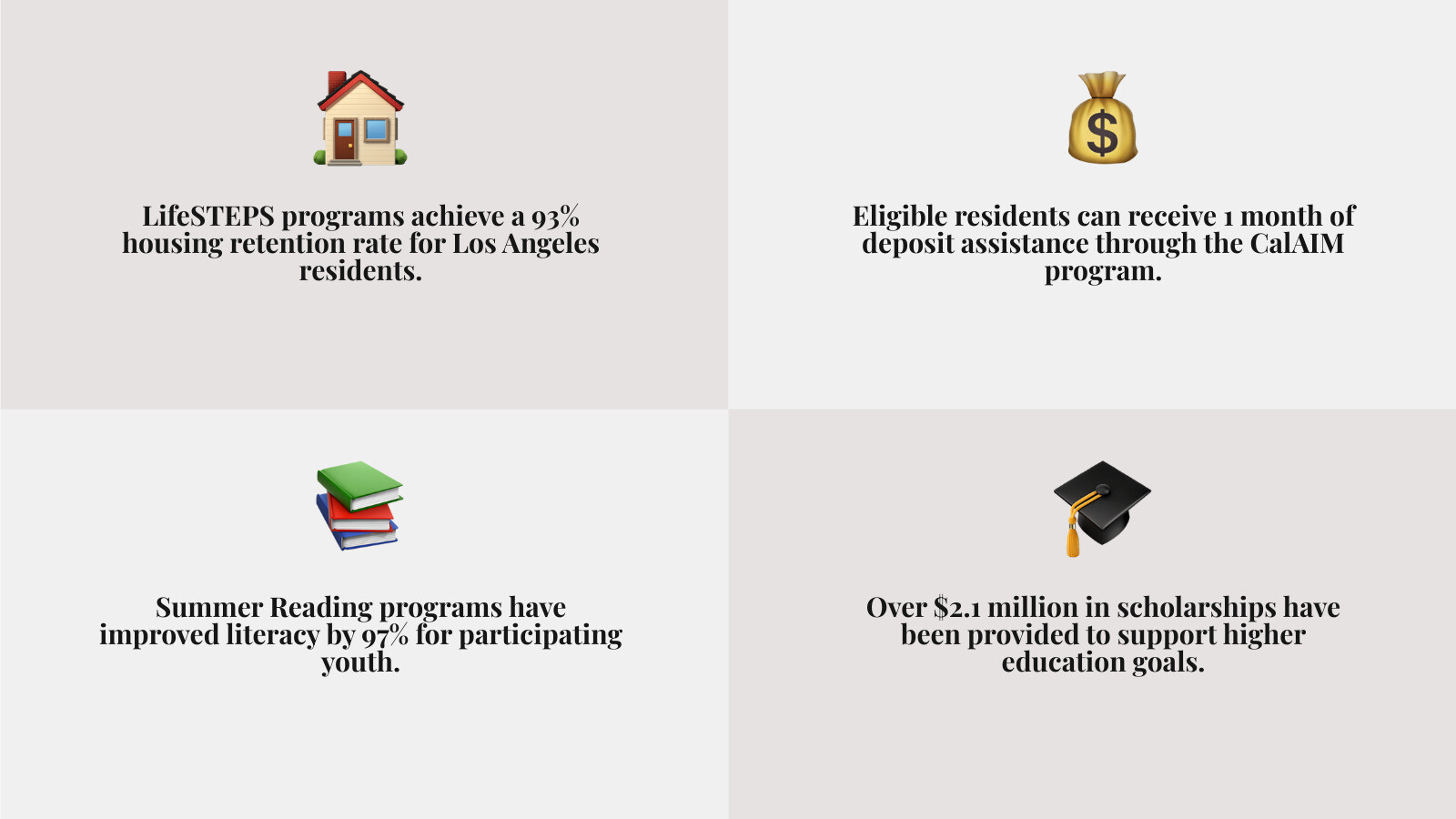
Los Angeles FSS services terms at a glance:
Overview of Los Angeles FSS Services
Navigating supportive services in Southern California can feel overwhelming, but understanding how Los Angeles FSS services operate makes the process straightforward. Family Self-Sufficiency (FSS) initiatives, alongside specialized housing authority programs and non-profit supportive services, exist to establish long-term economic independence. Whether coordinated through housing authorities or base support squadrons at local military installations, these programs combine stable housing with structured growth opportunities.
By linking stable housing with educational resources, youth programming, and self-sufficiency coaching, participants are given the tools necessary to exit public assistance reliance. Understanding the core structure of the FSS program is the first step toward transforming temporary housing into a permanent foundation for personal and academic growth. For additional national context, HUD explains the official Family Self-Sufficiency program framework and how it supports participating households.
Mission of Los Angeles FSS Services
The primary mission of Los Angeles FSS services is to empower individuals and families to gain economic independence and housing permanence. Rather than providing short-term fixes, the framework focuses on comprehensive supportive infrastructure. This includes combining affordable housing options with dedicated guidance in personal finance, career advancement, higher education access, and youth educational development.
For many participating households, stable housing provides the quiet, safe space required for children to focus on schoolwork and for adults to pursue higher education or advanced skills training. FSS initiatives align with community service models to ensure that every participant receives individualized, human-centered encouragement. The underlying goal remains constant: helping residents achieve permanent housing security, foster educational excellence in their children, and build a resilient foundation for the future.
Accessing Los Angeles FSS Services
Accessing Los Angeles FSS services begins with understanding eligibility, program intake steps, and available community support portals. Interested households can learn how to apply for Family Self Sufficiency program initiatives by connecting with local housing coordinators or community intake specialists.
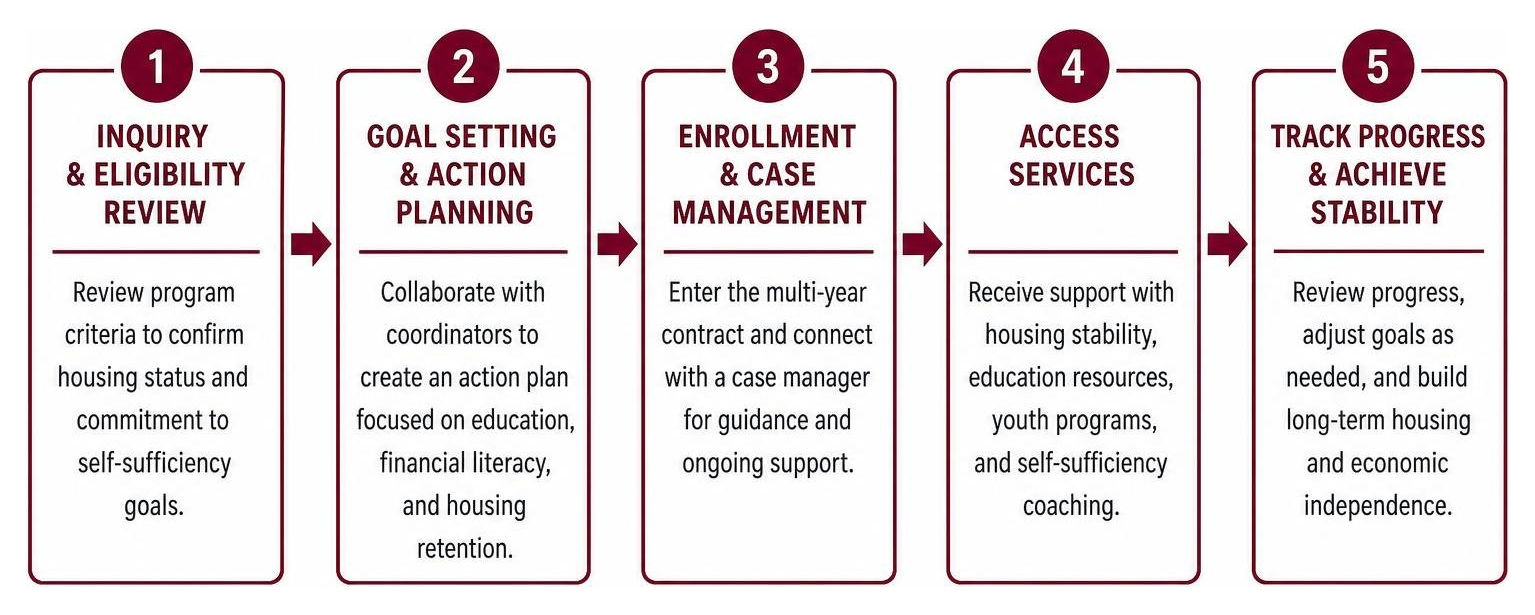
The intake process generally follows structured steps:
- Initial Inquiry & Eligibility Review: Review program criteria to confirm housing status and commitment to standard self-sufficiency goals.
- Goal Setting & Action Planning: Collaborate with coordinators to draft a detailed Family Self Sufficiency program action plan centered on educational attainment, financial literacy, and housing retention.
- Enrollment & Case Management: Formally enter the multi-year contract period, gaining direct access to supportive case management, tutoring referrals, and housing stabilization tools.
- Ongoing Milestones & Progress Tracking: Participate in periodic check-ins to monitor educational achievements, higher education grant applications, and housing readiness steps.
For military members, veterans, and local civilian residents alike, tapping into these portals provides an organized roadmap from foundational intake straight through to successful graduation.
Housing Assistance and Afterschool Programs
Housing security and youth education are deeply interconnected. When a household enjoys safe, reliable housing, youth can thrive in structured environments that support learning and personal development. LifeSTEPS focuses on connecting quality housing assistance with powerful afterschool programming so that stable living conditions naturally translate into improved academic success for children.

When families obtain reliable housing, children no longer endure the stress of frequent moves or interrupted school years. In Southern California communities, integrating dedicated afterschool centers directly within housing developments ensures that children have daily access to homework assistance, reading enrichment, and positive adult role models.
Afterschool Programs and Youth Enrichment
Youth enrichment is a vital component of holistic housing stability. Afterschool programs offered within supportive housing communities provide structured learning environments, character-building activities, and academic tutoring tailored to each child’s needs. These safe spaces keep youth productively engaged during crucial late-afternoon hours when parents may be working or completing higher education coursework.
A cornerstone of youth programming is summer reading enrichment. Keeping young minds active during the summer months prevents learning loss and builds lifelong confidence. Through focused literacy interventions, LifeSTEPS afterschool programs have achieved a remarkable 97% literacy improvement among participating children during Summer Reading sessions.
Key elements of youth afterschool programs include:
- Daily supervised homework time and group tutoring.
- Interactive STEM projects and creative arts enrichment.
- Structured literacy modules designed to boost reading comprehension.
- Peer social activities that build teamwork, empathy, and leadership skills.
Higher Education and Skill Building
Long-term housing retention relies heavily on creating opportunities for higher education and career development. Adults and transitioning youth living in supportive housing communities benefit immensely from tailored academic counseling and post-secondary guidance.
To make college and technical education accessible, LifeSTEPS offers robust guidance on university admissions, vocational certificate programs, and financial aid navigation. Over its history, LifeSTEPS has awarded $2.1M in scholarships to residents pursuing higher education, breaking down financial barriers and opening doors to sustainable careers.
For instance, Marcus (first name has been changed to protect privacy), a military veteran transitioning to civilian life in Los Angeles, used supportive housing services to stabilize his living situation. With dedicated guidance from community coordinators, Marcus applied for higher education grants and received a scholarship that enabled him to complete his associate degree in computer technology. Today, he maintains stable housing while working full-time in the technology sector.
Housing Stability, Financial Growth, and Support
Achieving permanent self-sufficiency requires a strategy that pairs reliable shelter with personal financial growth. Participants using Los Angeles FSS services receive hands-on instruction in household budgeting, savings strategies, and housing retention skills. This dual focus ensures that families not only find housing but also build the financial muscle needed to keep it over the long term.
Understanding the mechanics of financial growth—such as escrow savings accounts and deposit programs—empowers households to move from temporary shelter to long-term independence. To explore detailed strategies, review the comprehensive HUD FSS program guide to see how monthly financial milestones translate into real tangible assets.
Housing Readiness and Financial Support
Financial readiness is essential for maintaining housing stability. Many households face initial hurdles when moving into permanent housing due to upfront move-in costs, such as security deposits and initial utility setup fees. Without structured support, these entry costs can delay housing placement or force families into precarious financial situations.
Through targeted financial counseling, participants learn essential skills:
- Creating and maintaining a realistic monthly household budget.
- Building emergency savings to buffer against unexpected expenses.
- Understanding tenant rights, lease agreements, and landlord communication.
- Repairing personal credit scores to qualify for future housing choices or homeownership options.
When paired with case management, financial readiness training equips residents to meet their lease obligations, manage household expenses, and maintain housing stability indefinitely.
Housing Guidance and Community Resources
Navigating local housing resources requires clear direction and supportive coordination. Non-profit organization programs collaborate with public housing agencies, local municipalities, and community partners to guide residents through housing search and placement workflows.
For individuals transitioning out of temporary housing or military service, introductory housing briefings help clarify lease terms, local housing subsidies, and community expectations. Coordinators assist clients in identifying suitable, affordable properties across Southern California communities like Los Angeles, San Diego, Riverside, and Irvine.
Through comprehensive stabilization support, LifeSTEPS maintains an impressive 93% housing retention rate across its supported housing developments. This high retention rate proves that when residents receive continuous housing guidance alongside access to educational resources, they remain successfully housed year after year.
Afterschool Options and Educational Advancement
For working parents and students pursuing higher education, safe afterschool programs and academic support options are essential. Without reliable afterschool learning time, parents may struggle to maintain steady work schedules or attend evening college classes while children continue building strong academic habits.
Understanding this dynamic, Los Angeles FSS services emphasize integrated family support within the focused areas of housing stability, afterschool learning, and higher education advancement. By connecting residents with dedicated afterschool centers, tutoring support, and post-secondary guidance, families gain the stability needed to focus on long-term financial and educational goals.
Afterschool Programs and Educational Advancement
Afterschool centers located directly within residential housing communities serve as focal points for academic advancement. These facilities reduce transportation barriers for busy parents, allowing children to move from school into a secure learning environment connected to their housing community.
Beyond traditional homework assistance, these programs focus heavily on literacy, foundational math skills, and educational enrichment. The dramatic impact of these programs is reflected in the 97% literacy improvement seen during Summer Reading programs. These outcomes demonstrate how accessible, high-quality educational support at the elementary and middle school levels lays the groundwork for high school graduation and future higher education pursuits.
Youth centers also foster positive academic growth by providing structured mentorship. Program staff work closely with local public school teachers to identify areas where individual students need additional help, creating a seamless connection between classroom learning and afterschool support.
Financial Readiness and Los Angeles FSS Services for Families
Building wealth while renting is a cornerstone of the FSS model. Learn more about how families accumulate savings while maintaining housing by reading about how to build wealth while renting. Under standard FSS guidelines, as a participant’s earned income increases, a portion of their increased rent payment is deposited into an interest-bearing escrow account held by the housing agency. Upon successful graduation from the program, the family receives these accumulated escrow funds, which can be used toward higher education tuition, career training, or buying a home.
In addition to escrow accumulation, immediate financial relief for move-in costs is available for eligible participants. Through the CalAIM program, eligible residents can access deposit assistance, covering 1 month paid in advance to secure suitable housing. This vital deposit assistance removes the single largest financial barrier to housing entry, allowing families to transition quickly into stable homes.
When combined with LifeSTEPS’ historical commitment of providing $2.1M in scholarships for post-secondary education, families receive a complete pipeline of financial and academic support, from move-in deposit assistance to college graduation.
Frequently Asked Questions
What is the main mission of Los Angeles FSS services?
The main mission of Los Angeles FSS services is to help individuals and families achieve long-term economic independence and housing permanence. By combining stable housing assistance with financial coaching, higher education resources, and youth afterschool support, FSS programs empower residents to increase their earned income, reduce reliance on public assistance, and build lasting community stability.
What afterschool and educational options are provided through FSS?
Supported housing communities feature on-site afterschool programs offering daily homework help, STEM activities, and targeted literacy support—which has achieved a 97% literacy improvement during Summer Reading modules. For older youth and adults, educational support includes post-secondary planning, college application guidance, and access to higher education scholarship opportunities, supported by LifeSTEPS’ track record of delivering $2.1M in scholarships.
How do participants access housing setup and financial support?
Participants access housing setup and financial support by completing intake orientation with housing program coordinators or community service specialists. Eligible individuals transitioning into stable housing can access move-in deposit assistance through the CalAIM program, which provides 1 month paid in advance. Ongoing financial counseling helps participants budget effectively, repair credit, and establish long-term savings strategies to maintain a 93% housing retention rate.
Conclusion
Finding and utilizing Los Angeles FSS services provides individuals and families with a proven path toward permanent housing security and academic success. By linking affordable living environments with financial coaching, community resources, and dedicated afterschool programs, residents gain the tools needed to build a bright, self-sufficient future.
Through human-centered support, LifeSTEPS continues to empower California communities by achieving a 93% housing retention rate, delivering deposit support through the CalAIM program with 1 month paid in advance, helping children achieve a 97% literacy improvement in Summer Reading, and awarding $2.1M in scholarships for higher education. Explore our programs and services or contact our team to learn more about how housing assistance and education transform lives.
To learn more about first-time homeownership options and financial grants, explore our guide on low-income homeownership programs or read The Ultimate Guide to California Family Self Sufficiency.
Contact Information: LifeSTEPS | Phone: (916) 965-2110 | LifeSTEPS
LifeSTEPS currently provides services in California only.


