


The Complete Guide to One-Time Rent Payment Assistance for Emergency Help
The Complete Guide to One-Time Rent Payment Assistance for Emergency Help
Find One-Time Rent Payment Assistance Before an Eviction
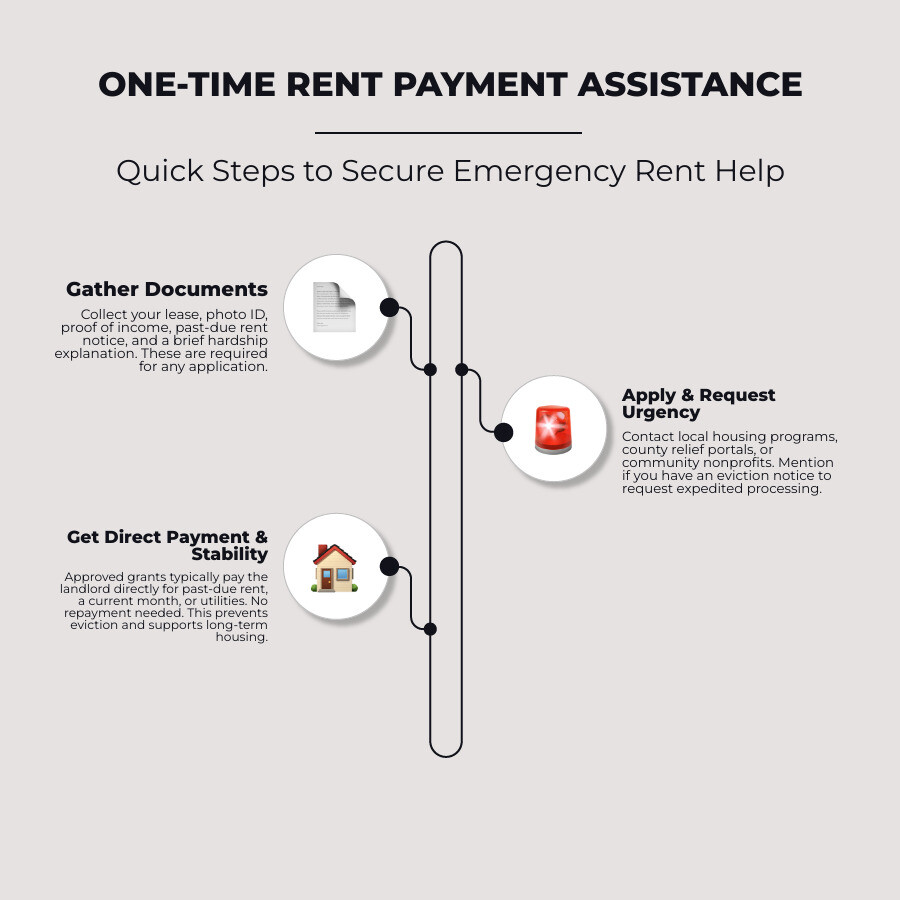
If you need one time rent payment assistance in California, act quickly: gather your lease, photo ID, proof of income, past-due rent notice, and a short explanation of the hardship. Then contact local housing support organizations, county or city programs, and community referral networks. Many grants pay the landlord directly and may cover past-due rent, a current month, or utilities. They are generally not loans, so approved funds usually do not need to be repaid.
For veterans and other renters rebuilding stability after a financial setback, timing matters. Tell each program if you have an eviction notice and ask whether urgent review is available.
LifeSTEPS provides California housing support built around long-term stability, with a 93% housing retention rate. Through the CalAIM program, eligible residents may also receive security deposit assistance, including 1 month paid in advance. LifeSTEPS also supports families through afterschool learning, where Summer Reading has produced a 97% literacy improvement, and higher education opportunities, with $2.1M in scholarships.
One time rent payment assistance word list:
Understanding One Time Rent Payment Assistance and How It Works
When an unexpected emergency arises—such as sudden medical bills, temporary job disruptions, or urgent vehicle repairs—keeping a roof over your head becomes the top priority. One-time emergency rent relief operates as a targeted crisis intervention designed to stop housing displacement before it leads to formal eviction or homelessness.
Unlike ongoing housing subsidies like Section 8 vouchers, one-time rental assistance is designed to resolve an acute, short-term financial gap. Historically, massive federal investments like the Treasury’s Emergency Rental Assistance programs (which allocated over $46 billion across ERA1 and ERA2) helped millions of households remain stably housed during major national crises. Following the conclusion of federal Emergency Rental Assistance Program funding cycles, the responsibility for emergency housing aid has shifted back to state initiatives, municipal housing departments, and local community-based organizations.
In California, these relief funds are primarily structured as direct vendor disbursements. Rather than depositing cash into a tenant’s personal bank account, program administrators disburse payments straight to the property management company or landlord. This direct-payment model reassures housing providers that arrears will be cleared immediately while protecting the tenant from eviction proceedings. For an in-depth breakdown of regional programs, consult our emergency rental assistance California complete guide.
Non-Repayable Grants vs. High-Risk Rent Loans
When facing an urgent rent deadline, some renters consider taking out private personal loans or turning to high-cost cash advance apps. Understanding the difference between non-repayable community grants and commercial borrowing is essential to protecting your financial future.
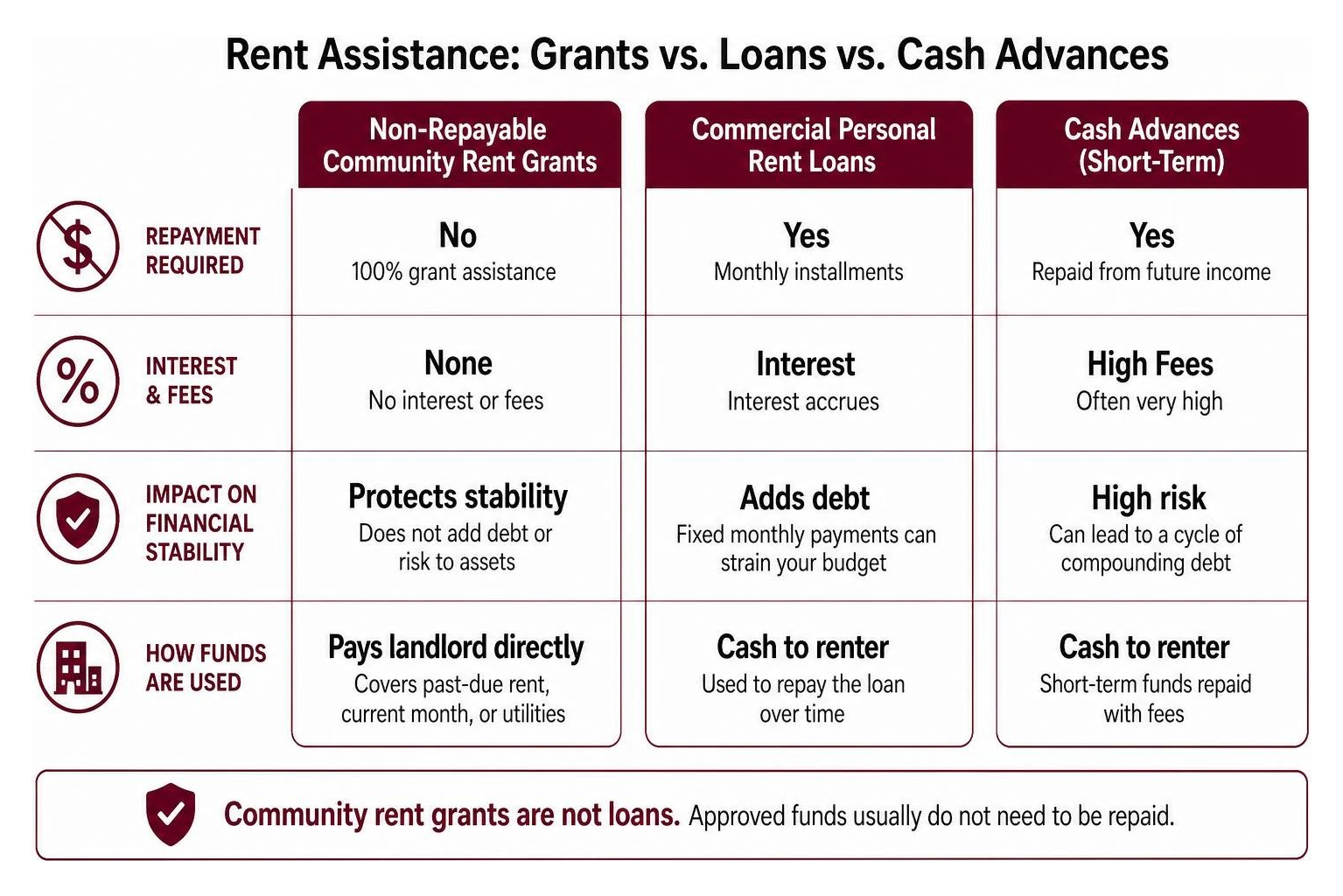
Emergency rental relief provided by government agencies and charitable organizations comes in the form of grants. These grants do not accrue interest, do not require monthly repayments, and do not place a lien on your personal assets. Conversely, commercial Rent Loans and short-term advances must be repaid out of future income. If your budget is already stretched thin, adding a fixed monthly loan payment can trigger a dangerous cycle of compounding debt that undermines long-term housing stability.
| Feature | Non-Repayable Emergency Rent Grants | Commercial Personal Rent Loans |
|---|---|---|
| Repayment Required | No (100% grant assistance) | Yes (monthly installments) |
| Interest Rates / APR | 0% (no interest charged) | Varies (can carry high interest rates) |
| Disbursement Method | Direct payment to landlord/utility | Direct deposit to borrower |
| Credit Score Impact | None (no credit check required) | Soft/hard credit inquiries apply |
| Processing Time | 1 to 8 weeks depending on agency | Same-day to several business days |
| Risk of Debt Cycle | None | High if household income is unstable |
Eligibility Requirements for One Time Rent Payment Assistance
While each local program maintains its own specific guidelines, most public and nonprofit rental relief initiatives in California share standard baseline eligibility criteria:
- Income Limits: Households must generally earn at or below 80% of the Area Median Income (AMI), with preference often given to extremely low-income households earning below 30% to 50% AMI.
- Residency Verification: Applicants must provide proof of residence within the designated municipality, county, or service boundary (such as a current lease agreement or utility statement).
- Documented Financial Hardship: Programs require verifiable evidence that a crisis occurred within the past 12 months, such as documented loss of income, medical bills, or urgent family emergencies.
- Housing Instability or Arrears: A formal notice from the landlord, past-due balance statement, or active Notice to Vacate demonstrating immediate risk of displacement.
- Asset Thresholds: Some municipal programs evaluate liquid household assets, requiring additional disclosure if liquid savings exceed specific benchmarks.
California Emergency Rental Relief and Regional Programs

California offers a diverse network of localized housing initiatives designed to keep families and individuals in their homes. While statewide blanket relief has evolved, cities and counties continue to fund municipal relief programs, eviction prevention networks, and emergency housing grants. Exploring rent relief near you unlocking city and county assistance is often the fastest way to identify active local funding streams.
Southern California Local Relief Initiatives
Renters in Southern California can access several targeted county and municipal programs designed to address regional housing costs:
- Los Angeles County: The LA County Rent Relief Program and local community action networks provide targeted grants to eligible tenants facing severe rent burdens. To explore localized community relief channels, see our guide on finding help with rent Los Angeles style.
- San Diego County: Administered through local housing authorities and community organizations, Rental Assistance initiatives support qualifying households with arrears resolution and short-term rent subsidies to prevent displacement.
- Riverside County & Inland Empire: Regional programs, including local CARES initiatives and partner nonprofits, offer direct housing stabilization services, utility grants, and emergency rent interventions.
- Irvine & Orange County: Local community partnerships and family resource centers coordinate emergency financial grants to bridge sudden housing shortfalls for qualifying residents.
CalAIM Support and Security Deposit Assistance
For individuals navigating complex life transitions, medical challenges, or housing instability, California’s CalAIM (California Advancing and Innovating Medi-Cal) program provides vital Community Supports. Under these specialized health-related social needs services, eligible participants can receive housing navigation, tenancy transition support, and move-in financial aid.
Through CalAIM Community Supports, qualifying participants can access security deposit assistance, including 1 month paid in advance, helping remove the steep upfront financial barriers that often prevent individuals and families from securing safe, permanent housing. Learn more about navigating these options in your guide to first month rent security deposit help programs resources.
Application Process and Eviction Prevention Strategies

Applying for rental relief requires organization, persistence, and clear communication with your housing provider. When facing housing insecurity, taking swift action can dramatically reduce the likelihood of legal action. Reviewing strategies for emergency rent assistance to avoid eviction can help you protect your rights while your application is processed.
How to Apply for One Time Rent Payment Assistance
To ensure your application is processed without unnecessary delays, prepare your paperwork in advance before submitting an intake form through a local program portal or community agency.
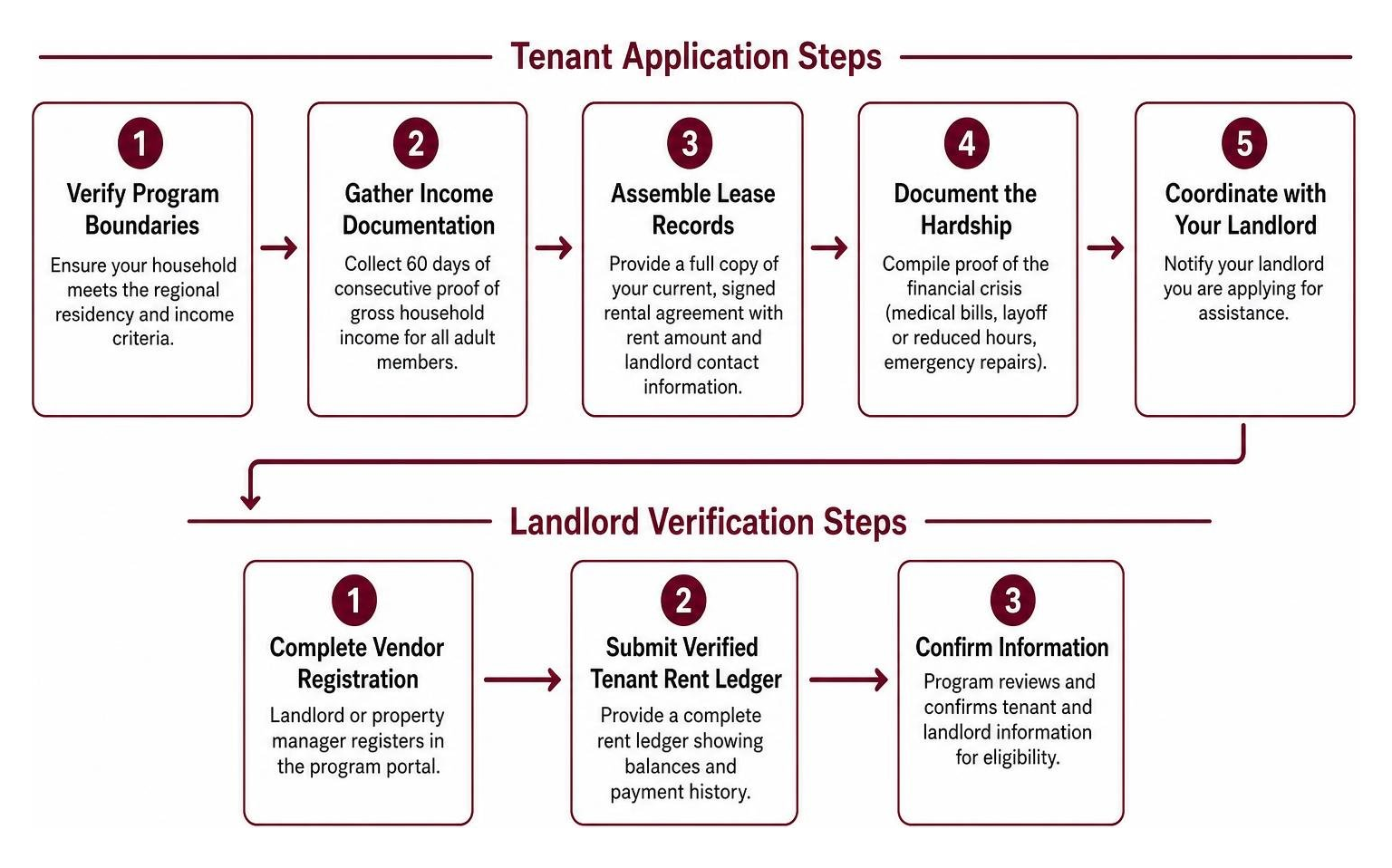
- Verify Program Boundaries: Ensure your household meets the regional residency and income criteria for the specific county or city program.
- Gather Income Documentation: Collect 60 days of consecutive proof of gross household income for all adult members (paystubs, benefit award letters, or self-employment records).
- Assemble Lease Records: Provide a full copy of your current, signed rental agreement detailing monthly rent obligations and landlord contact information.
- Document the Hardship: Compile proof of the financial crisis (such as medical bills, proof of layoff or reduced hours, or emergency repair receipts).
- Coordinate with Your Landlord: Notify your landlord or property manager that you are applying for assistance so they can promptly complete their required vendor registration and submit a verified tenant rent ledger.
Action Steps for Urgent Notices and Application Denials
If you have already received a formal Notice to Vacate, do not wait. Take these immediate steps:
- Communicate in Writing: Inform your landlord immediately that you have submitted an emergency assistance application and provide them with the application tracking number.
- Request Expedited Review: Contact the administering agency and inform them of your pending notice date to request priority or expedited processing.
- Engage Local Legal Aid: Seek free tenant legal defense services through local legal aid societies to ensure you understand your statutory rights and response timelines.
- Prepare an Appeal if Denied: If an application is rejected due to missing paperwork or calculation errors, submit a formal grievance or appeal within the program’s designated review window (typically 30 days).
Frequently Asked Questions About Emergency Rent Relief
How long does it take for emergency rent assistance to be approved?
Processing times vary depending on the administering agency and current community demand. Local nonprofit emergency relief programs can sometimes process urgent aid within several business days to two weeks, while larger municipal portals typically require two to six weeks. To avoid processing bottlenecks, ensure all uploaded documents are completely legible and that your landlord responds quickly to vendor verification requests.
What expenses are covered by emergency rental grants?
Most one-time emergency rental assistance programs prioritize past-due rent (rental arrears) to prevent immediate eviction. Many initiatives can also cover upcoming rent for the current month, past-due utility charges (water, gas, electricity), and late fees. Through specialized California programs like CalAIM, eligible individuals can also receive security deposit assistance to help establish new, stable tenancies.
What should tenants do if their rental relief application is denied?
If your application is denied, immediately review the written denial notice to understand the specific reason. Many denials stem from incomplete documentation, illegible uploads, or unresponsive landlords. You generally have the right to request a supervisory review or file a formal appeal within 30 days. Simultaneously, reach out to alternative community action networks, charitable organizations, and local legal aid resources for backup support.
Conclusion
Overcoming a temporary financial crisis requires immediate relief paired with long-term tools for lasting self-sufficiency. Non-repayable one-time emergency rental grants offer a critical safety net that keeps families housed and prevents the disruptive consequences of eviction.
LifeSTEPS is dedicated to empowering individuals and families across California to achieve self-reliance and permanent housing stability. By pairing comprehensive supportive housing services with programs like the Family Self-Sufficiency (FSS) model, LifeSTEPS helps participants build financial empowerment and work toward long-term goals like homeownership. Through these dedicated efforts, LifeSTEPS maintains an exceptional 93% housing retention rate across its communities. In addition to housing stabilization, LifeSTEPS invests in future generations through robust youth afterschool programs—where the Summer Reading program achieves a 97% literacy improvement—and creates pathways to higher education with over $2.1M in scholarships awarded.
If you or someone you know is navigating a housing crisis, explore available community resources and take proactive steps toward securing your home today. For media inquiries, contact: bex@lifestepsusa.org.
LifeSTEPS currently provides services in California only.


