


The Ultimate HUD Low Income Housing Application Guide
What Is HUD Low Income Housing and How Do You Apply?
HUD low income housing provides safe, affordable rental options for eligible families, seniors, veterans, and people with disabilities — funded by the federal government and managed locally across California.
Here’s a quick overview of how to access it:
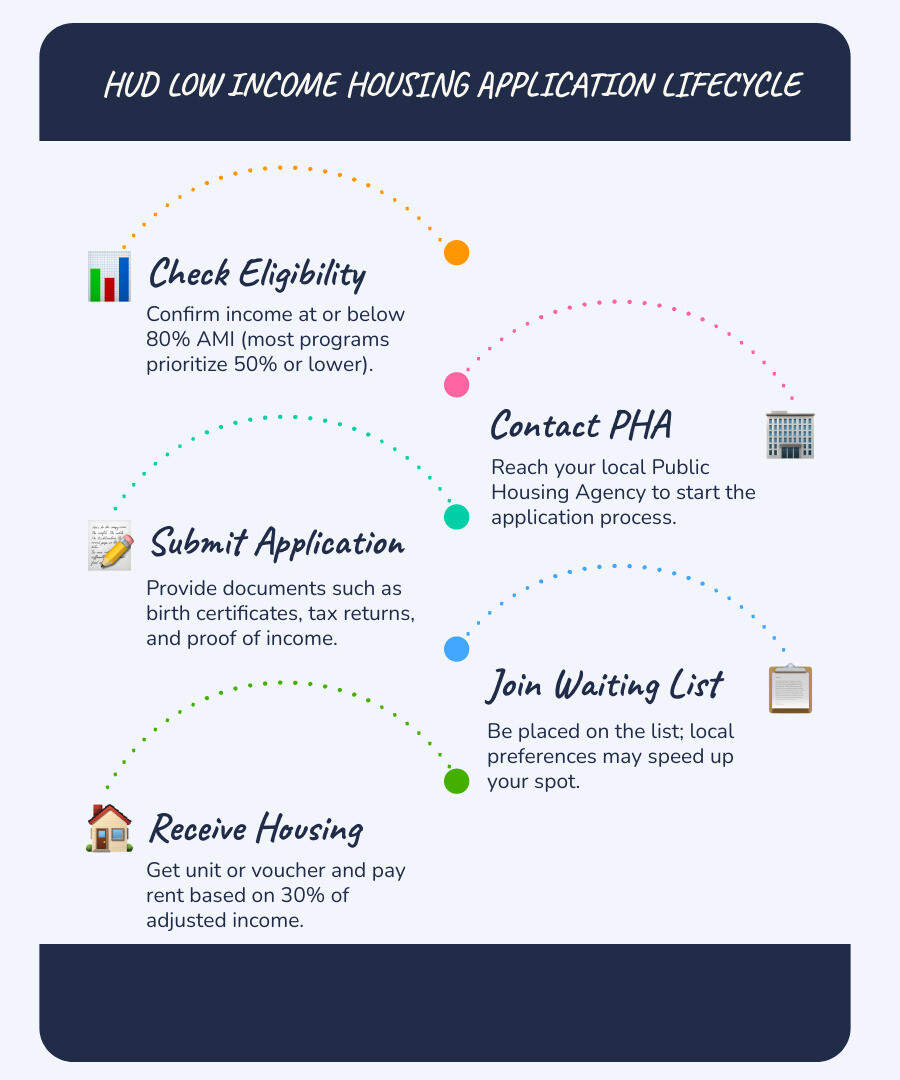
- Check your income eligibility — You must earn at or below 80% of your Area Median Income (AMI); most programs prioritize households at or below 50% AMI.
- Contact your local Public Housing Agency (PHA) — PHAs manage applications for both public housing units and Housing Choice Vouchers (Section 8).
- Submit a written application — Bring documentation like birth certificates, tax returns, and proof of income.
- Get placed on a waiting list — Demand is high; local preferences can move your application forward.
- Receive housing or a voucher — Once offered, pay rent based on 30% of your monthly adjusted income.
If you’re a recently discharged veteran, navigating housing in California can feel overwhelming. The good news: federal programs exist specifically to help you land stable housing fast — including dedicated veteran vouchers through HUD-VASH.
There are roughly 970,000 households currently living in HUD-assisted public housing across the country, managed by approximately 3,300 local housing agencies. Understanding how the system works is the first step toward using it.
This guide walks you through every step — from checking eligibility to moving in.
LifeSTEPS currently provides services in California only.
Learn more about hud low income housing:
Understanding hud low income housing Programs
When we talk about hud low income housing, we are usually referring to two main pillars of support: Public Housing and the Housing Choice Voucher program (often called Section 8). While both aim to make rent affordable, they work in very different ways.
Public housing consists of units owned and managed by a local Public Housing Agency (PHA). These can range from scattered single-family houses to high-rise apartments. In this setup, the government is essentially your landlord. On the flip side, the Housing Choice Voucher program allows you to find your own housing in the private market—as long as the landlord accepts vouchers and the unit meets safety standards. You can read more about these opportunities in our guide to Unlock Affordable Living: Section 8 Rental Opportunities.
To help you keep the jargon straight, HUD provides a helpful Glossary of HUD Terms that defines everything from “Assistance Payments” to “Gross Rent.”
Comparing HUD Assistance Programs
| Feature | Public Housing | Housing Choice Voucher (Section 8) |
|---|---|---|
| Who Owns the Property? | Local Housing Agency | Private Landlords |
| Who Manages the Unit? | The PHA | The Landlord |
| Where Can You Live? | Specific designated complexes | Any unit that meets program standards |
| Is it Portable? | Usually tied to the specific unit | Yes, you can move and take the voucher with you |
| Rent Amount | Roughly 30% of adjusted income | Roughly 30% of adjusted income |
Eligibility Requirements for hud low income housing
Eligibility for hud low income housing isn’t a one-size-fits-all number. It is based on your “Area Median Income” (AMI), which varies depending on where you live in California. A family of four in Los Angeles will have a different income limit than a family in Riverside.
HUD generally categorizes eligibility into three tiers:
- Low-Income: Households earning 80% or less of the AMI.
- Very Low-Income: Households earning 50% or less of the AMI.
- Extremely Low-Income: Households earning 30% or less of the AMI.
For the most accurate and current numbers, you can consult the FY 2026 Income Limits Documentation System. Most vouchers and public housing units are reserved for those in the “Very Low” category. If you are curious about how these limits apply to your specific situation, check out our breakdown of Affordable Housing for Low-Income Families and How to Get It.
Citizenship and Family Status
Beyond income, PHAs look at your family status and citizenship. To qualify, at least one member of your household must be a U.S. citizen or have eligible immigration status. PHAs also prioritize “families,” but don’t let that term confuse you—HUD defines a family as a single person, a group of people living together, or elderly individuals (62+) and persons with disabilities.
For properties funded through tax credits, different rules might apply. You can find technical details on these through the Multifamily Tax Subsidy (MTSP) Income Limits | HUD USER resource.
The Application Process and Waiting Lists
Applying for hud low income housing starts at your local Public Housing Agency (PHA). These agencies are the gatekeepers of federal funds in your community. Because we focus on California, we recommend looking at agencies like the Official San Diego Housing Commission (SDHC) Website or the Housing Authority of the County of Riverside: Home to see their specific local openings.

How to Apply for HUD low income housing in California
The application is typically a written form where you’ll provide details about everyone living in your home. You will need to be prepared with documentation, including:
- Birth certificates and Social Security cards for all members.
- Tax returns and recent pay stubs.
- Bank statements.
- Contact information for current and previous landlords.
While many lists are long, there are occasionally opportunities for Low-Income Housing with No Waiting List, though these are rare and usually property-specific. If you are searching for a place to use a voucher you already have, our resource on Housing Voucher Apartments Near Me can help narrow the search.
Managing the Waiting List Process
Once you apply, don’t be surprised if you’re placed on a waiting list. In high-demand areas like Irvine or Los Angeles, these lists can stay open for only a few days every few years.
PHAs often use a “preference” system to move certain people up the list. Common preferences include:
- Veterans or surviving spouses.
- People experiencing homelessness.
- Families with children.
- Victims of domestic violence.
It is vital to keep your contact information updated with the PHA. If they try to reach you and your phone number has changed, you could be dropped from the list entirely. For more tips on navigating this hurdle, read Unlock Your Home: A Fast-Track to Low-Income Housing.
Rent Calculation and Resident Rights
How much will you actually pay? HUD uses a formula called the Total Tenant Payment (TTP). Generally, your rent will be the highest of:
- 30% of your monthly adjusted income.
- 10% of your total monthly income.
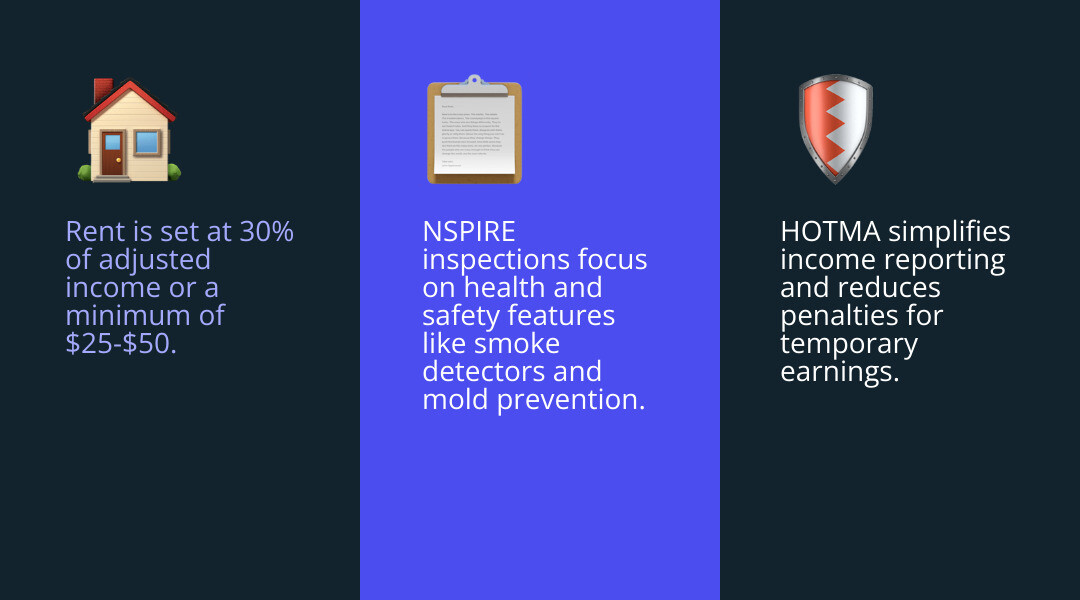
- A minimum rent set by the PHA (usually between $25 and $50).
PHAs also factor in utility allowances. If you pay for your own electricity or gas, the PHA may reduce your portion of the rent to account for those costs. Housing authorities use internal tools like Generating a Unit Detail Report to manage these designations and ensure units are occupied by the right-sized families.
Policy Changes: HOTMA and NSPIRE
The landscape of HUD low income housing changed recently with two major updates: HOTMA and NSPIRE.
- HOTMA (Housing Opportunity Through Modernization Act): This streamlined how income is calculated, making it easier for tenants to report their earnings without being penalized for small, temporary fluctuations.
- NSPIRE: This is the new gold standard for inspections. Instead of just checking if a building looks okay, NSPIRE focuses on “health and safety” inside the actual units—things like working smoke detectors, safe electrical outlets, and the absence of mold.
Technical codes for these programs and how they are tracked can be found in the web_codebook.xls documentation.
Support for Vulnerable Populations
We know that housing is more than just a roof; it’s a lifeline. For those experiencing homelessness or fleeing domestic violence, HUD offers Emergency Housing Vouchers (EHV).
Veterans have access to the HUD-VASH program, which combines a Section 8 voucher with case management and clinical services from the Department of Veterans Affairs (VA). This “Housing First” approach ensures that veterans are placed in a home before addressing other challenges like health or employment.
Achieving Stability Through Self-Sufficiency Programs
At LifeSTEPS, we believe housing is the foundation, but self-sufficiency is the goal. We are proud to share that our residents maintain a 93% housing retention rate. By providing on-site social services, we help people stay in their homes long-term.
Our impact goes beyond just keeping the lights on. We’ve seen a 97% literacy improvement through our Summer Reading programs and have helped students achieve their dreams with over $2.1M in scholarships awarded. You can learn more about how we bridge the gap in The HUD Self-Sufficiency Program: How to Build Wealth While Renting.
Building Wealth with the FSS Program
The Family Self-Sufficiency (FSS) program is one of HUD’s best-kept secrets. Normally, when your income goes up in hud low income housing, your rent goes up too. However, if you are in the FSS program, that rent increase is diverted into a special escrow account.
When you complete the program—which usually involves meeting employment goals—you get that money back. It can be thousands of dollars used for a car, tuition, or even a down payment on a home. Check out our HUD FSS Program Guide to see if you qualify, or read about whether you Can I Use Self-Sufficient Program with Public Housing?.
Pathways to Homeownership
Yes, you can actually buy a home with a voucher! The Section 8 Homeownership program allows eligible families to use their monthly subsidy toward a mortgage instead of rent.
To help with the initial transition, we collaborate with programs like CalAIM to provide deposit assistance. For those who qualify, we can assist with 1 month paid in advance for security deposits, removing one of the biggest barriers to moving into a stable environment.
Frequently Asked Questions about HUD Housing
How is my rent determined in HUD housing?
Your rent is generally 30% of your monthly adjusted income. “Adjusted” means you can deduct certain costs, like childcare or medical expenses for elderly/disabled family members, before the 30% is calculated.
Can I move to a different city with my voucher?
Yes! This is called “portability.” If you have a Housing Choice Voucher, you can generally move to any area in the country that has a PHA to manage your voucher. However, you usually have to live in the jurisdiction of the agency that issued the voucher for at least one year first.
What should I do if my income changes?
You must report any changes in income to your PHA immediately. If your income goes down, your rent can be adjusted downward so you don’t lose your housing. If it goes up, reporting it keeps you in compliance with your lease.

Conclusion
Navigating hud low income housing in California requires patience and the right information. Whether you are in Los Angeles, San Diego, Riverside, Irvine, or Natomas, the journey to stability starts with that first application at your local PHA.
At LifeSTEPS, we are here to support that journey. From literacy programs for your children to wealth-building escrow accounts through FSS, we aim to provide the human-centered support needed to turn an apartment into a permanent home.
More info about LifeSTEPS services
LifeSTEPS currently provides services in California only.


