


Touring Senior Citizen Apartment Homes for Independent Older Adults
Touring Senior Citizen Apartment Homes for Independent Older Adults
How to Find Senior Citizen Apartment Homes That Support Independence
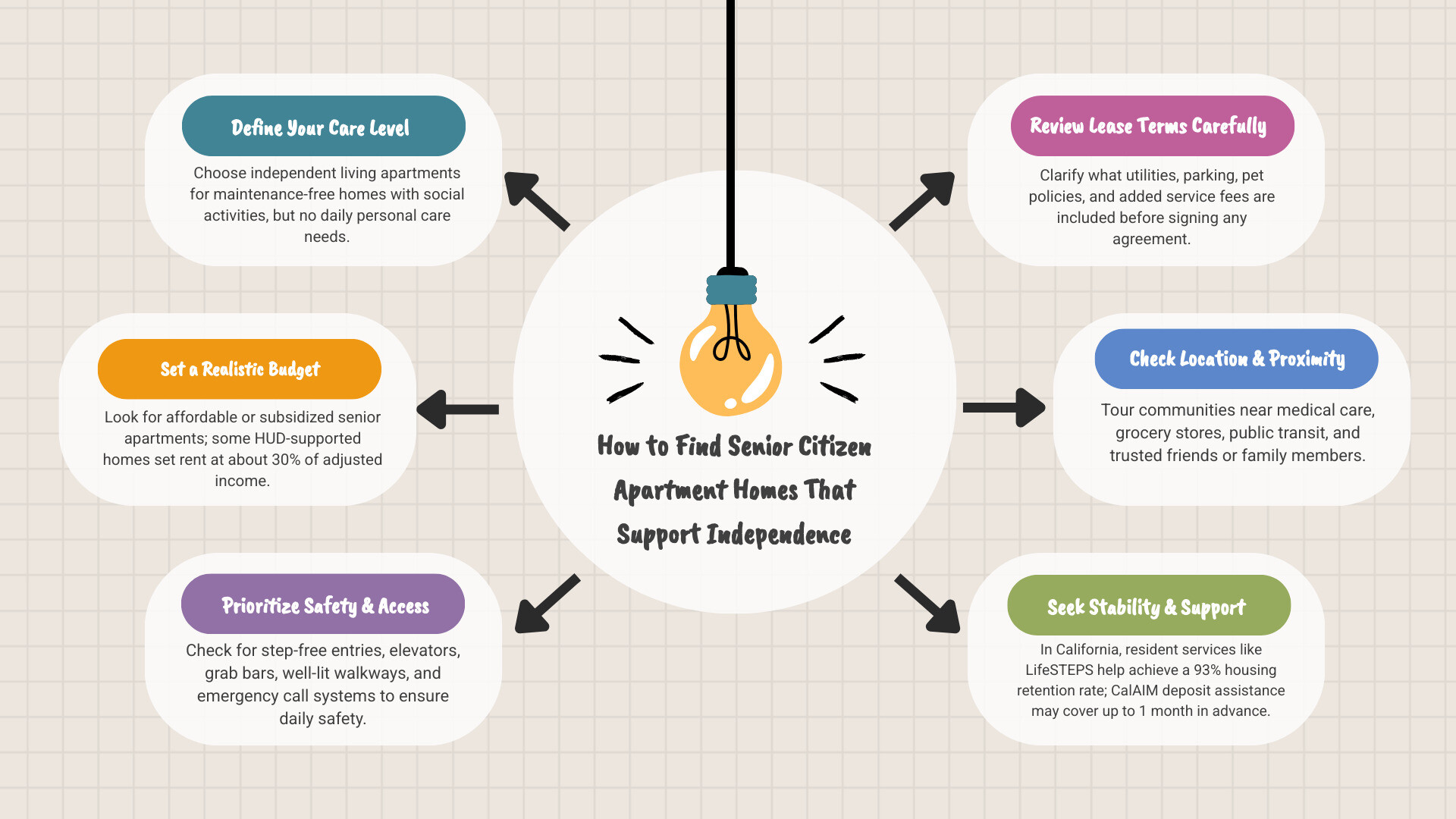
Senior citizen apartment homes are designed for older adults who want a private home with less upkeep, accessible features, and a built-in community. Start by choosing the level of support you need, setting a realistic monthly budget, and touring communities near medical care, grocery stores, transit, and people you trust.
Look for:
- Independent living apartments if you want a maintenance-free home and social activities without daily personal care.
- Affordable or subsidized senior apartments if your income is limited. Some HUD-supported homes set rent at about 30% of adjusted income.
- Safety and access features, such as step-free entries, elevators, grab bars, well-lit walkways, and emergency call systems.
- Clear lease terms that explain utilities, parking, pet policies, and added service fees.
For older veterans and others making a major housing transition, the right apartment can offer more than a place to live. It can create stability, privacy, and a path to stronger community ties. In California communities including Los Angeles, San Diego, Riverside, and the Bay Area, LifeSTEPS provides resident-centered housing support. Its work has helped achieve a 93% housing retention rate. For eligible residents, CalAIM deposit assistance may provide up to 1 month paid in advance to help address move-in barriers.
Helpful senior housing topics include affordable senior housing in California, senior apartment complexes, and cost of senior apartments.
Understanding Independent Senior Housing Options
Choosing where to spend your retirement years is one of the most empowering decisions you can make. As we look at the landscape in 2026, more than 17 million older adults aged 65 and older are economically insecure—living at or below 200% of the federal poverty level ($29,160 for an individual). Finding a safe, reliable, and accessible home is essential for preserving long-term physical and financial wellness.
Independent senior housing options cater to older adults who can manage their daily routines without constant medical supervision but want to eliminate the headaches of homeownership. You can finally trade in lawnmowers, roof repairs, and steep staircases for single-level floor plans, on-site maintenance, and vibrant social calendars.
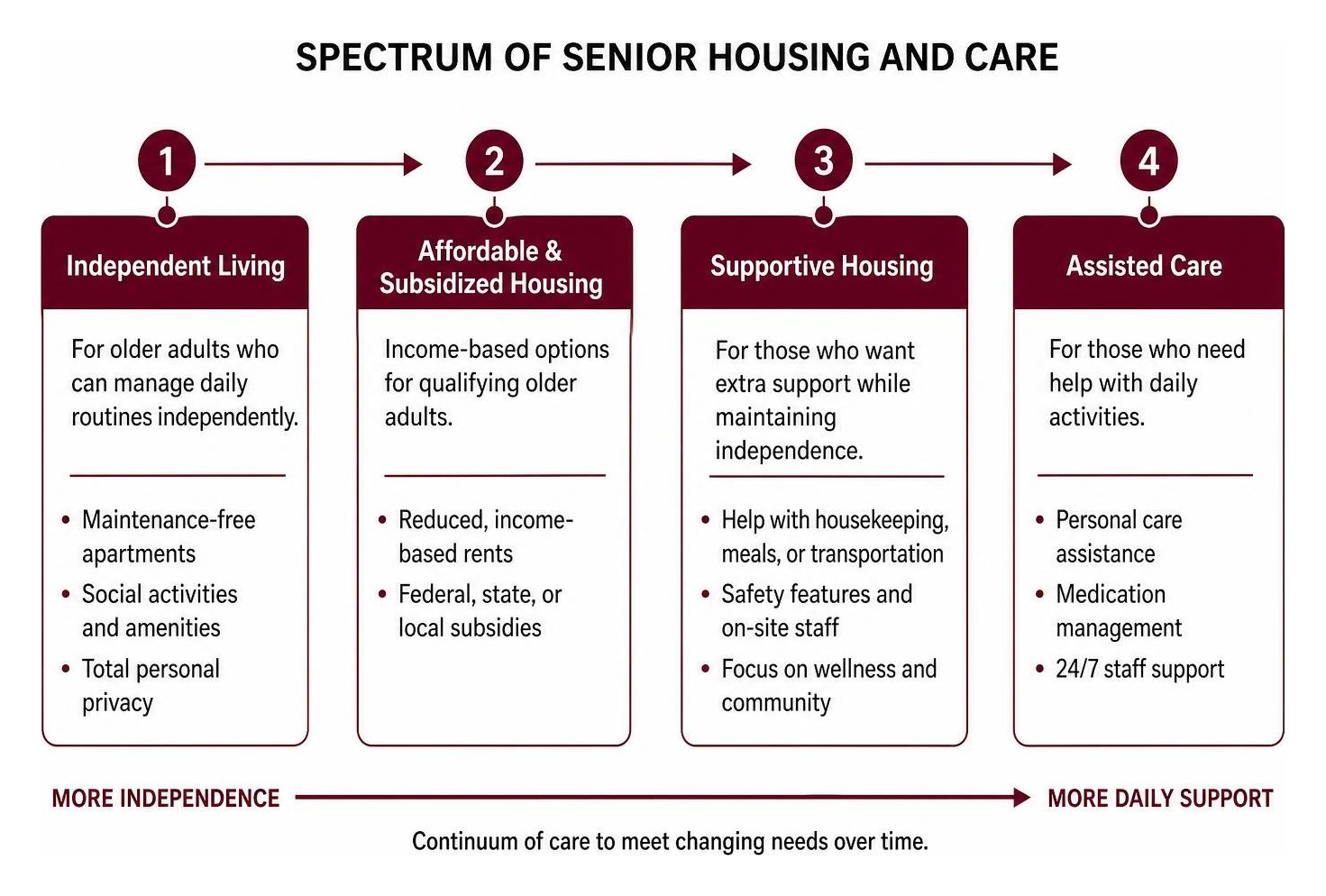
Independent living allows older adults to age in place safely while maintaining total personal privacy. These properties generally fall into two categories:
- 55+ and 62+ Active Adult Communities: Age-restricted residential neighborhoods or apartment complexes designed for older adults seeking peer connection, quiet surroundings, and lifestyle amenities.
- Affordable and Subsidized Senior Apartments: Properties funded through federal, state, or local housing initiatives that offer reduced, income-based rents for qualifying older adults.
For those planning ahead, understanding how independent living fits into the broader long-term care spectrum ensures you make the right move at the right time.
Evaluating Modern Senior Citizen Apartment Homes: Features and Amenities
Modern senior communities are purposefully constructed to promote autonomy, social connection, and safety. Rather than feeling institutional, quality communities blend residential comfort with subtle, functional modifications that support physical mobility.
Universal Design and Safety Accommodations
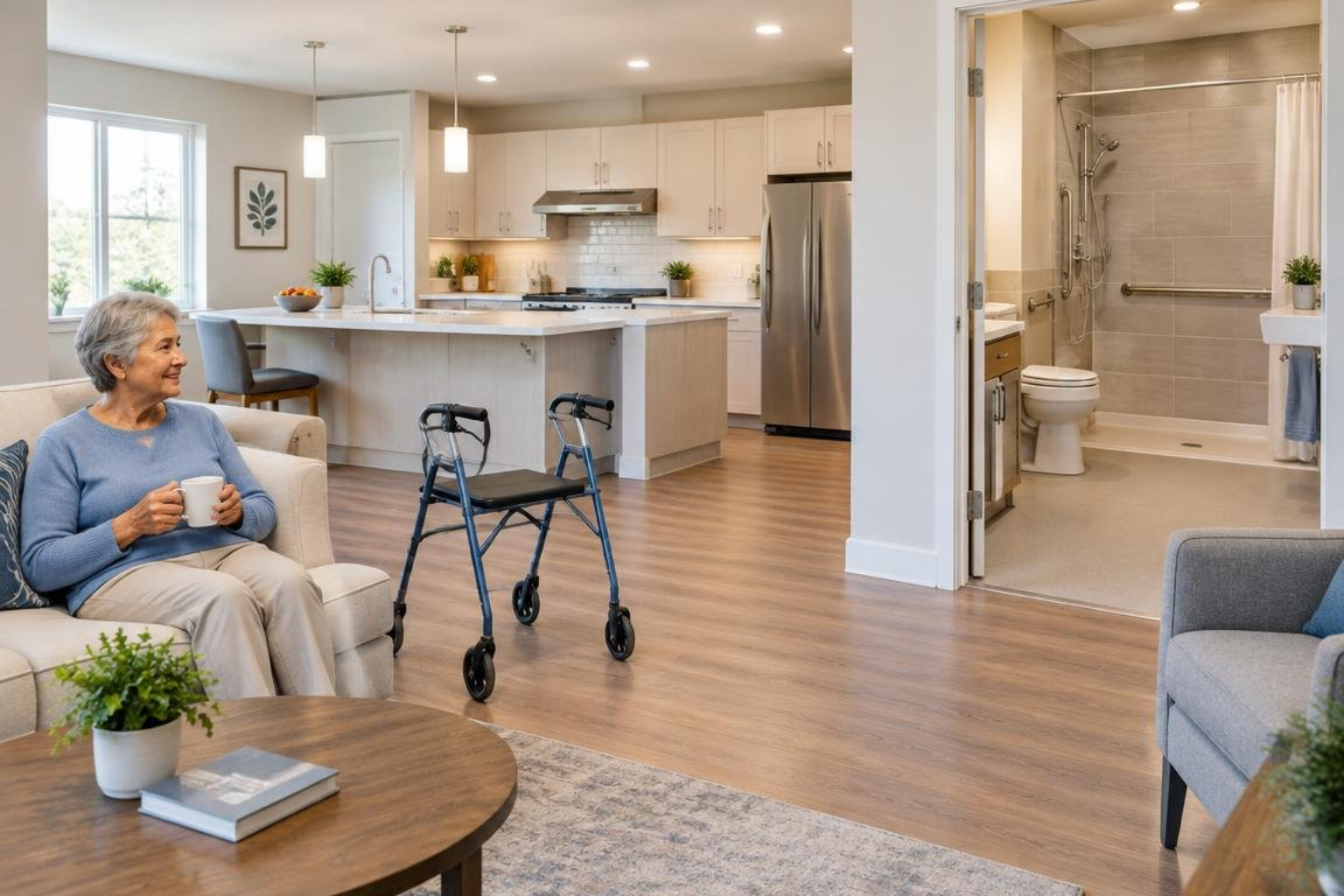
Universal design principles ensure that living spaces remain functional as physical needs change over time. When touring prospective homes, check for:
- Zero-Threshold Entryways and Wide Hallways: Smooth transitions between rooms eliminate trip hazards and accommodate walkers or wheelchairs easily.
- ADA-Compliant Bathrooms: Step-in or roll-in walk-in showers, secure bathroom grab bars, non-slip flooring, and raised toilets prevent slips and falls.
- Emergency Alert Systems: Integrated emergency pull cords in bedrooms and bathrooms, along with optional personal alert pendants, ensure rapid help during a fall or medical event.
- Building Infrastructure: Multistory buildings should feature reliable, well-maintained elevators, wide well-lit common corridors, and zero-step exterior entrances.
Social Engagement and Resident Amenities
Maintaining active social bonds is essential for emotional health and longevity. Many communities offer a rich variety of community amenities that encourage daily engagement:
- Shared Community Spaces: Library lounges, fitness rooms, wellness workshops, and resident-led game nights.
- Outdoor Features: Landscaped courtyards, walking paths, and raised community garden spaces.
- Transportation and Pet Policies: Dedicated shuttle transportation for grocery trips and medical appointments, alongside pet-friendly environments with outdoor pet relief areas.
Prospective residents can explore active municipal programs, such as the City of Irvine affordable senior housing resources, to review local developments incorporating these quality features.
Navigating Costs, Subsidies, and Assistance Programs
Managing housing expenses on a fixed retirement income requires careful budgeting and an understanding of available subsidy programs. When navigating affordable senior housing in California, older adults can access several programs designed to prevent housing displacement and ensure long-term housing stability.
Our experience shows that pairing stable housing with dedicated supportive services transforms lives. In our residential programs across California, LifeSTEPS provides structured housing retention support that maintains an overall 93% housing retention rate. For qualifying residents navigating move-in costs, deposit assistance through CalAIM can cover up to 1 month paid in advance to bridge upfront financial gaps.
Affordable Senior Citizen Apartment Homes and Subsidized Housing Programs
Several federal and state initiatives make renting manageable:
- HUD Section 202 Supportive Housing for the Elderly: Designed for seniors aged 62 and older with very low incomes. Under our comprehensive HUD Section 202 supportive housing guide, rent is capped directly at 30% of adjusted gross household income.
- Housing Choice Vouchers (Section 8): Vouchers that subsidize a portion of market-rate rents, allowing older adults to select qualifying private rental apartments.
- Low-Income Housing Tax Credit (LIHTC) Properties: Privately developed properties offering below-market rents to individuals earning under specific percentages of the Area Median Income (AMI).
Because waiting lists for subsidized properties typically range from 1 to 3 years, consulting local resources like Los Angeles County senior housing resources early helps applicants submit paperwork across multiple properties simultaneously.
Comparing Monthly Costs and Living Options
Understanding how independent apartment living compares financially to other care arrangements helps families budget effectively.
| Housing Option | Typical Monthly Cost (2025–2026) | Key Services Included | Best Suited For |
|---|---|---|---|
| Subsidized Senior Apartment | 30% of Adjusted Gross Income | Maintenance, community activities, secure building | Self-sufficient seniors with limited fixed income |
| Market-Rate Senior Apartment | $1,500 – $2,800/month | Utilities (often included), clubhouse, fitness gym | Active older adults desiring a maintenance-free home |
| In-Home Care (Part-Time) | $30 – $35/hour (~$1,800/mo part-time) | Personal assistance, meal preparation, errands | Seniors remaining in their existing family home |
| Assisted Living Facility | ~$6,200/month (National Average) | 24/7 personal care, daily dining, medication support | Older adults requiring daily living assistance |
| Skilled Nursing Facility | $9,581 (Shared) – $10,798 (Private)/mo | 24-hour medical management, rehabilitation | Individuals needing comprehensive clinical care |
Touring Checklist: What to Inspect Before Signing a Lease
Taking a thorough, in-person tour of any prospective senior community ensures that the property matches your physical needs, daily lifestyle, and financial expectations.
Accessibility and Building Infrastructure
During your walkthrough, pay close attention to structural details:
- Are parking spaces close to the main building entrance, and are walkways smooth, level, and well-lit?
- Are elevators smooth and centrally located near primary amenities?
- Is there an accessible on-site laundry facility on your floor, or does the unit feature in-unit hookups?
- Is the property conveniently located near public transit stops, grocery markets, and medical clinics?
What to Look for When Touring Senior Citizen Apartment Homes
Take time to observe the daily rhythms of the building. Note how staff members interact with residents and ask about average maintenance response times. Review the monthly activity calendar to confirm that wellness workshops, community meals, and recreation align with your personal interests.
Communities that partner with organizations providing supportive resident services that promote aging in place offer greater long-term stability by connecting residents directly with local resources, wellness programming, and community support.
Frequently Asked Questions About Senior Citizen Housing
What is the minimum age requirement for senior apartment communities?
Most independent senior properties operate as either 55+ or 62+ communities under the federal Housing for Older Persons Act. In 55+ properties, at least 80% of occupied units must have one resident aged 55 or older. Federally subsidized HUD Section 202 developments typically require the head of household to be at least 62 years old.
How is rent determined in subsidized senior housing developments?
In HUD Section 202 and Section 8 housing, tenant rent is calculated at 30% of adjusted gross monthly income. Deductions are factored in for qualifying out-of-pocket medical expenses, disability assistance, and approved utility allowances, keeping housing affordable for individuals living solely on Social Security.
What steps should older adults take while waiting for subsidized housing?
Because waiting lists can be lengthy, apply to several open waitlists across different housing authorities and non-profit housing registries. Keep written records of your application dates, update your contact information immediately if your phone number or mailing address changes, and explore community resources or temporary in-home care support while waiting.
Conclusion
Finding the right senior apartment home is an important step toward securing your physical comfort, financial peace of mind, and personal independence. By evaluating accessible design features, budgeting carefully, and tapping into supportive community programs, you can enjoy a vibrant, worry-free retirement.
To start your journey, explore the ultimate affordable senior housing list to discover safe, accessible, and welcoming housing options tailored to your needs.
For media inquiries, contact: bex@lifestepsusa.org
LifeSTEPS currently provides services in California only.


