


Maximize Veteran Homebuyer Benefits Across California Communities
Understanding the Military Homeownership Assistance Program and Federal Housing Grants
The military homeownership assistance program helps service members, veterans, and surviving spouses secure financing and down payment support through federal loan guarantees, state grants, and local closing-cost assistance. These layered resources can reduce upfront costs, lower monthly payments, and make purchasing a primary residence more achievable in high-cost California communities. While many assume military personnel automatically transition into homeownership without hurdles, the reality is nuanced. According to the Urban Institute, 78 percent of veteran households own their homes—14 percentage points higher than the total population. However, frequent relocations create substantial barriers for active-duty personnel, who have a homeownership rate of roughly 43 percent. A Rand Corporation study also highlighted that only 27.3 percent of military families own their current residence.
Navigating the financial landscape requires understanding how federal, state, and specialized grants interact. Research from Down Payment Resource (DPR) reveals that nationwide there are 61 down payment assistance programs offering up to $120,000 in funds for veterans and service members. These opportunities include forgivable second mortgages, structured grants, and specialized mortgage credit certificates designed to lower initial costs and build long-term equity.
Key Eligibility Rules for the Military Homeownership Assistance Program
Qualifying for dedicated military housing grants and subsidized loans depends on your service record, discharge characterization, and financial background. Most military homebuyer programs extend eligibility across all active branches, including the Army, Navy, Air Force, Marine Corps, Coast Guard, and Space Force, alongside qualifying National Guard members, Reservists, and surviving spouses.
Standard eligibility benchmarks include:
- Service Status: Active-duty personnel or veterans discharged under conditions other than dishonorable.
- Surviving Spouses: Unremarried surviving spouses of service members who died in the line of duty or from a service-connected disability.
- Credit Profile: Conventional programs typically require a minimum credit score of 620 to 640, though non-traditional credit histories can often be evaluated.
- Primary Residence: Properties must serve as the borrower’s principal residence, typically occupied within 60 days of purchase.
- Income and Purchase Limits: Programs funded through state or municipal bonds frequently set county-level household income caps.
For a broader perspective on federal and regional initiatives, reviewing structured veteran home buying assistance options helps buyers align their service benefits with their home purchase goals.
DoD Homeowners Assistance Program vs. VA Home Loan Benefits
Borrowers often confuse standard federal home loan guarantees with emergency Department of Defense initiatives. The standard VA home purchase loan is an ongoing program providing eligible buyers with low-interest mortgages and zero down payment requirements.
In contrast, the DoD Homeowners Assistance Program (HAP) is a specialized relief measure authorized under the Demonstration Cities and Metropolitan Development Act of 1966 and expanded by the American Recovery and Reinvestment Act of 2009. Administered by the U.S. Army Corps of Engineers, the DoD Homeowners Assistance Program overview outlines relief for wounded, injured, or ill service members with a 30 percent or greater service-connected disability, as well as surviving spouses relocating following a casualty.
| Feature | DoD Homeowners Assistance Program (HAP) | VA Home Purchase Loan Program |
|---|---|---|
| Primary Purpose | Financial loss mitigation and mortgage relief | Primary purchase or refinancing loan guarantee |
| Administering Body | DoD / U.S. Army Corps of Engineers | Department of Veterans Affairs (VA) |
| Eligibility Scope | Wounded service members (30%+ disability) & surviving spouses | General active duty, veterans, and surviving spouses |
| Down Payment Help | N/A (Compensates for sale losses or pays liens) | Allows 0% down payment financing on purchases |
| Property Limits | Benefit capped up to $729,750 for primary homes | No statutory loan limits for buyers with full entitlement |
| Primary Benefit | Private sale aid, government acquisition, or foreclosure relief | Competitive interest rates with no private mortgage insurance |
Eligible personnel can explore foundational federal support through VA housing assistance before deciding how to layer supplemental grants onto their primary mortgage.
State and Regional Down Payment Grants Across California
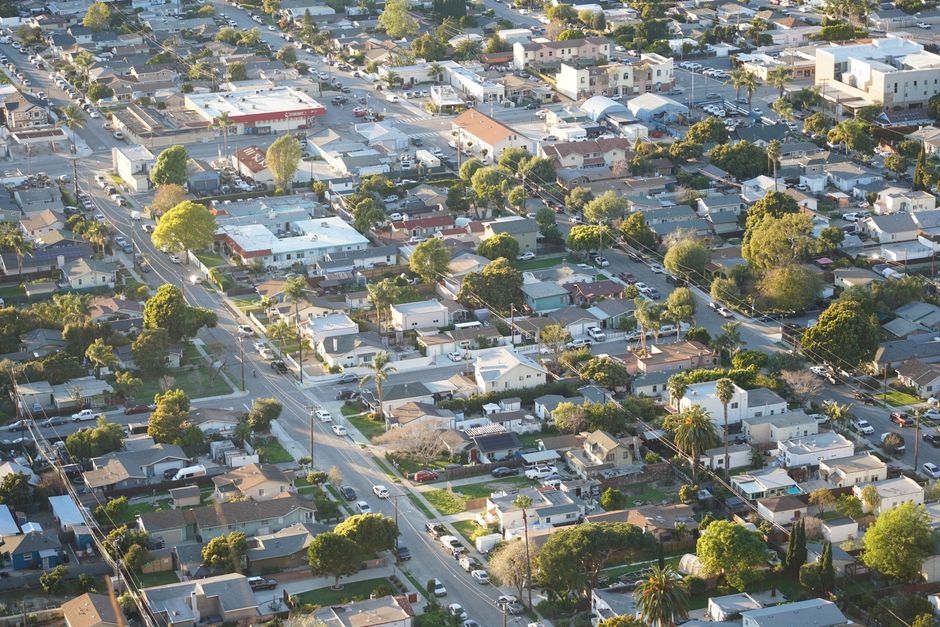
High housing costs in California make combining multiple financial programs essential. Rather than relying solely on a basic mortgage guarantee, military families can explore state-supported down payment assistance and forgivable second loans that dramatically reduce out-of-pocket costs at the closing table. A detailed guide to California veteran housing programs provides an overview of how state programs integrate with military credentials.
Southern California Local Assistance in Los Angeles, San Diego, and Riverside
Municipal and county housing authorities across Southern California offer robust down payment and closing cost assistance (DPA) initiatives. These funds can often be combined with primary mortgages to help lower total loan balances.
- Los Angeles County: First-time military buyers can access local subsidy pools that bridge the affordability gap. Veterans seeking stability can review tailored strategies for navigating veteran housing in Los Angeles to secure municipal closing subsidies.
- San Diego County: With its significant military footprint, the region offers down payment assistance and closing-cost grant options through the San Diego Housing Commission first-time homebuyer assistance initiative, supporting low- and moderate-income purchasers.
- Riverside County & Inland Empire: Regional assistance programs provide deferred-payment subordinate loans for down payment and closing costs via Riverside County down payment assistance programs.
State-Level Grant Layering and Equity Building
Stacking multiple funding sources allows buyers to maximize their purchasing power. For instance, local down payment assistance can be combined with state-level subordinate financing from the CalHOME program guidelines, which offers deferred-payment loans to assist low-income households.
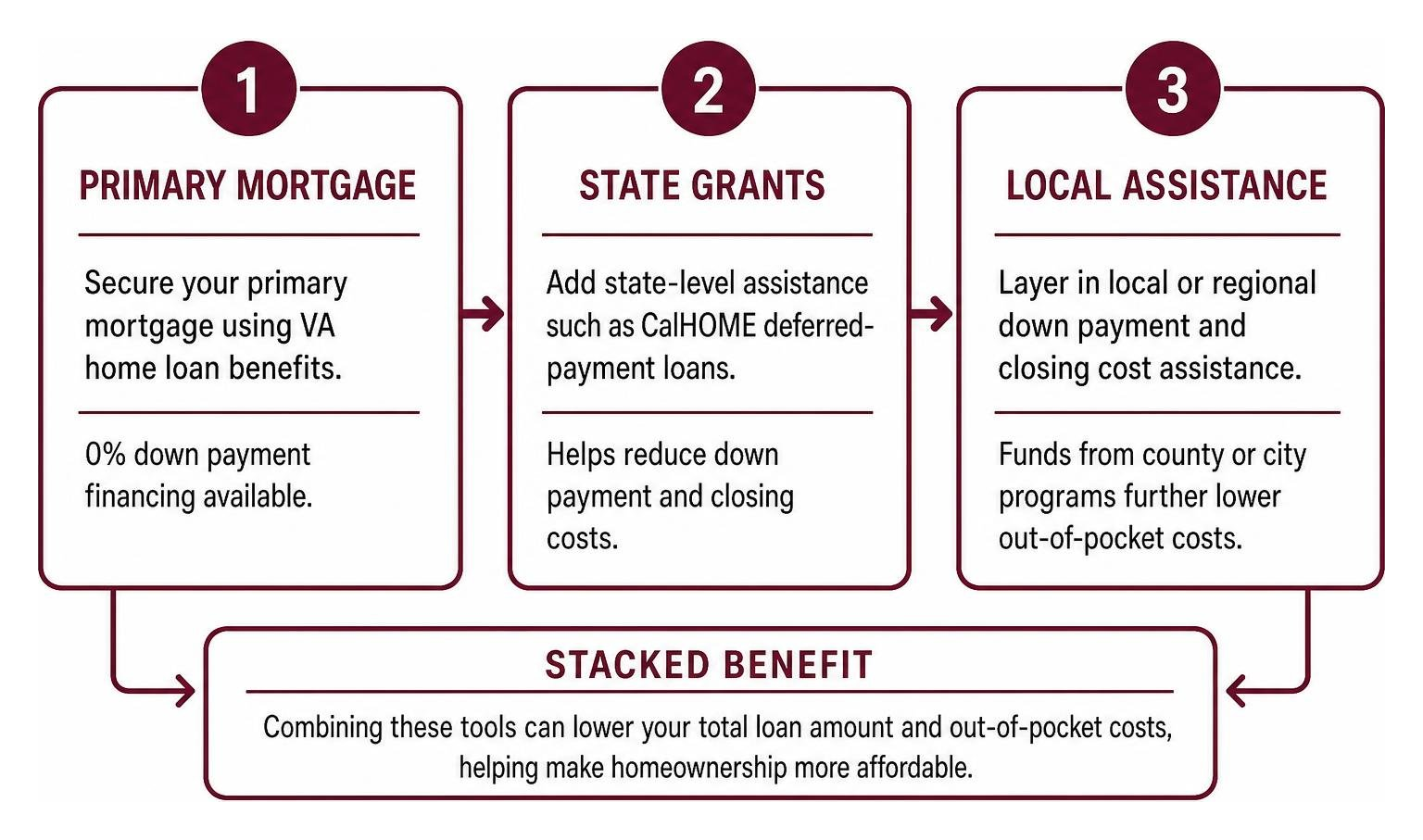
When stacking financing options, participating lenders ensure the total loan-to-value ratio aligns with underwriting rules. Reviewing comprehensive housing resources for veterans helps buyers coordinate multiple assistance programs effectively.
Application and Readiness for Military Homebuyers
Applying for homeownership assistance requires thorough preparation. Because down payment programs have strict compliance standards, military buyers must coordinate early with participating lenders experienced in both military financing and subordinate local grants. Exploring dedicated veterans assistance with housing pathways helps clarify the preparation steps required before making an offer.
How to Apply for a Military Homeownership Assistance Program in California
- Obtain Military Verification: Request your Certificate of Eligibility (COE) through the VA eBenefits portal and locate your DD Form 214 (Member-4 copy) or current Statement of Service.
- Select an Approved Participating Lender: Partner with a mortgage lender experienced in military financing and registered with California state and municipal assistance programs.
- Verify Program Income & Purchase Price Limits: Confirm that your total household income and the purchase price of your target home fall within local county caps.
- Complete Approved Homebuyer Education: Finish an accredited first-time homebuyer education course if required by the assistance program.
- Reserve Grant Funds and Submit Application: Your lender submits your loan package alongside grant reservation documents prior to contract closing.
Ensure you have the following essential documents organized:
- DD-214 or current active-duty Statement of Service
- VA Certificate of Eligibility (COE)
- Last 30 days of pay stubs (including LES for active duty)
- Last two years of federal tax returns and W-2s
- Two to three months of asset and bank statements
- Government-issued photo identification
Building Financial Self-Sufficiency and Sustainable Ownership
Securing a mortgage is only the first step; maintaining long-term stability requires structured budgeting and financial resilience. LifeSTEPS supportive housing initiatives focus on sustained self-sufficiency. For families transitioning from temporary arrangements into permanent homes, LifeSTEPS programs achieve an exceptional 93% housing retention rate.
LifeSTEPS also assists eligible participants in accessing essential bridge resources, such as 1 month paid in advance for deposit assistance via CalAIM programs when establishing initial residential stability. Combining financial literacy with structured housing support helps veterans build sustainable equity over time.
Frequently Asked Questions About Veteran Homebuyer Grants
Can military down payment assistance be combined with a zero-down VA loan?
Yes. Many veterans combine zero-down primary financing with secondary down payment assistance grants or forgivable loans. These funds can be applied toward lender fees, escrow requirements, title insurance, or reducing the overall loan balance.
What are the primary occupancy requirements for veteran grant programs?
Recipients must occupy the purchased property as their primary residence, typically within 60 days of closing. Eligible home types generally include single-family homes, planned unit developments (PUDs), townhomes, and approved condominiums. Multi-unit properties up to four units are often allowed, provided the service member lives in one of the units.
How do service-connected disability ratings impact housing assistance?
Veterans with a service-connected disability rating of 10 percent or greater receive an automatic waiver of the standard VA funding fee, saving thousands in transaction costs. Additionally, wounded warriors with a 30 percent or higher rating may qualify for specific emergency federal relief programs such as DoD HAP.
Conclusion
Achieving homeownership provides veterans and service members with long-term financial security and community roots. By exploring federal loan benefits, state programs, and local housing grants across California, military families can navigate the purchasing process with confidence. Programs supporting pathways to homeownership and long-term stability demonstrate how structured guidance helps individuals achieve lasting self-sufficiency.
For media inquiries, contact: bex@lifestepsusa.org
LifeSTEPS currently provides services in California only.


