


How to find a home in LA without breaking the bank
Finding Low Income Homes in Los Angeles: A Practical Guide
Low income homes in Los Angeles are in high demand — and for good reason. The city is one of the most expensive rental markets in the country, yet hundreds of thousands of residents, including recently discharged veterans, essential workers, and families, need housing they can actually afford.
Here is a quick overview of your main options:
| Option | Who It’s For | How to Access |
|---|---|---|
| Section 8 / Housing Choice Vouchers | Very low-income renters | Apply through HACLA |
| Public Housing | Low-income families and individuals | HACLA waiting list |
| Affordable Rental Developments | 30%–80% AMI households | Lottery or Coordinated Entry System |
| Emergency Housing (wildfire displaced) | Displaced residents | Housing.LACounty.gov |
| For-Sale Affordable Homes | First-time buyers at or below 80% AMI | Local lottery programs |
| Supportive Housing | Formerly homeless, veterans, special needs | CES referral or nonprofit provider |
The situation became even more urgent after the recent wildfires, which displaced thousands of LA County residents and stretched an already tight housing supply further. At the same time, new affordable developments are being built across the city, and programs exist to help you navigate the process — from applying for a voucher to finding a home through a lottery.
This guide walks you through everything you need to know, step by step.
Navigating the Market for Low Income Homes Los Angeles
Finding a place to live in May 2026 requires a mix of persistence and knowing where to look. The search for low income homes Los Angeles residents can afford has become more complex due to the aftermath of the Eaton and Palisades Fires. These wildfires created an immediate spike in demand for emergency housing, but the county has responded with specialized tools to help neighbors find stability.

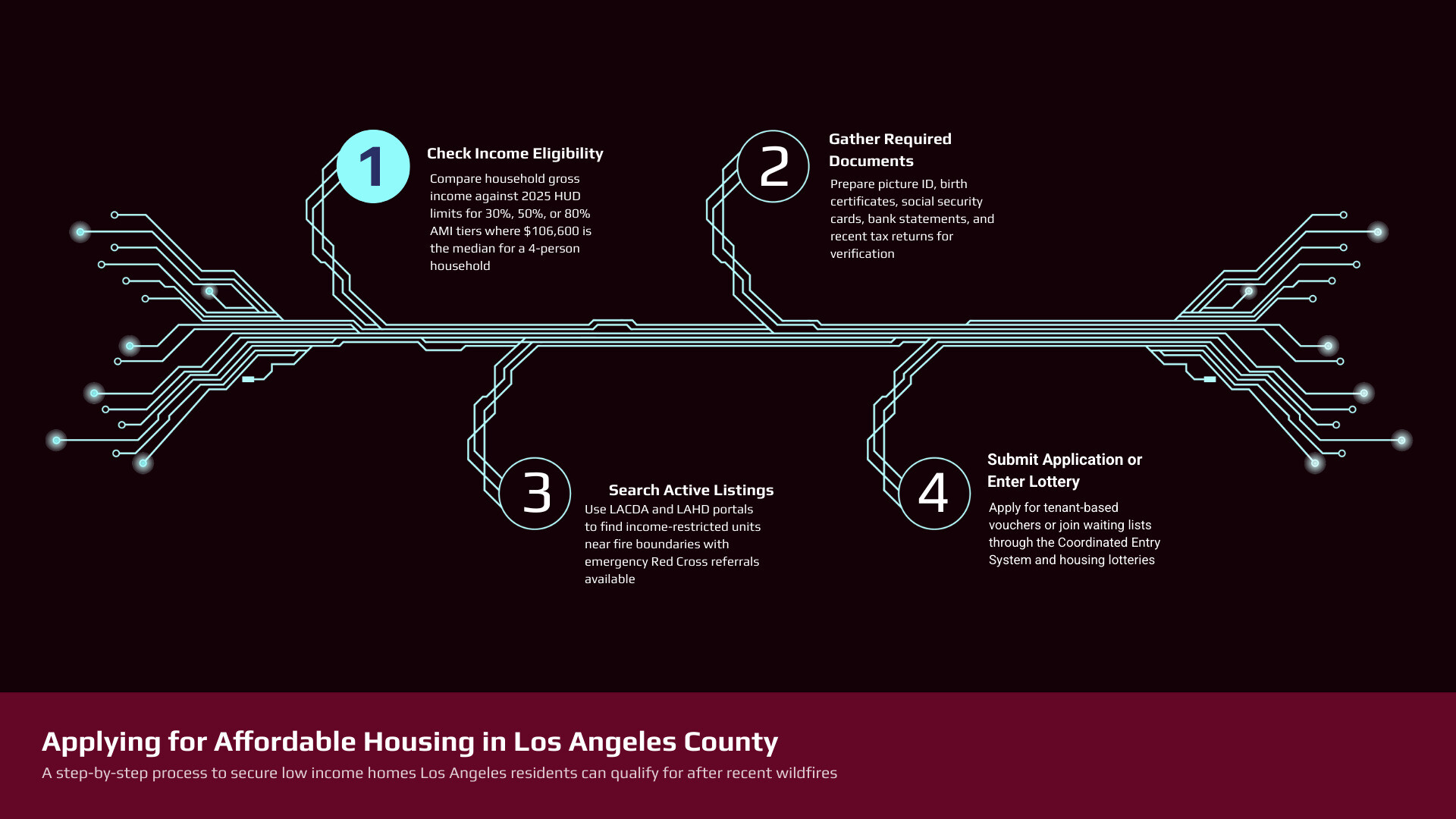
The Los Angeles County Development Authority (LACDA) and the Affordable Rental Housing – LAHD portal serve as the primary hubs for current listings. Unlike private sites, these registries focus specifically on units that have rent caps or are reserved for specific income tiers.
Emergency Housing Resources
For those displaced by recent wildfires, the County of Los Angeles has activated emergency coordination between the housing portal and the Red Cross. If you have been affected by the Eaton or Palisades Fires, there are specific resources available:
- Property Listings: Owners with available one- and two-bedroom units within 10 miles of fire boundaries are encouraged to list them for displaced families.
- Red Cross Referrals: Specialized assistance is available for families needing immediate placement.
- Free Search Tools: The LACounty.gov housing portal remains free for both renters and property owners, ensuring that emergency information is accessible to everyone.
If you are currently struggling to keep up with your current payments while searching for a new home, you can find more information on Finding Help with Rent Los Angeles Style.
Understanding Income Limits and Eligibility in LA County
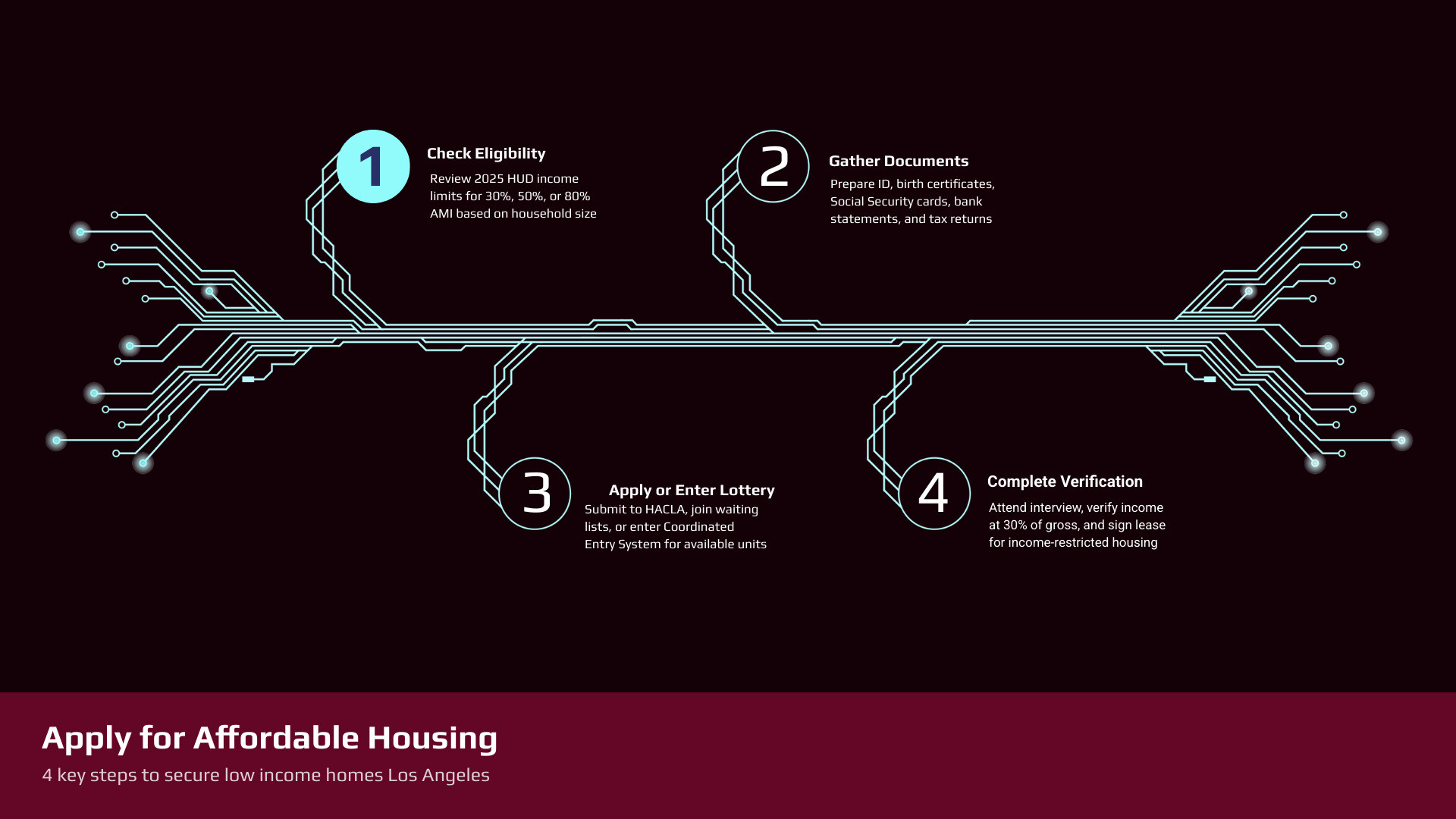
One of the most confusing parts of finding low income homes Los Angeles offers is the alphabet soup of “AMI” and “HUD limits.” AMI stands for Area Median Income. In 2025, the HUD-determined median income for a four-person household in Los Angeles County reached $106,600.
Most affordable housing is “income-restricted,” meaning you must earn below a certain percentage of that $106,600 to qualify.
Qualifying for Low Income Homes Los Angeles Units
To qualify, your household’s gross income (income before taxes) is compared against the AMI tiers. Generally, “affordable” means you should not be spending more than 30% of your gross monthly income on rent and utilities combined.
- 30% AMI (Extremely Low Income): For a single person, this limit is approximately $31,850. Many new developments, like the Victory Boulevard project, reserve a large portion of units for this tier.
- 50%–60% AMI (Very Low Income): This tier serves many “missing middle” workers, such as retail staff or entry-level healthcare workers.
- 80% AMI (Low Income): This is often the upper limit for affordable programs, capping at roughly $85,280 for a family of four.
To learn more about how these brackets affect your application, see our guide on Affordable Housing for Low Income Families and How to Get It and Income Restricted Housing Near Me.
Documentation for Housing Interviews
When your name finally comes up on a waitlist or you win a lottery, you must move fast. Having your “housing “ready” folder is essential. Most properties will require:
- Valid picture ID for all adults.
- Birth certificates and Social Security cards for every household member.
- Current bank statements (usually for the last 3 months).
- Proof of all income (pay stubs, social security award letters, or disability statements).
- Federal and state tax returns for the past 2–3 years.
Key Programs for Affordable Rental Housing
Los Angeles uses several different systems to manage low income homes Los Angeles residents need. The Housing Authority of the City of Los Angeles (HACLA) manages the largest programs, including 14 public housing sites.

Finding Help with Rent and Low Income Homes Los Angeles Vouchers
There are two main types of Section 8 assistance you should know about:
- Tenant-Based Vouchers: This voucher stays with you. You find a private landlord who accepts Section 8, and you pay roughly 30% of your income while the government pays the rest.
- Project-Based Vouchers: The assistance is tied to the building. If you move out, the next low-income tenant gets the benefit.
Because waiting lists can be years long, it is important to check for Low Income Housing with No Waiting List opportunities, which often appear when new buildings open their initial lottery. You can find more localized tips in Your Neighborhood Guide to Income Based Apts for Rent Near Me.
Pathways to Homeownership
Affordability isn’t just for renters. We believe that homeownership is a vital step toward long-term stability. Some local programs are creating townhomes specifically for families at or below 80% AMI. These programs often utilize “CalHome” funding and require buyers to:
- Contribute at least 3% of the purchase price from their own funds.
- Maintain a credit score (often 600 or higher).
- Complete a certified Homebuyer Education class.
If you are interested in moving from a voucher to a mortgage, our Unlock Your Front Door with FSS Homebuyer Education resources can help you understand how the Family Self-Sufficiency program helps you save for a down payment.
New Developments and Streamlined Approvals
To tackle the crisis, the city is using “Executive Directive 1” (ED1). This policy allows 100% affordable projects to bypass long public hearings and move from paperwork to construction in as little as nine months.
Several major affordable housing efforts are currently changing the landscape for low income homes Los Angeles seekers:
- A large development in the San Fernando Valley is providing homes for those at the 30% to 80% AMI levels.
- New family housing in South LA includes townhomes with on-site financial counseling.
- Another mixed-access development includes units reserved for a public lottery and others for formerly unhoused residents through the Coordinated Entry System (CES).
Community Impact and Challenges
While speed is good for housing production, it can lead to friction. In some neighborhoods, residents have raised concerns about unpermitted demolition and the scale of new five-story buildings in single-family areas. Issues like parking shortages and site safety are ongoing topics of debate. As reported by LAist, some neighbors feel that expedited processes limit their ability to provide input on how their community grows.
Sustainable and Accessible Features
Modern low income homes Los Angeles is building are not just affordable; they are high-quality. Many target “Green Point Gold” ratings, featuring:
- Drought-tolerant landscaping to save water.
- Energy-efficient appliances that lower utility bills for tenants.
- ADA-accessible units designed for residents with mobility impairments.
Supportive Services for Long-Term Housing Stability
Getting the keys is just the first step. We have found that the secret to a 93% housing retention rate is “wraparound support.” This means providing more than just four walls; it means providing case management, health services, and job training.
For those transitioning into a new home, we often utilize the CalAIM program for deposit assistance. This typically covers 1 month of rent paid in advance to help families overcome the initial financial hurdle of moving. You can read more about these strategies in Roof Over Your Head Navigating Housing for Low Income Families.
Wraparound Support for Special Populations
Veterans and seniors often face unique challenges. For veterans, housing stability is often tied to health outcomes. In statewide pilots, pairing permanent supportive housing with peer specialists and transportation assistance led to a 98% housing retention rate.
We’ve seen that when residents have access to social activities and consistent care coordination, emergency room visits drop by nearly 60%. It’s about creating a community where neighbors look out for one another.
Frequently Asked Questions about LA Housing
How does the Los Angeles housing lottery work?
When a new building opens, they often hold a lottery. You submit an initial “interest form.” If selected, you are given a “rank.” You then attend an interview to verify your income and documents. If you pass, you get a unit; if not, you stay on a waitlist.
What is the difference between 30% and 80% AMI?
It’s all about your paycheck. 30% AMI is for “Extremely Low Income” households (around $31,850 for one person). 80% AMI is for “Low Income” households (around $70,650 for one person). Rents are capped based on these tiers, so a 30% unit will always be cheaper than an 80% unit.
How can I find accessible housing for people with disabilities?
The Affordable and Accessible Housing Registry is the best tool for this. It allows you to filter specifically for units with mobility, hearing, or visual accommodations.
Conclusion
LifeSTEPS provides human-centered support to help Californians achieve a 93% housing retention rate through comprehensive case management and education. By focusing on measurable outcomes like literacy improvement in youth programs and scholarship support, the organization empowers residents to transition from stable housing to true self-sufficiency.
Whether you are a veteran looking for a stable place to call home or a family trying to navigate the complex world of low income homes Los Angeles, resources are available. From deposit assistance to the FSS program, the path to stability is built one step at a time.
Visit our website for more information: LifeSTEPS
LifeSTEPS currently provides services in California only.


