


Emergency Rental Assistance Today: Your Guide to Government and Local Aid
When You Need Rental Assistance Today: Quick Answers First
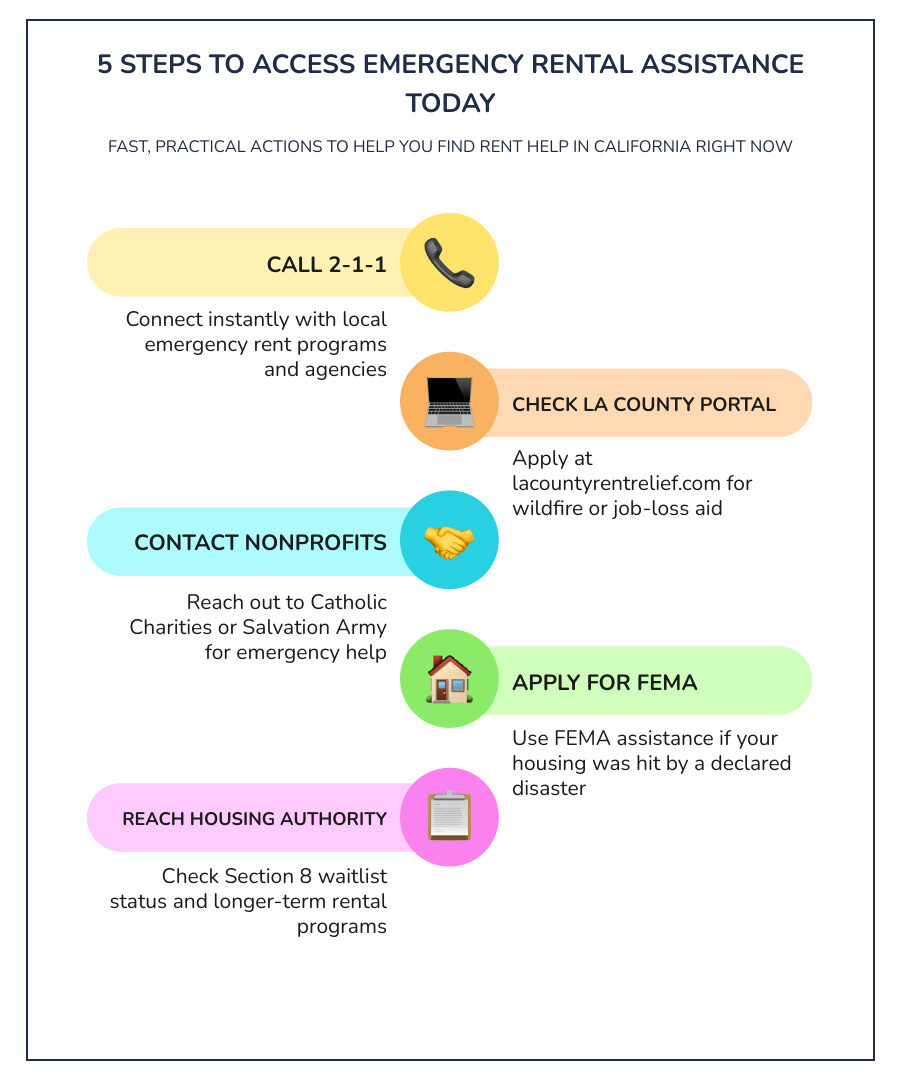
If you are searching for rental assistance today, here is where to start right now:
Fastest ways to get help:
- Call 2-1-1 — connects you to local emergency rent programs in California
- Visit the LA County Rent Relief website — for LA County residents impacted by wildfires, job loss, or other emergencies
- Contact a local nonprofit — Catholic Charities and the Salvation Army Southern California Division offer emergency rental help
- Apply for FEMA assistance — if your housing situation was affected by a declared disaster
- Reach out to your local housing authority — for Section 8 waitlist status and other longer-term programs
Millions of American households are one missed paycheck away from an eviction notice. In fact, 7.6 million renters face that risk every single year. For recently discharged veterans navigating the transition to civilian life, that pressure can feel even heavier — new city, new budget, new rules.
The good news is that real help exists. Federal programs distributed over $46 billion in emergency rental assistance during the pandemic years. While most of that funding has now wound down, state and local programs in California are still active — and organizations like LifeSTEPS are on the ground helping residents stay housed.
This guide breaks down every option available to you in 2026, from LA County’s current rent relief program to nonprofit resources and long-term housing support.
LifeSTEPS currently provides services in California only.
Rental assistance today glossary:
- emergency rental assistance
- how does emergency rental assistance work
- rental assistance with eviction notice
The Current Landscape of Rental Assistance Today
To understand the options available for rental assistance today, it helps to look at how the funding landscape has shifted. During the height of the COVID-19 pandemic, the federal government stepped in with unprecedented financial support. The U.S. Department of the Treasury administered the Emergency Rental Assistance (ERA) program, which was split into two major phases:
- ERA1: Provided $25 billion under the Consolidated Appropriations Act of 2021.
- ERA2: Provided $21.55 billion under the American Rescue Plan Act of 2021.
Together, these programs injected a grand total of $46.55 billion into state, local, and tribal governments to keep families in their homes. These funds covered unpaid rent, future rent, utility bills, and other housing-related expenses.
However, federal funding is not permanent. The period of performance for the ERA2 program officially ended on September 30, 2025. Grantees were required to submit their final reports by January 28, 2026. This means that direct federal funding through the Treasury’s ERA program is no longer available to distribute to renters.
Despite the end of these federal programs, the housing crisis remains a daily reality for millions of Americans. Nationwide, roughly 22.9 million households pay more than half of their income toward rent, often forcing them to choose between keeping a roof over their heads or buying food and medicine.
Fortunately, state-level initiatives, local county budgets, and charitable funds have stepped up to fill the gap. If you are looking for rental assistance today, your search will primarily focus on local county programs, state-specific safety nets, and nonprofit organizations.
| Program Type | Target Audience | Key Benefits | 2026 Status |
|---|---|---|---|
| Section 8 (Housing Choice Vouchers) | Very low-income families, elderly, and disabled individuals | Long-term subsidy where tenants pay roughly 30% of income toward rent | Active, but waitlists are frequently closed and wait times can range from 1 to 7 years |
| Emergency Rental Assistance (ERA) | Tenants facing immediate financial hardship or eviction | Rapid, short-term payments for rent arrears and utilities | Federal Treasury programs are closed; local and state-funded programs remain active |
To explore how these changes impact California renters specifically, you can read our Emergency Rental Assistance California Complete Guide or learn more about navigating the current rental market in this guide on Emergency Rental Assistance 2026: Get Help Paying Rent Now.
Los Angeles County Rent Relief Program
For residents living in Los Angeles County, the local government has developed targeted rental relief initiatives to address ongoing economic challenges and natural disasters. The LA County Rent Relief Program is designed to support both tenants and landlords who have faced severe financial hardships.
In recent years, Southern California has faced devastating wildfires, including the Eaton and Palisades wildfire events. These disasters displaced numerous families and disrupted local economies. To help those affected, the LA County program provides critical relief, allowing displaced homeowners who are now renting, as well as traditional tenants, to access financial aid.
The program offers substantial financial support, providing a maximum grant of up to $15,000 per rental unit. This grant can cover up to six months of unpaid rent debt (arrears). By targeting both sides of the rental agreement, the program helps landlords recover lost income while ensuring tenants avoid eviction. If you are facing a financial emergency but have not yet received a formal notice from your landlord, you can review our Rental Assistance Without Eviction Notice Guide to learn about your options.
Eligibility for LA County Rental Assistance Today
To ensure that the limited funds reach those who need them most, the LA County Rent Relief Program uses specific priority criteria:
- Income Limits: Households must have an income at or below 80% of the Area Median Income (AMI). However, priority is heavily weighted toward those at or below 50% AMI.
- Targeted Geography: The program utilizes equity maps to identify high-need, vulnerable communities that have been disproportionately impacted by economic instability.
- Small Landlord Priority: To support local housing providers, the program prioritizes small landlords who own and rent out four or fewer units.
- Disaster Impact: Special consideration and expedited processing are available for households directly displaced by local emergencies, such as the Eaton or Palisades wildfires.
How to Apply and Check Your Application Status
While the main application portal window opens periodically based on funding availability, applicants who have already submitted their paperwork can track their progress online.
To check your application status, log in to the official portal at the LA County Rent Relief Program. The system provides real-time updates as your file moves through the review process. It is highly recommended to check your registered email address regularly, as case managers will reach out directly if they require additional documentation, such as updated lease agreements, proof of income, or landlord W-9 forms.
Once an application is approved, payments are typically issued directly to the landlord within 7 to 21 business days. If a landlord is unresponsive or declines to participate, the program has protocols to review tenant-initiated applications to find alternative ways to deliver aid.
Alternative Local and Regional Programs in California
If the main LA County portal is closed or if you reside in a neighboring county, there are several regional programs across Southern California designed to prevent homelessness and stabilize communities.

Many local housing authorities and county departments work alongside statewide initiatives like CalAIM (California Advancing and Innovating Medi-Cal). Through CalAIM, eligible individuals transitioning out of temporary shelters or nursing facilities can access housing transition navigation services and deposit assistance, which typically covers up to 1 month paid in advance for a security deposit.
To learn more about how to secure these funds, read The Ultimate Guide to Rental and Deposit Assistance.
Accessing Emergency Rental Assistance Today in Southern California
- San Diego County: The Housing Authority of the County of San Diego manages local rental subsidies, including the Section 8 Housing Choice Voucher program and specialized support for veterans. The county recently transitioned to a new digital case management system (Yardi), allowing applicants to easily update and track their waitlist status online. For more details on local San Diego resources, visit the Rental Assistance – County of San Diego portal.
- Riverside County: The Riverside County Department of Public Social Services (DPSS) offers emergency shelter, utility assistance, and short-term rent relief to families facing immediate crises. To see if you qualify for their current programs, visit the official Rental Assistance page.
- Orange County: Local agencies and community coalitions provide homeless prevention services, utility assistance, and landlord mediation to keep families housed. These programs focus on rapid intervention before an eviction lawsuit is filed in court.
Nonprofit and Charitable Resources for Eviction Prevention
When government programs are closed or have long waiting lists, local charities and nonprofit organizations serve as an essential safety net. Organizations like Catholic Charities of California and the Salvation Army Southern California Division provide compassionate, professional, and barrier-free support to anyone in need, regardless of background or immigration status.
These organizations help families navigate immediate crises by offering:
- Emergency Rent and Utility Help: Direct financial assistance to pay off past-due bills and prevent utility shut-offs.
- Landlord Mediation: Helping tenants negotiate payment plans with landlords to prevent formal eviction filings.
- Disaster Relief: Working in tandem with federal agencies. For example, if you are affected by a federally declared disaster, you can apply for FEMA Assistance for Renters, which covers temporary lodging, utility costs, and personal property replacement.
If you are currently facing an active threat of displacement, acting quickly is vital. For step-by-step guidance on how to respond to landlord notices, consult our resource on Eviction Prevention 101: Expert Help to Avoid Eviction Today.
Frequently Asked Questions about Rental Assistance
Navigating housing programs can be complex. Below are answers to some of the most common questions renters ask when looking for assistance.
Are there federal rental assistance programs still open in 2026?
No, the major federal Treasury Emergency Rental Assistance programs (ERA1 and ERA2) have concluded, with the final performance period ending in late 2025. However, federal funds still flow to local communities through other permanent programs, such as the HUD-VASH program for veterans, Section 8 Housing Choice Vouchers, and Community Development Block Grants (CDBG) administered by local cities and counties.
What should I do if I receive an eviction notice?
Do not ignore it. An eviction notice is a legal warning, but it does not mean you have to move out immediately. Take the following steps right away:
- Read the notice carefully to understand the timeline (e.g., a 3-day pay-or-quit notice).
- Contact local legal aid organizations to understand your rights under California law.
- Communicate in writing with your landlord to see if you can establish a reasonable payment plan.
- Call 2-1-1 immediately to find local emergency funds that can help pay off the arrears.
Can landlords apply for rent relief on behalf of tenants?
Yes. Many local programs, including the LA County Rent Relief Program, allow landlords to initiate applications because it helps them recover unpaid rent directly. However, these programs still require the tenant’s active participation to verify household income, household size, and financial hardship.
Conclusion
Securing rental assistance today requires a proactive approach, utilizing a mix of county programs, state initiatives like CalAIM, and local nonprofit resources.
At LifeSTEPS, we are dedicated to helping Californians transition to stable housing and achieve long-term self-sufficiency. We are proud of our measurable community impact, including maintaining a 93% housing retention rate for our clients. By collaborating with programs like the Family Self-Sufficiency (FSS) initiative, we help individuals—including veterans—build pathways toward financial security and homeownership.
Our commitment to the community extends across generations. Through our youth and education initiatives, we have celebrated a 97% literacy improvement in our Summer Reading program and have awarded over $2.1 million in academic scholarships to date.
If you are currently facing a housing crisis, you do not have to navigate this journey alone. Explore our comprehensive directory of Emergency Rental Assistance resources to find the support you need to keep your home secure.
For inquiries, contact: LifeSTEPS | Phone: (916) 965-2110 | LifeSTEPS
LifeSTEPS currently provides services in California only.


