


Free Legal Aid Eviction Guide: Know Your Rights Before Court
When Facing Eviction, Free Legal Help Can Make All the Difference
Free legal aid eviction defense is available to qualifying low-income tenants in California — and knowing where to look can be the difference between keeping your home and losing it.
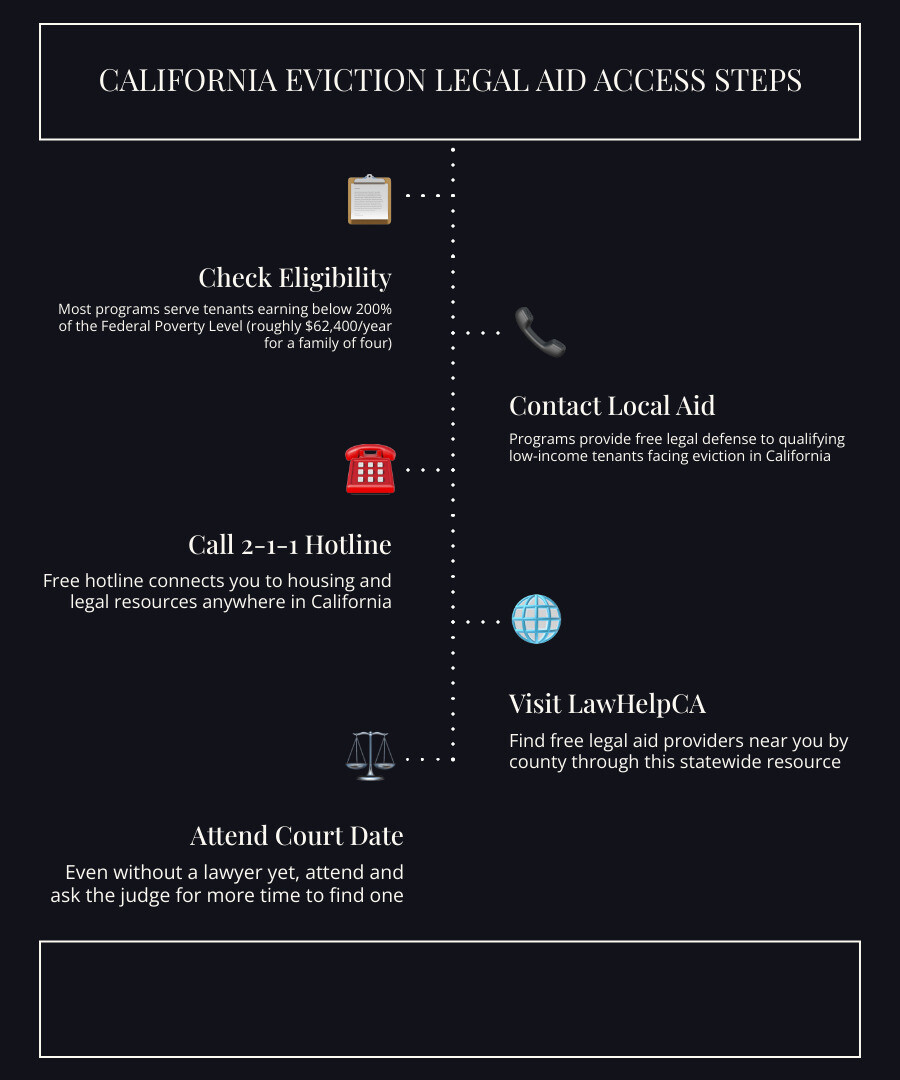
Here is a quick overview of how to access free eviction legal help in California:
- Check your eligibility — Most programs serve tenants earning below 200% of the Federal Poverty Level (roughly $62,400/year for a family of four).
- Contact a local legal aid organization — Programs like Stay Housed LA serve Los Angeles County tenants at no cost.
- Call 2-1-1 — This free hotline connects you to housing and legal resources anywhere in California.
- Visit LawHelpCA — Find free legal aid providers near you by county.
- Go to your court date — Even without a lawyer yet, attend and ask the judge for more time to find one.
Eviction cases move fast. In California, you may have as few as five business days to respond to a court summons. Yet nationally, only about 34% of tenants facing eviction had legal representation as of December 2023. That gap is costly — landlords almost always show up with attorneys, and unrepresented tenants are far more likely to lose their case.
For veterans transitioning to civilian life, a housing crisis can feel overwhelming on top of everything else. The good news is that free legal support exists, and you do not have to face court alone.
LifeSTEPS currently provides services in California only.
Glossary for free legal aid eviction:
Navigating the California Court System with Free Legal Aid Eviction Support
When you are served with an eviction notice, it can feel like the ground is slipping from beneath your feet. The legal system is complex, and navigating courtrooms, legal jargon, and strict deadlines without a professional guide is incredibly difficult. This is where a Right to Counsel program or a tenant defense attorney comes in.
In California, there is a growing movement to establish a “Right to Counsel” in civil cases, particularly for tenant defense. This means that just as someone accused of a crime is entitled to a public defender, a tenant facing the loss of their home should have access to a public civil attorney. Having a lawyer dramatically changes the outcome of a case: represented tenants are far more likely to remain in their homes, negotiate manageable payment plans, or avoid having an eviction permanently stain their rental records.
If you are trying to understand the steps of a court case or need immediately accessible legal forms, the California Courts Self-Help Resources portal is an excellent starting point. It explains court rules, filing processes, and your basic rights as a renter under state law.
Who Qualifies for Free Legal Aid Eviction Defense?
Free legal services are generally reserved for individuals and families who meet specific income guidelines. Most legal aid organizations in California use the Federal Poverty Level (FPL) as their benchmark.
Typically, to qualify for free representation, your household income must be at or below 200% of the Federal Poverty Level. The exact income limit depends on your household size. For example, in June 2026, the income thresholds are structured as follows:
- 1 Person: $31,200 per year
- 2 People: $42,200 per year
- 3 People: $53,200 per year
- 4 People: $64,200 per year
If you receive public benefits—such as Supplemental Security Income (SSI), Medi-Cal, CalFresh (food stamps), or CalWORKs—you often automatically meet the indigent status requirements for free legal help. Additionally, legal aid programs prioritize vulnerable populations, including seniors, veterans, and individuals with disabilities. To learn more about local protections, you can read our guide on how to Know your rights under California eviction law.
What Cases Are Covered by Free Legal Aid Eviction Lawyers?
Free legal aid programs do not just handle standard rent disputes. They cover a wide spectrum of housing court issues to keep families stably housed. The most common case types include:
- Non-Payment of Rent: When a tenant falls behind on rent due to financial hardship and receives a notice to pay or quit.
- Holdover Evictions: When a landlord claims a lease has expired or is attempting to evict a tenant without a renewal option.
- Lease Violations: Disputes over property rules, unauthorized occupants, or pets.
- Illegal Lockouts and Utility Shutoffs: When a landlord attempts to bypass the court system by changing your locks, turning off your water, or cutting your electricity. This is highly illegal in California, and legal aid attorneys can file emergency motions to restore your access.
- Habitability Disputes: When a landlord fails to make critical repairs, resulting in unsafe or unsanitary living conditions.
If you are facing a complex housing issue and need financial or legal assistance, check out The ultimate list of eviction prevention grants and legal aid to find resources that can help resolve the dispute before it reaches court.
Step-by-Step Guide: What to Do When You Receive an Eviction Notice
Receiving an eviction notice does not mean you have to pack your bags and leave tomorrow. A notice is simply the first step in a multi-stage legal process. A landlord cannot legally force you out of your home without a court order signed by a judge.
If you receive a notice, here is the step-by-step path you should follow:
- Read the Notice Carefully: Identify what type of notice you received. Is it a 3-Day Notice to Pay or Quit? A 3-Day Notice to Cure or Quit? Or a 30-Day or 60-Day Notice to Terminate? Each has different legal requirements.
- Do Not Ignore It: If it is a “cure or quit” notice, you have a set number of days to fix the issue (such as paying the back rent or resolving a lease violation).
- Watch for the Summons and Complaint: If you do not resolve the issue within the notice period, your landlord may file an Unlawful Detainer lawsuit. You will be served with a Summons and Complaint.
- Calculate Your Deadline: In California, you must file a written response (called an Answer) with the court within five business days of being served. If you fail to file an Answer, the landlord can win by default, and a sheriff can post a lockout notice shortly after.
- Seek Free Legal Assistance Immediately: Do not wait until the day before your response is due. Reach out to a local legal aid organization on day one.

If you are currently in a housing crisis and need emergency support to navigate this timeline, you can find immediate options through California renters emergency help.
Where to Find Free Tenant Legal Services in California
Depending on where you live in California, there are dedicated regional legal aid organizations designed to protect tenants. Because we serve California residents across key regions, we have compiled a list of trusted local resources.
- Los Angeles County: Stay Housed LA is a massive partnership between local community organizations and legal service providers. It has reached over 2.3 million tenants with educational resources and connected more than 50,000 tenants directly with legal representation.
- San Diego County: The Legal Aid Society of San Diego provides comprehensive eviction defense, legal clinics, and representation in Unlawful Detainer trials.
- Riverside County: Riverside Legal Aid offers free legal services, clinics, and self-help guidance to low-income renters facing housing instability.
- Orange County (Irvine Area): Local legal aid societies provide dedicated representation for families facing wrongful eviction or housing discrimination.
The table below outlines these major regional resources and their primary service areas:
| Organization | Primary Service Area | Key Services Provided |
|---|---|---|
| Stay Housed LA | Los Angeles County | Full-scope representation, legal clinics, tenant workshops |
| Legal Aid Society of San Diego | San Diego County | Eviction defense, tenant counseling, administrative hearings |
| Riverside Legal Aid | Riverside County | Unlawful detainer defense, self-help clinics, mediation support |
| LawHelpCA | Statewide (California) | Referral directory to local legal aid offices by zip code |
How to Prepare for Your First Court Appearance
If your case goes to court, preparation is your best defense. Walking into a courtroom can feel intimidating, but having organized paperwork will help you present a clear, factual defense to the judge.
When preparing to meet with a free legal aid eviction attorney or attending your first court appearance, you should gather the following evidence:
- Your Written Lease Agreement: This outlines the terms of your tenancy and the responsibilities of both parties.
- Rent Receipts and Bank Statements: Proof of all rent payments, especially those disputed by your landlord.
- Communication Logs: Save copies of all text messages, emails, and letters exchanged with your landlord or property manager.
- Written Repair Requests: If you withheld rent because of severe habitability issues, you must show that you notified the landlord in writing and gave them reasonable time to fix the issues.
- Photos and Videos: Visual evidence of any maintenance problems, mold, pest infestations, or broken utilities.
If you do not have an attorney by the date of your first hearing, do not panic. Attend the hearing anyway. When your case is called, explain to the judge that you are actively seeking legal counsel and request a postponement (also called a continuance) to secure representation. Most judges will grant a brief postponement to ensure you receive a fair trial.
For a deeper dive into organizing your defense and finding immediate housing stability, read our guide on Facing eviction housing help.
Frequently Asked Questions About Eviction Legal Aid
Can I get a free lawyer before my landlord files a court case?
Yes. Many legal aid organizations offer pre-litigation help. They can help you write formal demand letters regarding repairs, represent you in community mediation programs, or negotiate payment plans for back rent. Resolving these issues early is always the best way to prevent an eviction from ever reaching your public record.
What should I do if I cannot find a free attorney in time for court?
If legal aid programs are at capacity, go to your local courthouse’s self-help center. They cannot represent you in front of the judge, but they can help you fill out your Answer forms and explain court procedures. You can also search for alternative local resources through LawHelpCA or call 2-1-1 to find local tenant hotlines.
Do free legal aid programs assist undocumented tenants?
Yes. In California, Right to Counsel programs and non-profit legal aid organizations provide services regardless of immigration status. Your conversations with a legal aid attorney are protected by attorney-client privilege and remain completely confidential. Under California law, landlords are also strictly prohibited from using your immigration status as a tool of retaliation or harassment.
Conclusion
At LifeSTEPS, we believe that housing is the foundation of a stable, healthy life. We are dedicated to helping Californians transition to stable housing and self-sufficiency through human-centered support and measurable outcomes. Our eviction prevention efforts speak for themselves: we proudly maintain a 93% housing retention rate among the clients we serve.
We work hand-in-hand with programs to assist individuals, including veterans, in achieving housing stability and long-term security. Through our partnership with the CalAIM program, we offer crucial deposit assistance—covering up to 1 month paid in advance for deposit assistance—to help families secure safe, permanent homes.
Beyond housing, we believe in uplifting the entire family. Our educational programs have achieved a 97% literacy improvement through our Summer Reading programs, and we have helped students achieve their dreams by facilitating over $2.1 million in scholarships.
If you or someone you know is struggling to maintain their housing, please explore the LifeSTEPS Eviction Prevention Program to learn more about how we can support you.
LifeSTEPS | Phone: (916) 965-2110 | LifeSTEPS
LifeSTEPS currently provides services in California only.


