


Uncle Sam Wants to Help You Pay Your Rent
When the Rent Is Due and the Money Isn’t There
Government help to pay rent is available right now — and more people qualify than you might think.
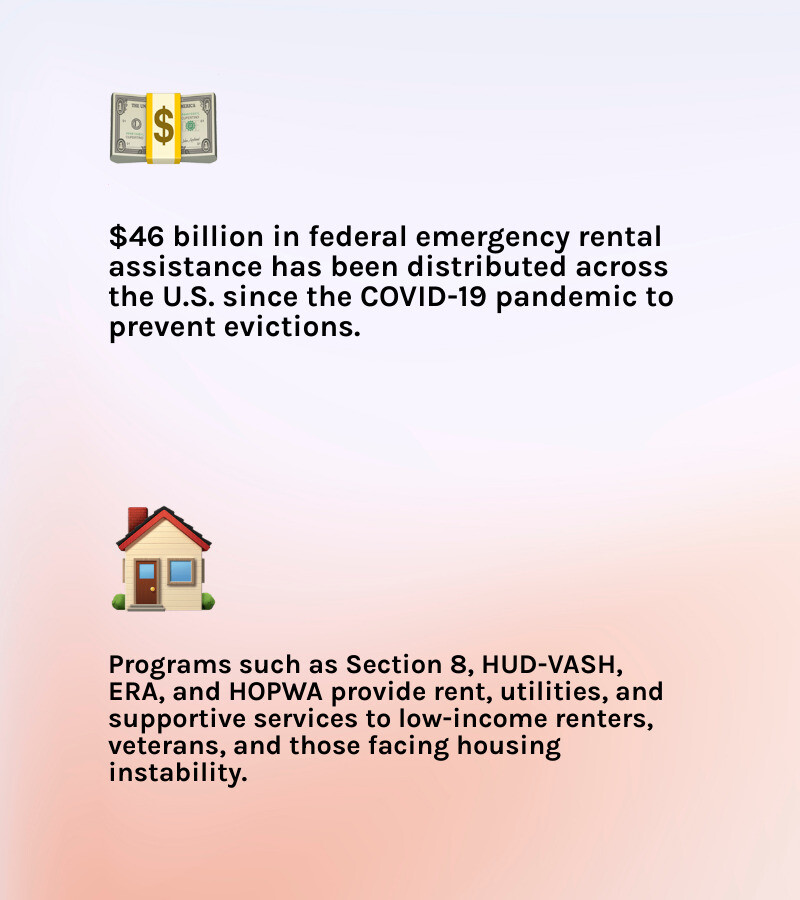
Here is a quick look at the main programs:
| Program | Who It’s For | What It Covers |
|---|---|---|
| Section 8 Housing Choice Voucher | Low-income renters (up to 80% AMI) | Monthly rent in private housing |
| Public Housing | Very low-income households | Reduced rent in government-owned units |
| Subsidized Housing | Low-income renters | Rent reduced by government payments to landlords |
| HUD-VASH | Homeless veterans | Housing voucher plus supportive services |
| Emergency Rental Assistance (ERA) | Renters facing hardship or eviction | Rent arrears, utilities, and other housing costs |
| HOPWA | People living with HIV/AIDS | Housing and related support services |
If you are a recently discharged veteran, you are not alone in facing housing instability. The transition to civilian life is hard, and rising rents make it harder. The good news is that federal, state, and local programs exist specifically to help people like you stay housed — or get housed — while you get back on your feet.
The federal government alone has directed more than $46 billion in emergency rental assistance to communities across the country since the start of the COVID-19 pandemic. That money flowed through states, counties, and local agencies to help real people cover rent, utility bills, and back payments before an eviction could happen.
The programs are still out there. Knowing which ones exist — and how to access them — can make all the difference.
LifeSTEPS currently provides services in California only.
Government help to pay rent definitions:
Understanding Government Help to Pay Rent: Federal vs. State Programs

When navigating affordable housing, it helps to understand who is pulling the strings. The federal government, primarily through the U.S. Department of Housing and Urban Development (HUD), supplies the bulk of the funding. However, state and local housing authorities are the ones who actually run the programs on the ground.
This means that while the rules for getting government help to pay rent start at the national level, your local housing authority in places like Los Angeles, San Diego, or Riverside determines how those rules are applied.
Understanding the difference between the three primary pillars of federal housing assistance can prevent a lot of application headaches:
| Program Type | How It Works | Who Owns the Property? |
|---|---|---|
| Section 8 (Housing Choice Vouchers) | Tenant receives a voucher to find a private rental. Tenant pays roughly 30% of income; government covers the rest. | Private landlords |
| Public Housing | Tenant rents directly from a local housing authority in a government-owned building. | Government / Local Housing Authority |
| Subsidized Housing | Government pays property owners directly to lower rents for low-income tenants in specific apartment buildings. | Private owners or non-profits |
While these programs offer long-term stability, they often come with lengthy waitlists. To address sudden financial emergencies, the federal government established temporary lifelines. The Emergency Rental Assistance Program | U.S. Department of the Treasury was created to distribute immediate relief directly to states and counties to prevent evictions during times of widespread economic hardship.
Section 8 Housing Choice Vouchers: Long-Term Government Help to Pay Rent
The Section 8 Housing Choice Voucher program is the gold standard of long-term rental assistance. Instead of forcing you to live in a specific building, Section 8 gives you a voucher that you can use to rent any privately owned apartment or house, provided the landlord accepts it and the rent meets HUD’s fair market standards.
To qualify, your household income must fall within the limits set by HUD, which are tied to the Area Median Income (AMI) of your county. Generally, your income cannot exceed 50% of the AMI, though some vouchers are available for households making up to 80% of the AMI.
Because demand for Section 8 is incredibly high, local housing authorities often close their waitlists or use random lotteries to select applicants. However, once you secure a voucher, it is highly portable. You can use it to move to other parts of California or even out of state, as long as you follow the proper transfer protocols. For a deep dive into navigating these waitlists, check out Don’t Pack Your Bags Yet: The Ultimate Guide to Rental Assistance Programs.
Emergency Rental Assistance: Immediate Government Help to Pay Rent
If Section 8 is a marathon, Emergency Rental Assistance (ERA) is a sprint. Created to combat the economic fallout of the COVID-19 pandemic, the U.S. Treasury launched two massive funding waves:
- ERA1 provided $25 billion to states and local governments to assist eligible households with financial aid and housing stability services.
- ERA2 added another $21.55 billion to the pot, expanding the scope to include broader eviction prevention activities.
While the federal period of performance for ERA2 officially ended on September 30, 2025, and final closeout reporting wrapped up in early 2026, the framework established by these programs completely changed how local communities handle rental crises. Many California counties in Southern California and the Bay Area repurposed these systems to create ongoing local emergency funds. If you are facing an immediate crisis, you can explore current local options in our guide to Emergency Rental Assistance Today: Your Guide to Government and Local Aid.
How to Apply for Rental Assistance and What to Expect

Applying for government help to pay rent does require some patience and organization. The process is highly localized, meaning you will apply directly through your county’s housing portal or a designated local non-profit partner.
To make the process as smooth as possible, it is best to treat the application like a business presentation. Having your documents organized and ready to upload will keep you ahead of the curve. Learn more about what to expect by reading How Emergency Rental Assistance Works and How to Get It.
Eligibility Criteria and Income Limits
To receive rental assistance, your household must meet specific criteria. First, you must show that you are experiencing housing instability or are at risk of homelessness. Second, your household income must fall below the local income limits, which are calculated as a percentage of your county’s Area Median Income (AMI):
- Extremely Low Income: At or below 30% of the AMI.
- Very Low Income: At or below 50% of the AMI.
- Low Income: At or below 80% of the AMI.
Local programs are required to prioritize households that need help the most. This means you will likely get processed faster if your household income is below 50% of the AMI, or if one or more members of your home have been unemployed for 90 days or longer. If you are struggling to make ends meet, you can find immediate options through Free Rent Help.
Required Documentation for Renters and Landlords
You will need to gather documentation for every adult living in your home. While specific requirements vary by county, you should generally have the following items ready:
-
For Renters:
- Government-issued photo identification.
- Proof of income (such as paystubs, tax filings, or bank statements).
- A copy of your current lease agreement.
- Past-due rent or utility notices.
- Written self-attestation of financial hardship if you lack formal documentation.
-
For Landlords:
- A completed W-9 form for tax purposes.
- Proof of property ownership.
- A delinquent rent statement showing exactly what the tenant owes.
Many programs allow “self-attestation” for income or housing instability if you have no other way to prove your situation, though they may require you to recertify your income every three months. For a comprehensive checklist of what you need, refer to Your Guide to First Month Rent Security Deposit Help Programs Resources.
Specialized Housing Support for Vulnerable Populations
Standard rental assistance programs are great, but some populations face unique hurdles that require specialized care. The government funds several targeted programs to ensure that veterans, seniors, individuals with disabilities, and those living with severe medical conditions do not fall through the cracks.
In Southern California, local housing authorities work closely with community organizations to administer these programs. For example, residents in San Diego County can find localized details through the Rental Assistance – County of San Diego portal.
Veteran-Specific Housing Programs
For veterans transitioning back to civilian life, the HUD-VASH (HUD-Veterans Affairs Supportive Housing) program is an invaluable resource. This program combines Section 8 rental vouchers with case management and clinical services provided directly by the Department of Veterans Affairs (VA).
HUD-VASH operates on a “Housing First” model. This means the primary goal is to get a veteran into stable housing immediately, without forcing them to meet strict preconditions first. Once housed, the veteran receives the support services necessary to maintain physical health, mental health, and employment. Veterans in the Los Angeles area can explore targeted local relief options through the LA County Rent Relief Program.
Assistance for Seniors and Individuals with Disabilities
Seniors and individuals with disabilities often live on fixed incomes, making them highly vulnerable to rent hikes. To protect these communities, HUD funds two dedicated programs:
- Section 202: Helps expand the supply of affordable housing for very low-income seniors (ages 62 and older) by providing capital advances to build and operate multifamily properties.
- Section 811: Provides similar support to develop and subsidize rental housing for extremely low-income adults with disabilities.
Additionally, in California, the CalAIM program offers integrated care management. This includes targeted deposit assistance—specifically covering 1 month paid in advance for security deposits—to help eligible individuals transition into stable, long-term homes. You can find more details on these statewide initiatives at California Renters Can Find Emergency Help Right Here.
Tenant Rights, Eviction Protections, and Landlord Roles
Receiving government help to pay rent does not just benefit you; it also provides significant financial security to your landlord. However, participating in these programs comes with rules and responsibilities for both parties.
In Riverside County, local initiatives like the ones detailed on CARES – RiversideCA.gov emphasize the importance of landlord-tenant cooperation. When landlords and tenants work together, eviction rates drop dramatically, keeping neighborhoods stable and families safe. To learn more about how we support these efforts, visit Eviction Prevention Services.
Eviction Prevention and Legal Aid
If you fall behind on rent, your landlord must provide you with a written notice before they can file for eviction in court. In California, this is typically a 3-day notice to pay rent or quit. However, if you are actively applying for rental assistance, many jurisdictions offer strong legal protections.
Court-based rental assistance programs can step in to provide emergency mediation and direct financial aid even after an eviction lawsuit has been filed. Accessing free legal aid is crucial during this time. Legal representation can help you navigate complex housing laws and ensure your rights are protected. For more information on how to defend your tenancy, check out Eviction Prevention Programs: A Lifeline for Renters in Crisis.
Landlord Responsibilities and Benefits
Landlords have a lot to gain by participating in government rental assistance programs. Instead of dealing with the costly and stressful process of eviction, they receive direct, guaranteed payments from the government to cover outstanding rent arrears.
In exchange for these payments, landlords must agree to certain conditions:
- They must maintain the property to meet basic health and safety standards.
- They must comply with the terms of the lease agreement.
- They cannot evict the tenant for nonpayment of the rent covered by the assistance program.
If you are a tenant trying to get your landlord to participate, it helps to approach them with the necessary paperwork already filled out. You can find tips on how to start this conversation in our Rental Assistance Without Eviction Notice Guide.
Frequently Asked Questions About Rental Assistance
Navigating rental assistance can feel like learning a whole new language. Here are answers to some of the most common questions renters ask.
What expenses can government help to pay rent cover?
Government assistance programs are designed to be flexible. Depending on the specific program, funds can cover:
- Outstanding rental arrears (back rent).
- Current and prospective monthly rent.
- Utility bills (electricity, gas, water, sewer, and trash).
- Security deposits (such as the 1 month paid in advance deposit assistance offered under the CalAIM program).
- Reasonable relocation costs and late fees.
How long does it take to get approved for rental assistance?
Approval times vary widely depending on the program and funding availability. Long-term programs like Section 8 can have waitlists that last several years. Emergency programs are designed to move faster, often processing applications within a few weeks. To speed up the process, ensure your application is 100% complete and that your landlord submits their required documentation promptly.
Can I get rental assistance if I don’t have an eviction notice?
Yes! Many programs are preventative. You do not need to wait until you receive an eviction notice to ask for help. If you can show a reduction in household income, rising utility bills, or other signs of housing instability, you can qualify for preventative aid.
Conclusion
Finding government help to pay rent is a crucial step toward rebuilding your financial foundation. Whether you need long-term support through Section 8 or immediate relief to get through a tough month, these programs are designed to keep you safe in your home.
At LifeSTEPS, we are a nonprofit organization in the social services industry, providing support and resources to individuals transitioning to stable housing and self-sufficiency. Our unique selling proposition is our collaboration with programs like the Family Self-Sufficiency (FSS) program to help clients, such as veterans, achieve homeownership and long-term stability.
Our human-centered approach delivers measurable community impact. Thanks to our dedicated housing retention services, we maintain a 93% housing retention rate for the individuals we serve. Beyond housing, our holistic support includes youth and education programs, boasting a 97% literacy improvement in our Summer Reading program and providing over $2.1 million in scholarships to help the next generation thrive.
If you or someone you know needs help finding resources or navigating the path to housing stability, we invite you to learn more about our Emergency Rental Assistance programs.
LifeSTEPS currently provides services in California only.


