


Reliable Low Income Rent Help That Keeps California Families Housed
Find Reliable Rent Assistance for Low Income Households in California
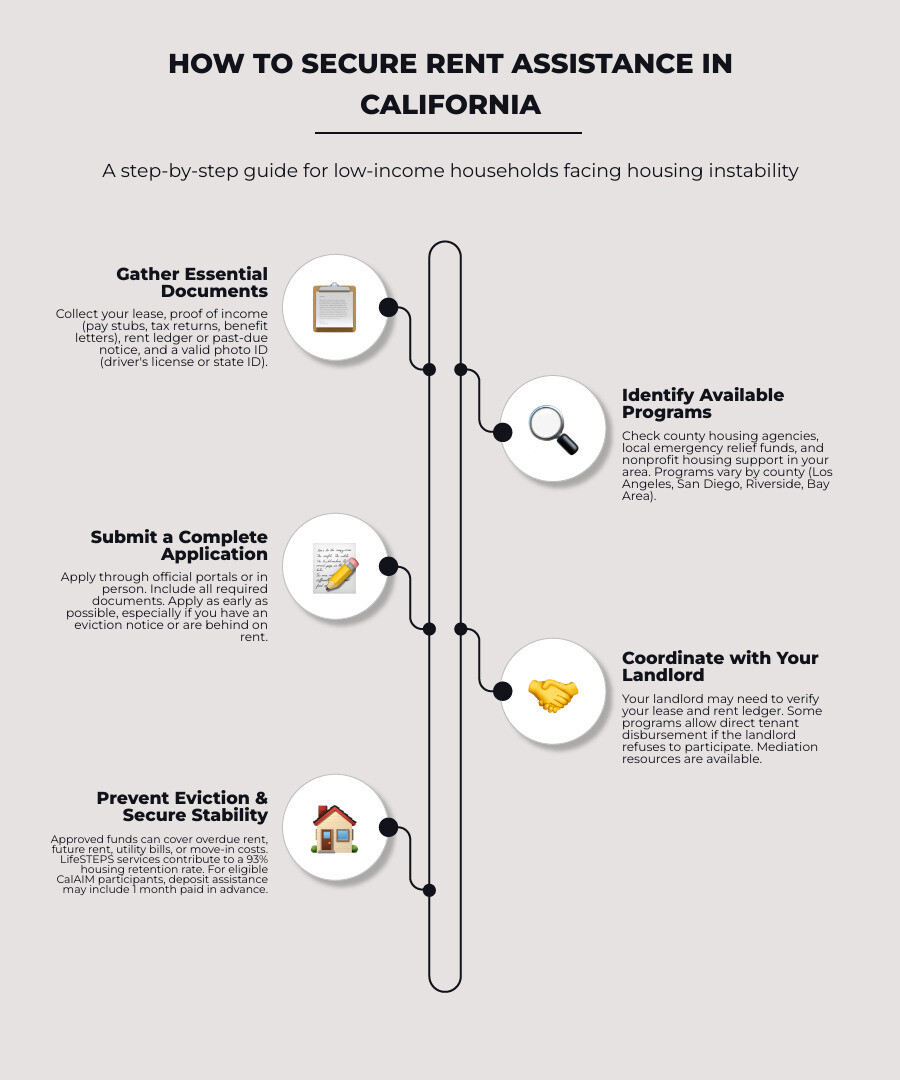
If you need rent assistance for low income households, start by gathering your lease, proof of income, rent ledger or past-due notice, and photo ID. Then check county housing agencies, local emergency relief funds, and nonprofit housing support in your area. Apply as early as possible, especially if you have received an eviction notice or are behind on rent.
In California, help may cover overdue rent, a short period of future rent, utility bills, or move-in costs. Eligible households may qualify for a government rental subsidy, homelessness prevention services, or supportive housing resources. Funding, income limits, and wait times differ by county, including Los Angeles, San Diego, Riverside, and Bay Area communities.
LifeSTEPS provides housing-focused support that helps residents work toward stable, long-term housing. Its services have contributed to a 93% housing retention rate. For eligible CalAIM participants, deposit assistance may include 1 month paid in advance to help make a move possible. Renters facing sudden financial hardship can also access one time rent payment assistance or locate free rent assistance near me through community providers.
Understanding Types of Housing Subsidies and Relief Funds
Securing affordable housing often requires understanding the distinct funding streams and support systems operating across California. Federal, state, and local governments provide unique mechanisms designed to lower monthly costs or clear housing-related debts. Navigating these options ensures you apply for the program best suited to your immediate or long-term financial reality.
| Program Type | Funding Level | Primary Purpose | How Assistance is Disbursed | Best Suited For |
|---|---|---|---|---|
| Housing Choice Vouchers (Section 8) | Federal (HUD) | Long-term monthly rent subsidy | Direct payment to private landlord; tenant pays ~30% income | Households seeking permanent, portable rental affordability |
| Project-Based Vouchers (PBV) | Federal / Local PHA | Long-term subsidized affordable housing units | Subsidy tied to specific property; non-portable | Individuals and families open to living in designated communities |
| Emergency Rental Assistance (ERAP) | Federal / State / County | Emergency rent arrears, utilities, and prospective rent | Direct payment to landlord or utility company (rarely tenant directly) | Households facing imminent eviction or temporary economic shock |
| CalAIM Community Supports | State (Medi-Cal) | Housing transition, deposits, and tenancy sustaining services | Direct coordination for security deposits (1 month advance) and navigation | Medi-Cal members experiencing housing transitions or instability |
| Municipal Relief Grants | Local City / County | Short-term crisis intervention and debt relief | Direct grant payment to property management | Renters with sudden hardship needing targeted local relief |
Long-term stability programs, such as Housing Choice Vouchers, follow the renter and allow households to choose standard private market rentals, provided the unit meets local housing authority safety standards and fair market rent thresholds. Conversely, project-based assistance stays attached to the specific building. For households seeking broader options, exploring comprehensive low income rental assistance models helps clarify how permanent vouchers differ from temporary interventions.
For residents seeking broader regional resources, reviewing California housing and urban development options provides clear pathways to connect with public housing agencies, fair housing enforcement agencies, and regional voucher administrators.
Major Programs Offering Rent Assistance for Low Income Households
Local jurisdictions in California frequently deploy targeted funds to address localized affordability pressures. In Southern California, large-scale initiatives step in to stabilize families who have fallen behind on essential living costs due to unforeseen medical emergencies, employment interruptions, or family transitions.

For example, the Los Angeles County rent relief programs have provided significant municipal investments—including multiseason grant expansions awarding up to $15,000 per unit for up to six months of relief. These programs focus on resolving accrued rental debt directly with landlords, keeping households in place and avoiding formal court filings.
Similar initiatives operate across other key regions, including Orange County, Riverside, and San Diego. Exploring regional rent relief initiatives helps tenants identify localized emergency pools that operate independently of federal voucher lists.
Eligibility Criteria for Rent Assistance for Low Income Renters
Qualifying for housing aid depends heavily on household income relative to your local area. The standard benchmark is the Area Median Income (AMI), updated annually by housing authorities:
- Low Income: Household income at or below 80% of the Area Median Income.
- Very Low Income: Household income at or below 50% of the Area Median Income (often given priority processing during funding rounds).
- Extremely Low Income: Household income at or below 30% of the Area Median Income.
Beyond income caps, applicants must show a demonstrable risk of homelessness or housing instability. This can be established through an eviction notice, past-due utility bills, or a high rent-burden ratio where housing costs consume more than 30% to 50% of monthly earnings. If you have not yet received a formal legal notice, applying for rental assistance without an eviction notice remains entirely possible through proactive municipal and nonprofit prevention initiatives.
How to Apply for Rent Assistance for Low Income Families
Applying successfully requires thorough document preparation. When local portals open, applications are frequently evaluated on a rolling, prioritized basis.
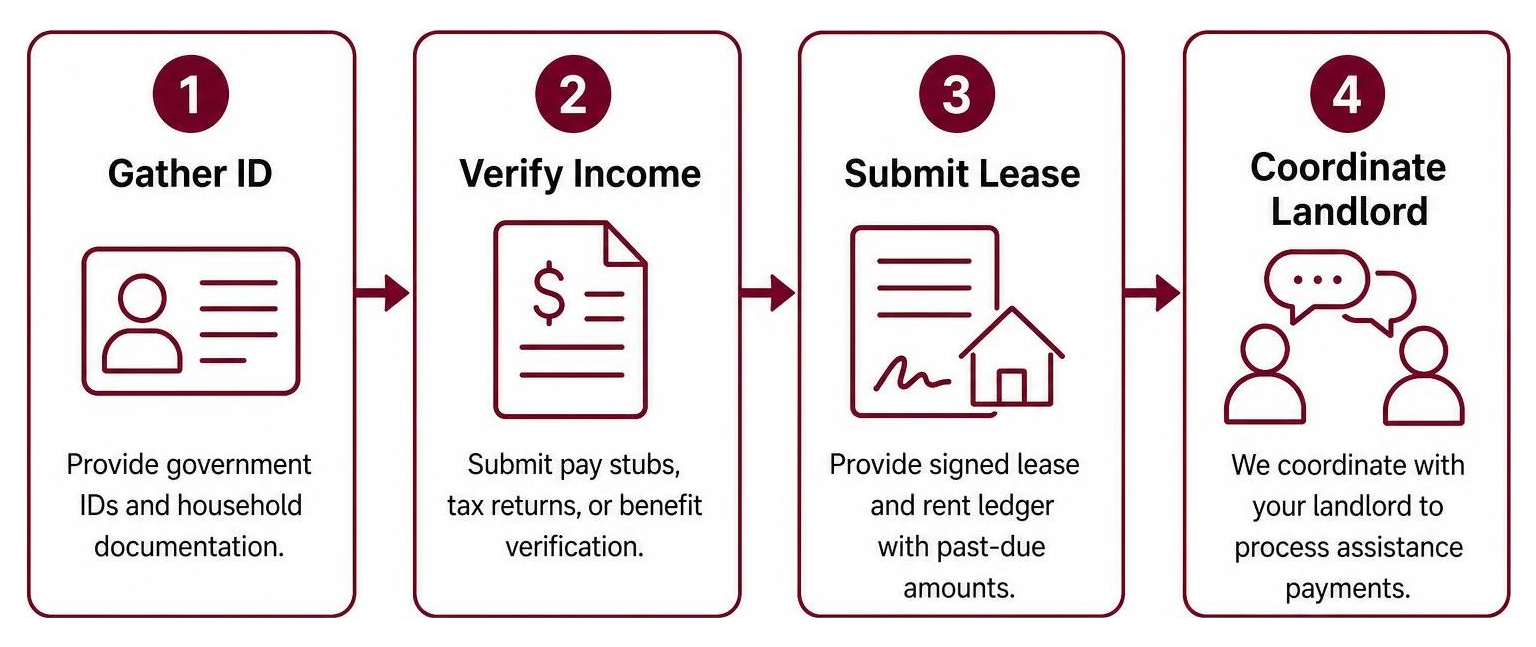
To navigate the process smoothly, follow these organized steps:
- Assemble Identification and Household Documentation: Gather government IDs, proof of California residency, and Social Security cards (or alternative identification numbers) for all adult household members.
- Collect Income Verification: Prepare your most recent federal tax returns, W-2s, or consecutive recent pay stubs. If receiving public benefits such as CalFresh, SSI, or disability, obtain official benefit verification letters.
- Obtain Housing Records: Have an active copy of your signed lease agreement along with an itemized rent ledger from your property manager clearly outlining past-due amounts and monthly obligations.
- Coordinate with Your Landlord: Many relief funds require property owners to submit a W-9 and direct deposit information. Notify your housing provider early to avoid processing delays.
- Submit Through Official Channels: Use designated municipal, county, or state portals. For a detailed walkthrough of state-level submission steps, consider navigating emergency rental assistance in California to avoid common administrative errors.
Eviction Prevention, Deposit Relief, and CalAIM Housing Support
True housing security extends beyond clearing past arrears; it involves building sustainable pathways to maintain housing stability over time. LifeSTEPS provides housing-focused supportive services across California affordable housing communities, achieving a verified 93% housing retention rate through dedicated on-site service coordination and eviction prevention strategies.

For Medi-Cal recipients facing homelessness or complex transitions, the state’s CalAIM (California Advancing and Innovating Medi-Cal) Community Supports program offers critical interventions. LifeSTEPS coordinates with eligible individuals to provide:
- Housing Transition Navigation Services: Hands-on assistance searching for appropriate housing, completing rental applications, and overcoming screening barriers.
- Housing Deposits: Financial support covering move-in costs, specifically including 1 month paid in advance for initial rent or security deposit requirements, removing significant upfront financial roadblocks.
- Housing Tenancy and Sustaining Services: Ongoing support to help tenants maintain positive landlord relations, navigate lease compliance, and access community resources.
For families in Southern California seeking diverse municipal and housing commission programs, reviewing San Diego housing assistance opportunities provides insight into local waiting lists and security deposit initiatives. When immediate short-term crises strike, pairing these supports with one-time emergency rent payment options ensures families remain securely housed without disrupting children’s schooling or employment routines.
Consider the experience of Elena, whose name has been changed to protect her privacy. When sudden medical expenses left her three months behind on rent in Southern California, an on-site supportive coordinator helped her assemble past-due documentation, submit an emergency municipal relief grant, and develop a household stabilization plan. Elena maintained her apartment, and her family stayed stably housed.
Protecting Yourself from Rental Scams and Fraudulent Schemes
The urgent need for housing relief has created opportunities for fraudulent actors. Protecting your personal identity and finances requires vigilance when searching for rent support programs.
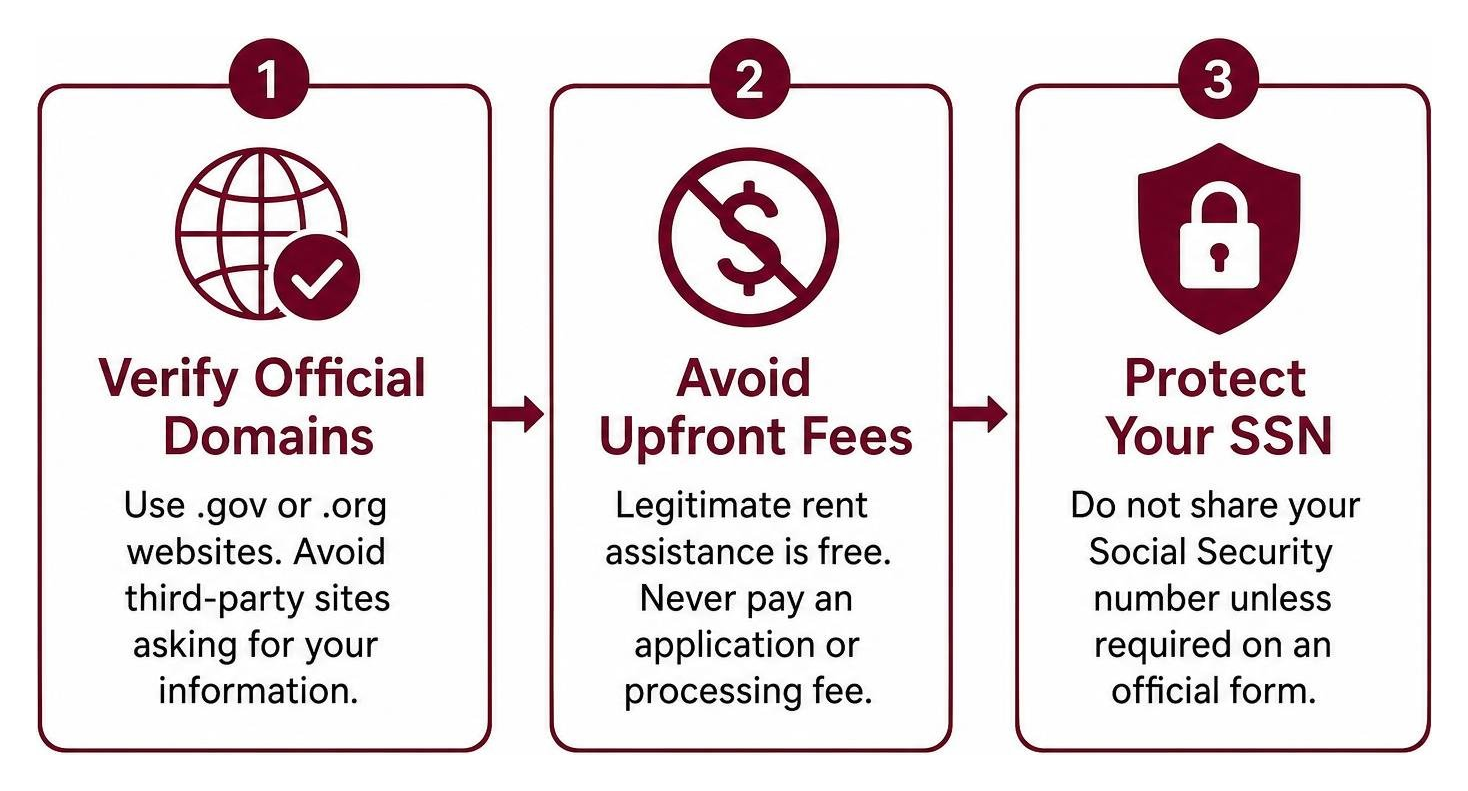
Always follow these fraud-prevention best practices:
- Never Pay for an Application: Legitimate government, municipal, and nonprofit rent relief applications are always free. Any website or individual demanding an “application processing fee,” “expedited review fee,” or “guaranteed approval charge” is running a scam.
- Verify Web Addresses: Official programs operate on
.gov,.org, or verified municipal contractor domains. Avoid third-party commercial websites claiming to accept housing relief applications in exchange for banking details. - Do Not Wire Money or Send Gift Cards: No housing authority or emergency program will ask you to wire funds, purchase prepaid gift cards, or send cryptocurrency to unlock financial assistance.
- Protect Sensitive Information: Only provide Social Security numbers, tax returns, and banking details through authenticated portals verified by your local county housing agency.
- Cross-Check with Local Housing Authorities: If you receive an unexpected email, text, or social media message stating you have been awarded housing funds, contact your local public housing authority or 2-1-1 service directly to verify its legitimacy before responding.
Frequently Asked Questions About California Rent Relief
What should I do if my landlord refuses to participate in a rent relief program?
While most relief programs are designed to issue payments directly to property owners, some municipal and state emergency frameworks permit direct tenant disbursements if a landlord fails to respond or declines participation within a designated timeframe. If your landlord refuses to participate, speak with a local housing counseling agency or tenant legal aid organization. Community mediators can often assist in negotiating directly with property managers to explain that the funds resolve rent arrears without legal costs.
How much financial aid can an eligible California household receive?
Assistance amounts vary by jurisdiction, program guidelines, and available funding. Emergency programs often cap total relief at specific dollar thresholds or duration limits—such as up to 12 to 18 months of combined rental arrears and prospective rent, or municipal grant maximums ranging from $5,000 to $15,000 per household. CalAIM deposit assistance focuses on practical move-in expenses, providing 1 month paid in advance for eligible participants to secure permanent tenancy.
Can I receive rental assistance if I already have a housing voucher?
Yes, but with specific limitations. If you hold a Housing Choice Voucher or live in subsidized housing, emergency relief funds cannot pay for the portion of the rent covered by the government subsidy. However, households with vouchers can often apply for emergency assistance to cover their designated tenant rent share if they experienced an unexpected hardship, as well as past-due utility balances.
Conclusion
Finding reliable housing support requires accurate information, early action, and access to trusted community partners. Whether you are facing sudden arrears, transitioning out of an unstable living arrangement, or working toward long-term self-sufficiency, supportive services make a lasting difference. LifeSTEPS remains committed to empowering communities through human-centered support, contributing to a 93% housing retention rate across its service locations. If you need guidance navigating local resources, explore how to access emergency rental assistance and supportive services to keep your family safely housed.
For media inquiries, contact: bex@lifestepsusa.org
LifeSTEPS currently provides services in California only.


