


Why Your Property Needs an Affordable Management Makeover
Why Affordable Housing Property Management Needs a Modern Approach
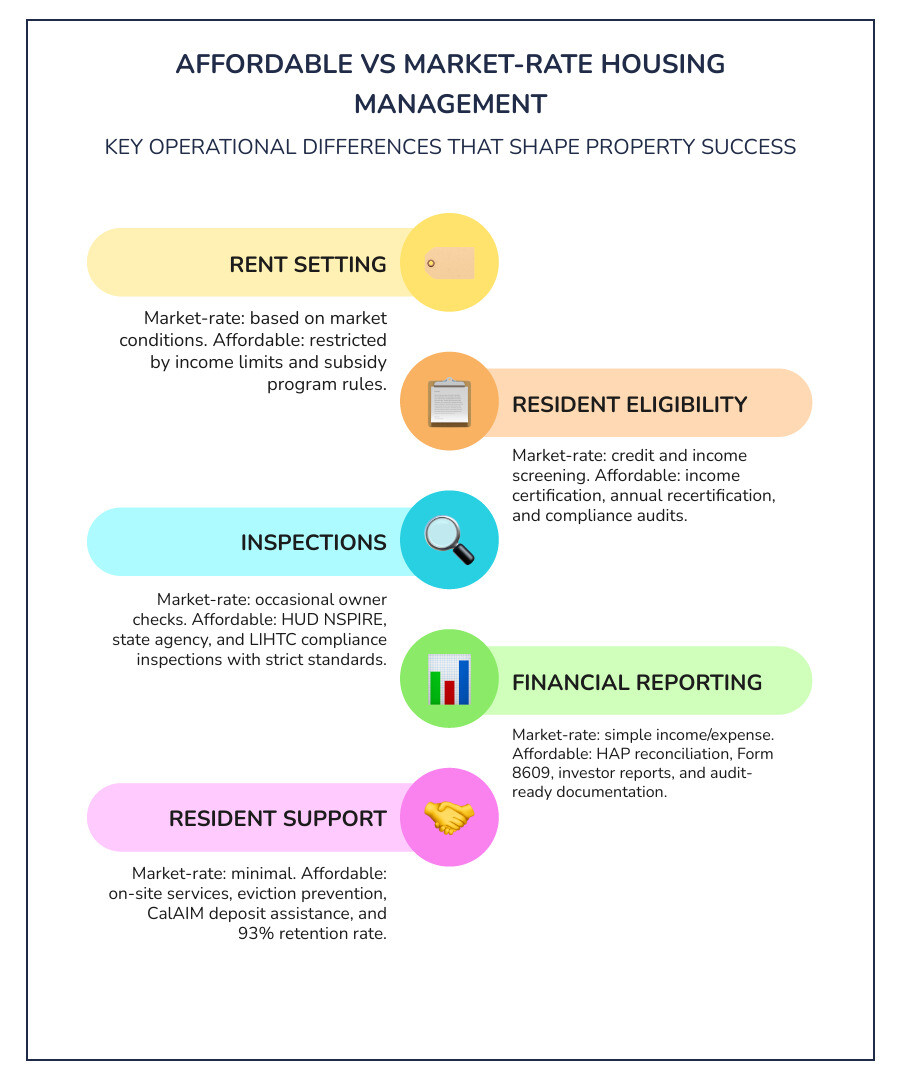
Affordable housing property management is more than collecting rent and fixing repairs. The right management approach protects subsidy funding, meets income and inspection rules, keeps homes safe, and helps residents remain housed. For a veteran rebuilding stability after service, those details can mean the difference between a confusing process and a reliable place to call home.
Unlike market-rate apartments, affordable communities may operate under layered requirements from LIHTC, HUD Section 8, USDA Rural Development, and California funding programs. Managers must balance lease-up, resident communication, maintenance, financial reporting, and audit-ready records without losing sight of the people who live there.
A management makeover starts by asking three practical questions:
- Are compliance files, certifications, and inspections consistently up to date?
- Are maintenance and capital plans preventing safety issues before they disrupt residents?
- Does the management model connect residents to support that improves housing stability?
LifeSTEPS brings a human-centered lens to California housing communities, including in Los Angeles, San Diego, Riverside, and the Bay Area. Supportive services matter alongside sound operations: LifeSTEPS reports a 93% housing retention rate, and CalAIM deposit assistance can provide 1 month paid in advance to help eligible residents overcome a common move-in barrier.
For additional context, LifeSTEPS resources explain how to compare affordable housing management companies, understand government subsidized housing, and navigate HUD affordable housing.
The Modern Framework of Affordable Housing Property Management
Managing an income-restricted multifamily asset is substantially different from overseeing market-rate housing. Conventional property management evaluates success almost entirely on net operating income, rent optimization, and commercial lease turnover. In contrast, affordable communities require dual-track operational excellence: maintaining high physical standards while navigating intricate state and federal regulatory frameworks.

Every property operating with public financing must maintain compliance across multiple jurisdictions. Property teams oversee communities financed through diverse federal and state rental subsidy programs, including:
- Low-Income Housing Tax Credit (LIHTC): Enacted under Section 42 of the Internal Revenue Code, this program restricts tenant incomes to specific Area Median Income (AMI) thresholds (such as 30%, 50%, or 60% AMI) and establishes maximum allowable rent limits.
- HUD Section 8 (Project-Based Rental Assistance): Entails Housing Assistance Payment (HAP) contracts requiring strict adherence to tenant rent contributions (typically 30% of adjusted household income) and rigorous annual recertification protocols.
- USDA Rural Development (Section 515 / 538): Targets rural multifamily housing, mandating specialized budget reviews, tenant contribution calculations, and Agency-specific physical standards.
- California Tax Credit Allocation Committee (CTCAC) & HCD Guidelines: Imposes state-specific regulatory agreements, extended affordability periods (often 55 years in California), and strict utility allowance guidelines.
- Local Housing Authority Standards: Adherence to operational and oversight criteria set by entities such as the Housing Authority of the City of Los Angeles, following established public housing authority standards.
Specialized Compliance in Affordable Housing Property Management
Compliance is the engine of subsidized housing. A single reporting error or an uncertified tenant file can jeopardize an owner’s tax credit allocation, initiate credit recapture, or stall critical monthly HAP disbursements.
At the property level, teams must master several core regulatory mechanisms:
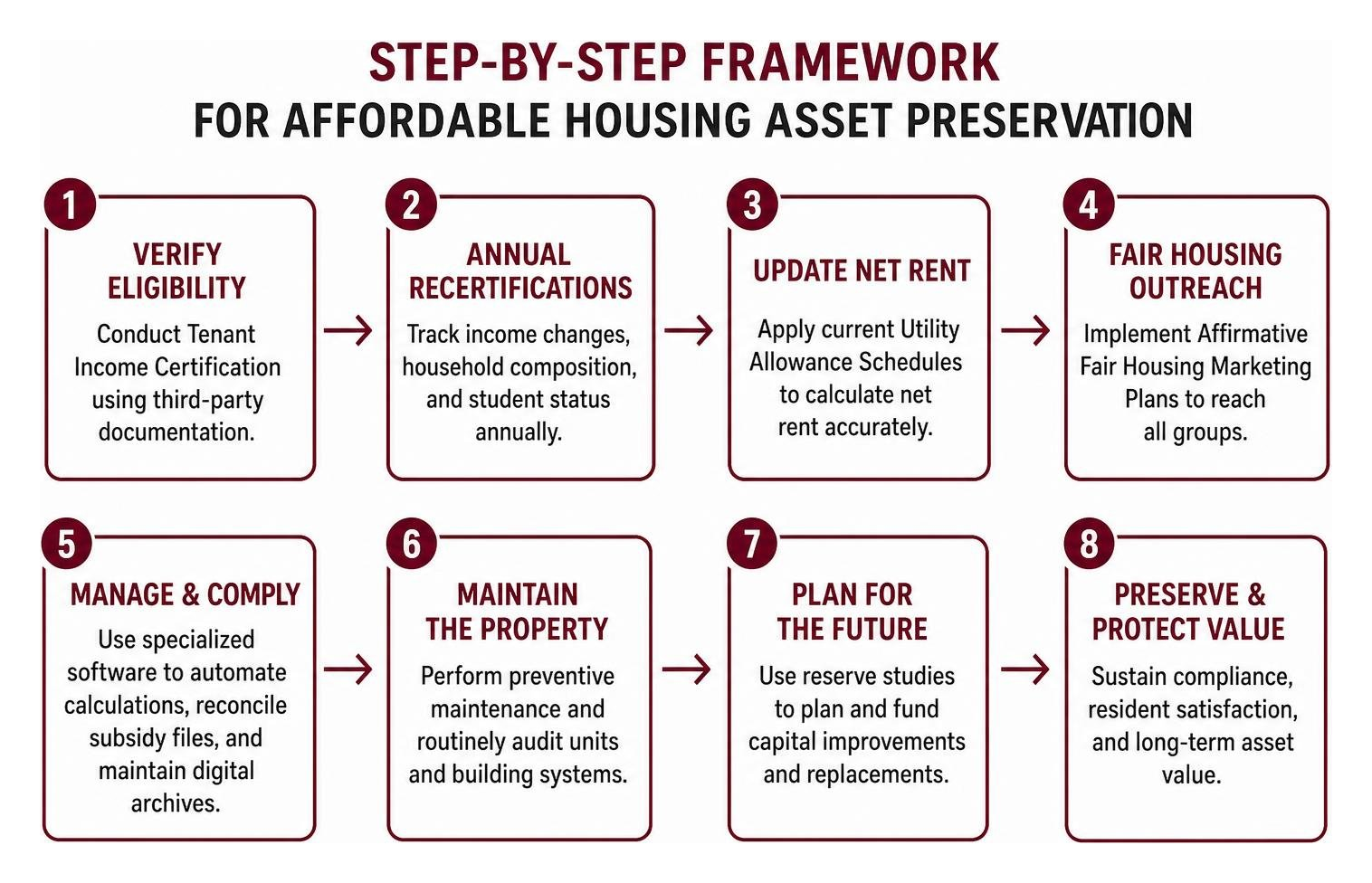
- Tenant Income Certification (TIC): Before move-in, property staff must verify every source of household income and assets via third-party documentation, ensuring qualifying thresholds are not exceeded.
- Annual Recertifications: Tracking income changes, family composition adjustments, and student status restrictions on an annual cycle.
- Utility Allowance Schedules: Regularly updating net rent figures by calculating regional utility allowances approved by local housing authorities or energy consumption models.
- Affirmative Fair Housing Marketing Plans (AFHMP): Implementing nondiscriminatory outreach to attract demographic groups least likely to apply.
Modern compliance management relies heavily on specialized software ecosystems like Yardi Voyager and RealPage OneSite. These platforms automate calculations, reconcile TRACS files for HUD, and maintain audit-ready digital archives that protect properties from non-compliance findings during state agency inspections.
Operational Models for Niche Housing Portfolios
Not all affordable housing portfolios share identical operational structures. Management workflows must adjust based on specific property models and resident demographics:
- Senior Affordable Communities: Emphasize universal accessibility, active aging amenities, and specialized emergency response systems.
- Resident-Owned Cooperatives & Community Land Trusts: Require property management that respects resident board governance, cooperative financial decision-making, and long-term land lease stewardship.
- Permanent Supportive Housing (PSH): Combines lease administration with robust on-site case management to support formerly unhoused individuals.
- Veteran Housing: Tailored intake workflows verifying military service documents (such as DD Form 214) alongside dedicated case management, outlined in our guide to supportive housing for veterans.
- Rural Housing Communities: Focus on agricultural worker occupancy requirements and USDA Rural Development accounting protocols.
| Subsidy / Program | Primary Regulatory Agency | Income Eligibility Threshold | Recertification Frequency | Key Compliance Focus |
|---|---|---|---|---|
| LIHTC (Section 42) | State Housing Finance Agency (e.g., CTCAC) / IRS | 30% – 80% AMI (often 50% or 60%) | Annual (or self-certification waiver if 100% LIHTC) | Protecting Form 8609, student rule compliance, maximum gross rents |
| HUD Section 8 (PBRA) | HUD / Contract Administrator | Extremely low to low income (30% – 50% AMI) | Annual (and interim for income shifts) | HAP voucher reconciliation, TRACS submissions, Enterprise Income Verification (EIV) |
| USDA Rural Dev. (Sec. 515) | USDA Rural Development | Very low to moderate income | Annual | Form RD 3560-8 verification, agency budget approval, reserve account audits |
Core Operational Pillars: Compliance, Asset Preservation, and Financial Reporting
Preserving the long-term value of an affordable asset requires an integrated operational framework. Operations must marry rigorous financial stewardship with proactive facilities maintenance.
Physical Asset Preservation & NSPIRE Readiness
Under HUD’s National Standards for the Physical Inspection of Real Estate (NSPIRE), property inspections emphasize resident safety, health, and functional living conditions. Modern property managers implement:
- Preventive Maintenance Routines: Scheduled HVAC maintenance, roofing checks, and fire-life safety certifications.
- Routine Unit Audits: Conducting internal pre-audits of living areas, building systems, and building exteriors to correct trip hazards, egress barriers, or moisture intrusion before regulatory inspectors arrive.
- Capital Improvement Planning: Long-range reserve studies to forecast capital replacement cycles (e.g., elevators, asphalt, solar arrays) aligned with regulatory reserve requirements.
These preservation standards are essential when managing developments aligned with municipal housing initiatives in Southern California.
Financial Stewardship and Reporting in Affordable Housing Property Management
Affordable housing accounting requires specialized expertise beyond standard balance sheets:
- Operating Budget Development: Structuring budgets that account for statutory rent caps while managing rising insurance and utility overhead.
- HAP Payment Reconciliation: Managing prompt voucher transmissions and resolving payment holds through contract administrators.
- Common Area Maintenance (CAM) & Mixed-Use Reconciliations: Managing shared cost allocations in developments that combine ground-floor commercial space with residential tax credit units.
- Form 8609 Protection: Guaranteeing that all first-year tenant files meet compliance criteria to secure the owner’s multi-year tax credit allocations.
Accelerating Lease-Up Velocity and Occupancy
During initial lease-up, delays in tenant income verifications can lead to significant loss-to-lease and postpone the critical “Placed in Service” timeline required by tax credit investors.
To accelerate occupancy without sacrificing compliance, leading managers adopt a “Velocity + Compliance” strategy:
- Pre-Leasing Pipelines: Launching marketing and waitlist campaigns 6 to 9 months before construction completion.
- Lottery Administration: Running equitable, compliant lottery systems that follow fair housing guidelines across competitive markets like Los Angeles, San Diego, and Irvine.
- Pre-Qualified Waitlists: Maintaining active pools of pre-screened applicants ready for immediate file processing as units become available.
To evaluate regional strategies, property owners often consult regional resources and review guides on selecting specialized property management solutions.
Community Stability and Resident-Centered Property Management
Strong property performance is directly linked to resident stability. When property managers treat residents as partners and provide access to supportive services, communities experience reduced turnover, fewer legal interventions, and lower administrative overhead.

LifeSTEPS works closely with affordable housing communities across California, delivering on-site services that help residents achieve personal and economic stability. By focusing on root causes of instability, property owners can achieve measurable social and financial returns.
Key resident-centered initiatives include:
- Eviction Prevention & Rental Stability: LifeSTEPS properties achieve a 93% housing retention rate by pairing property operations with timely resident intervention, budgeting education, and rent resolution support.
- Move-In Support: Navigating the CalAIM program to provide eligible participants with deposit assistance equal to 1 month paid in advance, eliminating a major hurdle to permanent housing.
- Youth & Educational Enrichment: Providing structured on-site afterschool programs that resulted in a 97% literacy improvement during Summer Reading initiatives.
- Higher Education Pathways: Expanding opportunities through $2.1M in scholarships awarded to residents pursuing college and vocational credentials.
When residents have access to community housing support and clear pathways to maintain housing stability, the entire property ecosystem benefits.
Selecting the Right Partner for Affordable Housing Property Management
Developers and property owners must rigorously evaluate prospective management partners. Collaborating with organizations experienced in nonprofit housing models ensures alignment with community mission goals.
When vetting a property management partner, ask these key operational questions:
- What is your portfolio’s average occupancy rate across LIHTC and Section 8 assets?
- How do you handle initial lease-ups to ensure files meet first-year investor audit standards?
- What property management software (e.g., Yardi Voyager, RealPage OneSite) do you use for subsidy reporting?
- How does your facilities team prepare on-site maintenance staff for HUD NSPIRE inspections?
- Do you provide bilingual staff to ensure clear, equitable communication with all residents?
- How do you coordinate with on-site supportive service providers to resolve tenant challenges and prevent evictions?
Frequently Asked Questions About Evaluating Housing Management Services
How does affordable housing property management differ from conventional market-rate management?
Affordable management requires verifying tenant household incomes against statutory AMI limits, capping rents according to program rules, and submitting to regular compliance audits from state housing finance agencies (like CTCAC) and HUD. Market-rate management focuses primarily on rent optimization without income certifications or subsidy compliance workflows.
What is the timeline for engaging a management team during new development?
Developers should bring a specialized management team on board 6 to 9 months prior to construction completion. This window allows the management team to draft the Affirmative Fair Housing Marketing Plan (AFHMP), establish realistic operating budgets, set up utility allowances, coordinate lottery applications, and launch the pre-leasing campaign.
How do modern managers prepare properties for HUD NSPIRE inspections?
Preparation involves conducting routine self-inspections across all three NSPIRE inspection areas (Inside, Outside, and Unit). Maintenance teams implement ongoing digital work-order tracking, audit smoke detectors and carbon monoxide sensors, eliminate trip and fall hazards, ensure proper electrical panel clearances, and resolve health or safety deficiencies immediately.
Conclusion
A successful affordable housing property requires balance: rigorous compliance, proactive asset maintenance, and dedicated resident support. Upgrading your property management model protects investor capital, preserves physical infrastructure, and fosters thriving communities across California.
LifeSTEPS provides human-centered service coordination to help housing communities achieve long-term success. Discover how our comprehensive social and housing services create measurable impact for residents and property owners alike.
For media inquiries, contact: bex@lifestepsusa.org
LifeSTEPS currently provides services in California only.


