Tag Archive for: affordable housing

low income homes Los Angeles

How to find a home in LA without breaking the bank

Finding Low Income Homes in Los Angeles: A Practical Guide

Low income homes in Los Angeles are in high demand — and for good reason. The city is one of the most expensive rental markets in the country, yet hundreds of thousands of residents, including recently discharged veterans, essential workers, and families, need housing they can actually afford.

Here is a quick overview of your main options:

Option Who It’s For How to Access
Section 8 / Housing Choice Vouchers Very low-income renters Apply through HACLA
Public Housing Low-income families and individuals HACLA waiting list
Affordable Rental Developments 30%–80% AMI households Lottery or Coordinated Entry System
Emergency Housing (wildfire displaced) Displaced residents Housing.LACounty.gov
For-Sale Affordable Homes First-time buyers at or below 80% AMI Local lottery programs
Supportive Housing Formerly homeless, veterans, special needs CES referral or nonprofit provider

The situation became even more urgent after the recent wildfires, which displaced thousands of LA County residents and stretched an already tight housing supply further. At the same time, new affordable developments are being built across the city, and programs exist to help you navigate the process — from applying for a voucher to finding a home through a lottery.

This guide walks you through everything you need to know, step by step.

Step-by-step infographic for applying for affordable housing in Los Angeles County infographic

Finding a place to live in May 2026 requires a mix of persistence and knowing where to look. The search for low income homes Los Angeles residents can afford has become more complex due to the aftermath of the Eaton and Palisades Fires. These wildfires created an immediate spike in demand for emergency housing, but the county has responded with specialized tools to help neighbors find stability.

A newly constructed apartment building in South LA designed for low-income residents

The Los Angeles County Development Authority (LACDA) and the Affordable Rental Housing – LAHD portal serve as the primary hubs for current listings. Unlike private sites, these registries focus specifically on units that have rent caps or are reserved for specific income tiers.

Emergency Housing Resources

For those displaced by recent wildfires, the County of Los Angeles has activated emergency coordination between the housing portal and the Red Cross. If you have been affected by the Eaton or Palisades Fires, there are specific resources available:

  • Property Listings: Owners with available one- and two-bedroom units within 10 miles of fire boundaries are encouraged to list them for displaced families.
  • Red Cross Referrals: Specialized assistance is available for families needing immediate placement.
  • Free Search Tools: The LACounty.gov housing portal remains free for both renters and property owners, ensuring that emergency information is accessible to everyone.

If you are currently struggling to keep up with your current payments while searching for a new home, you can find more information on Finding Help with Rent Los Angeles Style.

Understanding Income Limits and Eligibility in LA County

One of the most confusing parts of finding low income homes Los Angeles offers is the alphabet soup of “AMI” and “HUD limits.” AMI stands for Area Median Income. In 2025, the HUD-determined median income for a four-person household in Los Angeles County reached $106,600.

Most affordable housing is “income-restricted,” meaning you must earn below a certain percentage of that $106,600 to qualify.

Table comparing 2025 HUD income limits for 30, 50, and 80 percent AMI tiers infographic

Qualifying for Low Income Homes Los Angeles Units

To qualify, your household’s gross income (income before taxes) is compared against the AMI tiers. Generally, “affordable” means you should not be spending more than 30% of your gross monthly income on rent and utilities combined.

  • 30% AMI (Extremely Low Income): For a single person, this limit is approximately $31,850. Many new developments, like the Victory Boulevard project, reserve a large portion of units for this tier.
  • 50%–60% AMI (Very Low Income): This tier serves many “missing middle” workers, such as retail staff or entry-level healthcare workers.
  • 80% AMI (Low Income): This is often the upper limit for affordable programs, capping at roughly $85,280 for a family of four.

To learn more about how these brackets affect your application, see our guide on Affordable Housing for Low Income Families and How to Get It and Income Restricted Housing Near Me.

Documentation for Housing Interviews

When your name finally comes up on a waitlist or you win a lottery, you must move fast. Having your “housing “ready” folder is essential. Most properties will require:

  1. Valid picture ID for all adults.
  2. Birth certificates and Social Security cards for every household member.
  3. Current bank statements (usually for the last 3 months).
  4. Proof of all income (pay stubs, social security award letters, or disability statements).
  5. Federal and state tax returns for the past 2–3 years.

Key Programs for Affordable Rental Housing

Los Angeles uses several different systems to manage low income homes Los Angeles residents need. The Housing Authority of the City of Los Angeles (HACLA) manages the largest programs, including 14 public housing sites.

A diverse group of neighbors working together in a community garden at an affordable housing site

Finding Help with Rent and Low Income Homes Los Angeles Vouchers

There are two main types of Section 8 assistance you should know about:

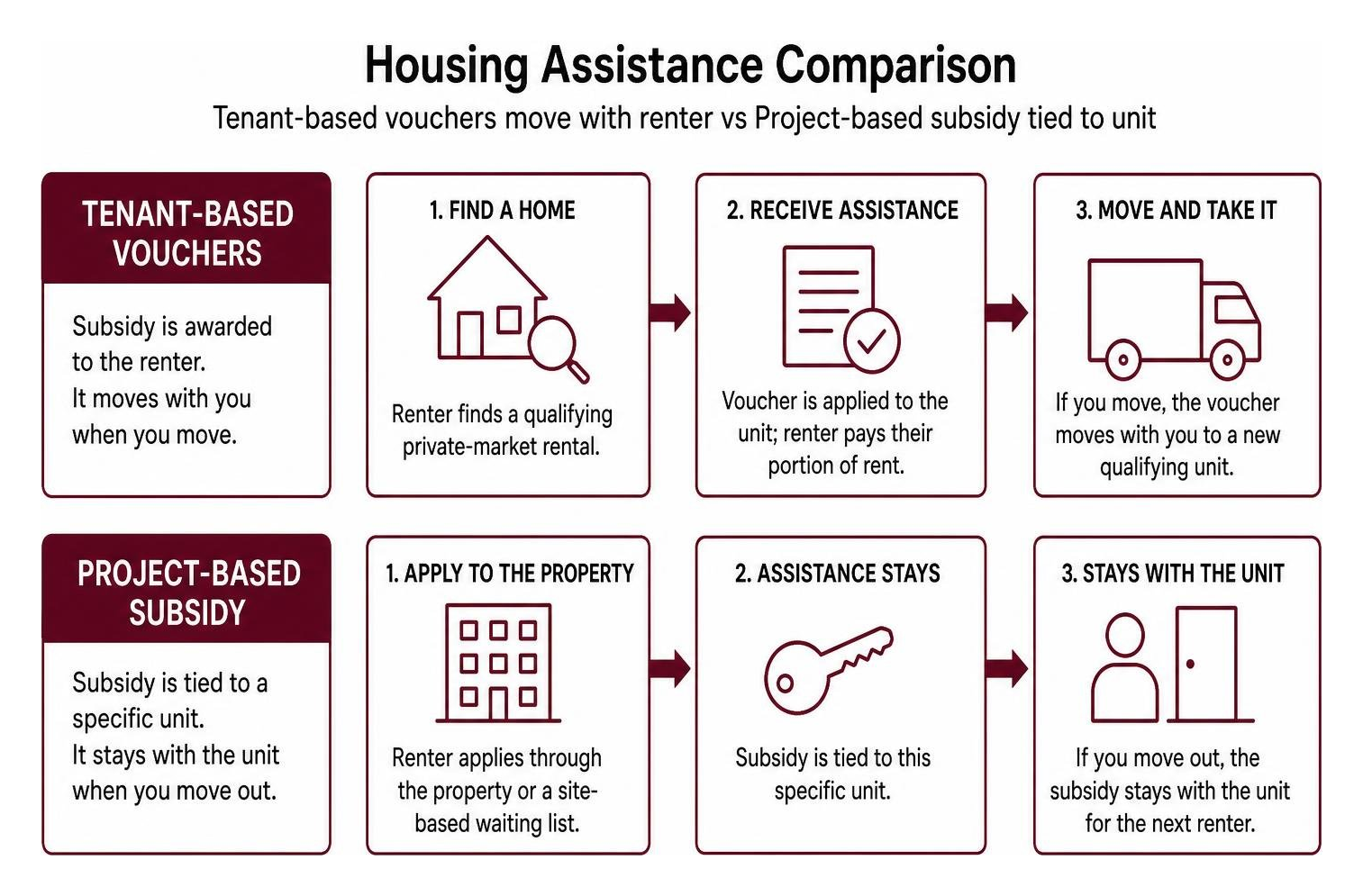
  • Tenant-Based Vouchers: This voucher stays with you. You find a private landlord who accepts Section 8, and you pay roughly 30% of your income while the government pays the rest.
  • Project-Based Vouchers: The assistance is tied to the building. If you move out, the next low-income tenant gets the benefit.

Because waiting lists can be years long, it is important to check for Low Income Housing with No Waiting List opportunities, which often appear when new buildings open their initial lottery. You can find more localized tips in Your Neighborhood Guide to Income Based Apts for Rent Near Me.

Pathways to Homeownership

Affordability isn’t just for renters. We believe that homeownership is a vital step toward long-term stability. Some local programs are creating townhomes specifically for families at or below 80% AMI. These programs often utilize “CalHome” funding and require buyers to:

  • Contribute at least 3% of the purchase price from their own funds.
  • Maintain a credit score (often 600 or higher).
  • Complete a certified Homebuyer Education class.

If you are interested in moving from a voucher to a mortgage, our Unlock Your Front Door with FSS Homebuyer Education resources can help you understand how the Family Self-Sufficiency program helps you save for a down payment.

New Developments and Streamlined Approvals

To tackle the crisis, the city is using “Executive Directive 1” (ED1). This policy allows 100% affordable projects to bypass long public hearings and move from paperwork to construction in as little as nine months.

Several major affordable housing efforts are currently changing the landscape for low income homes Los Angeles seekers:

  • A large development in the San Fernando Valley is providing homes for those at the 30% to 80% AMI levels.
  • New family housing in South LA includes townhomes with on-site financial counseling.
  • Another mixed-access development includes units reserved for a public lottery and others for formerly unhoused residents through the Coordinated Entry System (CES).

Community Impact and Challenges

While speed is good for housing production, it can lead to friction. In some neighborhoods, residents have raised concerns about unpermitted demolition and the scale of new five-story buildings in single-family areas. Issues like parking shortages and site safety are ongoing topics of debate. As reported by LAist, some neighbors feel that expedited processes limit their ability to provide input on how their community grows.

Sustainable and Accessible Features

Modern low income homes Los Angeles is building are not just affordable; they are high-quality. Many target “Green Point Gold” ratings, featuring:

  • Drought-tolerant landscaping to save water.
  • Energy-efficient appliances that lower utility bills for tenants.
  • ADA-accessible units designed for residents with mobility impairments.

Supportive Services for Long-Term Housing Stability

Getting the keys is just the first step. We have found that the secret to a 93% housing retention rate is “wraparound support.” This means providing more than just four walls; it means providing case management, health services, and job training.

For those transitioning into a new home, we often utilize the CalAIM program for deposit assistance. This typically covers 1 month of rent paid in advance to help families overcome the initial financial hurdle of moving. You can read more about these strategies in Roof Over Your Head Navigating Housing for Low Income Families.

Wraparound Support for Special Populations

Veterans and seniors often face unique challenges. For veterans, housing stability is often tied to health outcomes. In statewide pilots, pairing permanent supportive housing with peer specialists and transportation assistance led to a 98% housing retention rate.

We’ve seen that when residents have access to social activities and consistent care coordination, emergency room visits drop by nearly 60%. It’s about creating a community where neighbors look out for one another.

Frequently Asked Questions about LA Housing

How does the Los Angeles housing lottery work?

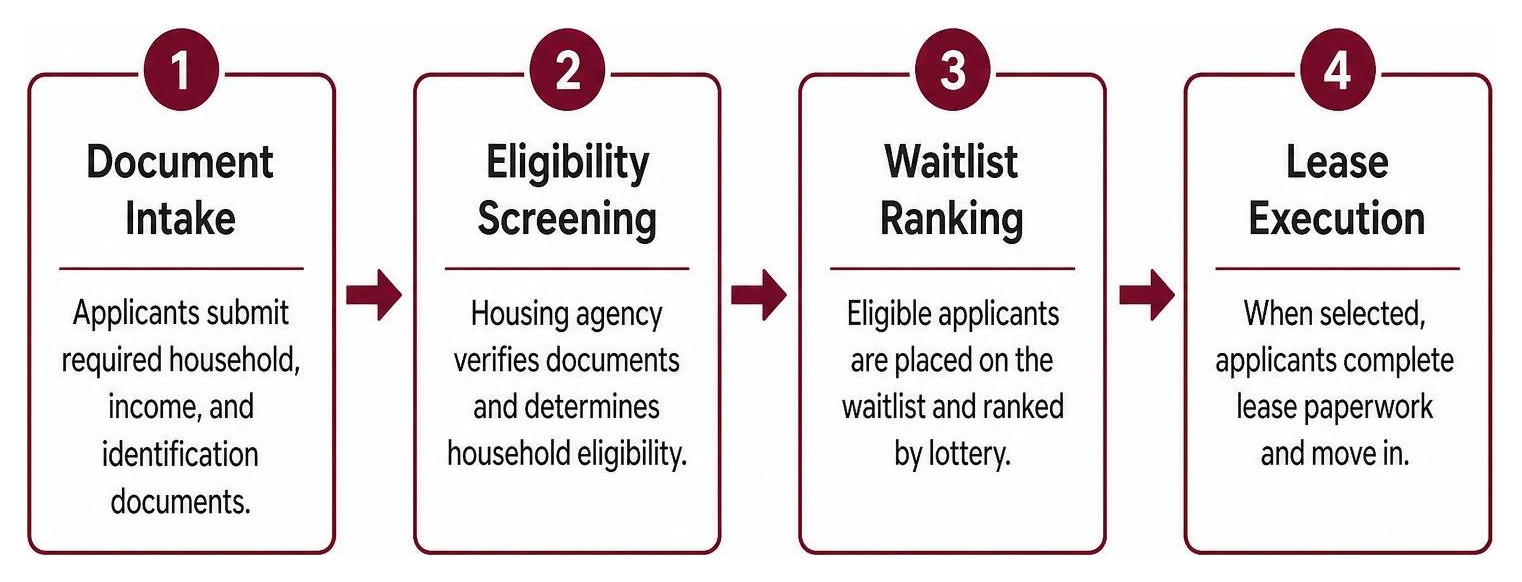
When a new building opens, they often hold a lottery. You submit an initial “interest form.” If selected, you are given a “rank.” You then attend an interview to verify your income and documents. If you pass, you get a unit; if not, you stay on a waitlist.

What is the difference between 30% and 80% AMI?

It’s all about your paycheck. 30% AMI is for “Extremely Low Income” households (around $31,850 for one person). 80% AMI is for “Low Income” households (around $70,650 for one person). Rents are capped based on these tiers, so a 30% unit will always be cheaper than an 80% unit.

How can I find accessible housing for people with disabilities?

The Affordable and Accessible Housing Registry is the best tool for this. It allows you to filter specifically for units with mobility, hearing, or visual accommodations.

Conclusion

LifeSTEPS provides human-centered support to help Californians achieve a 93% housing retention rate through comprehensive case management and education. By focusing on measurable outcomes like literacy improvement in youth programs and scholarship support, the organization empowers residents to transition from stable housing to true self-sufficiency.

Whether you are a veteran looking for a stable place to call home or a family trying to navigate the complex world of low income homes Los Angeles, resources are available. From deposit assistance to the FSS program, the path to stability is built one step at a time.

Visit our website for more information: LifeSTEPS

LifeSTEPS currently provides services in California only.

veterans assistance housing

An Essential Guide to Veterans Assistance Housing Options

What Veterans Need to Know About Housing Assistance in 2026

Veterans assistance housing in the United States spans a wide range of programs — from federal rental vouchers and disability grants to nonprofit transitional support and state-level services.

If you’re a veteran looking for quick answers, here’s a snapshot of the main options available:

  • HUD-VASH — Rental vouchers combined with VA case management for homeless veterans
  • Specially Adapted Housing (SAH) grant — Up to $126,526 in FY 2026 for home modifications due to service-connected disabilities
  • Special Home Adaptation (SHA) grant — Up to $25,350 in FY 2026 for qualifying disabilities
  • VA Home Loan — Zero-down-payment home purchase benefit for eligible veterans
  • DVNF Homeless to Housing (H2H) — Up to $2,000 in financial aid or household goods for veterans transitioning out of homelessness
  • Transitional housing programs — Short- to medium-term shelter with wraparound support services

The need for these programs is real and growing. In 2022, over 15,500 veterans were living unsheltered — in parks, on sidewalks, or in abandoned buildings — a 14.3% increase from the prior year. Another 20,067 veterans were in emergency shelters or transitional housing, up 2.6%. Unsheltered veterans alone accounted for roughly 80% of the total rise in veteran homelessness, even as the broader U.S. homeless population grew by 12% that same year.

For recently discharged veterans navigating civilian life, these numbers aren’t just statistics. They reflect real barriers — lost income, unfamiliar systems, and a lack of support at a critical transition point.

This guide breaks down every major veterans assistance housing option available in 2026, with a focus on what’s accessible to veterans in California.

veteran homelessness statistics 2022 showing unsheltered vs sheltered numbers and percentage increases infographic

Understanding Federal Veterans Assistance Housing Programs

Federal programs form the backbone of veterans assistance housing across the country. By combining the financial resources of the Department of Housing and Urban Development (HUD) with the clinical and supportive capabilities of the Department of Veterans Affairs (VA), these initiatives help veterans secure long-term, stable housing.

At the center of these efforts is the HUD-VASH program. This collaborative initiative pairs HUD’s Housing Choice Voucher (HCV) rental assistance with dedicated VA case management and clinical services. Instead of simply providing a rent subsidy, HUD-VASH ensures that veterans receive the ongoing medical, mental health, and substance use support they need to maintain their housing.

Congress has recognized the immense value of this model, consistently appropriating additional funding for new HUD-VASH vouchers every year since 2008. In 2024, HUD awarded approximately $40 million to fund 3,518 additional HUD-VASH vouchers. Additionally, on August 8, 2024, HUD awarded approximately $20 million to 245 HUD-VASH Public Housing Agencies (PHAs) under Notice PIH 2024-10 to bolster administrative capabilities. In recent fiscal cycles, Notice PIH 2026-1 made another $10 million in administrative fee funding available to ensure local housing authorities have the resources to keep the leasing pipeline moving.

To learn more about how these vouchers are administered, check out the official HUD-Veterans Affairs Supportive Housing (HUD-VASH) | HUD.gov portal or read our detailed overview of Veterans Affairs Supportive Housing.

To qualify for the HUD-VASH program, veterans must meet specific eligibility requirements. First, the veteran must be legally defined as homeless or at risk of homelessness. This includes those living on the streets, in emergency shelters, or in unstable temporary environments. Second, the veteran must be eligible for VA health care services, which is determined through a clinical assessment conducted by the local VA Medical Center (VAMC).

Notably, eligibility for HUD-VASH has expanded over the years to include veterans with Other Than Honorable (OTH) discharges, ensuring that those with complex transition histories are not left without a safety net.

If you or a loved one needs to apply, the process begins with a clinical assessment:

  1. Initiate Contact: Reach out to your local VA Medical Center and explicitly mention your interest in the HUD-VASH program. Alternatively, you can call the National Homeless Veteran Call Center at 1-877-4AID-VET (1-877-424-3838) for 24/7 assistance.
  2. Clinical Assessment: A VA caseworker will evaluate your housing status, physical and mental health needs, and overall eligibility.
  3. PHA Referral: Once approved by the VA, you will be referred to a partnering Public Housing Agency (PHA) in your area to receive your rental voucher.

For a deeper dive into these application pathways, explore our guides on Government Assistance For Homeless Veterans and Programs That Help Homeless Veterans.

What is the difference between HUD-VASH vouchers and VA home loans?

While both programs fall under the umbrella of federal veterans housing support, they serve entirely different financial needs and housing situations.

HUD-VASH is designed strictly as a rental assistance program for homeless or highly vulnerable veterans. The government pays a portion of the veteran’s rent directly to a private landlord, and the veteran contributes a percentage of their income (typically around 30%).

In contrast, VA home loan benefits are designed to help veterans, active-duty service members, and eligible surviving spouses purchase, build, or improve a permanent home. To use a VA loan, you must apply for a Certificate of Eligibility (COE) based on your service record. VA-backed loans allow you to buy a home with zero down payment, lower interest rates, and no private mortgage insurance (PMI). The VA also helps veterans calculate their remaining “bonus entitlement” using county loan limits to maximize their borrowing power and offers robust foreclosure avoidance assistance to prevent veterans from losing their homes during financial hardships.

To learn more about homeownership pathways, visit the VA Housing Assistance | Veterans Affairs portal and read Buying Your Castle A Guide To Veteran Home Buying Assistance.

Feature HUD-VASH Vouchers VA Home Loans
Primary Purpose Rental assistance and supportive case management Purchasing, building, or refinancing a permanent home
Target Audience Homeless or at-risk veterans in need of clinical support Eligible veterans, active-duty members, and surviving spouses
Down Payment N/A (Rental program) $0 down payment options available
Income/Credit Focuses on low-income limits; flexible credit requirements Standard lender underwriting applies, but with flexible terms
Key Benefit Government pays a portion of monthly rent to the landlord No private mortgage insurance (PMI) and competitive interest rates

Disability Housing Grants and Property Conversions

For veterans who have sustained service-connected disabilities, physical barriers in a standard home can severely limit independence. The VA offers specialized housing grants to help disabled veterans purchase or modify a home to accommodate their physical needs, ensuring they can navigate their living spaces safely and comfortably.

These grants are governed by strict statutory guidelines, including the limitations outlined in 38 U.S. Code § 2102. To explore the full scope of these benefits, refer to the VA’s guide on Disability Housing Grants For Veterans | Veterans Affairs and our comprehensive Housing Grants Veterans Complete Guide.

Specially Adapted Housing (SAH) vs. Special Home Adaptation (SHA) Grants

The two primary disability housing grants available to veterans are the Specially Adapted Housing (SAH) grant and the Special Home Adaptation (SHA) grant. They differ significantly in terms of qualifying disabilities, intended use, and maximum funding limits.

  • Specially Adapted Housing (SAH) Grant (38 USC § 2101(a)): The SAH grant is designed for veterans who own or plan to own a permanent home and have severe service-connected disabilities. Qualifying disabilities include the loss or loss of use of more than one limb, blindness in both eyes (with a visual acuity of 20/200 or less), severe burns, or certain progressive respiratory or neurological conditions. For FY 2026, the maximum SAH grant amount is $126,526. (Note: While the statutory aggregate baseline limit under section 2101(a) is set at $98,492, this limit is indexed and adjusted annually on October 1 based on national construction cost indexes).
  • Special Home Adaptation (SHA) Grant (38 USC § 2101(b)): The SHA grant is available to veterans who want to modify a permanent home they or a family member own. It is tailored for service-connected disabilities such as the loss or loss of use of both hands, severe respiratory injuries, or certain severe burns. For FY 2026, the maximum SHA grant amount is $25,350. (The statutory aggregate baseline limit under section 2101(b) is $19,733, which is also adjusted annually).

For legal details on how these limits are adjusted and managed, see 38 U.S. Code § 2102 – Limitations on assistance furnished | LII and read our article on Housing Grants For Veterans.

How many times can a veteran receive a disability housing grant?

Veterans do not have to use their entire grant allocation all at once. Under modern guidelines, a veteran can receive up to six separate grants of housing assistance over their lifetime, up to the maximum aggregate limit allowed for that fiscal year.

Furthermore, under the “10-year rule” (38 USC § 2102(f)), a veteran who previously used their grant limits more than 10 years ago may qualify for an additional grant of up to 50% of the current aggregate limit if their progressive disability requires new modifications that their current residence lacks.

For veterans temporarily residing in a home owned by a family member, the Temporary Residence Adaptation (TRA) grant is also available. The TRA grant allows veterans who otherwise qualify for an SAH or SHA grant to make physical changes to their temporary family home. For FY 2026, the maximum TRA grant limits are:

  • Up to $50,961 for those who qualify for the SAH program.
  • Up to $9,100 for those who qualify for the SHA program.

Transitional and Nonprofit Housing Support Programs

While federal vouchers and grants provide excellent long-term solutions, veterans often need immediate, transitional support when moving out of homelessness or crisis situations. Community-based shelters, transitional housing facilities, and nonprofit partnerships play a vital role in bridging this gap.

Transitional housing programs, such as those funded by the VA’s Grant and Per Diem (GPD) program, offer veterans up to two years of stable housing paired with mandatory stabilization services. For veterans who struggle with strict sobriety requirements, Low-Barrier Safe Havens provide a compassionate, harm-reduction-focused alternative, offering 24/7 shelter and support without immediate barriers to entry.

To learn more about these short-term options, read our guides on Transitional Housing For Veterans and From Service To Sanctuary Locating Transitional Housing For Veterans.

The DVNF Homeless to Housing (H2H) Program

The Disabled Veterans National Foundation (DVNF) operates the Homeless to Housing (H2H) program, which is designed to help veterans transition from temporary shelters or unsheltered homelessness into permanent, stable housing. The program recognizes that a physical house only becomes a functional home when it is furnished with essentials that provide comfort and dignity.

The H2H program offers up to $2,000 in assistance. Veterans must choose between two types of support based on their most immediate need:

  • Financial Assistance: Up to $2,000 to cover immediate transition costs, such as rental deposits or utility connections.
  • Household Comfort Support: Up to $2,000 in physical household goods, including kitchenware, bedding, bath essentials, and cleaning supplies.

To apply, veterans must provide their DD-214 or a valid Veteran ID, proof of income, and a recommendation letter from a professional caseworker. Please note that a dishonorable discharge or bad conduct discharge disqualifies an applicant. Additionally, furniture assistance is only purchased and delivered once the veteran has officially moved into their new residence; if the move-in is delayed by more than two weeks post-approval, the approval may be rescinded. For temporary financial emergencies, DVNF also offers the GPS grant, which provides up to $1,000 for rent, utilities, or auto payments.

Learn more about this resource directly from the Homeless To Housing – Disabled Veterans National Foundation page.

Converting Foreclosed Properties Under 38 USC §2041

An innovative legal mechanism under federal law allows the VA to convert defaulted properties directly into community assets. Under the legal authority of 38 USC §2041, the VA can sell, lease, or donate foreclosed properties (acquired as a result of defaults on VA-guaranteed loans) to nonprofit organizations, states, and tribal entities.

These properties are then renovated and used as temporary shelters or permanent housing for homeless veterans and those at risk of homelessness. To support nonprofits in this mission, the VA can:

  • Limit property lease terms to a maximum of three years.
  • Provide below-market interest rates on loans used to purchase these properties.
  • Waive standard loan fees and establish custom credit standards for partnering organizations.

This statutory tool ensures that empty, foreclosed homes are rapidly repurposed to serve the veterans who need them most. You can read the full statute at 38 USC 2041: Housing assistance for homeless veterans.

Local and State-Level Housing Resources for California Veterans

California is home to a robust network of state and local housing programs tailored specifically for veterans. Navigating these regional resources is key to securing immediate shelter and long-term stability. For a comprehensive look at what the Golden State offers, read A Complete Guide To California Veteran Housing Programs.

Local Veterans Assistance Housing Resources in Southern California

In Southern California, local housing authorities and VA medical centers work hand-in-hand to deploy HUD-VASH vouchers and county-level incentives.

  • Los Angeles County: The Greater Los Angeles VA Medical Center (VAMC) manages clinical assessments and intake for the local VASH program. Vouchers are administered by the Los Angeles County Development Authority (LACDA). Thanks to unique Interagency Agreements, these vouchers can be used across multiple municipal boundaries in Southern California, including Pasadena, Inglewood, Redondo Beach, Burbank, and Redondo Beach. To encourage private landlords to accept these vouchers, LACDA runs the Homeless Incentive Program (HIP), which offers monetary payouts, holding fees, and damage mitigation funds to property owners who rent to veterans holding Section 8 vouchers. To search local listings, visit Housing.LACounty.gov | LA County Veterans.
  • San Diego County: The San Diego County Housing and Community Development Services department administers a highly active VASH program in partnership with the San Diego VAMC, helping hundreds of veterans transition to stable private rentals each year. Learn more at Veterans Affairs Supportive Housing (VASH).

For practical steps on finding low-income rentals in these areas, see our guide on How To Secure Low Income Veteran Housing Near You.

State-Level Supportive Services and CalVet Programs

At the state level, the California Department of Veterans Affairs (CalVet) provides a wide array of housing and supportive services. CalVet Home Loans offer competitive financing terms, low down payments, and specialized protection plans for California veterans looking to buy a home.

Additionally, CalVet coordinates with local municipalities to fund dedicated veteran housing developments. For example, the City of Irvine has established robust affordable rental housing initiatives specifically set aside for veterans and their families, ensuring that those who served have access to high-quality, long-term housing options in master-planned communities.

To explore state-level benefits, check out Housing & Supportive Services – CalVet – CA.gov and the Housing for Veterans | City of Irvine portal.

Conclusion

Securing stable, affordable housing is the first step toward building a secure and fulfilling civilian life. Whether through federal HUD-VASH vouchers, VA home loans, disability housing grants, or state-level CalVet programs, there are numerous pathways designed to support our veterans.

At LifeSTEPS, we are deeply committed to walking alongside veterans as they transition to stable housing and long-term self-sufficiency. We serve key regions across California, including Los Angeles, San Diego, Riverside, and Irvine.

Our human-centered supportive services deliver measurable community impact. We are proud to maintain a 93% housing retention rate among our clients. Through our collaboration with the CalAIM program, we provide critical deposit assistance — including 1 month paid in advance for security deposits — to help veterans secure apartments quickly.

Furthermore, we work closely with programs like the Family Self-Sufficiency (FSS) initiative to help our clients build financial assets, establish strong credit, and successfully transition from rental assistance to permanent homeownership.

diagram showing the process of transitioning from housing instability to homeownership with LifeSTEPS

Our commitment to the families we serve extends beyond housing. We believe in empowering the next generation, which is why our youth programs have achieved a 97% literacy improvement through our Summer Reading programs, and we have awarded over $2.1 million in scholarships to help young people pursue higher education.

If you are a veteran in California looking to navigate your housing options, or if you are a housing partner interested in collaborating with us, we are here to help. For more information, explore our resources on Veterans Assistance With Housing.

LifeSTEPS | Phone: (916) 965-2110 | lifestepsusa.org

LifeSTEPS currently provides services in California only.

habitat for humanity mortgage assistance

All About Habitat for Humanity Mortgage Assistance Options

Understanding Habitat for Humanity Mortgage Assistance

Habitat for Humanity mortgage assistance is designed to make stable homeownership more attainable for households that can afford a reduced mortgage but may not qualify for traditional lending. Instead of offering free homes, local affiliates typically pair affordable home prices with zero-interest or below-market mortgage loans and structured buyer education.

The process generally follows these steps:

  1. Applicant applies through a local affiliate during an open intake period.
  2. The household is evaluated for housing need and ability to pay.
  3. Approved buyers complete required sweat equity and education hours.
  4. The household purchases the home through an affordable mortgage loan.
  5. Monthly payments flow back into a revolving building fund that helps support future families.

A common affordability goal is to keep monthly housing costs manageable in relation to gross household income.

Gross household income planning Purpose
Maximum 30% for housing costs Helps cover principal, interest if applicable, taxes, and insurance without overburdening the household.
Minimum 70% remaining funds Supports everyday living expenses, savings, healthcare, transportation, and other household needs.

Qualification Rules: Income, Credit, and Financial Requirements

While the mission is to expand access to safe shelter, habitat for humanity mortgage assistance is not an automatic grant program. Applicants must meet clear eligibility guidelines that demonstrate a genuine need for improved housing, legal residency status, and a reliable ability to pay an ongoing, reduced mortgage.

Diverse community members engaging in a supportive workshop environment

Proving housing need is often the first step in the selection process. Affiliates evaluate whether an applicant’s current living conditions are overcrowded, physically unsafe, structurally unmaintained, or financially burdensome. Spending more than 35% of gross monthly income on rental housing is a common benchmark used by program officers to confirm that an applicant is experiencing an urgent housing need.

Income Limits and Monthly Debt Ratios

Income guidelines are calibrated to reach households that earn too much to qualify for public housing, yet fall short of the income needed for traditional bank mortgages. Most programs focus on households earning between 30% and 80% of the Area Median Income (AMI), tailored for household size and local cost conditions. Applicants can compare local income categories using the HUD income limits dataset. For instance, in 2026, 80% AMI thresholds in Southern California locations like Los Angeles County range from approximately $93,300 for a single person up to $165,250 for a seven-person household.

Alongside meeting lower and upper income boundaries, prospective buyers must demonstrate steady, verifiable earnings. Acceptable income sources include ongoing employment wages (typically requiring at least 6 months of continuous history), Social Security payments, Supplemental Security Income (SSI), Disability benefits, pensions, and court-ordered child support. Cash income without an official paper trail or short-term assistance cannot be counted toward mortgage qualification.

Affiliates also review the applicant’s Debt-to-Income (DTI) ratio. This metric measures total recurring monthly obligations, including credit cards, car payments, and student loans, combined with the proposed new mortgage payment. To maintain long-term financial health, affiliates typically require that an applicant’s total DTI ratio does not exceed 40% to 43% of their gross monthly income.

Credit Criteria and Bankruptcy Waiting Periods

A common misconception is that an applicant needs a high credit score to receive habitat for humanity mortgage assistance. In reality, most regional affiliates do not enforce a strict minimum FICO score requirement. Instead of relying solely on automated credit scores, underwriting committees look at the overall story behind an applicant’s financial records.

Underwriting committees examine whether the applicant has shown a recent pattern of paying bills on time. Any negative accounts, outstanding tax liens, or court judgments must generally be resolved or placed on an active, documented repayment plan prior to final approval. Many regional offices set a strict cap on total uncollected past-due debt or collections, often requiring bad debt balances to remain below $2,000 (excluding medical collections, which are frequently evaluated with additional leniency).

For applicants who have experienced major financial setbacks like bankruptcy or foreclosure, waiting periods apply:

  • Bankruptcies: Applicants must show 2 to 5 years of clean financial stability following an official bankruptcy discharge.
  • Foreclosures: Programs generally require a minimum waiting period of 3 to 5 years after a past foreclosure date.
  • Evictions: Candidates must typically show at least 12 to 24 months of clear rental history following a past eviction.
  • Student Loans: Non-defaulted student loan balances are typically excluded from DTI ratio limits. However, if student loans are in default, the buyer must maintain regular monthly payments for at least 12 consecutive months to restore the account to good standing before applying.

Understanding these criteria can give applicants a clearer view of their readiness. For a foundational overview of mortgage basics, take a look at the beginners guide to home buyer programs.

Program Requirements: Sweat Equity, Down Payments, and Timelines

A primary principle of habitat for humanity mortgage assistance is the emphasis on active personal investment. Program participants build equity not only through money, but also through direct physical labor and educational training.

Adults sitting in a circle of chairs engaged in a supportive community conversation

This hands-on contribution is known as “sweat equity.” Instead of requiring tens of thousands of dollars in standard upfront cash, affiliates ask approved partner buyers to contribute sweat equity hours alongside construction staff, community volunteers, and fellow applicants.

Volunteer Commitment and Disability Accommodations

Depending on household size and local affiliate rules, partner buyers must complete between 125 and 500 volunteer hours before moving into their homes. Single-applicant households are often tasked with around 150 to 200 hours, while multi-applicant households generally complete 300 to 500 hours.

Sweat equity involves more than just construction site tasks like framing walls or painting trim. Hours are also earned by completing mandatory financial literacy workshops, home maintenance classes, and approved non-construction volunteer shifts that support local program operations.

Programs are fully committed to accessibility and reasonable accommodations under the Fair Housing Act. Applicants or family members with physical disabilities or mobility challenges are provided adapted, non-construction volunteer roles. These non-site activities include administrative office support, community outreach efforts, or other light program support tasks, ensuring every accepted family can fulfill their partnership hours comfortably and safely.

Down Payment, Closing Costs, and Process Timeline

While standard commercial lenders often demand a 5% to 20% down payment, habitat for humanity mortgage assistance keeps cash barrier requirements low:

  • Down Payment: Many local branches require no conventional cash down payment at all. In areas where a down payment is requested, it is fixed at a modest sum, such as $600, payable within a few weeks of property assignment.
  • Closing Costs & Prepaids: Homebuyers are expected to contribute a reasonable amount toward final closing costs or initial property insurance prepaids. Depending on regional affiliate guidelines, this out-of-pocket obligation typically ranges from $1,000 to $2,000.
  • Emergency Fund Savings: Before closing, buyers are guided to establish a personal emergency savings cushion to help cover unexpected future repairs or income changes.

The journey from submitting an initial application to receiving the keys is a multi-step process. On average, the homeownership journey takes between 12 and 24 months, though build schedules or land acquisition phases can stretch the timeline out further. Prospective buyers should plan for a steady, step-by-step commitment rather than an immediate housing solution.

Application Process and Next Steps for Prospective Buyers

Navigating the application process for habitat for humanity mortgage assistance requires patience, organization, and careful preparation. Because demand for affordable homes is high, local offices open their application cycles during specific intake windows throughout the year.

Steps to Prepare for Habitat for Humanity Mortgage Assistance

Preparing early helps streamline the application steps once an intake window opens. Here is how prospective buyers can prepare:

  1. Monitor Intake Announcements: Check local affiliate websites regularly to catch upcoming public orientation meetings and application deadlines.
  2. Gather Required Documentation: Pull together recent tax returns, W-2 forms, recent pay stubs, bank statements, official government identification, and proof of legal U.S. residency (such as a birth certificate, green card, or naturalization documents).
  3. Review Personal Credit Reports: Request free annual credit reports to check for unrecorded debts, outdated balances, or unresolved judgments that may need attention.
  4. Attend Required Information Sessions: Many affiliates require candidates to attend a preliminary orientation before gaining access to the formal application portal.

During the evaluation phase, selection committees look closely at household income, verify employment history, and may schedule a home visit to evaluate the candidate’s current housing conditions.

Support and Counseling Options If Denied

Receiving an initial non-approval letter can feel discouraging, but it does not mean the door to homeownership is closed forever. Local affiliates provide declining applicants with a clear written explanation outlining the exact areas that need improvement—such as reducing debt balances, increasing income stability, or resolving past credit marks.

Along with the explanation letter, applicants are typically connected with HUD-approved housing counseling agencies. These community financial counselors work with candidates free of charge to create personalized debt payoff plans, repair credit histories, and build emergency savings. Once an applicant addresses the outlined financial areas, they are encouraged to reapply during a future intake window.

Frequently Asked Questions About Habitat Housing Programs

Can individuals with past credit issues or bankruptcies qualify for a Habitat mortgage?

Yes. Programs do not use strict FICO score minimums to automatically disqualify applicants. Selection committees focus on your recent payment history and current financial stability. As long as past bankruptcies are fully discharged (typically requiring a 2 to 5 year waiting period), negative accounts are placed on documented payment plans, and total bad debt collections remain below local caps (frequently under $2,000), candidates can successfully qualify.

How does sweat equity work for buyers with physical disabilities?

Affiliates provide modified, non-construction volunteer roles for participants or family members with physical limitations. In accordance with the Fair Housing Act, reasonable accommodations are made so that sweat equity hours can be completed through office support, phone outreach, administrative tasks, or light duties at local ReStore locations.

Do Habitat homebuyers receive homes for free or make monthly mortgage payments?

Habitat homes are never given away for free. Partner families purchase their properties using affordable, long-term mortgages with terms capped at 30% of their gross monthly income. Buyers pay for their homes through ongoing monthly mortgage payments, out-of-pocket closing contributions, and sweat equity labor.

Conclusion

Understanding how habitat for humanity mortgage assistance works shows how structured, non-profit loan terms, low down payment requirements, and sweat equity investments help make homeownership achievable for lower-income families. By capping monthly housing costs at 30% of gross income and recycling mortgage payments into local building funds, these initiatives create lasting community stability.

For residents across California, combining housing education with local community resources offers a strong path toward long-term self-sufficiency. LifeSTEPS focuses on empowering individuals and families by providing supportive services that promote stability and personal growth. LifeSTEPS programs maintain a 93% housing retention rate across California communities.

Through partnership with the CalAIM program, LifeSTEPS offers deposit assistance—providing 1 month paid in advance—to help eligible participants secure stable housing. Beyond housing, LifeSTEPS invests in the next generation: the Summer Reading program has achieved a 97% literacy improvement among participating youth, and LifeSTEPS has helped deliver $2.1M in higher education scholarships to support students pursuing academic goals.

Whether you are preparing your finances for a future home loan application or exploring local educational opportunities, gathering clear information is the first step toward building a brighter future. To learn more about housing support initiatives and community resources, visit the LifeSTEPS Homeownership Journey portal today.

For media inquiries, contact: bex@lifestepsusa.org.

LifeSTEPS currently provides services in California only.

A Practical Guide to Subsidized Housing for Ages 55+ in California

A Practical Guide to Subsidized Housing for Ages 55+ in California

Why Subsidized Housing for Ages 55+ Matters in California


Subsidized housing 55 and older can help eligible California residents find apartments with income-based rent or below-market rent limits. Many communities are for adults 55+, while some federal senior programs require at least one household member to be 62 or older.

  • Who it helps: Older adults with limited income, including transitioning veterans seeking stable civilian housing.
  • What is available: Housing Choice Vouchers, HUD-assisted senior apartments, and tax-credit affordable communities.
  • What to expect: Income and age rules vary by property, and waiting lists often last 1 to 3 years.

The need is urgent. In 2026, more than 17 million Americans age 65 and older are economically insecure, and the senior poverty rate is about 15% under the Supplemental Poverty Measure. Older renters are especially exposed: 58% were cost-burdened in 2023, meaning housing costs took too much of their income.

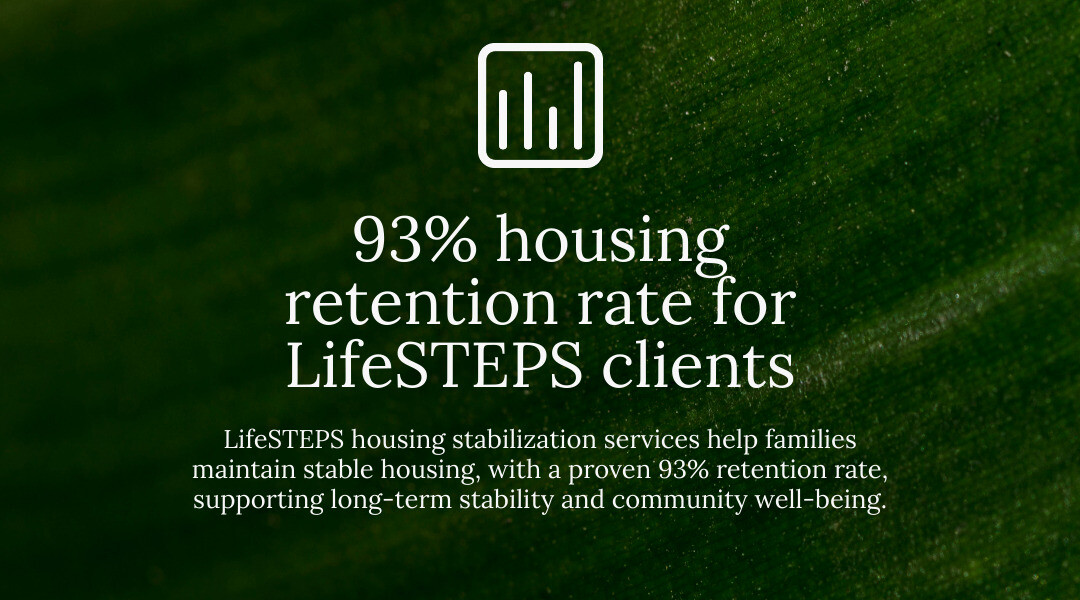
LifeSTEPS supports California residents in building housing stability. Its housing programs have a 93% housing retention rate, and CalAIM deposit assistance can provide 1 month paid in advance for eligible households. LifeSTEPS also strengthens communities through afterschool programs, including a 97% literacy improvement for Summer Reading, and more than $2.1M in scholarships supporting higher education.

California subsidized senior housing options: age rules, income limits, waitlists, and rent help infographic

Learn more about subsidized housing 55 and older:

Major Programs for Subsidized Housing 55 and Older

Finding the right affordable apartment requires understanding the main federal and state assistance programs. While many older adults search for subsidized housing 55 and older, different programs carry unique age requirements, rent calculation methods, and application steps.

The three primary programs operating across California include:

  1. Section 8 Housing Choice Vouchers: Administered by local Public Housing Authorities (PHAs), Section 8 allows qualifying individuals to rent privately owned apartments. The voucher program caps tenant rent contributions at approximately 30% of adjusted monthly income, while the housing authority pays the remainder directly to the property owner up to local payment standards.
  2. Section 202 Supportive Housing for the Elderly: Funded through the U.S. Department of Housing and Urban Development (HUD), Section 202 developments are designed specifically for very low-income older adults. Rent is capped at 30% of adjusted gross monthly income. These communities often feature built-in supportive services like on-site service coordinators, meal programs, and accessible bathroom grab bars to promote independent living.
  3. Low-Income Housing Tax Credit (LIHTC) Properties: LIHTC developments are privately owned properties built using federal tax incentives. Instead of capping rent on individual tenant income, LIHTC apartments set rent limits based on the local Area Median Income (AMI)—typically serving households earning 40%, 50%, or 60% of local AMI. Many LIHTC properties are age-restricted for residents 55 and older.

Comparison of Section 8, Section 202, and LIHTC programs for senior housing

Feature / Program Section 8 Vouchers Section 202 Supportive Housing Low-Income Housing Tax Credit (LIHTC)
Primary Target Age Generally 18+ (Special Senior Rules) 62 years of age or older 55+ or 62+ (Age-Restricted)
Rent Calculation Formula ~30% of household adjusted gross income ~30% of household adjusted gross income Capped based on 40%–60% Area Median Income
Housing Location Choice Any qualifying private market rental Specific HUD-subsidized building Specific tax-credit apartment building
On-Site Senior Services Varies by landlord Included (Coordinators, meal assistance) Varies (Often active adult amenities)
How to Apply Local Public Housing Authority (PHA) Direct to property management Direct to property management

When searching for options, explore our guide on top subsidized senior housing communities to evaluate property structures in your area.

Qualifications for Subsidized Housing 55 and Older

Eligibility rules ensure assistance reaches households with the greatest economic need. Qualifying criteria depend on household age, income limits, asset values, and legal status.

  • Age Eligibility Thresholds: Properties designated under the Housing for Older Persons Act (HOPA) require at least 80% of occupied units to have at least one occupant age 55 or older. Conversely, HUD Section 202 supportive housing generally requires the head of household to be at least 62 years old.
  • Area Median Income (AMI) Thresholds: Federal programs classify low-income levels relative to local county AMI benchmarks:
    • Extremely Low-Income: Income below 30% of AMI.
    • Very Low-Income: Income below 50% of AMI.
    • Low-Income: Income below 80% of AMI.
  • 2026 HUD Asset Limits: Effective Jan 1, 2026, HUD established a net family asset cap of $105,574 for very low-income senior qualifications. Total assets include bank accounts, real estate equity, and the net cash value of retirement accounts (like 401k funds minus withdrawal penalties). If net assets exceed $5,000, housing providers add either actual investment income or an imputed return rate (typically 0.06%) to annual gross income calculations.
  • Mandatory Elderly Deduction: In 2026, HUD provides a $550 mandatory annual deduction for elderly households (where the head or spouse is 62+ or disabled) when determining adjusted income for rent calculations. Medical expenses exceeding 3% of gross income can also be deducted.
  • Citizenship Documentation: Applicants must document U.S. citizenship or eligible legal immigration status. Mixed-status families may receive prorated rental assistance.

For additional practical advice on organizing your household documents, see our article on how to snag affordable 55 and older apartments without the stress.

High demand for affordable housing across California means waiting lists typically span from 1 to 3 years. Understanding how property managers process applications can help you navigate the process effectively.

older adult organizing financial and housing paperwork at a clean table

When new developments open or waitlists reopen, housing providers often conduct a random lottery to determine list ordering. Many communities apply local preference rules, prioritizing applicants who currently live or work within the specific municipality or county, as well as veterans transitioning to civilian living.

To ensure your application moves smoothly, review each property’s detailed housing application information packet. Keep past landlord references, credit histories, and income statements neatly structured so you can reply promptly when property staff call your name.

Comparison of interim in-home care versus subsidized senior housing placement

LifeSTEPS supports older adults during housing transitions by providing guidance, housing retention support, and connecting individuals to essential community housing resources.

How to Find and Apply for Low-Income Senior Apartments in California

The application process for subsidized housing 55 and older requires contacting local housing authorities and individual property managers directly.

modern affordable senior apartment building in a sunny California community

Key documentation required for your application folder includes:

  • Proof of age (driver’s license, birth certificate, or passport)
  • Social Security card and recent benefit statements
  • Pension statements, 12 months of projected income records, and 6 months of bank records
  • Proof of legal residency or citizenship
  • Medical expense receipts to claim eligible HUD deductions

Section 8 vouchers may include portability rules that allow a household to move within participating jurisdictions when program requirements are met. Before planning a move, ask the issuing Public Housing Authority about timing, paperwork, payment standards, and whether any initial residency requirements apply.

Steps to Apply for Subsidized Housing 55 and Older in California

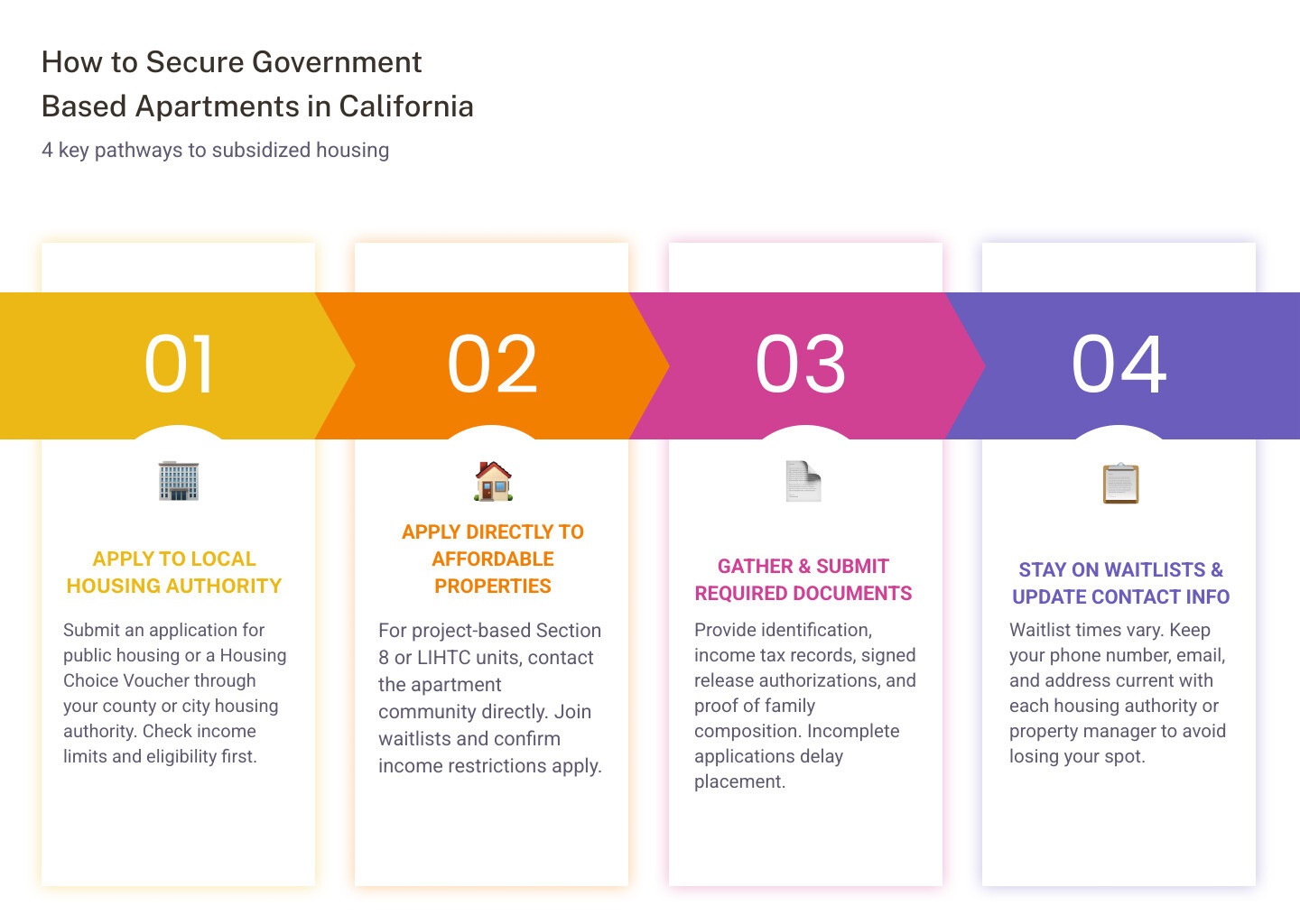
  1. Locate Your Public Housing Authority: Identify the local housing commission in your municipality or county to check for open Section 8 waitlists.
  2. Submit Pre-Applications Online: Complete pre-applications for open housing authority lists and track confirmation numbers.
  3. Apply Directly at Property Sites: For LIHTC and Section 202 properties, submit site-specific applications to each individual building manager.
  4. Maintain Contact Details: Update housing offices immediately in writing whenever your address, phone number, or gross income changes.

Step by step process to apply for subsidized senior housing

To explore HUD application procedures in greater detail, consult The Essential HUD Low Income Senior Housing Handbook and review state guidance on determining the best housing option for me through the California Department of Aging.

Regional Housing Search Resources across California Cities

Finding local vacancies is easier when using official public agencies, local housing authority listings, and property management offices for age-restricted affordable communities in California’s major metropolitan areas:

  • Los Angeles: Access centralized listings for city and county affordable developments through Los Angeles County senior resources.
  • San Diego: Review rental programs and tenant voucher guidance directly with the San Diego Housing Commission.
  • Riverside: Check city and county housing authority announcements for income-restricted senior apartment openings, application windows, and waitlist updates.
  • Irvine: Review local affordable housing resources and contact property management offices for current age-restricted apartment availability and application requirements.

You can also read our guide on comparing low-income rentals for seniors in your neighborhood for additional evaluation tips.

Living in Subsidized Senior Housing: Recertification and Rent Changes

Once moved into a subsidized apartment, residents must complete an annual income recertification process. Property staff review updated household income, asset balances, and medical expenses to recalculate monthly tenant rent contributions accurately.

LifeSTEPS provides human-centered support to ensure residents maintain long-term stability in their homes. LifeSTEPS achieves a 93% housing retention rate across its supported housing programs. For eligible households transitioning from housing instability, deposit assistance through the CalAIM program can provide 1 month paid in advance to help cover initial security move-in costs.

During housing searches, seniors should prioritize essential physical accessibility features:

  • Step-free building entrances and elevator access
  • Roll-in showers and sturdy bathroom grab bars
  • Lever-style door handles and well-lit walkways
  • Proximity to public transit, medical centers, and grocery stores

Frequently Asked Questions About Subsidized Senior Housing

Can my rent change if my income increases after moving in?

Yes. In HUD Section 8 and Section 202 programs, rent is set at roughly 30% of your adjusted monthly income. If your income increases—such as receiving a cost-of-living adjustment (COLA) on Social Security—your rent contribution will be recalculated during annual recertification. In LIHTC properties, rent is capped at a fixed percentage of local Area Median Income; moderate income increases will not raise your rent, provided household income remains within allowable program limits.

Can I use a Section 8 voucher at any apartment in California?

You can use a Section 8 Housing Choice Voucher at any rental property where the landlord accepts voucher payments and the monthly rent falls within the housing authority’s payment standards. Under California law (SB 329), landlords cannot reject applicants solely because they intend to pay rent using a housing voucher.

How does the lottery process work for affordable senior communities?

When a new age-restricted property opens its waitlist, management collects pre-applications during a specified window. All eligible applications are assigned a random lottery number. Applicants are placed on the waiting list in order of their lottery rank, with priority given to candidates qualifying for local preference rules.

Conclusion

Finding safe, comfortable, and independent senior living is achievable with accurate information and persistence. While waiting lists require patience, programs like Section 8, Section 202, and LIHTC offer long-term financial stability for older adults across California.

LifeSTEPS remains dedicated to empowering communities and helping residents achieve self-sufficiency. In addition to housing retention support, LifeSTEPS builds stronger communities through afterschool initiatives—achieving a 97% literacy improvement in Summer Reading programs—and has awarded over $2.1M in higher education scholarships.
For media inquiries, contact: bex@lifestepsusa.org.

To learn more about community resources and supportive housing assistance, explore LifeSTEPS programs and services or contact LifeSTEPS today.

LifeSTEPS currently provides services in California only.