


The Ultimate Guide to Free Legal Help for Eviction Cases
How to Secure a Free Lawyer for Your Eviction Case
If you received an unlawful detainer summons in California, you can get a free lawyer for an eviction case through legal aid organizations, court-based defense clinics, and municipal Right-to-Counsel programs.
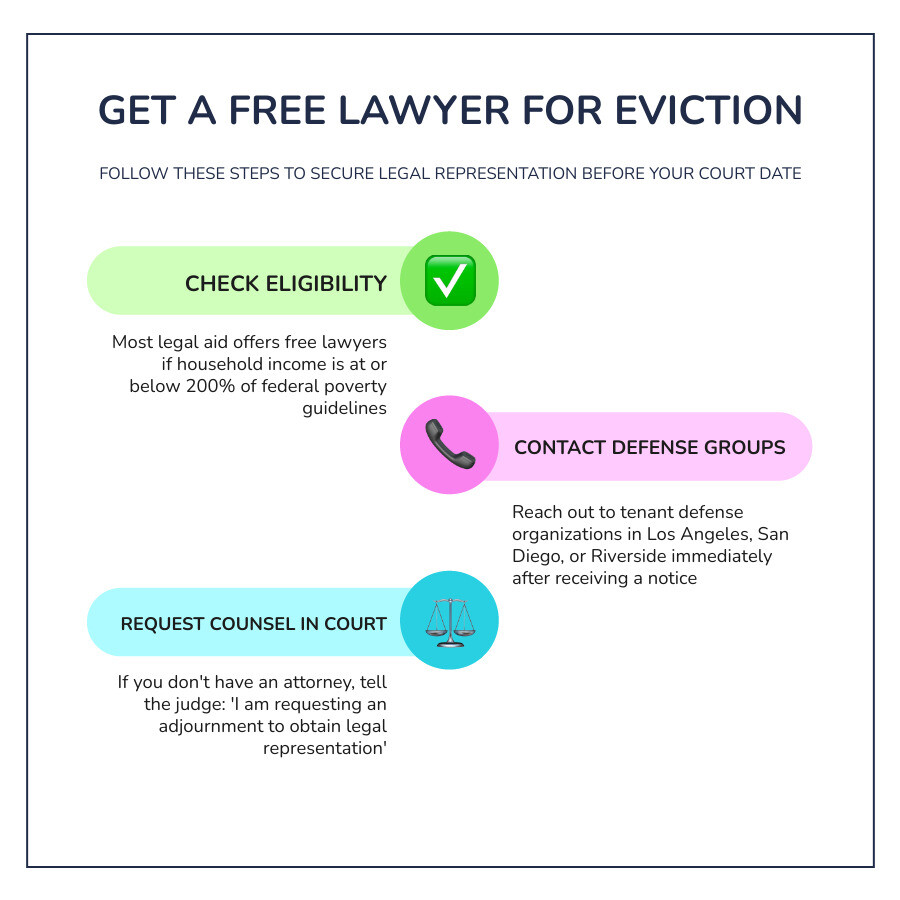
Here is how to secure free legal representation quickly:
- Check Your Eligibility: Most legal aid societies offer free attorneys to households earning at or below 200% of the federal poverty guidelines.
- Contact Local Tenant Defense Groups: Reach out to legal aid groups in counties like Los Angeles, San Diego, or Riverside immediately upon receiving a notice.
- Request Counsel at Your Hearing: If you do not have an attorney on your court date, tell the judge, “I am requesting an adjournment to obtain legal representation.”
- File an Answer Immediately: Always file a written answer with the court within five business days of service to avoid an automatic default eviction.
For transitioning service members and families working toward long-term stability, an unexpected housing dispute can feel overwhelming. Navigating legal filings while adjusting to civilian life requires clear, actionable resources.
Beyond courtroom defense, long-term stability requires community-based support. LifeSTEPS provides supportive housing programs across California that achieve a 93% housing retention rate. For eligible renters transitioning into stable homes, deposit assistance through the CalAIM program helps cover 1 month paid in advance. Community self-sufficiency also extends to the next generation, supporting youth through afterschool programs that deliver a 97% literacy improvement for Summer Reading and creating pathways to higher education with $2.1M in scholarships awarded.
Relevant articles related to free lawyer eviction case:
Understanding Right-to-Counsel and Free Lawyer Eviction Case Eligibility
In civil court, there is generally no universal constitutional right to a public defender. This creates a severe civil justice gap where landlords are almost always represented by legal counsel, while the vast majority of renters must defend themselves alone. Right-to-Counsel initiatives aim to rebalance this dynamic by establishing a legal right to free representation for eligible low-income tenants facing displacement.
Securing a free lawyer eviction case can dramatically change the trajectory of an unlawful detainer action. A skilled tenant attorney can negotiate settlements, enforce repairs, file procedural challenges, or help tenants secure emergency financial aid to stay housed.

Who Qualifies for a Free Lawyer Eviction Case in California?
Eligibility for court-appointed or free legal defense in California typically depends on household income, family size, and local jurisdiction.
- Income Limits: Most legal aid providers set their threshold at or below 200% of the federal poverty guidelines. For example, a family of four earning under $62,400 annually generally qualifies for full-scope representation.
- Household Size: Larger households receive higher qualifying income caps based on standardized federal poverty adjustments.
- Immigration Status: Many municipal tenant defense programs and nonprofit legal aid centers assist tenants regardless of citizenship or immigration status.
- Geographic Coverage: Legal aid organizations operate across California, including major service hubs such as Los Angeles, San Diego, Irvine, and Riverside.
To better understand your legal standing before stepping into a courtroom, review your protections and know your rights under California eviction law through statewide legal aid resources.
Covered Eviction Cases and Legal Defense Proceedings
Free legal representation generally covers tenants who are named as defendants in formal court actions. Common covered proceedings include:
- Nonpayment of Rent: Cases where the landlord claims unpaid rent, often resolved by verifying accounting or linking to rent relief.
- Breach of Lease: Lawsuits alleging unauthorized occupants, pets, or property alterations, where attorneys can prove the issue was resolved.
- No-Fault Terminations: Cases involving owner move-ins or major renovations where landlords must follow strict statutory guidelines and provide relocation assistance.
- Subsidized Housing Disputes: Termination of tenancy in Section 8 voucher programs or public housing developments, where administrative hearings and court trials require rigorous defense.
If you are facing an active court case, our free legal aid eviction guide provides a comprehensive breakdown of court notices and statutory timelines.
How to Secure Free Representation for Your Unlawful Detainer
Securing an attorney requires immediate action the moment you receive a notice or court summons. In California, once you receive an Unlawful Detainer Summons and Complaint, you have only five business days (excluding weekends and judicial holidays) to file a written response.
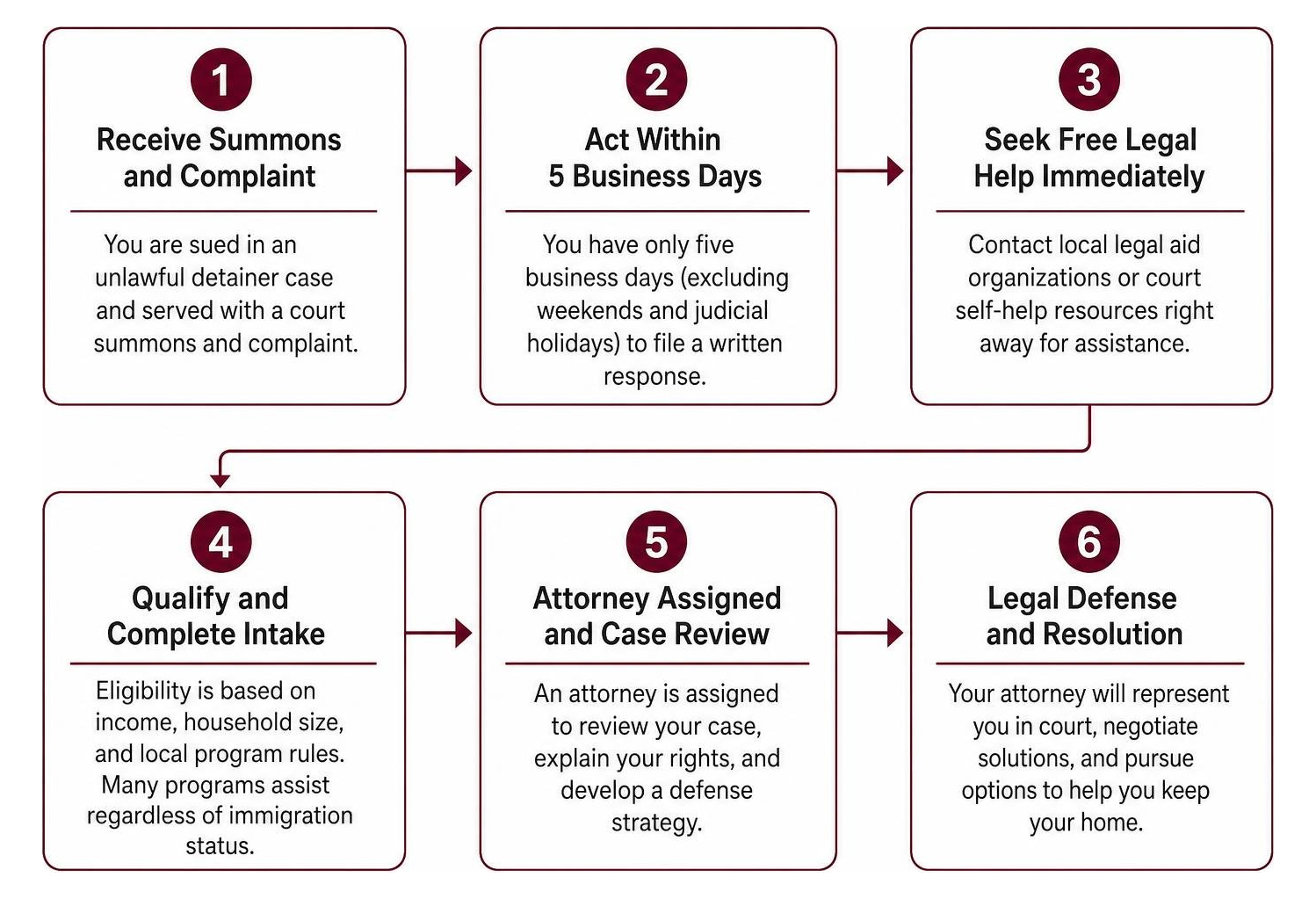
Tenants in Southern California and across the state can connect with trusted regional organizations:
- Residents in San Diego County can seek direct intake with local legal aid societies.
- Renters in Riverside County can access free legal services and court clinics through regional tenant defense clinics.
Steps to Request a Free Lawyer Eviction Case at Your First Hearing
If you were unable to retain an attorney before your first court appearance, you can still request representation directly inside the courtroom:
- Appear Promptly: Arrive early for your scheduled hearing. Never skip court, as failing to appear leads to an immediate default judgment.
- Request an Adjournment: When your case is called, inform the judge: “Your Honor, I am requesting a brief continuance to connect with free legal aid counsel.” Judges routinely grant a one- to two-week postponement for legal intake.
- Visit On-Site Courthouse Clinics: Many county courthouses have dedicated legal aid rooms or volunteer attorneys stationed in the building to provide same-day advice.
- Join Virtual Breakout Rooms: If appearing remotely, request to be placed in a legal aid breakout room to complete an eligibility screening before your hearing proceeds.
Connecting with emergency eviction prevention services early gives your advocate the necessary time to review your case and file an appropriate answer.
What to Do If Legal Aid Is Unavailable
Due to high demand, legal aid organizations may occasionally experience capacity constraints. If an attorney cannot take your case for full-scope representation, take these proactive steps:
- Request Limited-Scope Help: Ask a legal aid clinic to assist you specifically with drafting your Answer to ensure all affirmative defenses are properly preserved.
- Utilize Bar Association Referral Services: Contact your local county bar association for low-cost or sliding-scale initial consultations.
- Leverage Self-Help Centers: Visit your county court’s self-help center to ensure your pleadings, fee waivers, and jury trial demands are formatted correctly.
- Apply for Prevention Grants: Review our comprehensive guide to eviction prevention grants and legal aid to identify municipal funds that can resolve outstanding rent balances.
Preparing Documents and Building Key Defenses for Court
To give your defense attorney or self-represented case the highest chance of success, thorough documentation is essential.
Essential Evidence and Document Checklist
Gather and organize the following records into a dedicated case folder:
- The Lease Agreement: Your original rental contract, addenda, and any written amendments.
- Notices Served: The 3-day, 30-day, or 60-day notice served by the landlord, along with the proof of service.
- Payment Records: Bank statements, cashier’s check stubs, money order receipts, and online tenant portal payment logs.
- Maintenance Records: Written repair requests, emails, text messages, and photos showing unaddressed habitability issues.
- Rental Assistance Documentation: Proof of submitted or pending applications for rental assistance with an eviction notice.
Common Habitability and Procedural Defenses
A tenant attorney can raise several affirmative defenses to challenge an eviction:
- Breach of the Warranty of Habitability: Landlords are legally required to keep rental properties safe and fit for human occupation. If there is severe mold, plumbing failures, lack of heat, or pest infestations that the landlord failed to repair after notice, the court can reduce the rent owed and order repairs.
- Defective Notice or Service: If the landlord failed to serve the notice properly or miscalculated the rent due, the lawsuit may be dismissed.
- Retaliation or Discrimination: California law prohibits landlords from evicting tenants in retaliation for reporting code violations or exercising statutory rights.
- Cured Violations: Demonstrating that an alleged lease issue was fully remedied within the statutory notice period.
If back rent is the primary cause of the lawsuit, securing emergency rent assistance to avoid eviction can often facilitate a negotiated settlement that preserves the lease.
Comprehensive Housing and Eviction Prevention Services
Defending against an eviction in court is only one part of maintaining long-term housing stability. Sustainable prevention pairs legal advocacy with community-based social services, case management, and financial transition tools.
| Intervention Type | Primary Function | Ideal Situation | Key Outcome |
|---|---|---|---|
| Legal Aid Defense | Court representation & defense filing | Active unlawful detainer summons | Case dismissal or negotiated move-out timeline |
| Emergency Rental Aid | Direct back-rent payments to property owners | Notice to pay rent or quit | Elimination of rental arrears |
| CalAIM Deposit Support | Move-in security deposit & initial rent coverage | Transitioning into permanent supportive housing | Safe placement with 1 month paid in advance |
| Community Case Management | Ongoing self-sufficiency coaching & youth support | Long-term housing retention | 93% housing retention & academic growth |
Emergency Financial and Deposit Support
When families must transition to new housing, initial move-in expenses often present a major hurdle. For qualifying participants in California, deposit assistance through the CalAIM program helps cover move-in costs, including 1 month paid in advance.
Through these integrated support systems, LifeSTEPS achieves a 93% housing retention rate, ensuring individuals and families remain securely housed over the long term. If you are experiencing housing instability, learn more about our eviction prevention programs designed to help residents maintain stable living environments.
For example, when Marcus (name changed) faced housing instability during a career transition, comprehensive case management combined with emergency rental support helped his family resolve their tenancy issues without displacement.
Educational and Community Support Systems
Housing stability creates the foundation for educational achievement and generational growth. Beyond housing stabilization, LifeSTEPS supports youth development and higher education across California communities. Our afterschool programs have delivered a 97% literacy improvement for Summer Reading, and our educational initiatives have awarded $2.1M in scholarships to empower students pursuing college degrees and vocational certifications.
Frequently Asked Questions About Tenant Legal Rights
Can I get an eviction case dismissed without an attorney?
Yes. A tenant representing themselves can file a responsive pleading—such as a Demurrer or a formal Answer—raising procedural errors made by the landlord. If the landlord served an incorrect notice, accepted rent after the notice expired, or violated local rent control laws, the judge can dismiss the unlawful detainer. However, navigating court rules without counsel is challenging, making it wise to consult a self-help clinic or legal aid provider before your hearing.
How long does an unlawful detainer lawsuit usually take?
In California, unlawful detainer proceedings move quickly on a summary court calendar. From the time the summons is served to the trial date, the process often takes 30 to 60 days if contested. However, cases involving complex habitability counterclaims, jury demands, or court adjournments for legal representation can take several months, often providing time for landlords and tenants to negotiate a mutually agreeable settlement.
What happens if I miss my scheduled eviction court date?
If you do not attend your scheduled court hearing, the judge will enter a default judgment in favor of the landlord. This allows the landlord to obtain a Writ of Possession, which is delivered to the county sheriff to schedule a physical lockout. If an emergency prevented you from attending, you must immediately file an emergency Motion to Vacate Default Judgment and request an ex parte Stay of Execution with the court clerk.
Conclusion: Protecting Your Tenancy and Building Housing Stability
Facing an eviction is stressful, but you do not have to navigate the legal system alone. By understanding your rights, meeting all court deadlines, and connecting with legal aid organizations, you can secure the defense you need to protect your home.
LifeSTEPS remains committed to fostering self-sufficiency, housing stability, and educational empowerment across California communities through supportive housing, afterschool programs, and higher education scholarships.
For media inquiries, contact: bex@lifestepsusa.org
LifeSTEPS currently provides services in California only.


