


A Practical Guide to CalAIM Rent Deposit Help in CA
Get CalAIM Help With Rent Deposits in California
Charity help with rent deposits may be available through California’s CalAIM Community Supports program when you qualify through Medi-Cal. Start by asking your Medi-Cal managed care plan or housing support provider about Housing Transition Navigation Services. They can help confirm eligibility, gather documents, work with a landlord, and request support for a security deposit or 1 month paid in advance.
A deposit can be the last barrier between a person and a stable home. This is especially true for veterans and others rebuilding after a major life change. CalAIM connects eligible Medi-Cal members with housing-focused support designed to make a successful move-in more realistic, not just more affordable.
LifeSTEPS provides California housing services that center practical guidance and long-term stability. Its work has contributed to a 93% housing retention rate. Beyond housing, LifeSTEPS supports afterschool learning that has produced a 97% literacy improvement for Summer Reading and has helped deliver $2.1M in scholarships for higher education.
This guide explains where to look, what move-in costs may be covered, and how to prepare a strong CalAIM deposit-assistance request.
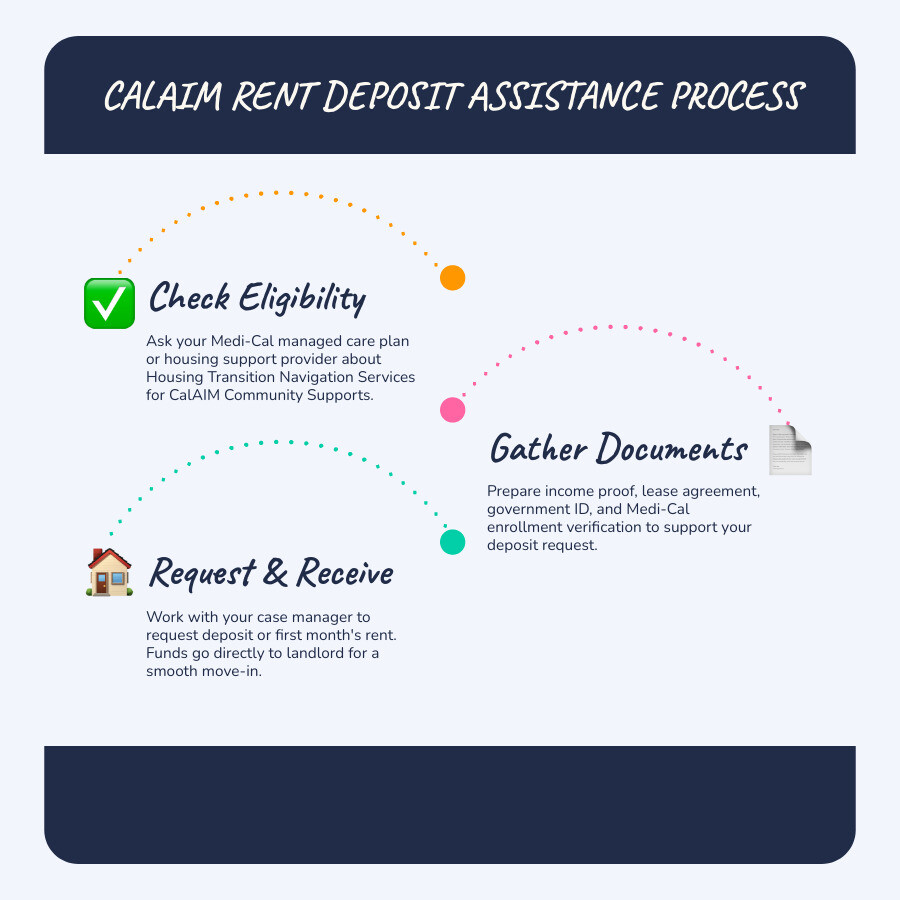
Simple guide to charity help with rent deposits:
- assistance with apartment deposits
- first month rent security deposit assistance
- help with security deposit and 1st months rent
Understanding Rent Deposits and Move-In Cost Barriers in California
Securing a safe, affordable place to live in California is a major accomplishment, but the upfront financial hurdles can quickly stall progress. For households across Los Angeles, San Diego, Riverside, and Irvine, the transition into private rental housing requires substantial capital before the front door ever opens. Beyond monthly rent, move-in packages often demand a complete security deposit, utility account connection charges, and credit screening fees. When sudden hardships strike, exploring Emergency Rental Assistance and deposit navigation becomes vital to bridge the affordability gap.
Why Initial Move-In Costs Create Housing Barriers
In many competitive California rental markets, standard move-in requirements can easily exceed thousands of dollars. Even when an individual or household qualifies for rental subsidies or holds an active housing choice voucher, market-rate deposits remain a significant obstacle. Housing vouchers generally cover a portion of the recurring monthly rent, but they rarely pay for the initial deposit out-of-pocket.
Without supplemental aid, households risk losing viable housing opportunities simply because they cannot pay upfront costs within a landlord’s strict timeline. Practical guidance found in Moving Day Rescue A Guide to First and Last Month Rent Assistance highlights how bridging this initial hurdle prevents immediate returns to housing instability.
What Housing Assistance and Deposit Funds Can Cover
Specialized move-in funding and charitable programs focus on removing these immediate financial barriers. Depending on the administering entity, assistance can cover:
- Security deposits (often capped at an amount equal to one or two months of rent)
- First month’s rent (frequently structured as 1 month paid in advance)
- Mandatory rental application and background screening fees
- Utility connection fees and initial utility setup deposits (gas, electric, water)
Reviewing Your Ultimate Guide to Assistance with Apartment Deposits and Move-In Fees gives renters a clear view of how these distinct line items are structured across diverse programs.
How CalAIM and Charity Help with Rent Deposits Work Together
The California Advancing and Innovating Medi-Cal (CalAIM) framework transforms how healthcare and social services intersect across the state. Under CalAIM Community Supports, Medi-Cal managed care plans can offer Housing Tenancy and Sustaining Services alongside direct Housing Deposits. By pairing healthcare coordination with targeted move-in resources, programs can address social drivers of health before homelessness or health crises occur. LifeSTEPS’ comprehensive housing approach directly supports this model, contributing to an overall 93% housing retention rate among participants. Learn more about navigating initial payment options in LifeSTEPS’ guide to First Month Rent and Security Deposit Assistance.

How to Access Charity Help with Rent Deposits Through Managed Care
Accessing CalAIM housing deposit services begins with your assigned Medi-Cal managed care plan. Members receiving Enhanced Care Management (ECM) work directly with a lead care manager who evaluates housing needs and initiates referrals for Community Supports.
When approved, housing deposits are paid directly to property owners or utility providers on the member’s behalf rather than distributed as direct cash to the tenant. This structured distribution builds trust with property managers and ensures smooth lease executions. For detailed steps on working with private landlords, explore LifeSTEPS’ resource on Help with Deposit Private Renting.
Grants Versus Loans: Comparing Forms of Charity Help with Rent Deposits
Different community organizations, public agencies, and non-profits offer distinct financial mechanisms to assist with move-in expenses. Understanding the differences between these options helps renters plan for long-term budget stability. Check out Don’t Let Deposits Drain You A Guide to Income Assistance for additional insights into managing baseline living expenses.
| Assistance Type | Funding Source | Repayment Required? | Best Suited For |
|---|---|---|---|
| CalAIM Housing Deposits | Medi-Cal Managed Care Plans | No (Direct Benefit Grant) | Eligible Medi-Cal members transitioning to permanent housing |
| Charitable Move-In Grants | Faith-Based & Community Non-Profits | No (Direct Grant) | Low-income households facing immediate move-in shortfalls |
| Deposit Guarantee Bonds | Local Municipalities & Housing Trusts | No (Landlord Guarantee) | Tenants with limited savings moving into participating properties |
| Interest-Free Micro-Loans | Community Development Financial Groups | Yes (Low monthly terms) | Working individuals needing temporary cash flow support |
Top Sources for Rent Deposit and Move-In Support in California

Navigating community-level aid requires knowing which local networks administer active funds in your region. Whether in Southern California hubs like Los Angeles, San Diego, and Riverside, or across the Bay Area, several non-profit agencies coordinate move-in grants. Discover more local strategies via How to Find Places That Help You Pay Your Security Deposit Without the Stress.
Faith-Based and Community Housing Relief Programs
Local non-profit organizations, Community Action Agencies, and faith-centered relief ministries frequently manage emergency pools for security deposit support. While individual grant caps may vary—often offering one-time disbursements of $300 to $1,500—these flexible funds can be combined with other local resources to bridge the full deposit balance. To understand how these micro-grants integrate with wider housing services, review The Ultimate Guide to Rental and Deposit Assistance.
Specialized Programs for Veterans and Families
Targeted housing initiatives exist for populations facing specific systemic hurdles:
- Veterans and Military Families: Dedicated support programs integrate rapid re-housing grants, case management, and deposit funds for former service members transitioning into permanent rentals. Find comprehensive paths in LifeSTEPS’ overview of Veterans Help with Security Deposit.
- Families with Children: Supportive housing programs offer coordinated move-in funds alongside educational enrichment to keep youth stably enrolled in local schools. Housing navigators may help families combine CalAIM deposit coverage with local utility grants so a move into permanent housing can proceed more smoothly.
Step-by-Step Guide to Applying for California Move-In Assistance
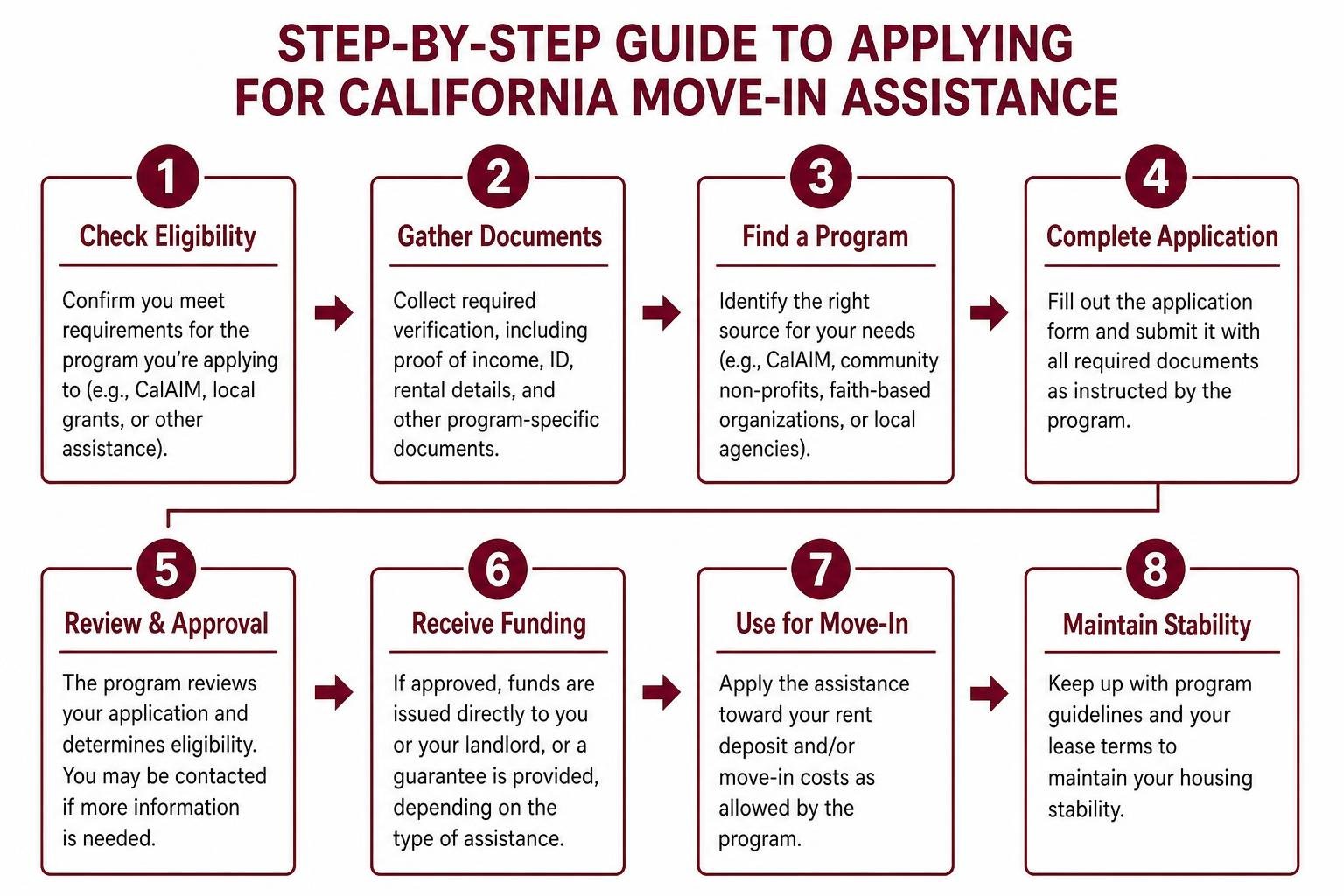
Preparation is the key to securing move-in grants before a prospective lease offer expires. Landlords typically hold vacant units for only a brief period, making rapid document submission essential. For a thorough walkthrough of the application pathway, see Need Help with Security Deposit for Apartment Here is How to Apply.
Essential Documentation Needed for Approval
Having your verification file organized prevents processing delays. Most charitable and CalAIM-linked programs require:
- Proof of Identity: Valid government-issued photo identification for all adult household members.
- Healthcare Coverage Verification: Active Medi-Cal enrollment card and plan information.
- Income & Benefit Verification: Recent pay stubs, benefits award letters (SSI, SSDI, CalWORKs), or zero-income certification forms.
- Housing Documentation: An unexecuted lease agreement, written letter of intent from the prospective landlord, and itemized move-in fee breakdown.
- Landlord Contact & Tax Info: A completed W-9 form from the property owner or management company to enable direct third-party disbursement.
Steps to Take When Waiting Lists or Funding Gaps Occur
Because charitable grant cycles and public allocations can experience temporary capacity limits, staying proactive is crucial:
- Maintain open communication with your prospective property owner regarding third-party payment timelines.
- Connect with regional 2-1-1 networks to identify secondary relief funds that can cover smaller items, such as utility connection charges.
- Work closely with your case manager to explore voucher navigation tactics outlined in Securing the Bag How to Find Help with Deposit for Section 8.
Frequently Asked Questions about Deposit Assistance
Can CalAIM pay both a security deposit and first month’s rent?
Yes, under California’s CalAIM Community Supports guidelines, eligible Medi-Cal members may receive assistance covering both the security deposit and 1 month paid in advance, provided the housing meets program safety and affordability standards.
Are rent deposit assistance payments made directly to landlords?
Yes. To ensure accountability, almost all charitable and state-funded programs disburse payments directly to the verified property owner or management company once the lease agreement and W-9 forms are approved.
What expenses are typically excluded from deposit assistance programs?
Deposit assistance programs generally do not cover ongoing monthly rent beyond initial move-in terms, unpaid court or eviction legal fees, mortgage payments, property damage repairs from previous tenancies, or non-essential application administrative surcharges.
Conclusion
Overcoming move-in cost barriers is a vital milestone on the journey toward long-term self-sufficiency. Through programs like CalAIM Community Supports and community-based relief, individuals and families across California can access the financial tools necessary to secure stable housing. LifeSTEPS remains dedicated to empowering communities through comprehensive social services, evidenced by a 93% housing retention rate, 97% literacy improvement in Summer Reading afterschool programs, and $2.1M in scholarships awarded for higher education.
To explore available resources and start your journey, learn more about first month rent and security deposit assistance today.
For media inquiries, contact: bex@lifestepsusa.org
LifeSTEPS currently provides services in California only.


