


Independent Living Facilities in California: A Practical Cost and Feature Breakdown
Finding Independent Living Facilities in California That Fit Your Next Chapter
Independent living facilities in California offer older adults a private home with less daily upkeep and more chances to connect. The best fit depends on your budget, preferred location, and whether you want only housing and amenities or a community with future care options.
Start by comparing communities in areas such as Los Angeles, San Diego, Riverside, and the Bay Area. Ask what the monthly fee includes, whether pets are welcome, how meals work, and if assisted living or memory care is available later. Most independent living communities are designed for people who can manage daily activities on their own but want help with tasks like maintenance, housekeeping, transportation, or cooking.
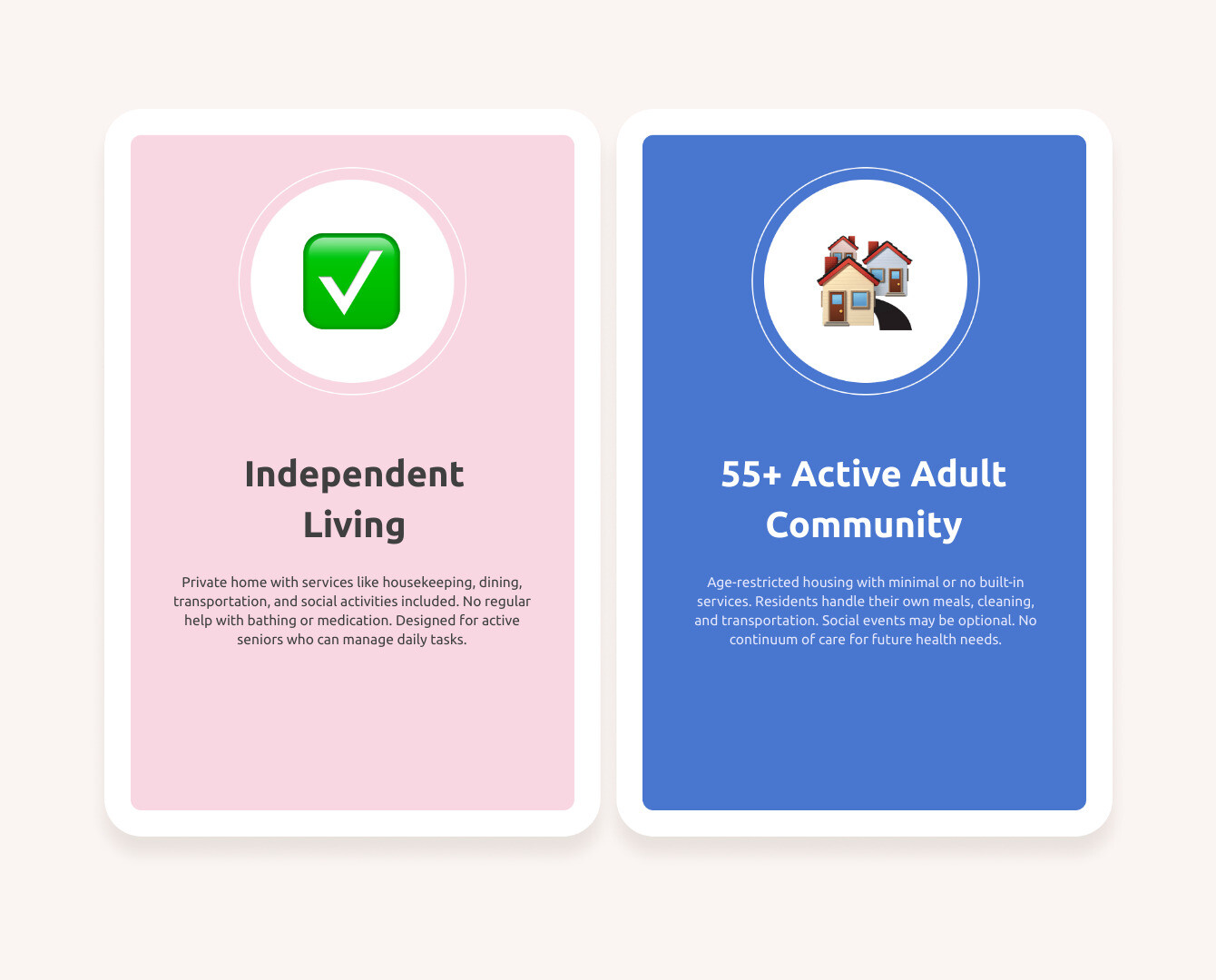
Unlike assisted living, independent living does not usually include regular help with bathing, dressing, or medication. It also differs from a 55+ community because services, dining, and social programming may be built into the monthly fee. Some Life Plan Communities also offer higher levels of care on the same campus if health needs change.
For households facing a move-related financial barrier, CalAIM deposit assistance may help with 1 month paid in advance. LifeSTEPS supports housing stability with a 93% housing retention rate, connecting Californians with practical resources for affordable housing for seniors, comprehensive housing programs for elderly residents, and sustainable senior housing low income opportunities.
Understanding Independent Living Facilities California: Key Definitions and Differences
Navigating the senior living landscape in California can feel overwhelming given the variety of housing types available. Independent living is designed specifically for older adults who maintain self-sufficiency with their activities of daily living (ADLs)—such as dressing, bathing, and personal care—but wish to trade home maintenance, yard work, and daily meal preparation for a vibrant, socially engaging community.
To make an informed decision, it is helpful to understand how independent living compares to age-restricted 55+ neighborhoods and licensed assisted living facilities. While a 55+ active adult community generally offers age-restricted rental or ownership housing with shared neighborhood amenities (like a pool or clubhouse), it rarely includes daily hospitality services such as chef-prepared meals, scheduled group transit, or routine housekeeping.
Conversely, assisted living communities provide hands-on personal care, wellness supervision, and medication administration alongside housing. Independent living bridges this gap by delivering a hospitality-rich residential setting without paying for medical or caregiving services you do not currently need. For individuals evaluating options across various price points, exploring senior living affordable housing options can help establish realistic baseline expectations for community amenities.
| Feature / Model | 55+ Active Adult Communities | Independent Living Communities | Assisted Living Residences | Life Plan / CCRC Campuses |
|---|---|---|---|---|
| Target Audience | Self-sufficient adults seeking age-restricted neighborhoods | Active seniors desiring a maintenance-free lifestyle | Seniors requiring daily ADL or medication assistance | Adults planning ahead for multi-stage aging in place |
| Primary Focus | Autonomous housing & lifestyle amenities | Hospitality, social programming & daily convenience | Hands-on personal care & wellness monitoring | Integrated multi-level care on a single campus |
| Meal Plans | Rarely included | Typically 1 to 3 chef-prepared meals daily | All daily meals & snacks included | Full dining plans with flexible monthly credits |
| Housekeeping & Linen | Handled by resident | Weekly or bi-weekly service included | Full daily/weekly service included | Included across all campus care tiers |
| Medical / ADL Support | Not provided on-site | Third-party private hire only | Staff-provided personal care assistance | Transition pathways to assisted living & nursing |

Continuing Care Retirement Communities (CCRCs), also referred to as Life Plan Communities, combine these various models onto a unified campus. In a CCRC, a resident can enter into an independent living cottage or apartment and maintain priority access to on-campus assisted living, memory support, or skilled nursing if their physical health needs evolve over time.
Average Costs and Fee Structures for Independent Living Across California
Pricing for independent living throughout California reflects the state’s diverse geographic and real estate markets. Private-market independent living monthly fees generally range from $3,000 to over $7,500 per month, depending on location, unit square footage, dining packages, and campus amenities.
Understanding what these fees cover is vital for financial planning. In most communities, the monthly base fee functions as an all-inclusive bundle covering property taxes, structural maintenance, landscaping, basic utilities (water, trash, sewer, and electric), scheduled local transportation, weekly housekeeping, and daily dining allowances. When evaluating your budget, applying structured rent budgeting strategies helps compare your current homeownership expenses—such as roof repairs, yard care, food costs, and utility bills—against a consolidated senior living invoice.
For seniors with limited incomes or transitioning from unstable housing, navigating these costs requires specialized support. Programs like CalAIM deposit assistance can cover 1 month paid in advance to help qualifying residents secure housing. When paired with supportive services, LifeSTEPS achieves a 93% housing retention rate, ensuring residents remain safely and permanently housed. To explore subsidized and income-restricted options, review resources on affordable senior housing California.
Pricing Differences in Independent Living Facilities California by Region
California’s regional markets feature notable cost variations:
- Los Angeles & Orange County (including Irvine): Monthly independent living rents in these metropolitan areas often start around $4,000 to $6,500 per month for standard one-bedroom apartments, with luxury coastal residences reaching significantly higher rates.
- San Diego County: Rents generally range from $3,800 to $6,000 per month, offering a wide selection of active adult communities near coastal and inland hubs.
- Riverside & Inland Empire: Communities in Riverside provide more accessible market-rate options, typically starting between $2,800 and $4,500 per month.
- Bay Area: Communities across Contra Costa and surrounding counties frequently range from $4,500 to $7,500 per month, reflecting regional living costs.
Exploring regional options, such as retirement communities in Thousand Oaks, CA, provides insight into how local geography impacts monthly pricing.
Entrance Fees vs. Rental Models in California Communities
When researching communities, you will encounter two primary financial models:
- Month-to-Month Rental Communities: These communities operate on a traditional lease model, requiring a security deposit, community move-in fee, and ongoing monthly rent. This structure offers flexibility without long-term capital commitments.
- Entrance Fee (Buy-In) Communities: Often utilized by Life Plan Communities, this model requires an upfront entrance fee alongside monthly service fees. Entrance fees can range from $100,000 to over $800,000 depending on home size and contract type.
Entrance fee contracts typically fall into two categories: rebatable (refundable) contracts, which return a percentage (e.g., 50% to 90%) of the initial entrance fee to the resident or their estate upon departure, and non-rebatable contracts, which amortize over time in exchange for lower upfront costs. For older adults seeking alternatives to large entry fees, exploring cost-effective alternatives to senior living can help clarify which financial path matches your retirement goals.
Essential Amenities, Services, and Continuum of Care
Modern independent living communities in California emphasize wellness, active lifestyles, and hassle-free living. Rather than simply providing shelter, these campuses operate like residential clubs tailored to older adults.
Standard amenities and services bundled into base fees generally include:
- Nutritional Dining Programs: Flexible dining credits redeemable across formal dining rooms, casual bistros, and cafés, featuring chef-prepared meals accommodating specialized dietary needs.
- Housekeeping & Linen Care: Weekly or bi-weekly deep cleaning, vacuuming, dusting, and fresh linen service.
- Health & Wellness Facilities: Heated pools, yoga and fitness studios, walking trails, and pickleball or bocce courts.
- Scheduled Local Transit: Group shuttles for grocery shopping, cultural outings, medical appointments, and retail centers.
- Pet-Friendly Accommodations: Dedicated dog runs, pet-washing stations, and scenic paths for companion animals.
Understanding these offerings helps families locate community-specific resources for independent living that encourage daily fulfillment and active aging.
Navigating Levels of Care and Changing Health Needs
While independent living caters to autonomous adults, health needs can shift. A major advantage of multi-level campuses or rental communities with integrated home health access is the ability to age in place without disruptive relocations.
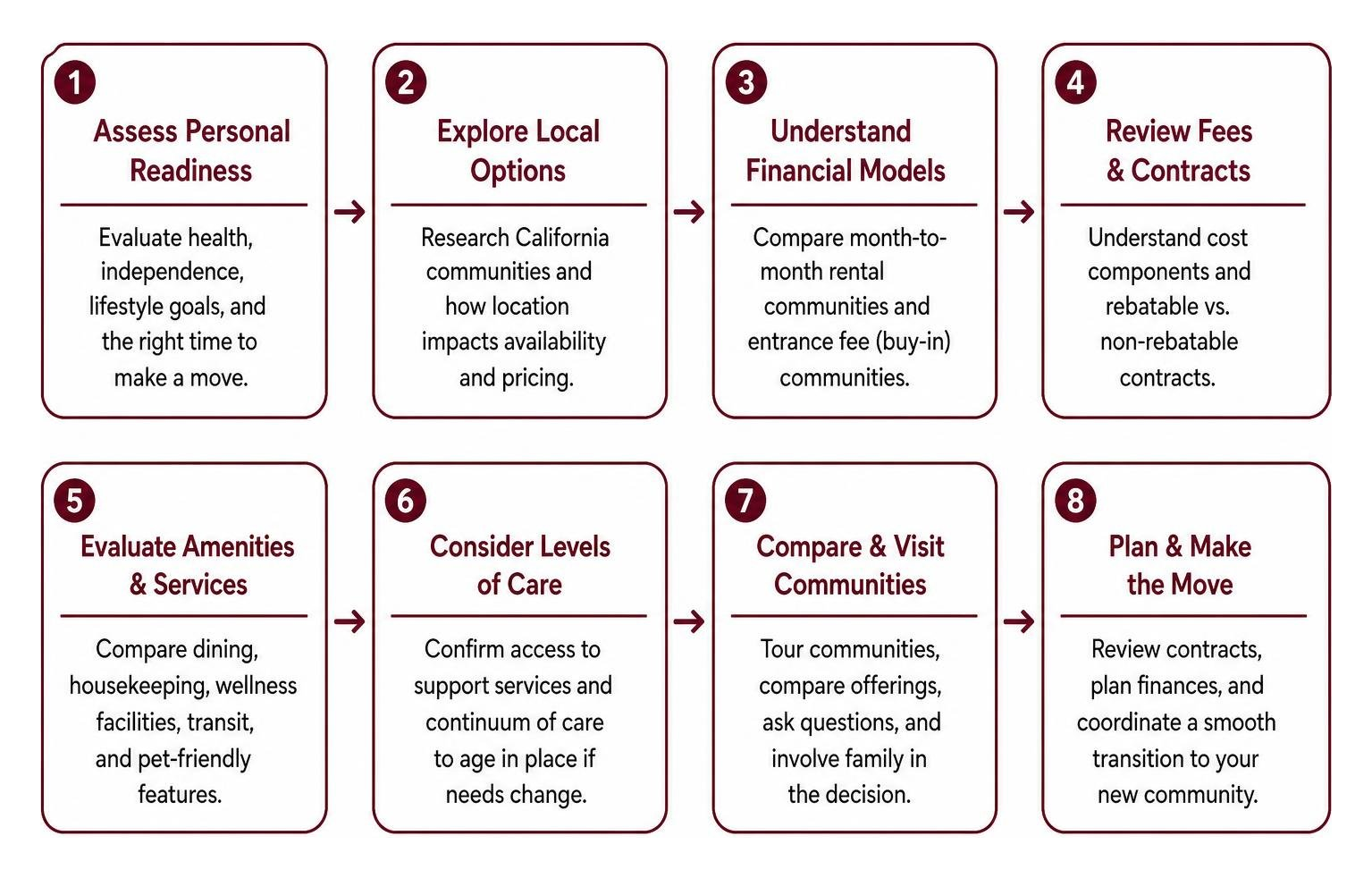
In rental independent living, residents experiencing minor mobility changes can arrange private, third-party caregiver visits for medication reminders or bathing assistance while remaining in their apartments. On CCRC campuses, structured transitional care pathways allow seamless transitions into assisted living or specialized memory support wings. Evaluating these senior living independence options early ensures that you and your loved ones have a proactive plan in place for every stage of retirement.
Evaluating Readiness and Community Selection
Determining the ideal time to transition into an independent living facility is a personal decision. Many seniors choose to move proactively while in good health to eliminate the physical burdens of home maintenance—such as clearing gutters, managing repairs, and keeping up with yard work—and expand their daily social network.
Signs that indicate it may be time to consider independent living include:
- Feeling isolated or spending excessive time at home without regular social activities.
- Struggling to manage household upkeep, deep cleaning, or grocery shopping.
- Desiring the security of 24-hour on-site personnel and integrated emergency response systems.
- Wanting to downsize belongings and simplify daily life.
Professional move management and downsizing specialists frequently work with incoming residents to space-plan floor layouts, organize personal belongings, and streamline the moving process.

Key Checklist for Touring Independent Living Facilities California
When touring prospective communities across California, use this checklist to guide your visit:
- Floor Plan Safety and Design: Are doorways wide enough for mobility aids? Are bathrooms equipped with walk-in showers, grab bars, and emergency pull cords?
- Dining Experience: Request a sample meal in the dining room. Are ingredients fresh, and does the menu accommodate your dietary preferences?
- Resident Engagement: Observe common areas. Are residents actively socializing, participating in classes, or enjoying outdoor patios?
- Staff Interactions: Is the staff attentive, welcoming, and responsive to questions?
- Community Policies: What are the pet deposit fees, parking rules, guest policies, and storage options?
- Care Progression: What specific support is available if your mobility or daily care needs change down the road?
Frequently Asked Questions About Independent Living in California
What is the average monthly cost of independent living in California?
Monthly costs in California generally range from $3,000 to $6,500 for market-rate rental apartments, with regional variances between Southern California coastal areas, inland communities like Riverside, and the Bay Area. Subsidized senior housing programs offer lower rates based on household income.
Are pets permitted in California independent living communities?
Yes, most independent living communities in California welcome companion pets, including dogs and cats. Communities typically have reasonable guidelines regarding weight limits, breed restrictions, and standard one-time pet deposits or nominal monthly pet rent.
Does Medicare or Medi-Cal cover independent living facilities in California?
No, Medicare and standard Medi-Cal do not cover independent living rent, entrance fees, or dining plans because independent living is classified as residential housing rather than medical care. However, for supportive housing transitions, programs like CalAIM can provide deposit assistance covering 1 month paid in advance for eligible individuals working toward housing stability.
Conclusion: Securing Your Next Chapter in California
Transitioning into an independent living community offers an opportunity to simplify your life, eliminate household chores, and embrace an active, socially connected retirement. Whether exploring rental apartments in Los Angeles, San Diego, Riverside, or Irvine, finding the right community begins with clear financial planning, assessing campus amenities, and understanding future care options.
LifeSTEPS is committed to building thriving communities through comprehensive housing support, social services, and education. Working alongside community programs and initiatives, LifeSTEPS empowers individuals, older adults, and veterans to achieve stability, self-sufficiency, and long-term home security. Through human-centered support, LifeSTEPS maintains a 93% housing retention rate across its California residential communities, while also uplifting youth through a 97% literacy improvement in Summer Reading and awarding $2.1M in scholarships for higher education.
To explore affordable housing solutions and supportive programs, view resources on low-cost senior independent living or connect with LifeSTEPS.
For media inquiries, contact: bex@lifestepsusa.org
LifeSTEPS currently provides services in California only.


