


Income Based No Credit Check Apartments: Do They Actually Exist?
When Credit Scores Shouldn’t Stand Between You and a Home
Income-based no credit check apartments do exist — and for veterans transitioning to civilian life, they can be a real path to stable housing.
Here is a quick answer to what you need to know:
- Income-based apartments set rent based on what you earn, not your credit score
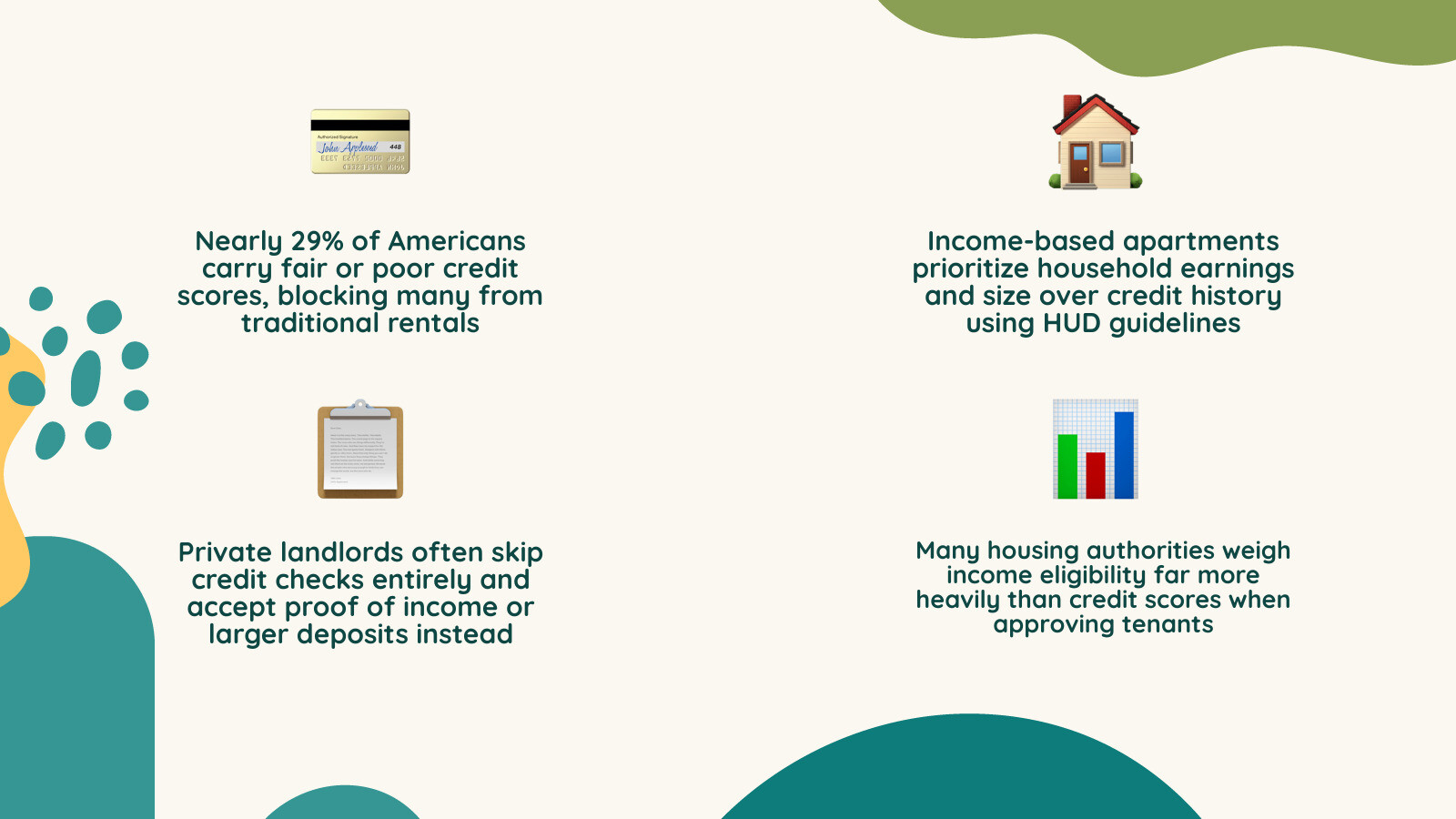
- Many income-restricted properties — especially those run by housing authorities and nonprofits — weigh income eligibility far more heavily than credit history
- Private landlords (nearly 40% of small landlords skip credit checks entirely) often approve tenants based on proof of income, references, or a larger deposit
- Government programs like Section 8 and local housing authority units prioritize income limits set by HUD, not credit scores
- Alternatives to credit checks include bank statements, pay stubs, tax returns, and letters of reference
Now for the fuller picture.
In July 2026, nearly 29% of Americans carry fair or poor credit scores — that is roughly 1 in 3 people. For veterans navigating the shift from military to civilian life, that number hits close to home. A gap in credit history, a period of financial instability, or simply never having built a credit profile can all make the standard rental process feel impossible.
Most landlords require a credit score of 670 or higher. But the good news is that not all rentals work that way. Income-based housing programs across California use a different standard — one built around what you earn and your household size, not your credit past.
Income based no credit check apartments glossary:
The Reality of Finding Income Based No Credit Check Apartments
When you start looking for a place to live, it can feel like your credit score is the only thing landlords care about. Experian data shows that 14.9% of Americans have “Fair” credit scores (580 to 669) and 14.2% have “Poor” credit scores (300 to 579). When standard property management companies draw a hard line at a 670 credit score, nearly a third of the population is left searching for alternative routes.
Thankfully, the affordable housing landscape operates on a different set of rules. While market-rate rentals use credit scores as a primary filter to measure risk, affordable housing programs are designed to prioritize community need.
In California, income restricted rentals focus primarily on your gross annual household income rather than a flawless credit history. These programs are designed to keep people housed, which means their screening processes are often much more holistic than those of corporate, market-rate developments.
Understanding Income-Restricted vs. Market-Rate Rentals
To navigate this market successfully, it helps to understand how these properties are funded and managed. Market-rate rentals are driven entirely by supply and demand. Landlords can set any rental price they like and use strict credit criteria to screen out anyone they deem a financial risk.
In contrast, income-restricted housing is tied to federal, state, or local subsidies. The rent for these units is legally capped to ensure it remains affordable. Under Department of Housing and Urban Development (HUD) guidelines, housing is considered affordable when an occupant pays no more than 30% of their gross income toward housing costs, including utilities.
To qualify for these units, your household income must fall below a certain percentage of the Area Median Income (AMI)—usually 30%, 50%, 60%, or 80%. Because these properties receive tax credits or government funding to serve lower-income households, their primary compliance check is verifying your income, not your credit score. If you are searching for income restricted housing near me, you are looking at properties where your paycheck matters far more than your credit report.
How to Qualify for Income Based No Credit Check Apartments
While some income-restricted properties still run credit checks, they rarely look for a perfect 670 score. Instead, they look for specific red flags like active bankruptcies, unpaid utility bills, or recent evictions. If your credit is simply “thin” (meaning you have little to no credit history) or if you have a low score due to past medical bills, many affordable housing providers will work with you.
To qualify, you must show that your income is stable and falls within the local AMI limits. If your credit score is low, you can strengthen your application by focusing on private landlords or smaller housing developments. Private landlords are often much more flexible than large corporate property management groups.
| Feature | Corporate Property Management | Private Landlords / Affordable Housing |
|---|---|---|
| Minimum Credit Score | Typically 670+ (strict cutoff) | Often no minimum; credit history evaluated individually |
| Primary Screening Tool | Automated credit and background check | Income verification, personal references, rental history |
| Flexibility on Bad Credit | Very low; automated denials | High; open to explanations, co-signers, or larger deposits |
| Income Requirements | Usually 3x the monthly rent | Based on AMI tiers (30% to 80% of local median income) |
| Lease Terms | Rigid 12-month terms | Open to month-to-month or customized terms |
Strategies to Bypass Credit Checks in Affordable Housing
If you are determined to find an apartment without undergoing a traditional credit check, you need to adjust your search strategy. Corporate high-rises and large property management firms almost always use automated screening software that automatically rejects applications below a certain credit threshold. To bypass this, you need to target the human element of the rental market.
Nearly 40% of small, independent landlords skip credit checks entirely. These “mom-and-pop” landlords are often more concerned with finding a respectful, quiet tenant who communicates well and pays rent on time. Instead of relying on a computer algorithm, they rely on personal interactions, solid employment verification, and glowing references from past landlords.
Another excellent strategy is to look for month-to-month leases. While these can sometimes carry a slightly higher monthly rent, they represent a much lower risk for the landlord. A landlord is often far more willing to skip a credit check if they know they are not locked into a rigid 12-month contract. Offering to pay a slightly larger security deposit—such as one month of rent paid in advance—can also instantly put an independent landlord’s mind at ease. If you are a first-time renter or rebuilding your life after a setback, reading up on the best income based apartments for beginners can give you the foundational tools you need to approach these landlords with confidence.
Where to Search for Income Based No Credit Check Apartments in California
Finding these opportunities requires knowing where to look, especially in highly competitive California markets. If you are searching in Southern California, focusing your efforts on specific regional resources can yield great results.
For those looking for no credit check apartments in Los Angeles, targeting co-living spaces, independent listings, and community-oriented housing providers is a smart move. In San Diego, utilizing resources like the San Diego Housing Commission (SDHC) or searching specifically for low-income rentals in San Diego can connect you with properties that prioritize income eligibility over credit scores.
You can also find dedicated affordable communities in other Southern California hubs. For example, check out Low Income Apartments for Rent in Riverside CA or explore the Affordable Housing – Irvine Company programs, which offer income-restricted units in beautifully maintained neighborhoods.
No matter which area you target, keeping a local guide handy like your neighborhood guide to income based apts for rent near me will help you map out properties that accept alternative screening methods.
Utilizing Co-signers, Guarantors, and Roommates
If a property manager insists on a credit check and your score isn’t where it needs to be, you don’t have to walk away. You can use several financial workarounds to secure the unit:
- Find a Co-signer: A co-signer is a trusted friend or family member with strong credit who signs the lease with you. They become legally responsible for the rent from day one if you fail to pay.
- Use a Guarantor Service: If you do not have someone who can co-sign, professional guarantor services can act as your co-signer for a fee (usually 4% to 10% of the annual rent).
- Get a Roommate: Moving in with a roommate who has excellent credit is one of the fastest ways to bypass your own credit limitations. Landlords will often approve an application if the combined household income is strong and at least one applicant meets their credit criteria.

Essential Documentation and Avoiding Rental Scams
When you apply for an income based no credit check apartments unit, you must prove your financial stability in other ways. Because the landlord is skipping the credit report, your documentation needs to be organized, thorough, and highly professional. Arriving at an open house with a pre-assembled application packet shows that you are a serious, reliable applicant.

Your application packet should include:
- Valid government-issued photo ID
- Proof of income (at least eight weeks of recent pay stubs or bank statements)
- Tax returns from the past two years
- A written list of professional and personal references (including contact info)
- A copy of your utility bills in your name to prove a history of consistent payments
Proof of Income Alternatives
If you do not have traditional pay stubs—perhaps because you are a freelancer, gig worker, or transitioning veteran—you can use several creative alternatives to prove your income.
Many landlords will happily accept consecutive bank statements showing regular deposits, signed client contracts, tax returns, or benefit verification letters (such as GI Bill housing allowances, Social Security, or disability payments). If you are looking for based on income apartments downtown, showing a consistent stream of alternative income can help you secure a spot in vibrant, urban neighborhoods where traditional credit checks are common but flexible options exist.
Spotting Red Flags in ‘No Credit Check’ Listings
Unfortunately, the search for “no credit check” housing can attract dishonest actors. Scammers know that renters with poor credit are often desperate for housing, and they frequently target these listings. In fact, roughly 1 in 4 rental scams specifically target seekers of no-credit-check apartments.
To protect yourself, you must know how to spot the red flags of a rental scam. Use this verification process before handing over any money:
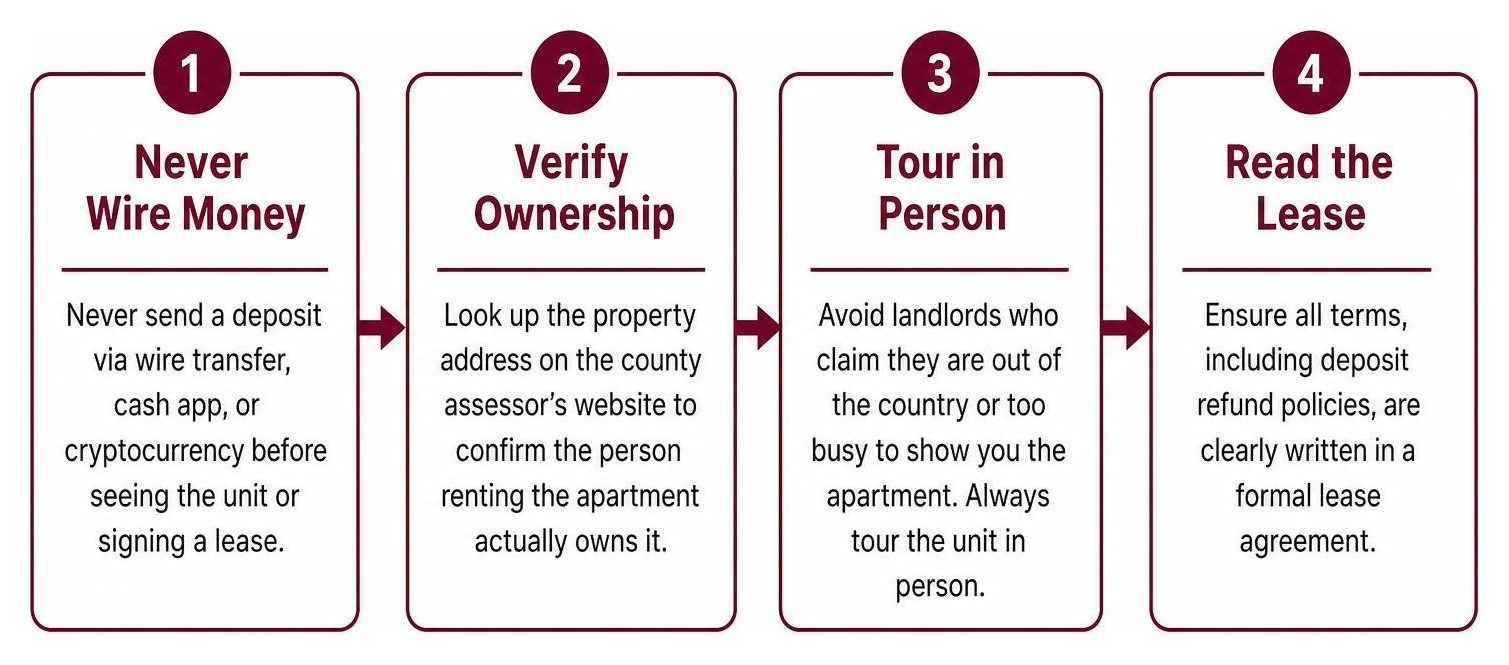
- Never Wire Money: If a landlord asks for a deposit via wire transfer, cash app, or cryptocurrency before you have seen the unit or signed a lease, walk away immediately.
- Verify Ownership: Look up the property address on the county assessor’s website to verify that the person renting the apartment actually owns the property.
- Tour in Person: Avoid “landlords” who claim they are out of the country or too busy to show you the apartment in person. Always walk through the physical unit before signing anything.
- Read the Lease: Ensure all terms, including deposit refund policies, are clearly written in a formal lease agreement.
Frequently Asked Questions About Income-Based Housing
Navigating the affordable housing market can raise a lot of questions. Here are some of the most common concerns renters face.
Do income-based apartments always check credit?
Not always, but many do run a modified credit check. However, their screening is vastly different from market-rate rentals. Instead of looking for a high credit score, they are primarily checking for “landlord debt”—meaning unpaid rent, utility collections, or active evictions.
If you have a Section 8 voucher, many housing authorities and landlords are even more lenient. Because the government guarantees a large portion of the rent, the landlord’s financial risk is incredibly low, making them much more likely to overlook a poor credit score. If you are navigating this process with a disability, resources like Navigating the Maze of Disability Income Based Housing can offer specialized guidance on finding supportive, income-based communities.
What is the minimum credit score for affordable housing?
There is no universal minimum credit score for affordable housing. Many properties funded by the Low-Income Housing Tax Credit (LIHTC) program do not have a hard credit score cutoff. Instead, they perform an individual assessment of your application. If you can show a stable income that meets their AMI requirements and have a clean rental history over the past few years, a low credit score is rarely a dealbreaker.
How does the CalAIM program help with security deposits?
For eligible Californians, the California Advancing and Innovating Medi-Cal (CalAIM) program provides incredible housing transition support. Through CalAIM, qualified individuals can receive deposit assistance—specifically covering 1 month paid in advance for a security deposit—along with help navigating the rental application process. This program is designed to remove the immediate financial barriers to housing, helping you secure a home even if you are rebuilding your credit.
Conclusion
Finding income based no credit check apartments in California can be challenging, but with the right strategies and resources, it is entirely possible. By focusing on income-restricted properties, targeting independent landlords, and keeping your financial documentation organized, you can bypass traditional credit barriers and secure a safe, stable place to live.
At LifeSTEPS, we are dedicated to helping individuals and families transition to stable housing and self-sufficiency. Through our human-centered support and collaboration with programs like the Family Self-Sufficiency (FSS) program, we help clients—including veterans—achieve long-term housing stability and even homeownership.
We are proud of our community impact, which includes a 93% housing retention rate for the individuals we serve. Beyond housing, we believe in uplifting the next generation, which is why we have helped facilitate $2.1 million in scholarships and achieved a 97% literacy improvement through our Summer Reading afterschool programs.
If you are ready to take the next step toward a stable future, we encourage you to explore the LifeSTEPS programs and services available in your community.
For inquiries, contact: LifeSTEPS | Phone: (916) 965-2110 | LifeSTEPS
LifeSTEPS currently provides services in California only.


