


Need Help with Security Deposit for Apartment? Here is How to Apply
Need Help with Security Deposit for Apartment? Here is How to Apply
When Upfront Costs Block Your Path to Housing: What to Know About Assistance with Deposit for Apartment
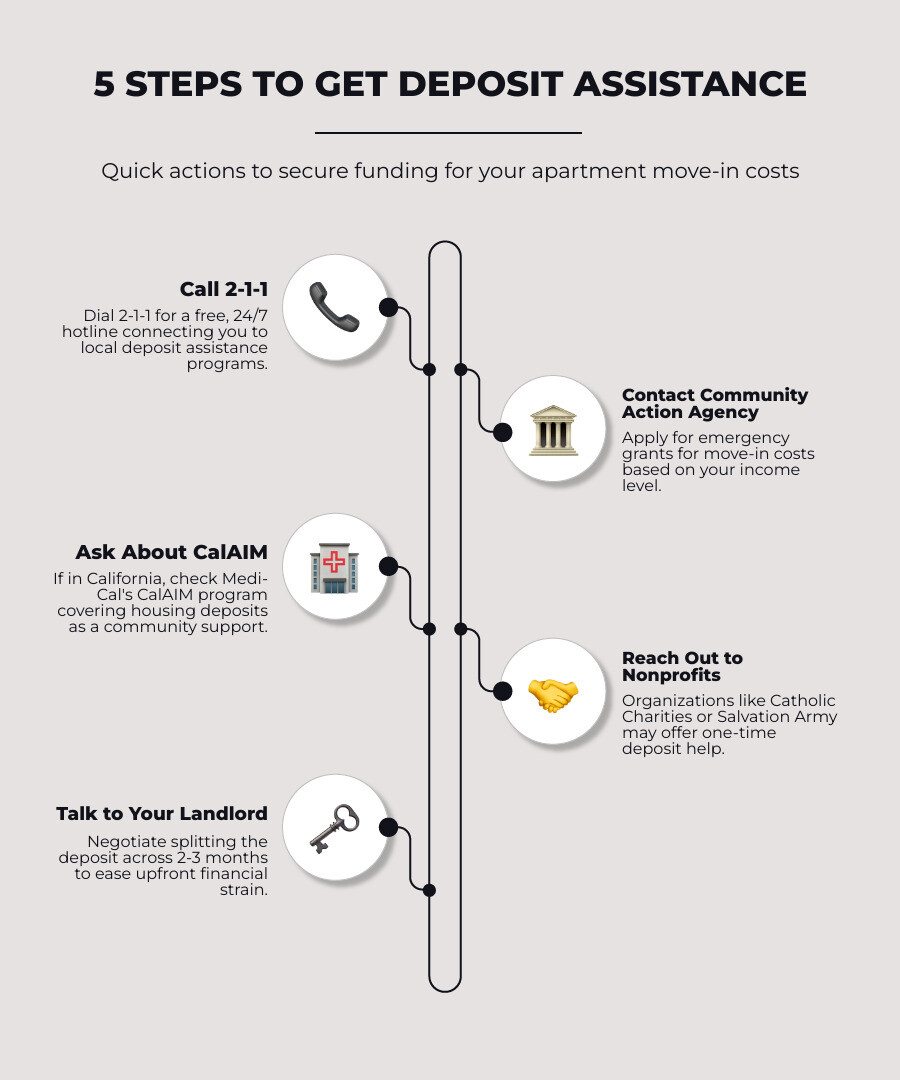
If you need assistance with a deposit for an apartment, here are the fastest ways to find help:
- Dial 2-1-1 — free, 24/7 hotline that connects you to local deposit assistance programs in your area
- Contact a Community Action Agency — provides emergency grants for move-in costs based on income
- Ask about CalAIM — California’s Medi-Cal program includes housing deposits as a covered community support
- Reach out to nonprofits — organizations like Catholic Charities and The Salvation Army offer one-time deposit help
- Talk to your landlord — many will split the deposit across two or three months rather than lose a qualified tenant
Moving into a new apartment costs more than most people expect. Between a security deposit, first month’s rent, application fees, and sometimes last month’s rent, a new lease can demand two to three times the monthly rent before you ever sleep a single night in the place. For many renters — especially veterans transitioning to civilian life — that lump sum is the single biggest wall standing between them and stable housing.
The good news is that real help exists. Government programs, nonprofit organizations, and even your own landlord may be able to reduce or spread out what you owe upfront. Knowing where to look, and in what order to ask, makes all the difference.
This guide walks you through exactly how to find and apply for deposit assistance in California — from eligibility requirements to the documents you will need on day one.
LifeSTEPS currently provides services in California only.
Assistance with deposit for apartment word roundup:
- help with security deposit and 1st months rent
- first month rent security deposit assistance
- rental and deposit assistance
Understanding Move-In Costs and Assistance with Deposit for Apartment Requirements
When you find an apartment you love, signing the lease should feel like a victory. However, calculating the actual check you need to hand over before receiving the keys can quickly create intense financial stress. Across California, from Los Angeles to San Diego, initial move-in costs often top $2,000 to $4,000.
Why Upfront Move-In Costs Create Housing Barriers
Landlords ask for security deposits to protect against potential property damage or unpaid rent. While this protects the property owner, it places a heavy burden on low-income families, seniors, and veterans working toward economic independence.
Most leases require:
- First Month’s Rent: Paid upfront to cover your initial 30 days.
- Security Deposit: Usually equal to 1 month paid in advance for deposit assistance calculations, though some locations permitted up to two months in prior years. Under recent legislation in California, security deposits are generally capped at one month’s rent.
- Application & Screening Fees: Ranging from $30 to $50 per adult to cover credit and background checks.
- Utility Activation Deposits: Electricity, gas, and water connections often require individual setup fees or security deposits if you lack established utility credit history.
When these lump sums are required all at once, households facing temporary hardships or working on fixed incomes find themselves locked out of stable living situations. Seeking structured First Month Rent and Security Deposit Assistance provides a reliable bridge across this initial financial divide.
Government Programs and Charitable Options for Rental Deposit Support
Finding assistance with deposit for apartment costs requires navigating both public and charitable funding streams. Public programs tend to offer larger funding grants, while charitable organizations provide swift, localized emergency support.

Finding Local Assistance with Deposit for Apartment Programs Near You
To connect with programs in your immediate neighborhood, starting with regional social service hubs guarantees accurate local routing:
- 2-1-1 Helpline: Dialing 2-1-1 operates free, 24/7 across California. Operators match your zip code to active local deposit assistance grants and housing crisis channels.
- Community Action Agencies (CSBG): These local agency partners receive federal Community Services Block Grants to provide emergency financial aid for move-in fees and security deposits.
- CalAIM Community Supports: If you are enrolled in Medi-Cal, California’s CalAIM initiative offers direct funding for Housing Deposits. This includes security deposits, application fees, setup fees, and initial utility connection costs to help individuals transition into permanent housing.
- County Housing Authorities: Regional offices across locations like San Diego County administer specialized Rental Assistance funds and deposit match programs designed to stabilize low-income residents.
Rapid Re-Housing and Tenant-Based Rental Subsidies
Federal and state housing frameworks prioritize rapid placement to prevent individuals from entering homeless shelters or staying in overcrowded conditions:
- Rapid Re-Housing: Funded through HUD’s Emergency Solutions Grants (ESG) and Continuum of Care networks, Rapid Re-Housing delivers short-term lease subsidies alongside full security deposit coverage to place individuals rapidly into private market rentals.
- Tenant-Based Rental Assistance (TBRA): Funded via HOME Investment Partnerships, TBRA offers security and utility deposit coverage along with up to 24 months of rental assistance. Beneficiaries participate in supportive pathways while establishing self-sufficiency.
- Housing Choice Vouchers (Section 8): While a voucher covers monthly rental subsidies, specific local housing authorities offer complementary move-in deposit grants or security deposit loan funds for voucher holders. Discover strategies on Securing the Bag How to Find Help with Deposit for Section 8 to streamline your search.
How to Qualify and Apply for Move-In Financial Aid
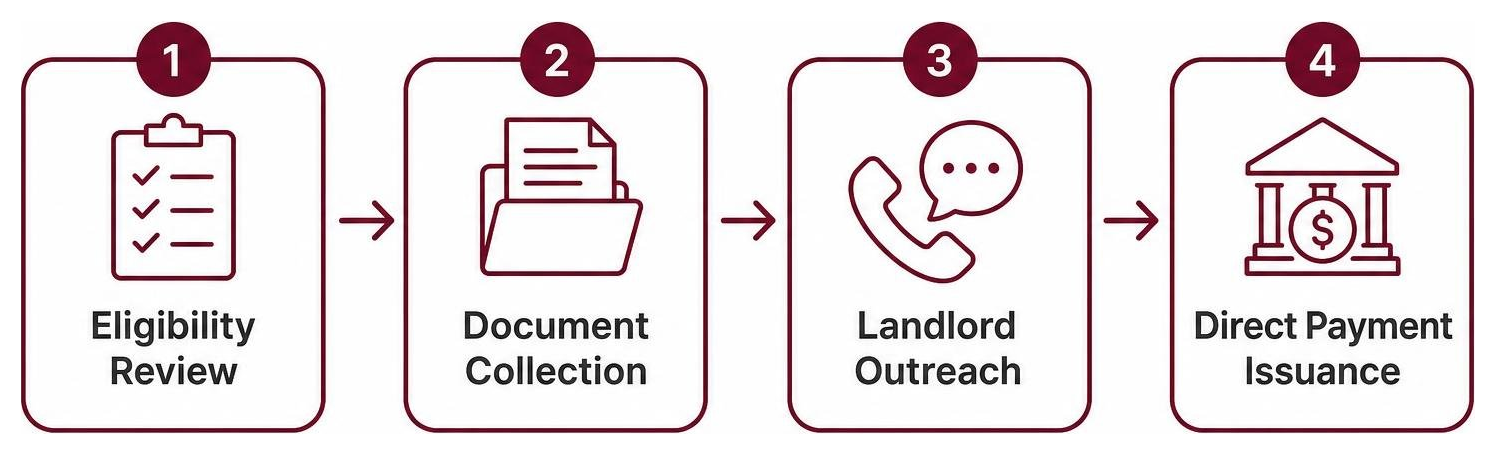
Receiving approval for move-in financial aid relies on clear eligibility documentation and submitting a complete application package before funds are fully allocated.
Eligibility Standards for Assistance with Deposit for Apartment Funding
While every program enforces unique local standards, primary qualifying criteria across California usually center on income thresholds and long-term lease sustainability:
- Area Median Income (AMI): Most security deposit programs require household income to fall at or below 50% to 60% of the local Area Median Income (AMI). Specific federal programs allow household income up to 80% AMI.
- Lease Price Limits: The target apartment’s monthly rent must fall at or below Fair Market Value (FMV) standards established for the area.
- Post-Assistance Financial Sustainability: Applicants must demonstrate that after the initial deposit is paid (often matching 1 month paid in advance for deposit assistance), their ongoing monthly income is sufficient to maintain future rent payments independently.
Reviewing Your Guide to First Month Rent Security Deposit Help Programs Resources will help you measure your household income against active income limits.
| Program Type | Target AMI / Income Limit | Common Expenses Covered | Typical Disbursement Method |
|---|---|---|---|
| CalAIM Housing Deposits | Medi-Cal Eligible | Security deposit, setup fees, utilities | Direct to Landlord / Vendor |
| TBRA Program | Up to 80% AMI | Security deposit, utility deposit, rent subsidy | Direct to Property Owner |
| Community Action Grants | 125% – 200% Federal Poverty Level | Move-in balance, deposit gap coverage | Direct Check to Management |
| Local Nonprofits / Charities | Varies (Crisis-based) | One-time deposit aid, application fees | Direct Vendor Payment |
Document Checklist for Your Application
To avoid delays while your desired unit remains on the market, gather your documentation checklist in advance. Reviewing Your Ultimate Guide to Assistance with Apartment Deposits and Move-In Fees ensures you won’t miss crucial items:
- Photo Identification: Government-issued IDs or driver’s licenses for all adult household members.
- Proof of Income: Paystubs from the past 30 consecutive days, or current benefit award letters (SSI, SSDI, Unemployment, CalWORKs, or retirement pension statements).
- Lease Agreement or Intent-to-Rent Letter: A formal document signed by the property owner stating rental terms, monthly cost, and exact deposit balance required.
- Landlord W-9 Form: Completed tax documentation from the landlord, as government programs issue direct checks and cannot disburse cash directly to tenants.
- Proof of Financial Hardship: Documentation showing recent financial hardship or emergency circumstances that impacted upfront savings.
Alternative Solutions When Facing Urgent Deposit Deadlines and Waitlists
If government programs feature long waitlists or processing times that exceed your landlord’s move-in deadline, alternative strategies can keep your lease opportunity active.

Landlord Payment Plans and Deposit Alternatives
Property management companies prefer filling vacant units with reliable tenants rather than leaving apartments empty. Proposing structured alternatives can protect your lease approval:
- Deposit Installment Plans: Offer to split the security deposit across your first two, three, or four monthly payments. Requesting this flexibility in writing with a clear schedule demonstrates financial responsibility.
- Deposit-Alternative Insurance: Services like Rhino, Jetty, or Obligo replace large upfront cash deposits with small, non-refundable monthly payments or single upfront premiums. That unlike standard security deposits, insurance premiums are non-refundable at lease end.
- Security Deposit Micro-Loans: Select community organizations offer interest-free micro-loans (for instance, $300 repaid over 10 monthly installments of $30) to cover initial move-in gaps.
For further advice on managing private market leases, explore Help with Deposit Private Renting.
Immediate Options for Fast Moving Funds
When faced with strict 24- to 48-hour payment windows to lock in an apartment:
- Program Stacking: Combine smaller grants from multiple local sources — such as pairing a local charity pledge with a community action grant — to cover the total required balance.
- Move-In Stabilization Funds: Specialized initiatives like the EFA Move-In Stabilization Program | AOP assist in overcoming sudden financial hurdles by delivering fast vendor payments directly to landlords and utility managers.
- Private Support Networks: Raising funds through personal support networks provides zero-interest, instant liquidity without impacting background check records or triggering administrative application delays.
Frequently Asked Questions About Deposit Assistance
Do security deposit assistance programs require repayment?
Most charitable and government move-in programs operate as non-repayable grants. As long as you fulfill program requirements, you do not owe any funds back. However, specialized community funds operate as zero-interest micro-loans, structured into manageable monthly payments to replenish the fund for future families.
How do programs pay the security deposit?
Deposit assistance programs almost never give cash directly to applicants. Instead, payments are issued directly to property owners, management agencies, or utility vendors via official checks or electronic transfers after receiving a completed landlord application and W-9 form.
Can I get deposit assistance if I am facing long program waitlists?
Yes. If primary county programs show extended waitlists, contact regional crisis organizations, churches, or CalAIM community support managers. Combining fast micro-grants from local nonprofits with a landlord installment agreement often resolves short-term lease deadlines safely.
Conclusion: Securing Your Next Home with Community Resources
Overcoming the upfront financial barrier of an apartment security deposit is essential to establishing stable housing. At LifeSTEPS, we provide supportive housing and educational services across California — serving key regions including Los Angeles, San Diego, Riverside, and Irvine — to help individuals build long-term economic self-sufficiency.
Our dedicated community efforts achieve meaningful, measurable outcomes:
- 93% Housing Retention Rate: Helping individuals maintain stable, permanent housing.
- CalAIM Program Integration: Partnering directly with housing navigation and deposit assistance channels to make move-ins accessible.
- Family Self-Sufficiency (FSS): Supporting clients, including veterans, as they transition toward long-term stability and homeownership.
- Education & Youth Impact: Inspiring the next generation through a 97% literacy improvement rate in our Summer Reading programs and providing $2.1M in higher education scholarships.
If you need guidance navigating housing stability programs or move-in support resources, explore our comprehensive guide on First Month Rent and Security Deposit Assistance. For contact: LifeSTEPS | Phone: (916) 965-2110 | LifeSTEPS.
LifeSTEPS currently provides services in California only.


