Unlocking Stability with Permanent Supportive Housing Vouchers
When Homelessness Meets Disability: How a PSH Housing Voucher Can Change Everything
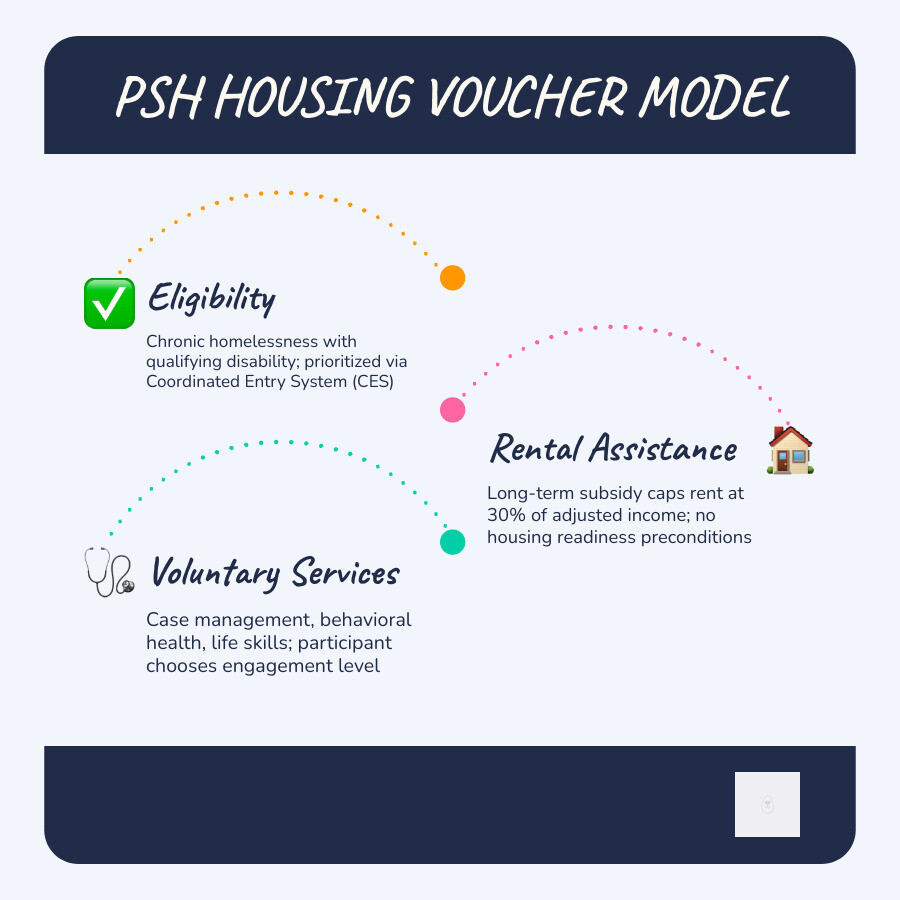
A PSH housing voucher is a long-term rental subsidy paired with voluntary support services, designed specifically for people experiencing homelessness who also live with a disability. Unlike a temporary shelter bed or a short-term fix, this voucher offers a path to stable, permanent housing with no requirement to complete treatment or prove “housing readiness” before getting a key in hand.
Here’s what you need to know at a glance:
- Who it’s for: People experiencing literal homelessness who have a qualifying disability (physical, mental, developmental, or substance-related)
- What it covers: Long-term rental assistance, capping your rent at no more than 30% of your income
- What comes with it: Voluntary supportive services like case management, behavioral health support, and life skills — you choose what you engage with
- How you access it: Through a local Coordinated Entry System (CES), which prioritizes people with the highest needs
- Key difference from Section 8: PSH vouchers are specifically targeted at chronically homeless individuals with disabilities and come bundled with wraparound services
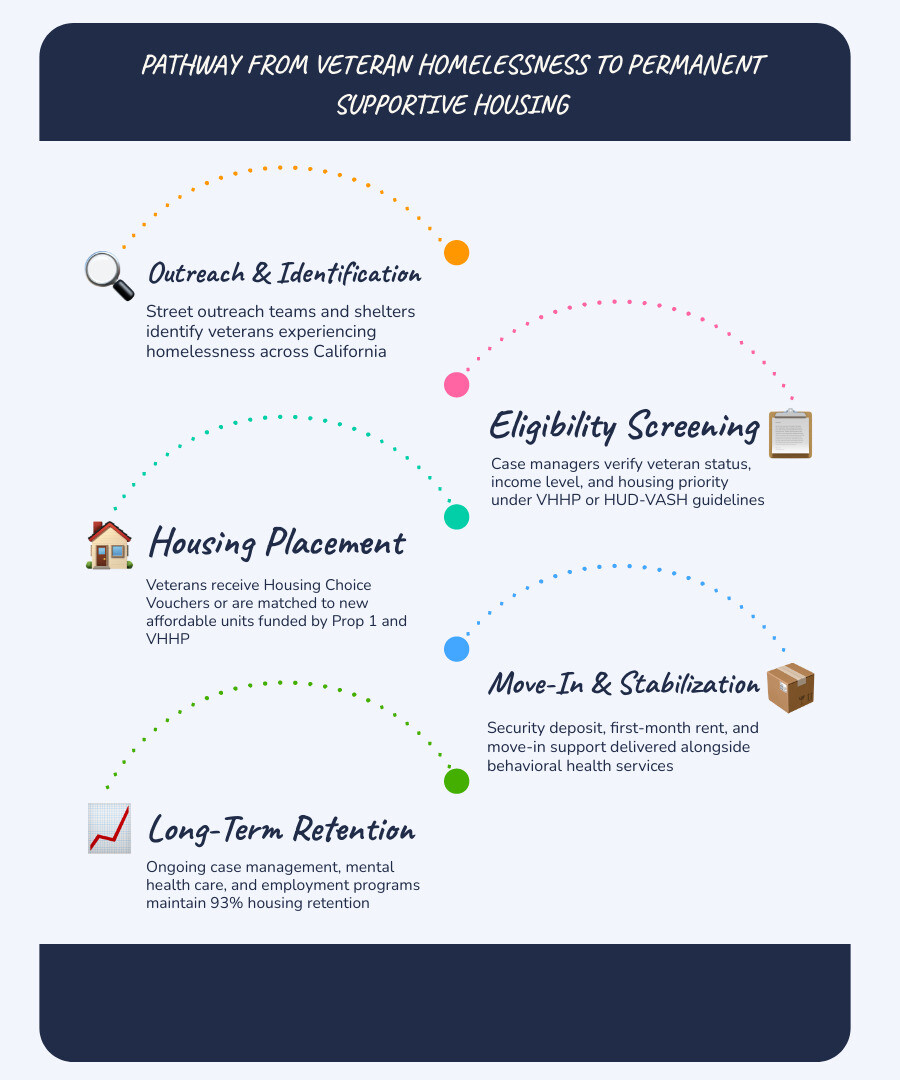
For veterans transitioning out of service and into civilian life, this program can be a critical bridge. In 2020, chronic homelessness, officially defined as having a disability and being continuously homeless for one year or more, or experiencing at least four episodes of homelessness totaling 12 months in the past three years, rose by 15%. Veterans are disproportionately represented in that number.
The good news: PSH works. Research consistently shows that people who access these vouchers maintain housing stability over a one-to-two-year period, with significant reductions in emergency room visits, shelter use, and other crisis-driven costs.
Related content about psh housing voucher:
- permanent supportive housing
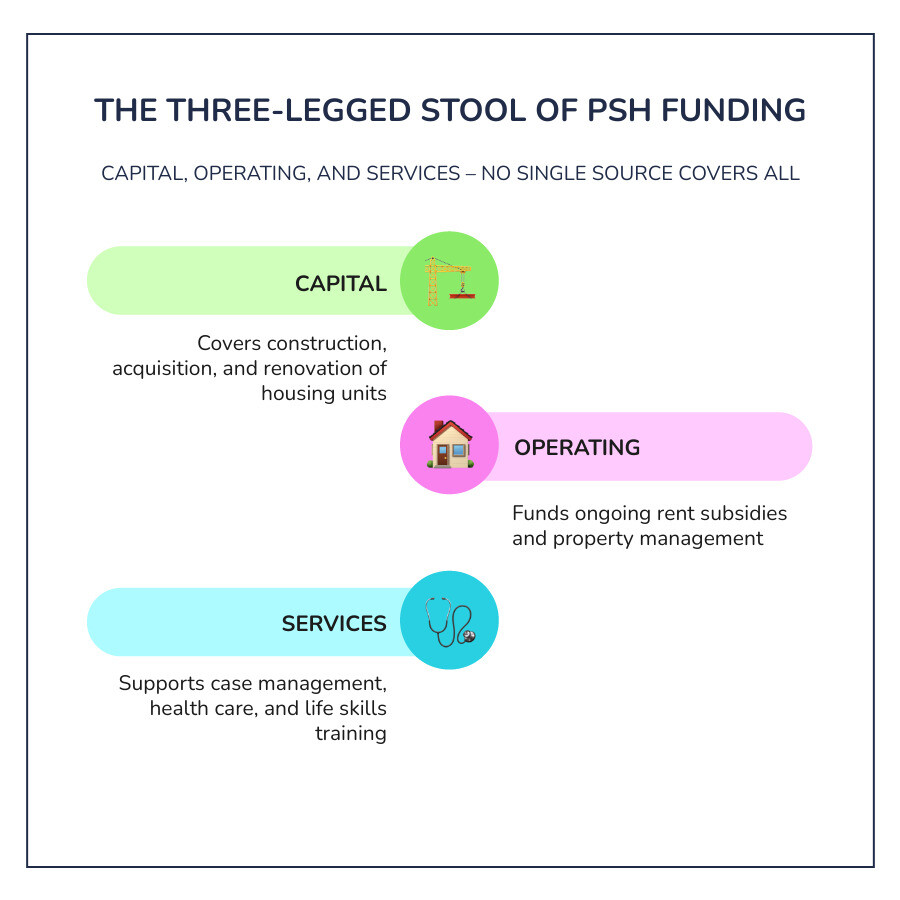
- how is permanent supportive housing funded
- housing case management services
Understanding the PSH Housing Voucher and How It Works

At its core, a PSH housing voucher is more than just a piece of paper that pays the rent; it is a commitment to long-term stability. While traditional programs like the Housing Choice Voucher (HCV) Program provide financial assistance to over 2.3 million American families, Permanent Supportive Housing (PSH) goes a step further by integrating housing with specialized care.
In our work across California, we see how this model functions as a “braided” system. One strand is the rental assistance, which ensures the home is affordable. The second strand is the supportive services, which ensure the individual has the tools to stay housed. This is not a temporary shelter; it is Permanent Supportive Housing (PSH) designed to last as long as the tenant needs it.
Qualifying for a psh housing voucher
To qualify for this specific type of assistance, an individual must generally meet two primary criteria:
- Homelessness Status: The person must be experiencing “literal homelessness” (living in a place not meant for human habitation, an emergency shelter, or fleeing domestic violence).
- Disability Status: There must be a verifiable, long-term disability. This includes physical disabilities, developmental disabilities, or behavioral health conditions like serious mental illness or chronic substance use disorders.
We often use a “vulnerability index” during the assessment phase. This tool helps housing providers identify those who are at the highest risk of harm if they remain on the streets, ensuring that the most fragile members of our community are moved to the front of the line.
The Housing First approach
The PSH housing voucher operates under the “Housing First” philosophy. This means we believe people are better able to address their health, employment, and personal goals once they have a roof over their heads.
There are no “preconditions” for this housing. You do not have to be sober, and you do not have to be employed. Participation in supportive services is voluntary. By removing these barriers, we focus on immediate placement, which has proven to be the most effective way to end chronic homelessness. You can find more info about housing services and how we implement these models on our programs page.
Eligibility Requirements for Permanent Supportive Housing

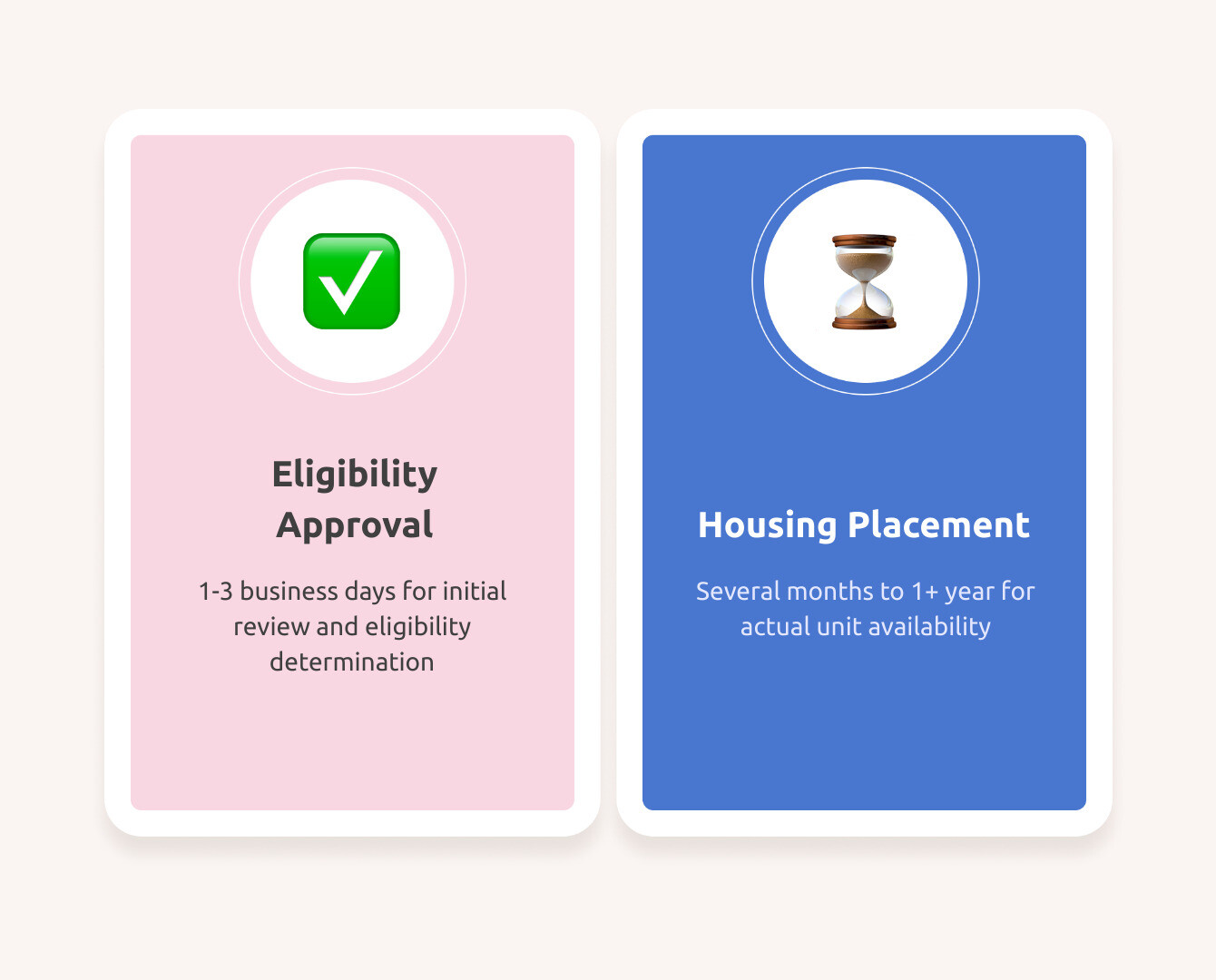
As of April 2026, the demand for PSH in areas like Los Angeles, Riverside, and San Diego remains high. Because the program is targeted at those with the highest needs, the eligibility process is thorough. It isn’t just about needing a home; it’s about proving that you belong to the specific population the federal government has earmarked for this funding.
Documentation for chronic homelessness and disabilities
Documentation is the hurdle that many of our clients face, and it’s where human-centered support makes the biggest difference. To prove eligibility, we typically need:
- Disability Verification: A written diagnosis from a licensed professional (such as a doctor, psychiatrist, or licensed social worker) confirming the disability is long-term and impacts the person’s ability to live independently.
- Chronic Homelessness Proof: HUD requires third-party documentation to prove a person has been homeless for 12 months continuously or has had four episodes in three years totaling 12 months.
- Self-Certification: While third-party proof is best, HUD allows for self-certification of homelessness for up to 3 months in most cases, though this is a last resort.
Coordinated Entry Systems (CES) in California
In California, you don’t apply for a PSH housing voucher at a single office. Instead, you enter the Coordinated Entry System (CES). This is a centralized database used by cities like Irvine, Riverside, and San Diego to manage the referral process.
- Los Angeles: The CES here is one of the largest in the country, prioritizing those with the highest vulnerability scores.
- Riverside and San Diego: These regions use similar prioritization models to ensure that veterans and those with serious mental illness are matched with the right unit and service package.
Core Components: Supportive Services and Rent Calculation
The success of the PSH housing voucher isn’t just about the building—it’s about the budget and the backbone of support.
Calculating rent for a psh housing voucher
Rent for PSH tenants is designed to be affordable even for those with zero income. The calculation usually follows these rules:
- 30% Rule: Tenants pay no more than 30% of their adjusted monthly income toward rent. If a tenant has no income, their rent is $0.
- Utility Allowances: If the tenant is responsible for their own utilities, a “utility allowance” is subtracted from their rent portion to ensure they can afford the bills.
- Rent Reasonableness: The total rent for the unit must be “reasonable” compared to similar unassisted units in the local California market.
- Fair Market Rent (FMR): HUD sets limits on how much the voucher will cover based on the average cost of housing in the specific county (e.g., Riverside vs. Los Angeles).
The role of voluntary supportive services
While the housing is permanent, the services are flexible. We provide or connect residents to:
- Case Management: A dedicated professional to help navigate healthcare and benefits.
- Behavioral Health: Access to counseling and peer support groups.
- Life Skills: Training in financial education, independent living, and even housekeeping.
- Peer Support: Connecting with others who have lived experience with homelessness can be a powerful motivator for stability.
PSH Models and Funding Sources in California
In California, PSH isn’t a “one size fits all” program. Depending on the funding source—whether it’s the HUD Continuum of Care (CoC), HUD-VASH (for veterans), or state-level initiatives like CalAIM—the housing might look very different.
Scattered-site vs. Project-based psh housing voucher
There are two main ways these vouchers are used:
| Feature | Scattered-Site Model | Project-Based Model |
|---|---|---|
| Voucher Type | Tenant-based (moves with you) | Tied to the specific unit |
| Location | Private apartments in the community | A dedicated building for PSH |
| Integration | High; living among non-assisted neighbors | Moderate; community of peers |
| Services | Mobile case management | On-site staff and offices |
Scattered-site models offer the most flexibility, allowing a tenant to choose an apartment in their preferred neighborhood. Project-based models often provide a stronger sense of community and easier access to on-site help.
Addressing specific populations
We tailor our approach to meet the unique needs of different groups:
- Veterans: Through HUD-VASH vouchers, we help veterans who have experienced chronic homelessness. In major California metropolitan areas, PSH programs have seen significant reductions in veteran homelessness over the last decade.
- Serious Mental Illness: For those transitioning from institutional settings, PSH provides the necessary outpatient treatment links to prevent re-hospitalization.
- Domestic Violence: Special PSH set-asides exist for those fleeing dangerous situations who also have a qualifying disability.
Benefits and Outcomes of Supportive Housing
The impact of a PSH housing voucher ripples far beyond the individual. It changes the landscape of our California communities.
Housing stability and cost savings
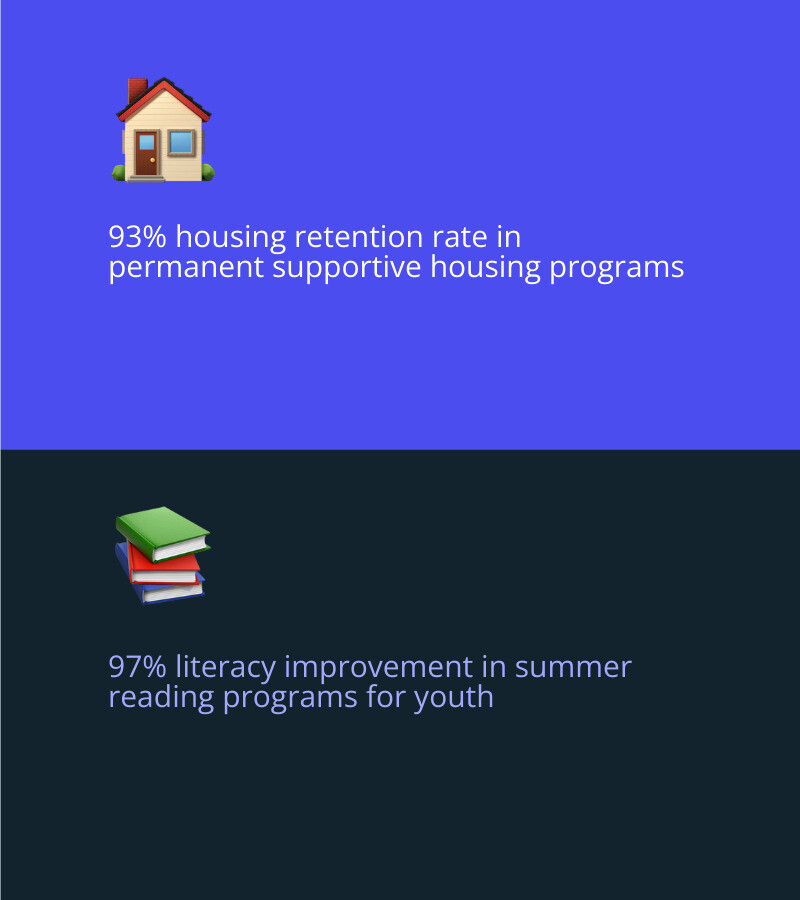
The statistics are clear. In programs similar to those we support, there is a 93% tenancy retention rate. This means that once people get into PSH, they stay there.
- Medicaid Savings: Data shows a 25% reduction in Medicaid costs for PSH participants because they are no longer using the emergency room as their primary doctor.
- Crisis Diversion: PSH results in fewer nights spent in jails, prisons, and homeless shelters, which saves taxpayers thousands of dollars per person annually.
Long-term impact on California communities
Across California, our focus is on measurable outcomes. Beyond just “housing,” we look at the human-centered support that leads to a better quality of life. For example, our commitment to education has seen a 97% literacy improvement in summer reading programs for families in our communities. We have also helped facilitate $2.1M in scholarships to help residents reach for higher education and self-sufficiency. For more info about education services, you can explore our youth-focused initiatives.
Frequently Asked Questions about PSH Vouchers
Can participants move between PSH units?
Yes. If a participant’s needs change—for example, if a family grows and needs more bedrooms—they can often move between PSH units or projects without needing to be re-prioritized through the Coordinated Entry System. The goal is to keep the person housed, not to keep them stuck in one specific unit.
Are supportive services mandatory for residents?
No. Under the Housing First model, services are voluntary. While we strongly encourage residents to engage with their case managers and health providers, their lease is not contingent on participating in treatment. However, the availability of these services must be guaranteed by the housing provider.
How does CalAIM assist with housing deposits?
For those eligible under California’s CalAIM program, we can often assist with “Housing Transition Navigation Services.” This includes help with security deposits. In many cases, we can provide assistance equivalent to 1 month paid in advance for deposit requirements, helping to clear the final financial hurdle to moving in.
Conclusion
At LifeSTEPS, we believe that a PSH housing voucher is a foundation for a new life. By combining stable housing with human-centered support, we aren’t just putting a roof over someone’s head—we are building a stronger, healthier California. Whether it’s helping a veteran find their first permanent home in years or providing the literacy support a child needs to succeed, our mission is to ensure every resident has the opportunity to thrive.
If you or someone you know is struggling with homelessness and a disability in California, reach out to your local Coordinated Entry System to begin the assessment process.
LifeSTEPS currently provides services in California only.