


Emergency Rental Assistance Eviction Relief for Los Angeles and Riverside Renters
Emergency Rental Assistance Eviction Relief Starts With Fast Action
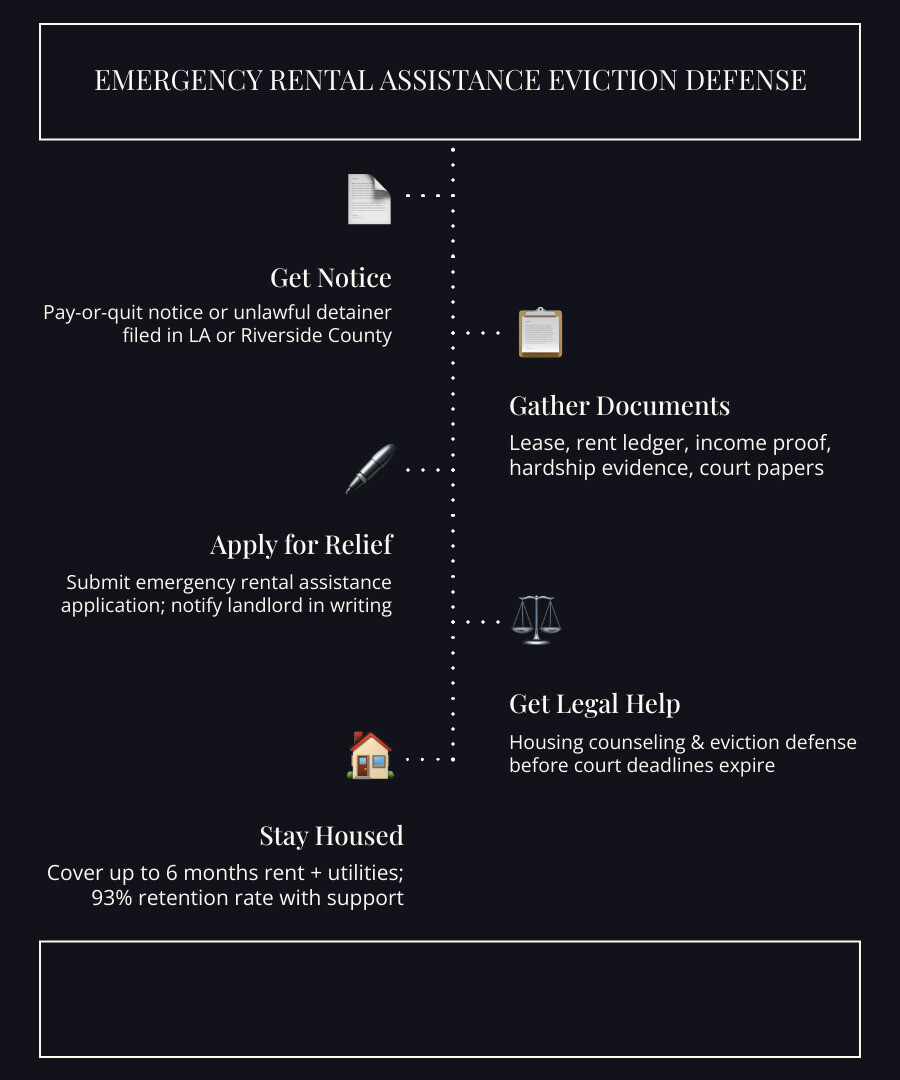
If you have a pay-or-quit notice or an eviction case in Los Angeles or Riverside County, apply for emergency rental assistance as soon as possible. Gather your notice, lease or proof of where you live, rent ledger, income information, and evidence of hardship. Then tell your landlord that you have applied and keep copies of every document and status update.
Emergency rental assistance eviction relief may cover overdue rent, utilities, and in some cases future rent or eviction-related costs. Los Angeles County has expanded its rent-relief funding by $14.6 million, with awards of up to six months and $15,000 per unit when funding and eligibility rules allow. Programs generally prioritize households below 50% of Area Median Income and people facing an imminent eviction.
An application does not automatically stop a California eviction. Do not ignore court papers or deadlines. Get housing counseling and legal help quickly while your application is pending. LifeSTEPS provides housing-focused support designed to help residents stay stably housed; its housing services have supported a 93% housing retention rate. For eligible CalAIM participants, deposit assistance can include 1 month paid in advance.
To understand the full scope of emergency rental assistance eviction options, explore eviction prevention programs, learn about rental assistance social services, and connect with free legal aid for eviction defense before court proceedings begin.
How Emergency Rental Assistance Eviction Programs Work in Southern California
When unexpected financial emergencies strike, keeping up with escalating housing costs can feel overwhelming. Across Southern California communities—including Los Angeles, Riverside, San Diego, and Irvine—local and county-administered rental relief initiatives provide financial lifelines to prevent displacement.
A major milestone in local relief efforts has been the Los Angeles County Emergency Rent Relief Program expansion, which injected $14.6 million in additional funding to bring the County’s overall investment to more than $44.6 million. Understanding how emergency rental assistance works empowers tenants and property owners to clear back rent before formal legal filings progress.
Under current guidelines, regional grants provide up to six months of emergency relief, capped at a maximum award of $15,000 per residential unit. These funds are structured to resolve past-due balances and maintain long-term tenancy.
| Feature / Expense | Los Angeles County Relief | Riverside & Regional Relief |
|---|---|---|
| Maximum Assistance Duration | Up to 6 months of relief | Varies by program tier (up to 18 months under aggregate federal rules) |
| Maximum Financial Cap | Up to $15,000 per unit | Program-specific based on local median rent standards |
| Rental Arrears | Fully eligible for verified unpaid debt | Fully eligible for verified balances |
| Eligible Utilities | Gas, electric, water, trash, and home energy debt | Essential home utility and energy balances |
| Application Portals | Online portal with free in-language phone intake | County housing authority portals and designated community hubs |
Income Eligibility and Area Median Income Thresholds
Federal and local relief programs establish clear eligibility benchmarks to direct aid where it is needed most. Under standardized federal guidelines outlined in the U.S. Department of the Treasury Emergency Rental Assistance Frequently Asked Questions, eligibility requires a household income at or below 80% of the Area Median Income (AMI).
Programs are mandated to prioritize two specific vulnerable groups:
- Households earning at or below 50% of the Area Median Income.
- Households where at least one adult family member has experienced unemployment for 90 or more consecutive days prior to application.
Income verification can be established using tax returns, pay stubs, benefits award letters, or categorical eligibility—which allows documentation from other low-income public assistance programs approved after January 1, 2020, to fulfill income verification automatically.
Step-by-Step Guide to Filing an Emergency Rental Assistance Eviction Defense Application
Taking immediate steps after receiving a notice to pay or quit significantly improves housing outcomes. Following these steps helps streamline review:
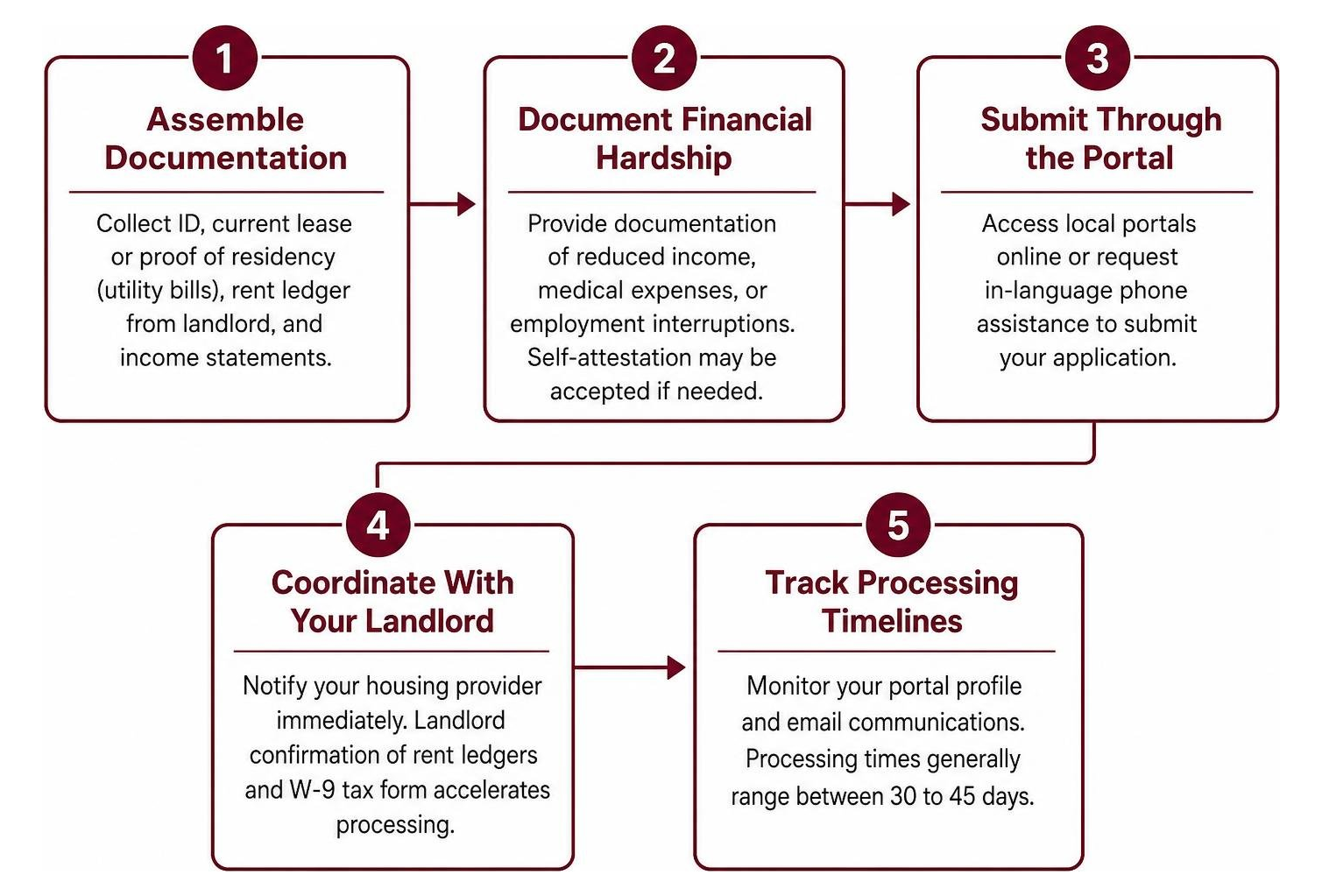
- Assemble Documentation: Collect government-issued identification, current lease agreements or proof of residency (e.g., utility bills), an updated rent ledger from your landlord, and income statements.
- Document Financial Hardship: Gather documentation showing reduced household income, medical expenses, or employment interruptions. If conventional documentation is inaccessible, written self-attestation may be accepted under specific program guidelines.
- Submit Through the Portal: Access local portals online or request in-language phone assistance to submit your application.
- Coordinate With Your Landlord: Notify your housing provider immediately, as landlord confirmation of rent ledgers and tax forms (W-9) accelerates processing.
- Track Processing Timelines: Monitor your portal profile and email communications closely. Processing times generally range between 30 to 45 days.
If you are navigating an urgent displacement risk, exploring rental assistance with an eviction notice provides practical direction for resolving active disputes.
Securing Eviction Protection and Legal Safeguards During the Application Process
Submitting an application for rental assistance is a critical first step, but renters must actively protect their legal rights throughout the process. In California, receiving a notice to pay rent or quit initiates a strict statutory timeline. Renters who receive formal court summonses (unlawful detainer complaints) must file written answers with the court to prevent default judgments.

Applying for emergency rent assistance to avoid eviction demonstrates a good-faith effort to resolve rent debt. Many Southern California courts encourage eviction diversion pathways, allowing tenants and landlords time to secure relief checks before cases proceed to trial.
Empirical research highlighted in Keeping People in Their Homes: The Impact of Emergency Rental Assistance on Evictions demonstrates that rental assistance interventions cut eviction filings by roughly 45% compared to historical baselines. Furthermore, participating households were 65% less likely to experience homelessness, proving that rapid financial intervention preserves community stability.
How Landlord Participation Impacts Emergency Rental Assistance Eviction Outcomes
Landlord collaboration ensures swift resolution of rental debt. In major local programs, such as the LA County Launches $14.6 Million Expansion of Emergency Rent Relief Program framework, either the tenant or landlord can initiate an application, but relief checks are sent directly to property owners to clear verified arrears.
When a property owner does not initially respond, administrative protocols ensure tenant protection:
- Program administrators conduct structured outreach across multiple communication channels.
- If a landlord fails to respond after five calendar days following three outreach attempts (via telephone, text, or email) or seven days by postal mail, funds may be disbursed directly to the tenant to satisfy their housing obligations.
Housing Stability Services and CalAIM Deposit Support
Financial aid resolves past-due balances, but comprehensive eviction prevention services address underlying challenges to ensure lasting housing security. Supportive case managers assist families with budget counseling, utility stabilization, and navigating complex administrative systems.
LifeSTEPS provides housing-focused case management and supportive services throughout California, helping residents sustain a 93% housing retention rate. For qualifying participants transitioning into permanent homes through the California Enhanced Care Management and Community Supports framework (CalAIM), deposit assistance provides essential security deposit support, which can include 1 month paid in advance.
Navigating Subsidies, Duplication of Benefits, and Denial Appeals
Renters residing in subsidized housing or receiving Housing Choice Vouchers (Section 8) are eligible for emergency rental relief for their tenant-owed portion of rent and utility arrears. Non-duplication rules prohibit programs from paying the portion of rent already covered by federal or municipal subsidies, ensuring public funds cover only unpaid out-of-pocket balances.

If an application is denied or an award amount is contested, applicants have the right to file an administrative appeal. Key protections include:
- 90-Day Appeal Window: Applicants generally have up to 90 days from the date of the denial notice to file an appeal.
- Administrative Review: Requesting a review allows an independent case officer to re-examine income documents, self-attestations, or corrected ledgers.
- Legal Support Networks: Tenants can access eviction prevention grants and legal aid to identify legal clinics that offer free assistance during administrative hearings and court proceedings.
Frequently Asked Questions About Emergency Rent Relief
Can emergency rental assistance cover court fees and eviction bonds?
Yes. Under Treasury guidelines, allowable housing-related expenses include legal fees, late fees, and rent bonds required by a court to stay an eviction proceeding, file an appeal, or reinstate a residential lease.
What happens if a landlord refuses to participate in the relief program?
If a landlord refuses to cooperate or fails to return required documentation, program administrators follow standardized outreach rules (such as five days over three contact attempts). If the landlord remains unresponsive, payments can be issued directly to the tenant to pay their rent and prevent informal displacement.
Can subsidized housing tenants apply for emergency rent relief?
Yes. Tenants living in subsidized properties or utilizing housing vouchers can apply for relief to cover their individual tenant share of unpaid rent, past-due utility bills, and other eligible housing costs.
Achieving Long-Term Housing Stability
Resolving immediate rent arrears prevents imminent displacement, but long-term self-sufficiency protects households against future emergencies. Beyond housing stability, youth and education initiatives foster intergenerational mobility—our educational programs have achieved a 97% literacy improvement during Summer Reading programs alongside $2.1M in scholarships awarded to promising students.
By coordinating with public housing programs and initiatives like Family Self-Sufficiency (FSS), LifeSTEPS assists individuals and veterans in building financial independence, improving credit, and working toward homeownership. Exploring comprehensive eviction prevention programs connects families with the guidance, resources, and community partnerships necessary to maintain stability.
For media inquiries, contact: bex@lifestepsusa.org
LifeSTEPS currently provides services in California only.


