


Understanding ERAP 2 Allocations and Additional Relief Opportunities
What the ERAP 2 Program Means for Renters Today
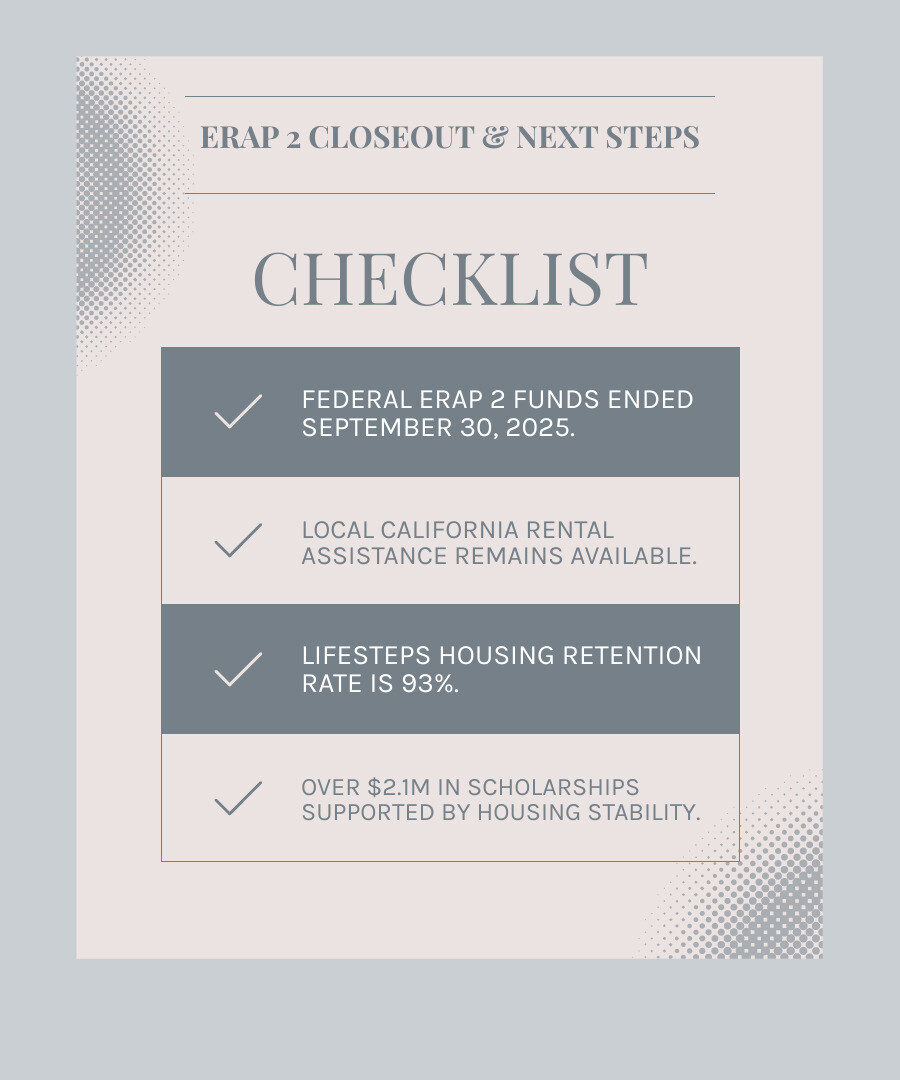
The federal ERAP 2 program was emergency rental assistance funded by the American Rescue Plan Act to help eligible renters pay rent, utility bills, and certain housing-stability costs during the COVID-19 crisis. Its federal performance period ended September 30, 2025, so renters can no longer apply for ERAP 2 funds. People facing a housing emergency now should look to local rental assistance, eviction-prevention services, utility relief, and housing-support organizations in California.
For veterans and other renters rebuilding stability, the key takeaway is simple: federal pandemic aid has closed, but local support can still help prevent displacement. LifeSTEPS provides California housing stability services, including CalAIM deposit assistance with 1 month paid in advance. Its housing programs report a 93% housing retention rate.
Housing stability is also connected to opportunity. LifeSTEPS’ Summer Reading efforts have achieved a 97% literacy improvement, while $2.1M in scholarships has supported higher education goals. These outcomes show why short-term housing help and long-term community support both matter.
Renters seeking background information on relief structures can explore how a government rental subsidy operates, how emergency rental assistance works, and current options for emergency rental assistance.
Understanding the Federal ERAP 2 Program and Allocation Structure

When economic disruption swept through communities, keeping families housed became a national priority. Congress established the Emergency Rental Assistance framework in two distinct legislative waves. The second round, commonly designated as ERA2 or the ERAP 2 initiative, was authorized under the American Rescue Plan Act of 2021.
Administered by the U.S. Department of the Treasury, this second tranche allocated $21.55 billion directly to states, territories, and local governments. The overarching mission was clear: prevent mass evictions, eliminate crippling rental debts, and maintain residential stability. Understanding how emergency rental assistance works requires reviewing the administrative structure that made this unprecedented scale possible.
The U.S. Department of the Treasury established strict financial oversight mechanisms. Grantees had to demonstrate capacity, establish transparent eligibility portals, and comply with reporting metrics while distributing funds to households at or below 80% of the Area Median Income (AMI). Official rules from the Treasury Emergency Rental Assistance Program ensured that emergency relief prioritized those at the greatest risk of homelessness.
Statutory Funding and Scope of the ERAP 2 Program
Together, ERA1 ($25 billion from the Consolidated Appropriations Act of 2021) and ERA2 ($21.55 billion) provided over $46 billion in housing stability support nationwide.
The funds addressed a broad spectrum of urgent residential liabilities:
- Rental Arrears: Accumulated past-due rent balances built up during periods of financial disruption.
- Prospective Rent: Upfront rental payments to ensure housing continuity while households regained economic footing.
- Utility Assistance and Home Energy Costs: Past-due and upcoming balances for electricity, gas, water, sewer, and trash removal.
- Housing Stability Services: Specialized case management, housing navigation, and legal aid aimed at keeping households stably housed.
Securing emergency rental assistance today relies on different frameworks than those early pandemic funds, but ERAP 2 set the standard for comprehensive relief.
Spending Tranches and Concurrent Fund Distribution
A common administrative challenge for municipalities was balancing two separate federal awards. Early on, local governments questioned whether they had to exhaust all first-round allocations before drawing from second-round funds. Treasury guidance clarified that jurisdictions did not have to fully deplete first-round awards before beginning disbursements under the second round.
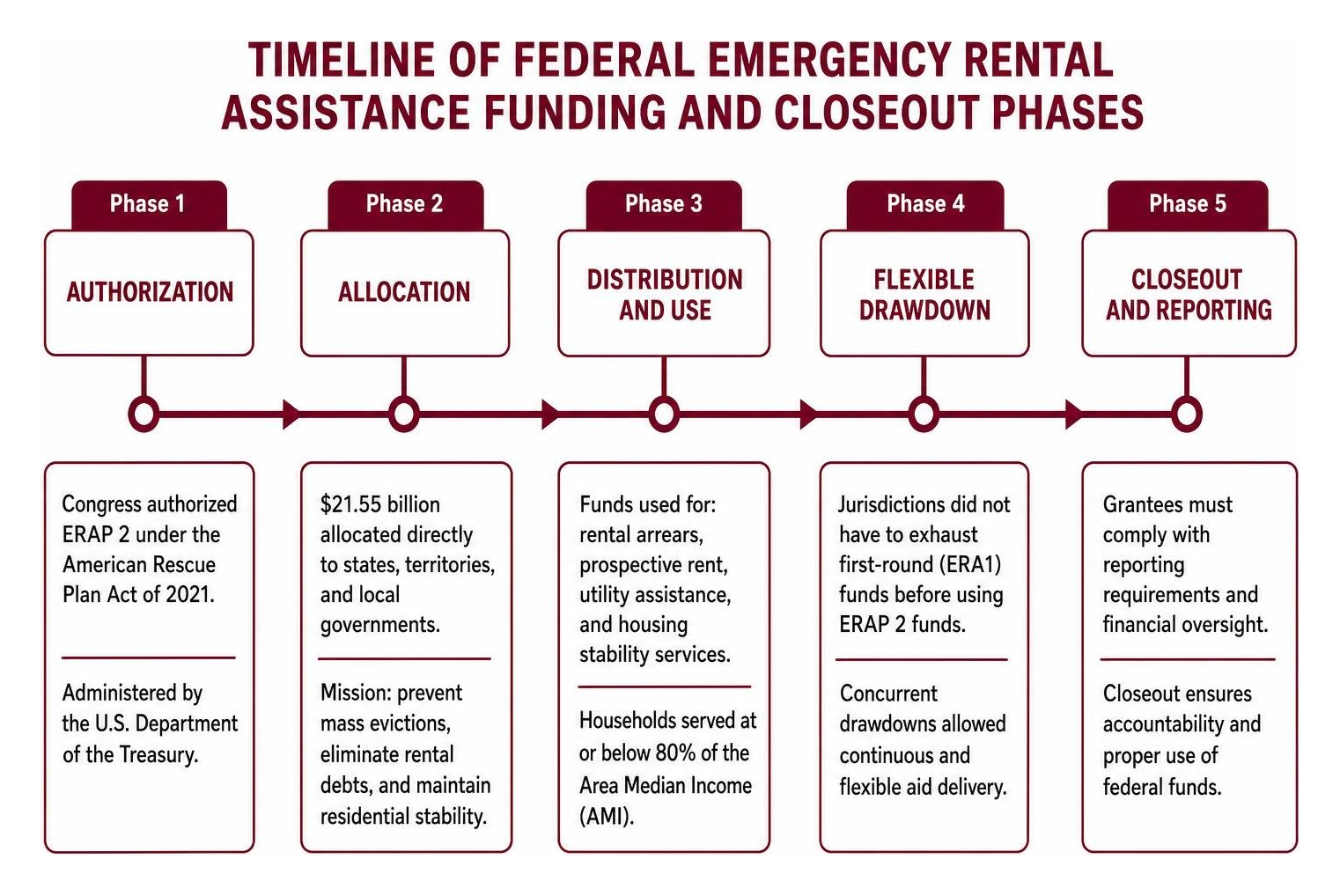
This operational flexibility allowed grantees to execute concurrent drawdowns. Local administrators could use the second round’s more streamlined rules—such as direct-to-tenant payments when property owners chose not to participate—ensuring aid flowed without administrative bottlenecks.
Regulatory Differences: ERA1 vs. ERA2 Guidelines
While both funding waves targeted housing preservation, the regulatory frameworks featured significant distinctions. Grantees faced differing statutory caps, administrative rules, and tenant payment protocols.
| Feature | ERA1 (Consolidated Appropriations Act, 2021) | ERA2 (American Rescue Plan Act, 2021) |
|---|---|---|
| Total National Funding | $25.00 Billion | $21.55 Billion |
| Maximum Assistance Duration | Up to 12 months (plus 3-month extension under special conditions; 15 months max) | Up to 18 months (combined total across both rounds) |
| Landlord Participation Mandate | Grantees had to make documented outreach attempts to landlords before paying tenants | Grantees could provide funds directly to eligible renters much more easily |
| Income Verification | Formal documentation prioritized; strict verification barriers | Allowed flexible self-attestation standards to accelerate emergency processing |
| Federal Obligation Window | Expired September 30, 2022 | Performance period ended September 30, 2025 |
These structural improvements allowed administrators to reach vulnerable renters who might otherwise have fallen through administrative cracks. For a broader look at public housing aid, explore available options for a government rental subsidy.
Program Closeout, Performance Periods, and Treasury Oversight
The lifecycle of emergency federal funding follows rigorous statutory timelines. The official period of performance for second-round emergency rental assistance awards concluded on September 30, 2025. Following this date, grantees were prohibited from obligating or disbursing funds for new rental assistance claims.
Treasury established a final closeout reporting deadline of January 28, 2026. Grantees conducted financial reconciliations, accounted for reallocated funds, and submitted final outcome reports detailing household demographics and total expenditures.
During the operational phase, Treasury actively reclaimed unspent balances from slow-spending jurisdictions and redistributed them to high-performing grantees that demonstrated immediate community need. As the program approached its conclusion, grantees issued formal notifications to landlords and applicants, directing households toward local safety nets. Renter protections documented in the California rent relief archive and historical guides on covid renters relief reflect this transition from temporary pandemic relief to sustained local support systems.
California Housing Relief and Supportive Services Beyond ERAP
With federal pandemic portals closed, California communities rely on state, regional, and non-profit initiatives to preserve housing stability. Disruption in housing stability impacts entire families, which is why integrated supportive services are critical.
LifeSTEPS delivers comprehensive community services throughout California, maintaining a 93% housing retention rate across supportive housing programs. Through specialized initiatives such as the CalAIM program, LifeSTEPS assists individuals and families with move-in and deposit assistance, including 1 month paid in advance to ensure successful tenancy transitions.
Long-term residential stability flourishes when paired with youth enrichment and educational opportunity. LifeSTEPS’ afterschool programs empower young residents through the Summer Reading initiative, which has achieved a 97% literacy improvement among participating youth. Furthermore, LifeSTEPS invests in economic mobility by opening pathways to higher education, having awarded $2.1M in scholarships to date.
For households needing emergency interventions, regional programs across California continue to offer localized aid:
- Los Angeles County: Renters can explore relief resources through the LA County Rent Relief Program for local emergency options.
- San Diego County: The county provides ongoing emergency stability and housing vouchers detailed on the San Diego County rental assistance portal.
- Riverside County & Southern California: Local housing authorities administer targeted eviction-prevention funds and emergency vouchers.
For an extensive overview of state-specific initiatives, explore resources on emergency rental assistance in California and learn how to access one-time rent payment assistance.
Frequently Asked Questions About Emergency Rental Assistance
Can Renters Still Submit Applications Under the ERAP 2 Program?
No. The federal performance period ended on September 30, 2025, and all associated application portals are permanently closed. Renters facing current financial hardship must apply for active state-funded initiatives, local county programs, or community-based homelessness prevention grants. Reviewing an emergency rental assistance benefit guide can help identify open community alternatives.
What Documentation Was Required for Landlord and Tenant Disbursements?
During the active administration of the program, applicants and property managers submitted specific verification documents to ensure compliance:
- Proof of Identity: Government-issued photo identification for adult household members.
- Income Verification: Recent paystubs, W-2s, tax returns, or signed self-attestations demonstrating household income at or below 80% AMI.
- Housing Obligation: A valid written lease agreement or formal documentation of tenancy.
- Proof of Arrears: An itemized past-due rent ledger signed by the landlord or current past-due utility statements.
- Landlord Paperwork: Signed IRS Form W-9 and direct deposit details for electronic payment disbursement.
What Ongoing Subsidies Exist for Renters Facing Housing Emergencies?
While emergency pandemic programs have run their course, multiple ongoing relief avenues exist:
- Housing Choice Vouchers (Section 8): Federally funded, locally administered rental subsidies capping tenant rent at approximately 30% to 40% of adjusted monthly income.
- CalAIM Community Supports: Housing transition and deposit assistance programs providing move-in support and security deposits with 1 month paid in advance.
- Targeted Senior Programs: Dedicated housing subsidies designed specifically for older adults, which are detailed in resources on rent subsidies for seniors.
- Utility Assistance Programs: Low-Income Home Energy Assistance Programs (LIHEAP) providing direct relief for heating and electric bills.
Conclusion
The federal emergency rental framework proved essential during a period of acute national crisis, distributing tens of billions of dollars to keep families safely housed. As communities move beyond emergency pandemic allocations, the focus shifts to lasting self-sufficiency, robust educational foundations, and stable housing retention.
LifeSTEPS remains dedicated to providing community-centered supportive housing, educational afterschool enrichment, and higher education advancement to help individuals and families thrive.
For media inquiries, contact: bex@lifestepsusa.org
LifeSTEPS currently provides services in California only.


