Tag Archive for: affordable housing

California housing assistance

A Quick Start Guide to the Homeownership Assistance Fund in California

A Quick Start Guide to the Homeownership Assistance Fund in California

California Homeownership Assistance Fund: Quick Answer


Homeownership assistance fund relief can help eligible California homeowners catch up on mortgage payments and other housing costs after a COVID-19-related financial hardship. The federal Homeowner Assistance Fund was created to prevent foreclosure, utility shutoffs, and housing loss, but funding is limited and many local programs have closed or exhausted their available funds.

For a quick overview:

  • It may cover past-due mortgage payments, property taxes, insurance, utilities, and certain housing fees.
  • Eligibility commonly depends on household income, a qualifying hardship after January 21, 2020, and use of the home as a primary residence.
  • Assistance is usually paid directly to a mortgage servicer, utility provider, insurer, or tax office.
  • California homeowners should confirm current program availability before gathering documents or applying.

Housing stability is often the first step toward long-term goals after military service. LifeSTEPS supports California communities with housing-focused services and has helped achieve a 93% housing retention rate. Through the CalAIM program, LifeSTEPS also provides deposit assistance of 1 month paid in advance for eligible participants. Beyond housing, LifeSTEPS supports opportunity through afterschool programs, including a 97% literacy improvement for Summer Reading, and $2.1M in scholarships for higher education.
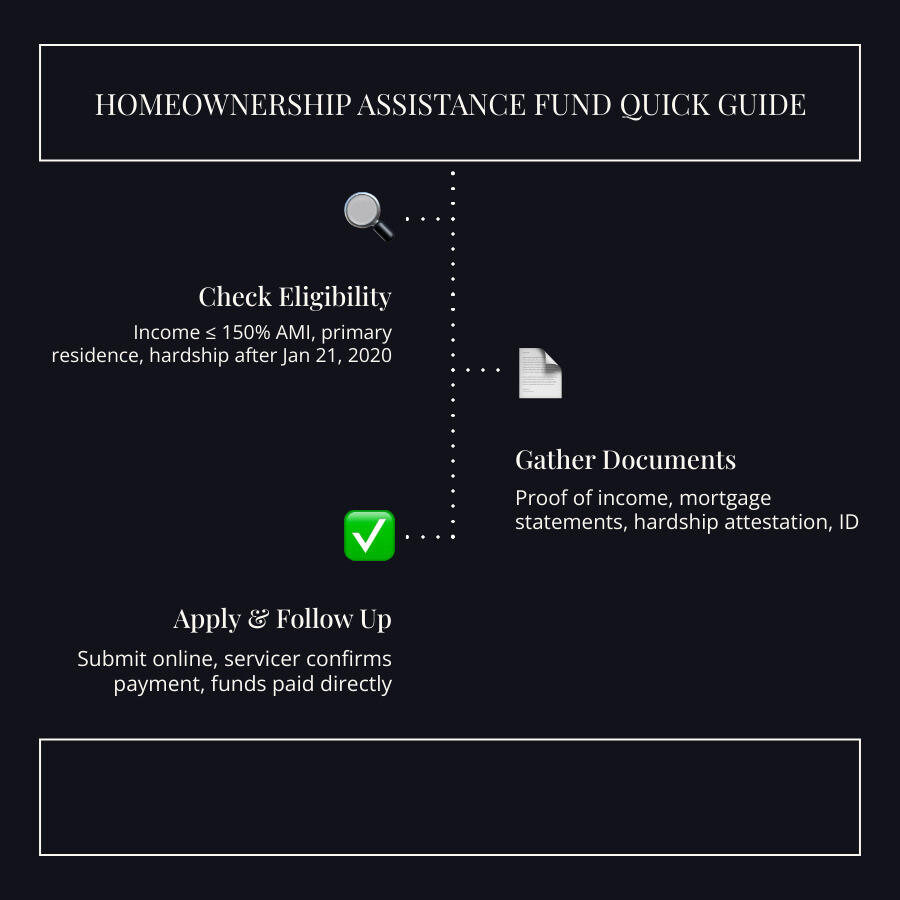
California homeowner assistance overview infographic

Explore more about homeownership assistance fund:

Overview of the Homeownership Assistance Fund

The federal Homeowner Assistance Fund (HAF) was created as a major lifeline for families who experienced severe financial stress during the pandemic. Authorized under Section 3206 of the American Rescue Plan Act of 2021 and codified at 15 USC 9058d: Homeowner Assistance Fund, this initiative appropriated $9.961 billion nationwide to mitigate mortgage delinquencies, defaults, foreclosures, loss of home energy services, and displacement.

Administered federally by the U.S. Department of the Treasury, funds were disbursed to all 50 states, the District of Columbia, U.S. territories, and tribal entities. Across the country, state housing finance agencies designed local initiatives—such as state mortgage relief programs—to route federal relief directly to loan servicers, tax agencies, and utility providers on behalf of qualifying homeowners.

Nationally, the program delivered almost $7.9 billion in financial relief to over 610,000 struggling households through late 2025, with state-level administrators expending nearly 95% of their total allocations. As a result, the homeownership assistance fund structure stands out as one of the most comprehensive federal housing protection efforts in American history. For families who are looking beyond emergency foreclosure prevention toward long-term home security, exploring low income homebuyer programs provides an essential roadmap for building lasting stability.

The underlying goal of the statutory guidance in 15 USC 9058d is to keep families housed by resolving qualified housing expenses that accrued due to financial hardship after January 21, 2020. The statutory framework required state and local participants to establish standardized compliance protocols, ensuring that taxpayer dollars directly resolved housing arrears rather than being disbursed directly as unmonitored cash payments.

Under federal rules, eligible entities were allowed to allocate up to 5% of their total grant award toward HUD-approved housing counseling or legal services, and up to 15% toward administrative costs. This allowed states to partner with certified counseling networks to offer financial education, loss mitigation guidance, and servicer negotiation support.

Preventing displacement through targeted housing assistance aligns directly with the core mission of LifeSTEPS. LifeSTEPS works across California—in areas like Los Angeles, San Diego, Riverside, and Irvine—to deliver meaningful community support services. By partnering with housing communities, LifeSTEPS helps residents maintain stability so they can focus on education, career growth, and financial independence.

Eligibility and Expense Coverage in California

To qualify for relief under the homeownership assistance fund guidelines, applicants must meet specific federal and state criteria. Program rules focus strictly on primary residences, ensuring that funds assist everyday families rather than real estate investors or vacation property owners.

Federal requirements mandate that homeowners demonstrate a qualified financial hardship—such as a reduction in income or a substantial increase in living expenses—that originated or continued after January 21, 2020. Additionally, applicants must satisfy income criteria defined by their local Area Median Income (AMI). For broader context on structured homebuyer resources, explore the ultimate guide to affordable homeownership programs and grants.

Qualified Expenses Covered by the Homeownership Assistance Fund

The homeownership assistance fund covers a wide variety of housing-related debts to ensure comprehensive relief for struggling families. Approved expense categories under federal guidelines include:

  • Mortgage Reinstatement: Curing past-due principal and interest payments to bring delinquent loans completely current.
  • Principal Reduction & Loan Terms: Funding partial principal curtailments or interest rate buy-downs to bring ongoing monthly payments into an affordable range.
  • Delinquent Property Taxes: Paying overdue property taxes to eliminate tax liens and prevent tax forfeiture sales.
  • Hazard and Flood Insurance Arrears: Clearing past-due homeowners, hazard, flood, or windstorm insurance premiums required by lenders.
  • Homeowners Association (HOA) Fees: Paying delinquent HOA dues, condo fees, or common charge assessments that threaten property title.
  • Utility & Internet Debt: Resolving delinquent electric, gas, water, wastewater, and essential internet service bills to preserve home habitability.

Adults sitting in a circle of chairs chatting during a housing community workshop

When homeowners resolve these pressing debts, they gain the breathing room required to stabilize their household budgets. When families face unexpected financial strain, accessing local housing resources allows them to regain solid financial ground and avoid severe housing disruption.

Income Thresholds and Household Requirements

Income eligibility for HAF relief is capped at 150% of the Area Median Income (AMI) or 100% of the median income for the United States, whichever is greater. However, the federal statute includes a mandatory targeting requirement: at least 60% of every participant’s award funds must be used to assist homeowners whose incomes are equal to or less than 100% of the Area Median Income or 100% of the U.S. median income.

Program Mandate Targeting Percentage / Limit Target Household Category
Primary Targeting Mandate Minimum 60% of Total Award Income <= 100% AMI or U.S. Median Income
Maximum Income Cap Up to 150% AMI Income <= 150% AMI or U.S. Median Income
Counseling & Legal Cap Maximum 5% Budget Set-Aside HUD-Approved Housing Counseling
Administrative Cap Maximum 15% Budget Set-Aside Program Operational Administration

State programs prioritize remaining funds for socially disadvantaged individuals who face systemic barriers to housing stability. Applications require complete household documentation, including active government identification, proof of current income for all adult household members, recent mortgage statements, tax bills, or utility notices. For households looking to transition into sustainable property ownership, reviewing a practical guide to homeownership assistance for moderate income provides key income strategies.

Application Steps and Program Deadlines

Navigating the mortgage relief application process requires careful organization and quick action. Because funding distribution operates strictly on a “first completed, first served” basis, submitting accurate documentation immediately prevents unnecessary processing delays.

Homeowner Assistance Fund Application Steps

Homeowners seeking assistance should visit official government portals, such as the U.S. Department of the Treasury Homeowner Assistance Fund Portal, or review resources on the Get Homeowner Assistance Fund Help | Consumer Financial Protection Bureau website.

How to Apply for the Homeownership Assistance Fund

Applying for state-administered relief involves several clear steps designed to verify identity, financial hardship, and servicer coordination:

  1. Online Portal Screening: Complete an initial eligibility questionnaire on your state’s designated portal to confirm household income limits and property qualification.
  2. Identity and Income Verification: Upload secure identification documents alongside proof of income, such as recent pay stubs, W-2 forms, tax returns, or self-attestation statements.
  3. Delinquency Documentation: Submit current mortgage statements, property tax delinquency notices, utility bills, or HOA assessment records showing past-due balances.
  4. Servicer Notification: Once an application is officially registered, notify your mortgage servicer directly. Certain federal loan guarantors require servicers to pause foreclosure proceedings for up to 60 days while a HAF application is evaluated.
  5. Direct Disbursement: Upon approval, grant funds are disbursed directly to your lender, tax assessor, or utility provider to clear overdue balances.

For residents in Southern California, pairing mortgage relief with regional housing opportunities can help build long-term stability. You can explore regional initiatives such as local housing commission first-time homebuyer resources or county programs listed under Down Payment Assistance Programs in Riverside. Additional structural support can be reviewed in the LifeSTEPS guide on housing authority programs your pathway to affordable homeownership.

Program Deadlines, Closeouts, and Tribal Allocations

Under federal rules, the HAF program was designed as a temporary relief measure, scheduled to conclude by September 30, 2026, or when allocated state funds are fully spent. As programs across the nation reach full disbursement, state agencies are entering administrative closeout phases, following U.S. Treasury closeout checklists to complete final reporting.

To track the operational status of programs nationwide, homeowners can consult the directory maintained by the Homeowner Assistance Fund – NCSHA.

Importantly, Section 3206 of the American Rescue Plan Act allocated $498 million specifically for Indian Tribes, Alaska Native villages, and the Department of Hawaiian Home Lands (DHHL). These tribal allocations are administered directly by tribally designated housing entities (TDHEs) to provide culturally tailored housing support, utility assistance, and mortgage relief for native homeowners on and off tribal lands.

Alternative Housing Solutions When Funding Is Depleted

As state homeownership assistance fund allocations reach complete closeout, homeowners facing unexpected financial distress must turn to sustainable, long-term housing strategies. While emergency grants offer short-term relief, permanent housing security requires structured community support, budget counseling, and access to local assistance programs.
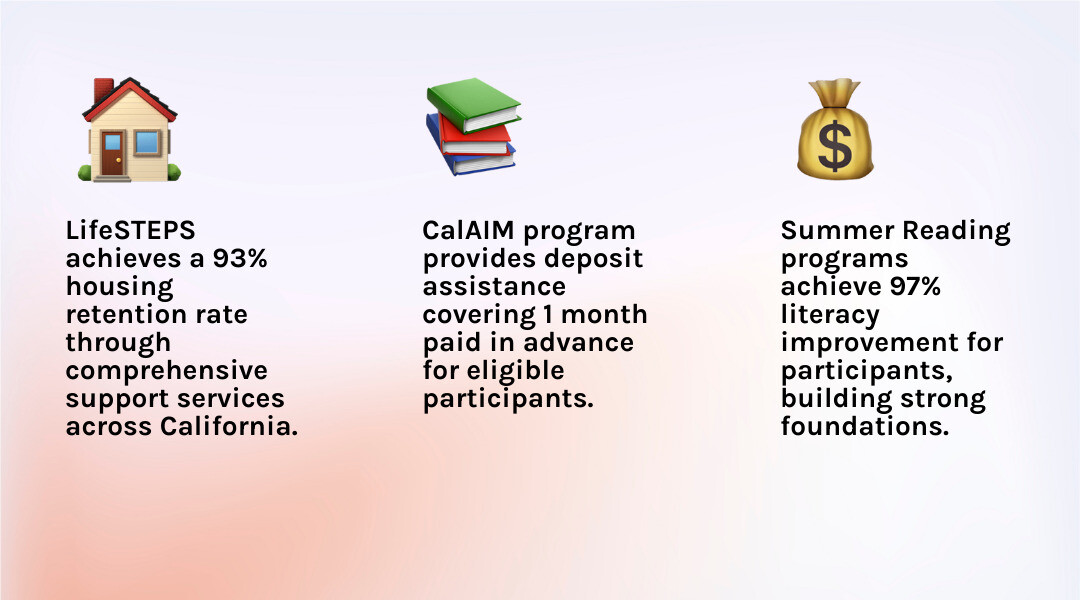
Homeowner Retention and Educational Outcomes infographic

LifeSTEPS focuses on helping individuals and families establish lasting self-sufficiency through comprehensive support services:

  • Exceptional Housing Retention: LifeSTEPS housing-focused support services across California have achieved a 93% housing retention rate, keeping families stably housed even during challenging transitions.
  • CalAIM Deposit Assistance: Through the CalAIM program, eligible participants can receive deposit assistance covering 1 month paid in advance, easing the financial transition into secure housing.
  • Summer Reading Literacy Programs: LifeSTEPS afterschool educational enrichment programs achieved a 97% literacy improvement for Summer Reading participants, laying a strong foundation for future academic success.
  • Educational Scholarships: To foster long-term multi-generational success, LifeSTEPS has awarded $2.1M in scholarships to support higher education pursuits for residents in partner communities.

Homeowners seeking long-term options can also explore foundational homebuyer guides, such as the LifeSTEPS breakdown of low income first time home guide and the 2026 guide to every first home loan grant. Additionally, military families can review dedicated resources through the LifeSTEPS guide on Buying Your Castle A Guide To Veteran Home Buying Assistance. For clients participating in structured growth initiatives, the LifeSTEPS article on building a brighter future through family self-sufficiency programs illustrates how family self-sufficiency programs pave the way to lasting stability.

Frequently Asked Questions About California Mortgage Relief

Is the California assistance program still accepting applications?

Most state HAF allocations, including state mortgage relief programs, have expended the vast majority of their federal funds and closed or waitlisted new applications. Homeowners should check their state program’s portal directly to see if any remaining funds or specialized waitlists are available. If state funds are exhausted, homeowners are encouraged to connect immediately with a HUD-approved housing counseling agency for loss mitigation options.

Do homeowners have to repay grant funds?

In most cases, assistance provided through the federal Homeowner Assistance Fund is structured as a non-repayable grant. However, certain state jurisdictions established forgiving soft liens (often forgivable over a 3- to 5-year occupancy period). If a homeowner maintains the property as their primary residence during that period, the lien is fully forgiven, and the state pays the associated recording release fees. Under federal legislation, grant funds are excluded from gross income for federal tax purposes.

Where can tribal members access specialized housing support?

Tribal members can access dedicated housing relief funded through the federal $498 million tribal set-aside. These programs are managed directly by Indian Tribes, Alaska Native villages, or Tribally Designated Housing Entities (TDHEs). Resources and contact portals can be found through the National American Indian Housing Council (NAIHC) Tribal Housing Assistance Resource Hub or directly through individual tribal housing authorities.

Conclusion

The homeownership assistance fund has played a vital role in protecting over 610,000 households nationwide from foreclosure, utility disconnection, and housing displacement. While federal relief funds are winding down as programs complete their closeout phases, establishing long-term housing stability remains an achievable goal through proactive planning, community resources, and structured support.

LifeSTEPS remains committed to empowering California residents through human-centered housing services, educational support, and self-sufficiency initiatives. By achieving a 93% housing retention rate, providing CalAIM deposit assistance of 1 month paid in advance, driving a 97% literacy improvement for Summer Reading, and delivering $2.1M in scholarships for higher education, LifeSTEPS helps individuals and families build bright, secure futures across Southern California and the Bay Area.

For assistance or more information: LifeSTEPS | Phone: (916) 965-2110 | LifeSTEPS Official Website.

LifeSTEPS currently provides services in California only.

low cost housing near me affordable apartment building

Stop Overpaying for Your Apartment Today

Stop Overpaying for Your Apartment Today

Why Finding Low Cost Housing Near Me Feels So Hard — And What to Do About It

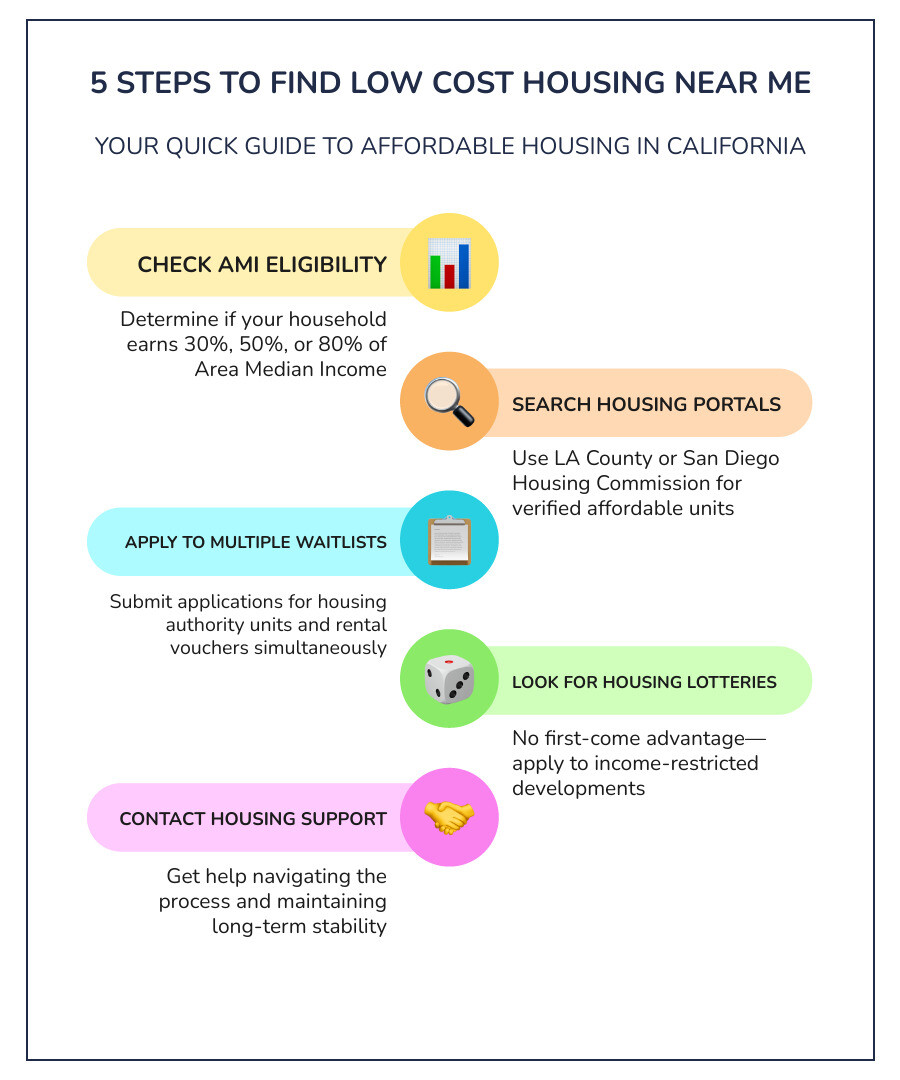
If you’re searching for low cost housing near me, here are the fastest ways to find verified affordable options in California:

  1. Check your Area Median Income (AMI) eligibility — most affordable housing is open to households earning 30%, 50%, or 80% of the local AMI
  2. Search local housing authority portals — the Los Angeles County Housing Portal and San Diego Housing Commission list verified affordable units
  3. Apply to multiple waitlists at once — apply for both housing authority-owned units and rental vouchers simultaneously to improve your chances
  4. Look for housing lotteries — income-restricted developments regularly open lottery applications with no first-come advantage
  5. Contact a housing support organization — LifeSTEPS helps California residents navigate the process and maintain long-term housing stability

Rent is taking a bigger and bigger bite out of people’s budgets. For recently discharged veterans trying to get stable in civilian life, that pressure is even sharper. You may be dealing with a new city, a new routine, and no clear roadmap for finding housing you can actually afford.

The good news: a real system exists. From Section 8 vouchers to income-restricted apartments to housing lotteries, there are more options than most people realize. The hard part is knowing where to look and how to qualify.

This guide walks you through every step — so you can stop overpaying and start building real stability.

Step-by-step affordable housing search process from income check to move-in infographic

Terms related to low cost housing near me:

Understanding Low Cost Housing Near Me and How It Works

To successfully navigate the affordable housing market, we first need to understand how these programs are structured. The foundation of almost every housing program in California is a metric known as the Area Median Income (AMI).

The federal government calculates the AMI annually for every county and metropolitan area. Because the cost of living varies wildly between regions, AMI ensures that “affordable” means something specific to your local community.

Eligibility for affordable housing is grouped into specific income brackets based on your household size:

  • Extremely Low Income (30% AMI): Households earning at or below 30% of the local median income.
  • Very Low Income (50% AMI): Households earning between 31% and 50% of the local median income.
  • Low Income (80% AMI): Households earning between 51% and 80% of the local median income.

For example, in high-cost areas of Southern California, the dollar amount for 80% AMI can actually be quite high, meaning many working individuals and families qualify for assistance without realizing it. To get a clear picture of how these limits apply to your neighborhood, you can read our Your Neighborhood Guide to Income-Based Apts for Rent Near Me or consult the official federal guidelines on the California | HUD.gov / U.S. Department of Housing and Urban … portal.

A group of adults chatting in a circle of chairs during a community housing meeting

Types of Affordable Housing Options in California

When searching for low cost housing near me, you will run into several distinct programs. Understanding the differences between these options is key to focusing your search on the programs that best fit your immediate and long-term needs.

Public Housing and Section 8 Vouchers

Public housing and Housing Choice Vouchers (often called Section 8) are the primary federal programs designed to help low-income families, seniors, and disabled individuals.

  • Public Housing: These are physical properties owned and managed directly by local housing authorities. If you qualify, your rent is typically capped at 30% of your household’s adjusted gross income.
  • Section 8 Vouchers: Rather than assigning you to a specific building, Section 8 provides a tenant-based voucher. You are free to find your own rental on the private market, provided the landlord accepts Section 8 and the rent meets HUD’s fair market standards. The voucher covers the difference between 30% of your income and the actual rent.

If you are feeling overwhelmed by the rules of these programs, you are not alone. Getting professional help finding low income housing can save you months of trial and error.

Income-Restricted Apartments and Housing Lotteries

Unlike public housing, income-restricted apartments are privately owned and operated but receive government subsidies or tax credits (such as the Low-Income Housing Tax Credit, or LIHTC). In exchange for these financial incentives, the property owners agree to rent a percentage of their units to households earning below certain AMI thresholds (usually 50% or 80%).

Because demand for these modern, privately managed units is incredibly high, developers often use housing lotteries to distribute vacant apartments fairly. When a new building opens, applicants submit their documentation during a specific window, and winners are selected at random. If you do not win the initial lottery, you are typically placed on a waitlist. You can learn more about how to navigate these opportunities by reading our guide on income restricted housing near me.

Housing Feature Section 8 Vouchers Income-Restricted Apartments
Who Owns the Property? Private landlords on the open market Private developers/companies
How is Rent Calculated? Strictly capped at 30% of your household income Set flat rates based on AMI brackets (e.g., 50% or 80%)
Portability Yes, you can move and take the voucher with you No, the affordability is tied directly to the building
Application Process Apply through the local county housing authority Apply directly to the property management office or lottery

Specialized Housing Programs and Stability Services

Finding a physical apartment is only half the battle; staying housed and building a stable life is the ultimate goal. At LifeSTEPS, we believe that true housing stability requires a combination of affordable rent, personal support, and financial planning.

caseworker hands keys to resident in front of new home

How to Search for Low Cost Housing Near Me in California

The search for affordable housing must be highly localized. Here is where to look if you live in our service areas:

Finding Low Cost Housing Near Me with No Waiting List

One of the biggest hurdles in the housing search is the waiting list. In many parts of California, waitlists for Section 8 can remain closed for years. However, there are times when private, income-restricted buildings have immediate openings or open their waitlists for a short period.

To find these opportunities, you must monitor local property management websites directly and keep your application documents ready. For a detailed breakdown of how to locate these rare openings, read our guide on low income housing with no waiting list.

Support for Veterans, Seniors, and Families

Certain populations face unique challenges when trying to secure stable housing. Veterans transitioning to civilian life, seniors living on fixed incomes, and families experiencing sudden financial shocks require specialized programs.

Permanent supportive housing programs combine affordable rent with on-site case management, mental health support, and community building. For those starting from scratch, we recommend checking out the best income-based apartments for beginners.

To help families move into these units, we utilize the CalAIM program to provide critical financial support. Through CalAIM, we can offer deposit assistance—specifically covering 1 month paid in advance for deposit assistance—to ensure that upfront costs do not stand in the way of a safe home. This intensive, human-centered approach is why we proudly maintain a 93% housing retention rate among the participants we serve.

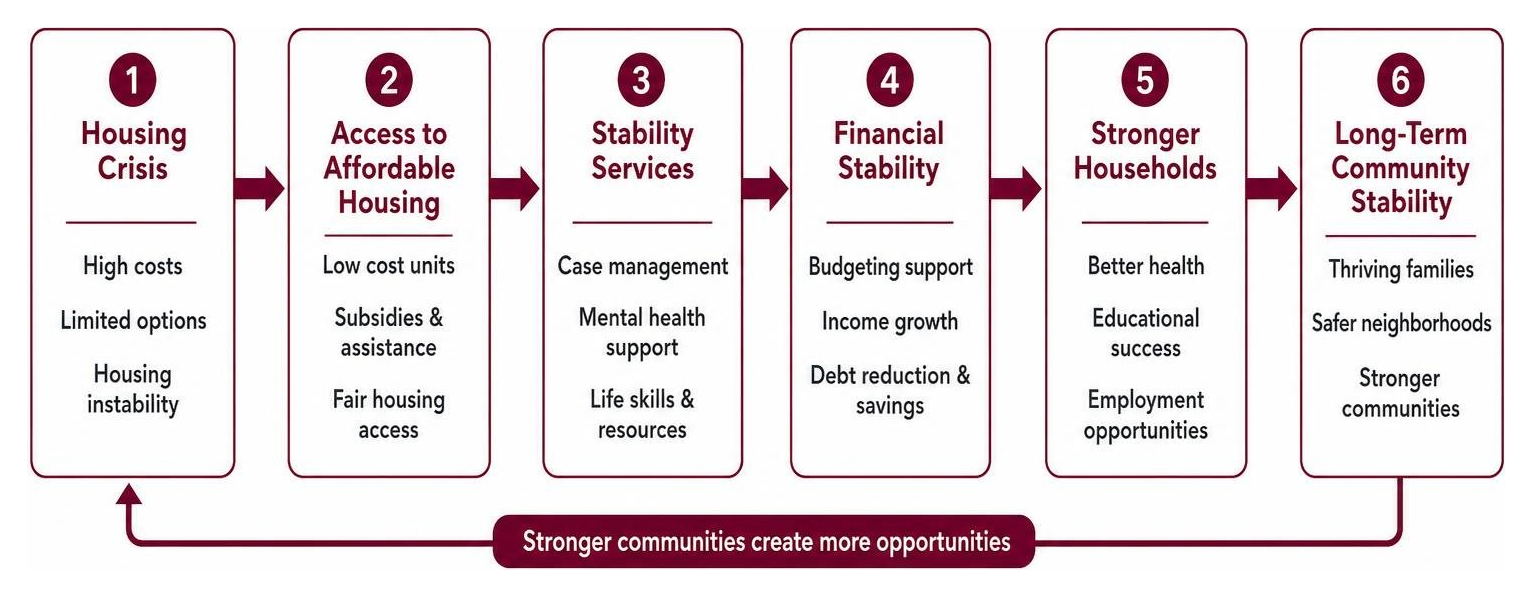
The pathway from housing crisis to long-term community stability

Education and Youth Services for Housing Stability

We know that housing stability is intergenerational. When children have a quiet, supportive place to study, they thrive. That is why our services extend far beyond physical walls to include afterschool programs and higher education support.

Our summer reading initiatives have achieved a 97% literacy improvement among participating youth, helping close the achievement gap for low-income families. Furthermore, we have helped students achieve their dreams of higher education by facilitating $2.1M in scholarships. By investing in the next generation, we help families break the cycle of poverty for good.

Frequently Asked Questions About Affordable Housing

How do I verify if a property is truly affordable and avoid scams?

Unfortunately, housing scams are common. Scammers often copy legitimate listings, lower the price, and ask for wire transfers or application fees before you see the property.

To protect yourself:

  • Always verify the listing on official municipal databases like the Los Angeles County Housing Portal.
  • Never pay a deposit or application fee in cash, via wire transfer, or through peer-to-peer payment apps before signing a formal lease.
  • Deal directly with established property management companies or verified housing authorities.

In California, tenants have strong legal protections. Landlords must follow strict legal procedures to evict a tenant and cannot simply change the locks or throw your belongings out. If you receive an eviction notice, seek free legal aid immediately. Organizations like local legal aid societies can help you understand your rights, defend against wrongful evictions, and negotiate rent repayment plans.

How do income limits (AMI) affect my eligibility?

Your eligibility is determined by comparing your total household gross income against the regional AMI limits for your household size. If your income increases after you move into an income-restricted apartment, you generally do not lose your housing immediately. Most programs allow you to stay as long as your income was qualified at the time of your initial lease signing, though your rent may adjust gradually over time depending on the specific program rules.

Conclusion: Take the Next Step Toward Housing Stability

Finding low cost housing near me is a journey that requires patience, organization, and the right support. By understanding how AMI limits work, utilizing local search portals, and applying to diverse programs, you can find an affordable place to call home.

At LifeSTEPS, we do not just help you find an apartment—we help you build a foundation for the future. Through our collaboration with programs like the Family Self-Sufficiency (FSS) program, we work side-by-side with our clients to transition them from rental assistance to permanent homeownership and lasting self-sufficiency.

Whether you are a veteran looking for stable ground or a family striving for a better future, we are here to walk with you every step of the way. Explore our LifeSTEPS programs and services to see how we can support your journey.

LifeSTEPS currently provides services in California only.
For inquiries, contact: LifeSTEPS | Phone: (916) 965-2110 | LifeSTEPS

veteran family standing in front of their new home

Home Sweet Home: Veteran Assistance Loans and Housing Programs

Home Sweet Home: Veteran Assistance Loans and Housing Programs

What Are Veteran Assistance Loans — and How Do You Get One?

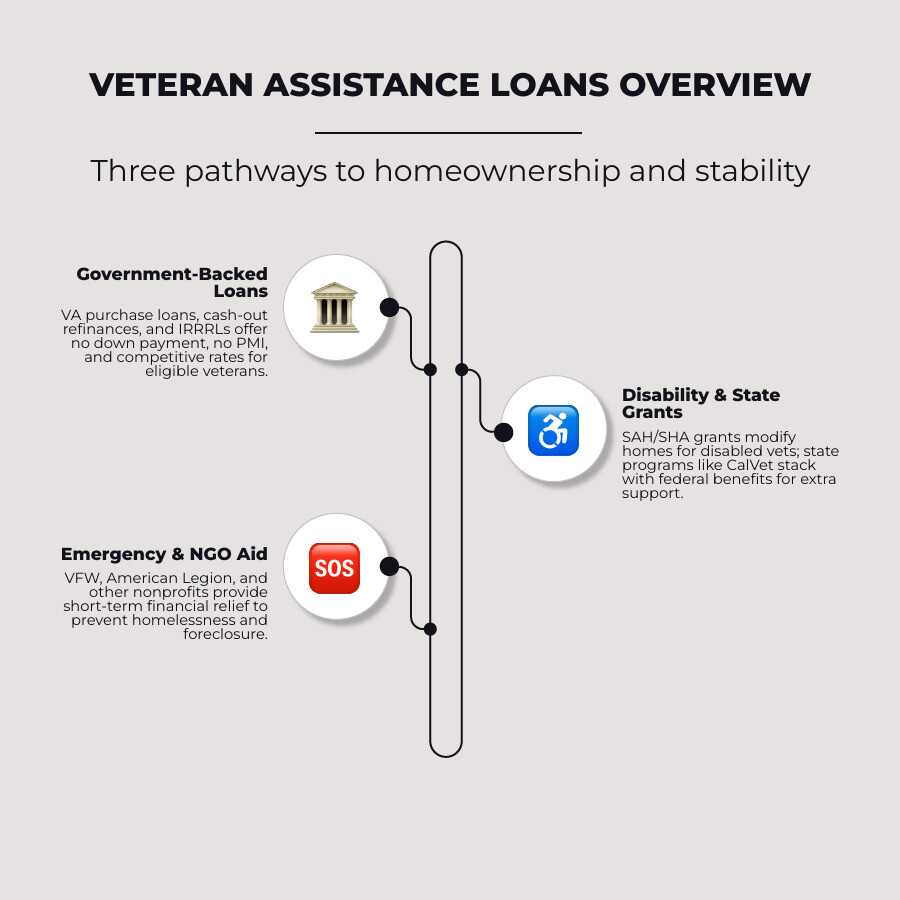
Veteran assistance loans are government-backed and nonprofit-supported financing options that help eligible veterans, service members, and surviving spouses buy, build, or improve a home — often with no down payment required.

Here is a quick overview of the main options:

  • VA Purchase Loan — Buy a home with no down payment and no private mortgage insurance (PMI)
  • Cash-Out Refinance — Tap your home equity for cash while refinancing your existing mortgage
  • Interest Rate Reduction Refinance Loan (IRRRL) — Lower your interest rate on an existing VA loan
  • Native American Direct Loan (NADL) — Finance a home on Federal Trust Land directly through the VA
  • Specially Adapted Housing (SAH) Grant — Modify your home if you have a service-connected disability
  • State Programs (e.g., CalVet) — California-specific loan programs that may stack with federal VA benefits
  • NGO Emergency Grants — Short-term financial relief from organizations like the VFW or American Legion

Life after active duty brings real challenges. Housing insecurity and financial instability are among the most common. The good news: veterans have earned access to a powerful set of tools to build stability — and this guide walks through all of them.

Pathway to veteran housing stability: loan types, eligibility, grants, and foreclosure prevention infographic

Veteran assistance loans word list:

Understanding VA Home Loans and Veteran Assistance Loans

When we talk about securing a stable foundation, the federal VA home loan program is often the most powerful tool in a veteran’s financial toolkit. Established in 1944 under the Servicemen’s Readjustment Act, this program was designed to serve as a long-term readjustment benefit rather than a standard commercial mortgage. Since then, it has helped millions of military families transition into homeownership.

At its core, the VA loan is not a direct loan from the government (with a few unique exceptions). Instead, the Department of Veterans Affairs provides a VA loan guaranty to private lenders. By guaranteeing a portion of the loan (typically up to 25%), the VA reduces the risk for lenders, which allows them to offer highly competitive terms to borrowers.

One of the most remarkable aspects of this program is that it is a lifetime benefit. You do not lose your entitlement once you use it; you can use it multiple times to purchase subsequent homes or refinance existing mortgages. For veterans aiming to secure their piece of the American dream, our guide on buying your castle a guide to veteran home buying assistance provides excellent strategies for leveraging these benefits.

To understand the widespread impact of these programs, consider that as of the 2023 American Housing Survey, approximately 7.4% of owner-occupied units across the nation had VA-insured loans. This statistic highlights just how vital federal support is in keeping our military community housed.

Types of VA-Backed Veteran Assistance Loans

There is no one-size-fits-all solution when it comes to housing. The VA offers several distinct loan products tailored to different financial situations:

  • VA Purchase Loans: These are the standard loans used to buy an existing home or build a new one. The primary benefit here is affordability: in FY2024, an incredible 74% of VA home loan purchasers did not make a down payment. Additionally, borrowers are spared the monthly cost of Private Mortgage Insurance (PMI), saving hundreds of dollars each month.
  • Cash-Out Refinance Loans: If you already own a home and want to replace your current loan with a new one under better terms, this option allows you to take cash out of your home equity. This cash can be used to pay off high-interest debt, fund home repairs, or cover emergency expenses.
  • Interest Rate Reduction Refinance Loans (IRRRL): Also known as a “streamlined refinance,” this option is designed to lower your monthly payment by reducing the interest rate on an existing VA loan. The process is simplified, often requiring no appraisal and minimal paperwork. The popularity of refinancing fluctuates heavily based on market conditions; for instance, in FY2020, the number of VA refinance loans more than tripled compared to FY2019, and then increased again by nearly 22% in FY2021, before falling to its lowest level since FY2008 in FY2023 as interest rates rose.
  • Native American Direct Loans (NADL): Unlike standard VA-guaranteed loans, the Native American Direct Loan is a direct loan provided by the VA itself. It allows eligible Native American veterans to finance the purchase, construction, or improvement of homes on Federal Trust Land.
  • Manufactured Home Loans: Under 38 USC 3712 manufactured homes, veterans can secure government-backed financing to buy manufactured homes, purchase lots, or prepare a lot with utilities. These loans are capped at 95% of the property’s purchase price and have specific statutory maturity limits (e.g., up to 25 years and 32 days for a double-wide home and lot).

A modern manufactured home situated on a private lot

How the VA Loan Entitlement System Works

The engine behind every VA loan is the “entitlement” system. Your entitlement is the specific dollar amount the VA promises to guarantee to your lender.

There are two levels of entitlement:

  1. Basic Entitlement: This is typically $36,000. For loans under $144,000, the VA guarantees up to this amount.
  2. Bonus (Secondary) Entitlement: For loans over $144,000, the VA provides additional entitlement. Since the passage of the Blue Water Navy Vietnam Veterans Act, county loan limits no longer cap the maximum loan amount for veterans with full entitlement. This means you can borrow as much as a lender is willing to extend without a down payment.

To access your entitlement, you must obtain a Certificate of Eligibility (COE). If you sell your home and pay off your VA loan in full, you can restore your entitlement to use on another purchase. Under certain circumstances, you can also transfer your remaining entitlement to a qualified buyer who is also a veteran.

Eligibility, Underwriting, and Comparing Loan Programs

To qualify for veteran assistance loans, you must meet specific service duration and character of discharge requirements. Generally, eligibility is extended to active-duty service members, veterans, Selected Reserve members, and certain surviving spouses.

The minimum service requirements vary by era:

  • Active Duty: At least 90 continuous days of active service.
  • National Guard: At least 90 days of active service, including at least 30 consecutive days under Title 32.
  • Selected Reserve: Typically six years of service, unless discharged earlier for a service-connected disability.

For a comprehensive breakdown of legislative history and eligibility criteria, you can review the official VA Home Loan Programs report.

Service Requirements and Character of Discharge Reviews

What happens if your military discharge is not classified as “Honorable”? If you received an Other Than Honorable (OTH) or Bad Conduct discharge, you might assume that your path to homeownership is completely blocked. Fortunately, this is not necessarily the case.

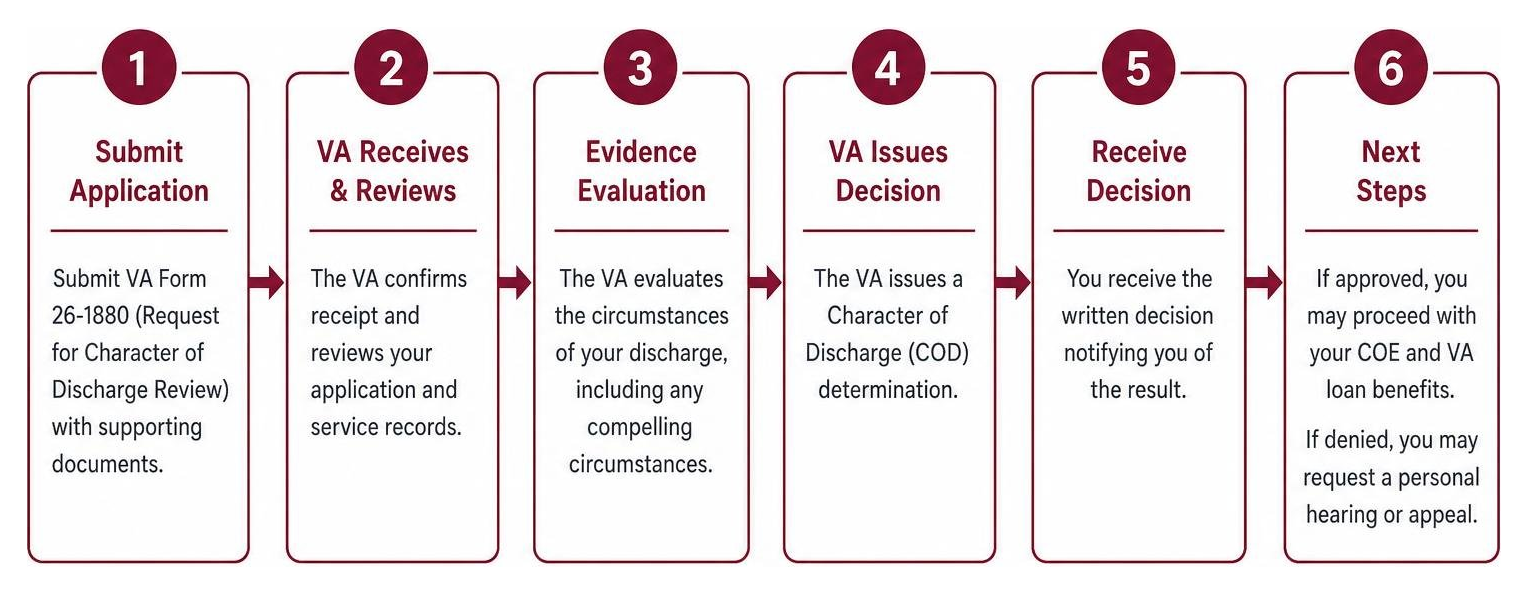
The VA provides a process called a Character of Discharge (COD) determination. This is an administrative review where the VA evaluates your service record, focusing on the circumstances surrounding your discharge. If the VA determines your service was “honorable for VA purposes,” you can unlock your home loan benefits.

To initiate this, you can apply for a COE using VA Form 26-1880. The VA will look for “compelling circumstances” to excuse any minor misconduct, such as undiagnosed PTSD, traumatic brain injuries (TBI), or family hardships.

The step-by-step process of a Character of Discharge review

Financial Underwriting: DTI and Residual Income Standards

While the VA does not set a minimum credit score, private lenders do. Furthermore, lenders must evaluate your financial health using strict underwriting guidelines outlined in 38 CFR 36.4340 underwriting standards.

Underwriting relies on two main pillars:

  1. Debt-to-Income (DTI) Ratio: The standard DTI threshold is 41% or less. This represents your monthly debt payments divided by your gross monthly income. If your DTI is higher, the loan can still be approved if there are strong compensating factors, such as significant liquid assets or a high residual income.
  2. Residual Income Analysis: This is the amount of monthly income you have left over after paying taxes, housing expenses, and other debts. The VA uses regional guidelines (based on family size) to ensure you can comfortably cover basic living expenses like food and utilities. Active-duty service members and retirees can receive a 5% reduction in their residual income requirement if they have documented access to nearby military base facilities.

VA Loans vs. FHA Loans

Many veterans wonder whether they should choose a VA loan or a Federal Housing Administration (FHA) loan. While both are excellent government-backed options, they differ significantly in cost and flexibility.

Feature VA Loans FHA Loans
Down Payment 0% (for eligible borrowers) Minimum 3.5%
Monthly Mortgage Insurance None Required (MIP) for the life of the loan
Upfront Fees Funding Fee (1.25% to 3.3%) Upfront Mortgage Insurance Premium (1.75%)
Credit Score Requirements Flexible (determined by lender) Typically stricter than VA
Closing Costs Strictly limited by VA guidelines Standard closing costs apply

State-Level Veteran Assistance Loans and CalVet Programs

In addition to federal options, many states offer highly competitive localized benefits. Here in California, the California Department of Veterans Affairs administers the CalVet Home Loans program.

CalVet operates differently than the federal VA program. Instead of guaranteeing a loan from a private lender, CalVet purchases the home directly and sells it back to the veteran under a land contract. This unique structure allows CalVet to offer low interest rates, group insurance coverage (including disaster and flood protection), and flexible underwriting for veterans who might struggle to qualify through traditional channels.

While other states have their own models—such as the North Dakota Veterans Aid Loan Program, which offers small loans up to $8,000 with an 8% interest rate and a 50% interest refund for on-time payments—the CalVet program remains the gold standard for California residents. For a deeper look at local resources, read a complete guide to california veteran housing programs.

A quiet California suburban neighborhood representing community stability

Grants, NGO Financial Aid, and Foreclosure Prevention

For veterans who already own homes or are facing unexpected financial hardships, there are several grants and relief programs designed to maintain housing stability. If you are struggling with rent or mortgage payments, we encourage you to explore our resources on housing grants for veterans.

Housing Grants for Veterans with Service-Connected Disabilities

The federal government offers substantial financial assistance to help veterans with service-connected disabilities modify their living spaces. These grants ensure that veterans can live independently in a barrier-free environment:

  • Specially Adapted Housing (SAH) Grants: Designed for veterans with severe, permanent disabilities (such as the loss of use of both legs or arms). These grants can be used to build a specially adapted home or modify an existing home.
  • Special Housing Adaptation (SHA) Grants: Aimed at veterans with specific mobility or sensory limitations (such as severe burns or blindness). These funds help adapt an existing home to improve safety and accessibility.

Emergency Financial Assistance from Non-Governmental Organizations

When emergency expenses strike, turning to high-interest personal loans can worsen financial distress. Fortunately, several non-governmental organizations (NGOs) provide direct financial assistance:

  • VFW Financial Assistance: This program provides emergency grants of up to $2,500 to active-duty service members and their families to cover basic needs. To ease the burden, the VFW pays the creditors directly rather than distributing cash.
  • The American Legion Temporary Financial Assistance (TFA): Provides cash grants to minor children of veterans to ensure they have shelter, food, and utilities during times of crisis.
  • USAA and Navy Federal: While these are financial institutions rather than charities, they offer tailored personal loans for veterans (up to $50,000) with competitive terms and extended repayment periods to help consolidate debt.

Foreclosure Avoidance and Mortgage Relief Options

If you are a veteran struggling to make your mortgage payments, do not wait until you receive a foreclosure notice. The VA employs dedicated loan technicians who work directly with borrowers and mortgage servicers to find viable solutions.

Through the VA Housing Assistance portal, you can explore several loss mitigation options:

  • Repayment Plans: Spreading out missed payments over a set period.
  • Special Forbearances: Temporarily suspending or reducing your payments.
  • Loan Modifications: Adjusting the interest rate or extending the loan term.
  • Partial Claim Program: A program established to assist veterans who defaulted by allowing the VA to pay a portion of the past-due amount directly to the lender, which is then repaid as a zero-interest junior lien.

Under the Servicemembers Civil Relief Act (SCRA), active-duty service members also receive legal protections against foreclosure and high interest rates while deployed.

Frequently Asked Questions About Veteran Assistance Loans

Who is exempt from paying the VA loan funding fee?

The VA loan funding fee is a one-time administrative fee paid at closing. However, the fee is completely waived for:

  • Veterans receiving VA compensation for a service-connected disability.
  • Active-duty service members who provide a pre-discharge disability rating.
  • Surviving spouses of veterans who died in service or from a service-connected disability.

Can I get a VA loan with an Other Than Honorable discharge?

Yes. While an Honorable discharge makes the process seamless, veterans with an OTH discharge can still qualify by undergoing a Character of Discharge (COD) review. Submitting a detailed personal statement on VA Form 21-4138 detailing any compelling circumstances is key to a successful review.

What resources are available for veterans facing immediate homelessness?

Veterans in immediate danger of homelessness can access the HUD-VASH program, which combines HUD housing vouchers with VA supportive services. Additionally, the Supportive Services for Veteran Families (SSVF) program offers rapid rehousing and eviction prevention. For more details, explore our guide on programs that help homeless veterans or contact the national Veterans Crisis Line by dialing 988 (Press 1).

Conclusion

Securing stable housing is the first step toward building a thriving life. At LifeSTEPS, we are dedicated to walking alongside individuals and families as they transition to self-sufficiency. We are proud to maintain a 93% housing retention rate across our supportive housing programs.

Through our collaboration with the CalAIM program, we offer crucial deposit assistance—specifically providing 1 month paid in advance for deposit assistance—to help clients overcome the upfront financial barriers of moving. We also collaborate closely with the Family Self-Sufficiency (FSS) program to help low-income veterans transition from renting to proud homeownership.

Beyond housing, we believe in supporting the entire family. Our Summer Reading program has achieved a 97% literacy improvement among participating children, and we have proudly awarded over $2.1 million in college scholarships to help the next generation reach their full potential.

If you are a veteran in Los Angeles, San Diego, Riverside, Irvine, or the Bay Area looking for a supportive community and hands-on help navigating housing resources, we are here for you. Explore our guide on veterans assistance with housing or learn more about our Supportive Services.

For more information, contact: LifeSTEPS | Phone: (916) 965-2110 | LifeSTEPS

LifeSTEPS currently provides services in California only.

first-time homebuyer receiving house keys at front door

Get Funding with the Homeownership Down Payment and Closing Cost Assistance Program

Get Funding with the Homeownership Down Payment and Closing Cost Assistance Program

The Real Cost of Buying a Home — and How Assistance Programs Close the Gap

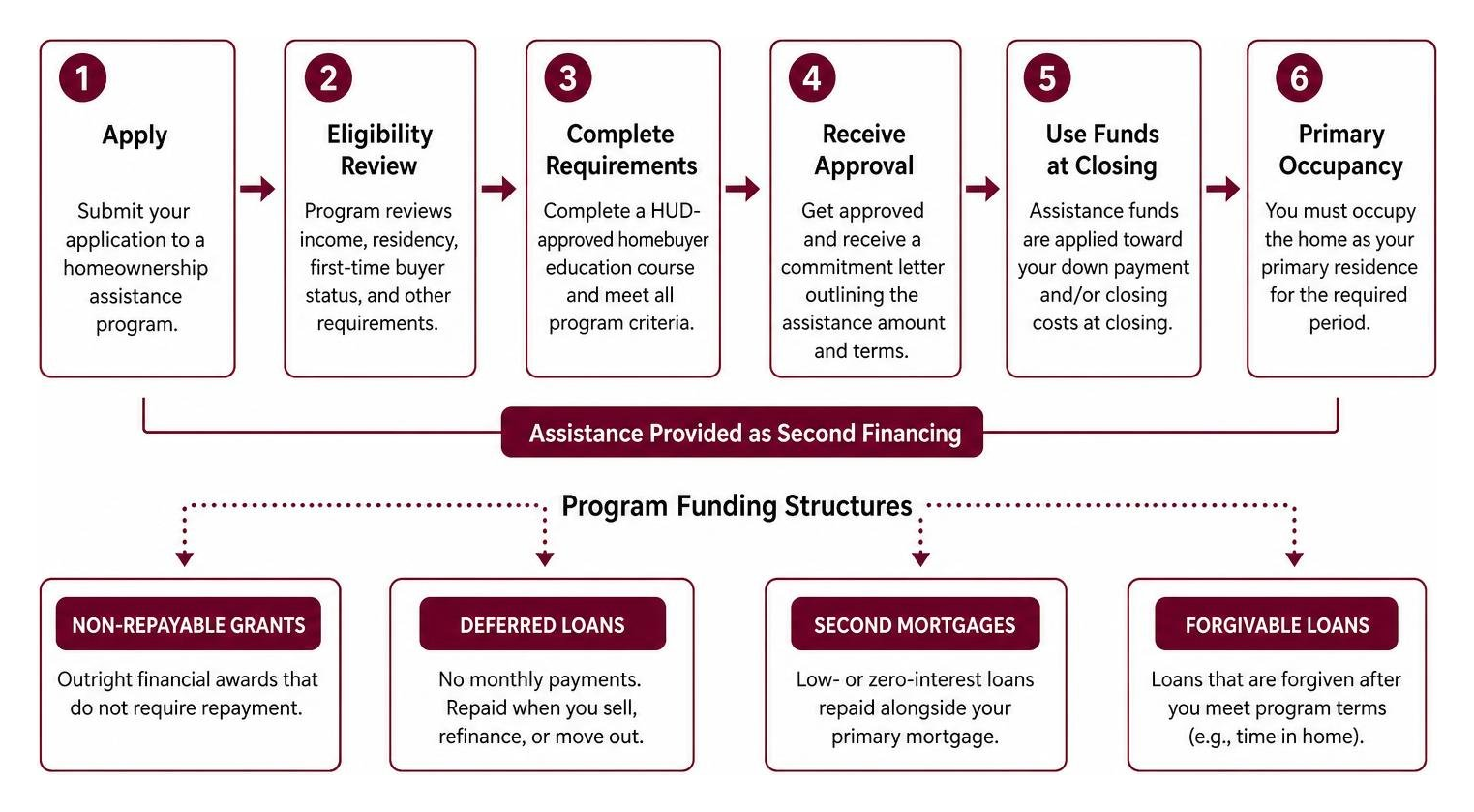
A homeownership down payment and closing cost assistance program is a funding resource that helps buyers cover the upfront costs of purchasing a home — typically through grants, forgivable loans, or deferred second mortgages. Here is a quick snapshot of how these programs work:

  • Grants — Free money that does not need to be repaid
  • Forgivable loans — Balances are forgiven after you live in the home for a set period (often 5 to 15 years)
  • Deferred loans — No monthly payments; the balance is repaid when you sell, refinance, or move out
  • Second mortgages — Low- or zero-interest loans repaid alongside your primary mortgage

Most programs require you to meet income limits (usually 80% to 120% of Area Median Income), complete a HUD-approved homebuyer education course, and use the home as your primary residence.

For veterans transitioning to civilian life, homeownership can feel just out of reach. The down payment alone stops many qualified buyers before they even get started. In 2026, with housing costs still elevated across California, that gap is real — but it is not insurmountable.

There are over 2,600 homeownership assistance programs available across the United States, and 74% of them specifically target down payment and closing costs. Many California buyers — including veterans, low-to-moderate income households, and first-generation buyers — qualify for meaningful financial help they may not know exists.

LifeSTEPS provides homeownership assistance to help residents in California navigate these programs and move toward long-term housing stability.

Down payment and closing cost assistance program types, eligibility, and award amounts overview infographic

LifeSTEPS currently provides services in California only.

Homeownership down payment and closing cost assistance program vocabulary:

How a Homeownership Down Payment and Closing Cost Assistance Program Works

For many hardworking individuals and families across California, saving for a home purchase feels like aiming at a moving target. Even when monthly income easily covers a standard mortgage payment, gathering tens of thousands of dollars in liquid cash for upfront costs remains the ultimate roadblock.

A homeownership down payment and closing cost assistance program acts as flexible gap financing. Designed to bridge the divide between your cash reserves and the total purchase capital required, these programs help working families, veterans, and low-to-moderate-income households achieve permanent housing security.

In California, programs are administered by state entities like the California Housing Finance Agency (CalHFA), municipal housing departments in hubs like Los Angeles, San Diego, and Riverside, and partner social service organizations. By tapping into secondary financing options—such as the state-level MyHome Assistance Program – Homebuyers – CalHFA – CA.gov—buyers can secure secondary funds that sit behind their main mortgage, drastically reducing out-of-pocket expenses at the closing table.

Flowchart of down payment assistance funding structures from application to primary occupancy

Types of Financial Assistance Available

When exploring local options, you will find four primary financing structures:

  1. Non-Repayable Grants: Outright financial awards provided by housing authorities or non-profit entities. These funds require no monthly repayment and no future payoff when designed as pure grants.
  2. 0% Interest Deferred Second Loans: The assistance amount is secured as a subordinate lien against your property. No monthly payments are required, and zero interest accrues over the life of the loan. The balance becomes due only when you sell the home, refinance the primary loan, or transfer the title.
  3. Forgivable Loans: Structured as 0% interest second mortgages, these loans are amortized and forgiven on a set schedule (such as 20% per year over 5 years, or fully forgiven after 10 to 15 years) provided you maintain the property as your primary residence.
  4. Repayable Secondary Loans: Subordinate loans offered at low or fixed interest rates, amortized over a set term (like 15 years) and paid alongside your monthly mortgage payment.

To explore options tailored to buyers purchasing their first property, check our guide on first time home ownership grants.

Award Amounts, Repayment Terms, and Forgiveness

Award amounts vary significantly depending on the administering agency and target geographic area. State and municipal programs in California frequently provide assistance structured as a percentage of the purchase price (typically 3% to 3.5%) or fixed caps ranging from $10,000 to over $100,000 in high-cost metropolitan markets.

Repayment terms and forgiveness conditions strictly depend on the funding source:

  • Residency Requirements: To earn full forgiveness on forgivable loan options, you must occupy the home as your principal residence for the entirety of the specified affordability period.
  • Payoff and Lien Release: When a deferred loan is eventually satisfied—either through property sale, full term completion, or mortgage payoff—the administering agency issues an official Request of Payoff or Lien Release Procedure to clear the title.

Eligibility Criteria for Down Payment and Closing Cost Help

Program eligibility is grounded in HUD guidelines to ensure funding reaches qualified buyers who need gap financing most. Administrators look at household income, current assets, home purchase price limits, and personal credit metrics.

If you want to review tailored low-income housing criteria, browse our low-income home buyer programs resources.

Credit and Income Standards for a Homeownership Down Payment and Closing Cost Assistance Program

To qualify for a homeownership down payment and closing cost assistance program, applicants must satisfy basic financial benchmarks:

  • Income Limits: Household earnings are capped based on Area Median Income (AMI) thresholds established annually by HUD, typically ranging between 80% AMI for targeted assistance and up to 120% or 150% AMI for general state homebuyer programs.
  • Credit Score Minimums: Most state programs require a minimum credit score of 640, though select specialized products accept scores starting around 620 to 660. Non-traditional credit histories may be considered under specific manual underwriting rules.
  • Debt-to-Income (DTI) Ratios: Borrowers must demonstrate sustainable debt management. Housing debt (PITI) is often capped at 30% to 35% of gross income, with total monthly debt service restricted between 42% and 50%.
  • Liquid Asset Caps: Programs frequently limit post-closing liquid reserves (typically $25,000 to $50,000) to ensure grants support buyers with genuine financial need. Retirement savings like 401(k) balances are generally excluded from asset limit calculations.
  • Homebuyer Education: Completing a HUD-approved homebuyer education course is a mandatory requirement across nearly all assistance programs. These courses empower buyers with essential budgeting, maintenance, and mortgage management skills.

First-Time, First-Generation, and Repeat Buyer Rules

While many assistance options focus on first-time buyers, qualification rules are broader than many people realize:

  • Standard First-Time Buyer Definition: Defined as any buyer who has not owned a primary residence during the preceding three-year period. Exceptions exist for displaced homemakers or single parents who previously owned a home with a former spouse.
  • Repeat Buyer Options: Nationwide, over 38% of down payment assistance programs are open to repeat buyers who have owned a home within the last three years, particularly when purchasing in targeted urban census tracts.
  • First-Generation Homebuyers: Specialized programs cater to first-generation buyers—defined as individuals whose parents or legal guardians do not currently own a home (or lost a home to foreclosure) or individuals who aged out of foster care. Programs like MMCDC First-Generation Down Payment Assistance – NeighborWorks Home Partners reflect these modern, equity-focused definitions.

How to Apply for Assistance and Combine Funding Sources

Lender and homebuyer reviewing closing cost documents and loan preapproval letters

Applying for a homeownership down payment and closing cost assistance program requires a structured, step-by-step approach. Coordinating early with approved housing counselors and mortgage lenders ensures your assistance funds are reserved well before your target closing date.

To understand foundational concepts before starting your journey, read our beginners guide to home buyer programs.

Step-by-Step Application Process for a Homeownership Down Payment and Closing Cost Assistance Program

Navigating the application timeline involves several key milestones:

  1. Complete Homebuyer Education: Register for and complete an 8-hour HUD-approved homebuyer education course through a recognized housing counseling agency. Receive your completion certificate.
  2. Obtain Lender Preapproval: Connect with a participating mortgage lender who is certified to originate loans paired with local or state down payment assistance programs.
  3. Submit Eligibility Documentation: Provide two to three years of tax returns, recent W-2s, pay stubs, and bank statements to verify household income against AMI limits.
  4. Secure Reservation Letters: Upon approval, your lender submits your file to the program administrator to lock in and reserve your down payment assistance funds (often valid for 60 to 90 days).
  5. Execute Purchase Agreement: Work with your real estate agent to find an eligible property within program price caps and execute a purchase contract.
  6. Underwriting and Closing: Allow 25 to 30 business days for final administrative processing, document verification, and subordinate loan package preparation prior to closing.

Program Stacking and Combining Assistance Programs

One of the most effective strategies for reducing upfront costs is program stacking—combining multiple financial sources to cover your down payment, closing costs, and escrow reserves.

  • Community Seconds Mortgages: Under Fannie Mae and secondary mortgage guidelines, buyers can pair a primary affordable mortgage (such as HomeReady) with subordinate Community Seconds loans up to a Combined Loan-to-Value (CLTV) limit of 105%.
  • Combining Grants and Secondary Loans: Qualified buyers can layer local municipal grants, state deferred loans, and specialized military or employee assistance benefits.
  • Zero Cash-Back Rule: When stacking assistance programs, the total funding cannot exceed your total actual closing costs and down payment requirements. Buyers are prohibited from receiving cash back at closing from assistance funds.

For an in-depth breakdown of multi-source funding models, view the 2026 guide to every first home loan grant.

Homeowner reviewing mortgage papers and property title documents at desk

Understanding the long-term commitments associated with a homeownership down payment and closing cost assistance program is essential for protecting your property equity.

For additional strategies on long-term home security, check out our guide on home financing.

What Happens When You Sell or Refinance

Subordinate loans and forgivable grants remain tied to your property deed until all program conditions are met:

  • Selling the Property: If you sell your home before a forgivable loan’s affordability period ends, or while holding a deferred 0% second loan, the remaining principal balance becomes due immediately from your sale proceeds.
  • Refinancing Your Primary Mortgage: Refinancing your primary mortgage can trigger an immediate payoff demand for subordinate assistance loans. However, some municipal programs offer subordination policies allowing the secondary loan to stay in place if the refinance lowers your interest rate without taking cash out.
  • Primary Occupancy Verification: Program administrators periodically verify primary residency. Transferring the property, converting it into a rental, or relocating will accelerate loan repayment triggers.

Finding Approved Lenders and Local Providers in California

Finding the right local resources is the fastest way to turn homeownership goals into reality. California residents should explore regional housing departments and state programs:

  • City of Los Angeles: The Los Angeles Housing Department provides comprehensive local buyer support, outlined on the First-Time Homebuyers – LAHD – City of Los Angeles portal.
  • Southern California Hubs: Local housing authorities across San Diego, Riverside, Irvine, and Natomas offer municipal gap funding, homebuyer counseling, and down payment secondary loans.
  • CalHFA Approved Lenders: State programs require working with certified participating lenders who are trained in underwriting secondary CalHFA financing products.

Frequently Asked Questions about Homebuyer Assistance

Can repeat buyers qualify for down payment assistance?

Yes. Over 38% of homebuyer assistance programs nationwide cater to repeat buyers who have owned a home within the last three years. Additionally, anyone who has not owned a primary residence in the past three years meets the standard definition of a first-time homebuyer under federal guidelines.

What credit score is needed for down payment programs?

Most government-backed and state housing finance agency programs require a minimum credit score of 640. Some specialized municipal programs or manual underwriting options accept credit scores down to 620, provided debt-to-income ratios remain strong.

How long does it take to get approved for closing cost help?

The complete review and reservation process typically takes between 25 and 30 business days from the time your application package is submitted by a participating lender. Completing homebuyer education before shopping for a home speeds up the timeline significantly.

Conclusion

Overcoming the upfront financial hurdle of buying a home is within reach when you connect with the right funding programs and support systems. By taking advantage of a homeownership down payment and closing cost assistance program, qualifying individuals and families can preserve emergency savings while transitioning into permanent housing stability.

At LifeSTEPS, our mission is to empower individuals and families as they transition to stable housing and self-sufficiency. Working alongside supportive programs like the Family Self-Sufficiency (FSS) initiative, we provide educational guidance and holistic case management to help clients build brighter futures. From housing stability—where we maintain an extraordinary 93% housing retention rate—to empowering youth through 97% literacy improvement in our Summer Reading programs and awarding $2.1M in higher education scholarships, community support changes lives. For individuals eligible for CalAIM, we also help connect clients with crucial deposit assistance (such as 1 month paid in advance) to ensure seamless transitions into stable housing.

Explore how our wrap-around services build long-term independence by visiting LifeSTEPS Programs and Services.

LifeSTEPS | Phone: (916) 965-2110 | LifeSTEPS

LifeSTEPS currently provides services in California only.