Tag Archive for: affordable housing

disability income based apartments affordable housing accessible building

Navigating HUD: Your Guide to Disability Income Based Apartments

When Housing Feels Out of Reach: What Disability Income Based Apartments Actually Are

Disability income-based apartments are rental units where your rent is calculated as a percentage of your income — not set at a fixed market rate. For most federal programs, that percentage is 30% of your monthly household income.

Here is a quick overview of the main options available:

  • Section 811 — Supportive rental housing for adults aged 18–61 with disabilities; rent is 30% of household income
  • Housing Choice Vouchers (HCV) — Portable vouchers covering the gap between 30% of your income and the actual rent
  • Mainstream Vouchers — Specifically for households with a disabled adult under 62 who are homeless or at risk
  • Project-Based Vouchers — Tied to a specific property; you must live there to receive the subsidy
  • Low-Income Housing Tax Credit (LIHTC) properties — Income-restricted apartments serving households at 30–80% of the Area Median Income (AMI)

To qualify for most of these programs, your household income generally needs to be below 50% of the Area Median Income — and for some programs, below 30%.

For recently discharged veterans, navigating this system while also adjusting to civilian life can feel overwhelming. The programs exist, the funding exists, and the housing exists — but knowing where to start is the hard part.

This guide breaks it all down clearly, so you can find the right program, understand what you qualify for, and take the next step toward stable housing.

Infographic comparing disability housing options: Section 811, HCV, Mainstream Vouchers, income limits, rent percentage

Related content about disability income based apartments:

Understanding Disability Income Based Apartments and Subsidized Housing

When searching for affordable housing, it is easy to get lost in the alphabet soup of government terms. However, there is a fundamental difference between standard affordable housing and disability-specific subsidized housing. Standard affordable housing programs, such as general Low-Income Housing Tax Credit (LIHTC) properties, cap rents based on set percentages of the Area Median Income (AMI). In these units, the rent is fixed. If your income drops, your rent does not automatically adjust.

In contrast, true disability income based apartments utilize a dynamic rent calculation. Under federal guidelines, your rent is tied directly to what you actually bring in each month. If your primary source of income is Supplemental Security Income (SSI) or Social Security Disability Insurance (SSDI), your housing program ensures you are not priced out of shelter.

The baseline standard for these programs is the “30% of income rule.” This means your monthly rent contribution is capped at exactly 30% of your adjusted monthly household income. If your only income is an SSI check of $1,000 per month, your rent contribution will be approximately $300, with federal subsidies covering the remaining balance of the market-rate rent. This safety net provides unmatched financial stability.

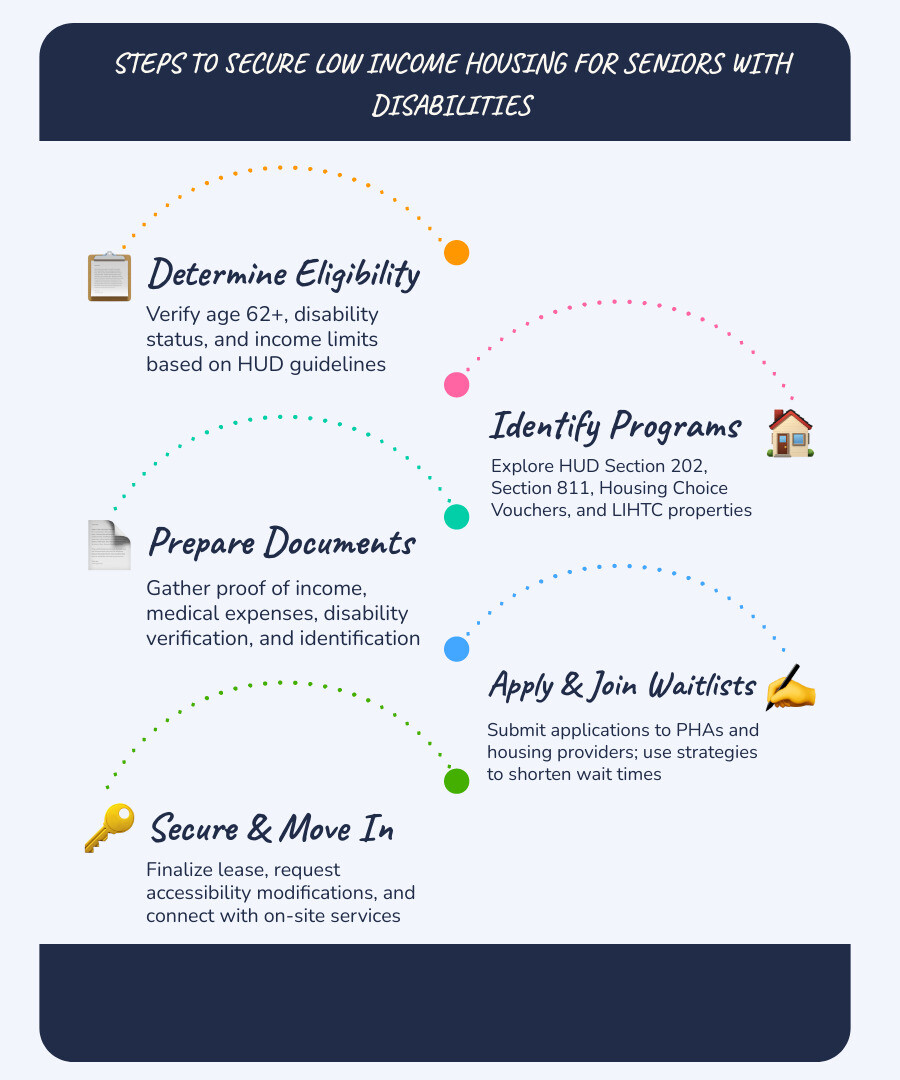
Navigating these differences is the first step toward securing a safe home. For a deeper dive into how these programs compare, you can read our guide on Navigating the Maze of Disability Income Based Housing. Additionally, for those requiring a higher level of daily assistance, exploring Assisted Living for Low Income Disabled Adults and Low Income Housing for Elderly and Disabled options can clarify which path fits your physical and financial needs.

Key HUD Programs for Individuals with Disabilities

The U.S. Department of Housing and Urban Development (HUD) administers several programs designed to help low-income individuals with disabilities secure stable, accessible homes. These programs operate through partnerships with local housing authorities, non-profit developers, and private landlords.

To find the right fit, it is essential to understand the primary branches of HUD assistance:

  • Section 811 Supportive Housing for Persons with Disabilities: This program is specifically designed to expand the supply of accessible, affordable homes that offer integrated supportive services.
  • Section 202 Supportive Housing for the Elderly: While Section 811 targets non-elderly disabled adults, Section 202 serves low-income seniors aged 62 and older, many of whom also live with age-related disabilities.
  • Housing Choice Vouchers (HCV): Often referred to as “Section 8,” this program provides rental assistance that can be used in the private market.

For more details on how these federal structures support vulnerable populations, you can check out the official HUD Multifamily Housing Resources. If your care needs go beyond independent living, you may also benefit from reviewing Low Income Assisted Living for Disabled structures to see how healthcare and housing assistance merge.

Section 811 Supportive Housing for Disability Income Based Apartments

The Section 811 program is unique because it combines affordable housing with voluntary, community-based supportive services. The program operates through two primary funding mechanisms:

  1. Traditional Capital Advances: HUD provides interest-free capital advances to non-profit developers to build or rehabilitate accessible housing. These properties must remain dedicated to very low-income individuals with disabilities for at least 40 years.
  2. Project Rental Assistance (PRA): Under the Section 811 PRA model, HUD awards funds directly to state housing agencies (like the California Housing Finance Agency). These state agencies then partner with local property owners to set aside a specific number of units for extremely low-income individuals with disabilities.

Under the Section 811 PRA model, property owners cannot accept direct referrals from the public. Instead, applicants must be referred through designated state health and human services pathways, ensuring that those with the highest need and those transitioning out of institutional care are prioritized. For property managers and housing specialists, the administrative rules governing these properties are detailed in the HUD Section 811 Operations Manual.

Housing Choice Vouchers and Mainstream Vouchers

The Housing Choice Voucher (HCV) program is the nation’s largest rental assistance initiative. While standard HCVs are open to all low-income families, HUD has established specialized voucher categories to assist individuals with disabilities:

  • Tenant-Based Vouchers: These vouchers are “portable.” If you receive a tenant-based voucher, you can search for an apartment in the private rental market. As long as the landlord accepts the voucher and the unit meets federal safety standards, you can use it there. If you choose to move, the voucher goes with you.
  • Project-Based Vouchers (PBVs): Unlike tenant-based vouchers, PBVs are tied directly to a specific apartment unit within a designated property. If you move out of a project-based unit, the rental assistance stays with the unit for the next qualifying tenant.
  • Mainstream Vouchers: These vouchers are specifically set aside for non-elderly persons with disabilities (ages 18 to 61) who are transitioning out of institutional settings, experiencing homelessness, or at risk of homelessness.

To qualify for tenant-based and mainstream vouchers, a household’s income must generally fall below 50% of the Area Median Income (AMI). Local housing authorities, such as those managing San Diego Public Housing Options, administer these voucher programs locally and maintain the associated waiting lists.

Eligibility and Rent Calculations for Subsidized Housing

To qualify for disability income based apartments, applicants must meet strict income thresholds set annually by HUD. These thresholds are calculated as a percentage of the median income of the county or metropolitan area where you wish to live.

HUD categorizes low-income households into three tiers:

  • Low Income: Households earning at or below 80% of the Area Median Income.
  • Very Low Income: Households earning at or below 50% of the Area Median Income (the primary threshold for standard Section 8 vouchers).
  • Extremely Low Income (ELI): Households earning below the federal poverty line or less than 30% of the Area Median Income. Section 811 PRA programs specifically target ELI households.

The table below highlights the key operational differences between the primary voucher types available to individuals with disabilities:

Voucher Type Portability Target Population Typical Income Limit
Tenant-Based Voucher (HCV) Fully portable; moves with the tenant General low-income households 50% of Area Median Income (AMI)
Project-Based Voucher (PBV) Tied to the specific housing unit Low-income households matching property criteria 50% of Area Median Income (AMI)
Mainstream Voucher Fully portable; moves with the tenant Non-elderly disabled adults (18–61) 50% of Area Median Income (AMI)
Section 811 PRA Tied to the specific housing unit Extremely low-income disabled adults (18–61) 30% of Area Median Income (AMI)

Qualifying for Disability Income Based Apartments in California

To qualify for disability-targeted housing programs in California, applicants must provide documented verification of their disability. This requirement is typically met if you already receive SSI or SSDI benefits. If you do not receive federal disability benefits but have a physical, developmental, or mental health condition that substantially limits one or more major life activities, a certified healthcare professional can complete a third-party verification form.

In addition to disability verification, applicants must meet the following criteria:

  • Age Requirements: For Section 811 and Mainstream Voucher programs, the qualifying disabled adult must be between the ages of 18 and 61.
  • Asset and Income Limits: All sources of household income, including child support, pensions, and interest from assets, are counted. However, certain assets and specific income sources—such as the income of a registered live-in caregiver—are excluded from the rent calculation.
  • Citizenship or Eligible Immigration Status: Applicants must be U.S. citizens or have eligible non-citizen immigration status.

For residents navigating these requirements in Southern California, local agencies provide tailored support. You can explore Los Angeles Disability Services for local county resources, and check out our insights on Accessible Living: Unlocking the Secrets to Disability Friendly Apartments to learn how to request reasonable accommodations during the leasing process.

Applying for subsidized housing requires patience, organization, and persistence. Because the demand for affordable housing far exceeds the supply, waitlists for Section 8 vouchers and Section 811 units are frequently long or temporarily closed.

adults in a circle of chairs chatting and discussing application requirements

When applying, you will face several hurdles:

  1. Waitlist Management: Check the status of local housing authority waitlists regularly. When a waitlist opens, submit your application immediately. Ensure that you notify the housing authority of any change in your mailing address or contact information, as failing to respond to a waitlist update will result in your application being removed.
  2. Background and Credit Checks: While federal housing programs are designed to assist those in need, private landlords participating in these programs still conduct standard background and credit checks. If you have a poor credit history or a past eviction, you can request a “reasonable accommodation” if these issues were directly related to your disability (for example, past medical debt).
  3. Compiling Documentation: You will need to provide Social Security cards for all household members, birth certificates, proof of all income sources, and bank statements.

Staying organized is your best defense against administrative delays. To help you prepare for the application journey, read our guide on Affordable Homes for Disabled Adults.

California-Specific Housing Initiatives and Support

California has introduced innovative programs to bridge the gap between healthcare and housing. One of the most significant initiatives is the California Advancing and Innovating Medi-Cal (CalAIM) program. Through CalAIM, qualifying Medi-Cal members can access “Enhanced Care Management” and “Community Supports,” which include housing transition services and tenancy sustaining services.

Under CalAIM, eligible participants can receive critical financial assistance to overcome the initial cost barrier of moving into an apartment. This includes deposit assistance, where the program can cover up to 1 month paid in advance for deposit assistance, helping individuals secure a lease without depleting their limited monthly disability income.

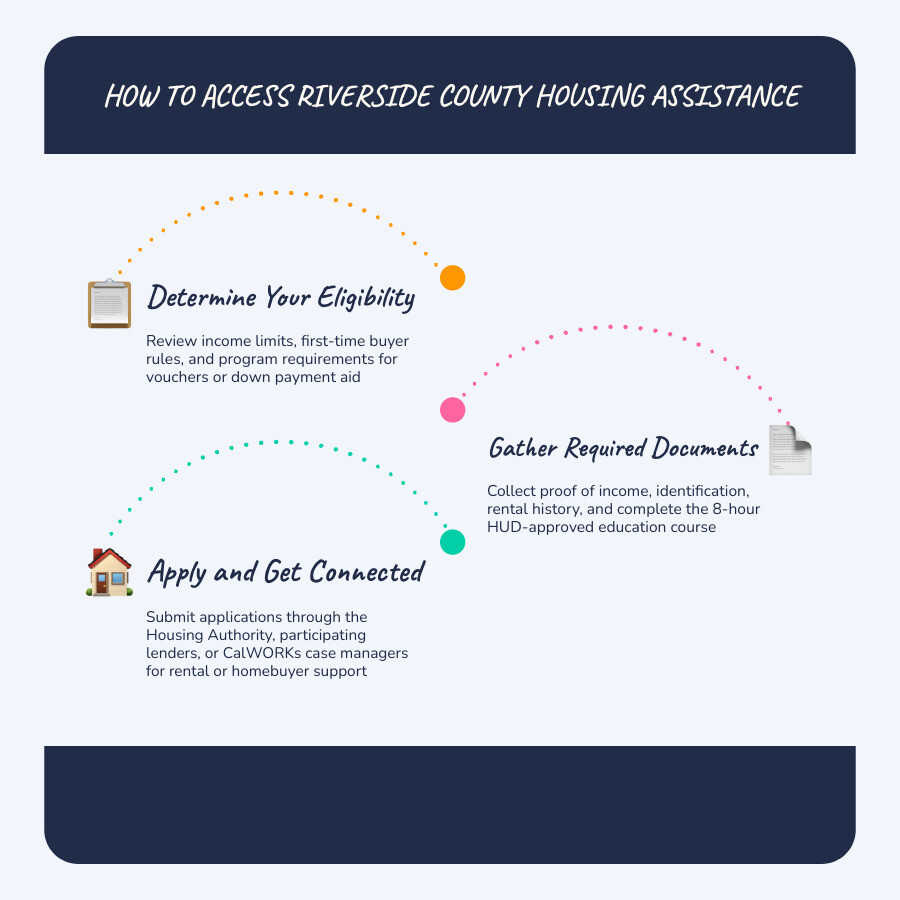
If you are looking for properties in specific Southern California markets, you can explore regional listings such as Riverside Low Income Rentals or search for master-planned affordable communities through regional affordable housing search tools. For additional state-funded options and municipal programs, you can also consult other local housing authority resources.

Frequently Asked Questions about Disability Housing

What percentage of my income goes toward rent in these programs?

Under federal guidelines for Section 811 and Housing Choice Vouchers, your rent contribution is set at exactly 30% of your adjusted monthly household income. Your adjusted income is calculated by taking your gross income and subtracting specific deductions, such as allowances for dependents or ongoing medical expenses that are not covered by insurance.

Additionally, if your lease requires you to pay for your own utilities (such as electricity or gas), the housing authority will apply a “utility allowance” deduction to your rent, lowering the amount you pay directly to your landlord to ensure your total housing costs do not exceed the 30% threshold.

Can I keep my Section 8 voucher if I move into a Section 811 property?

Generally, no. Section 811 properties utilize project-based rental assistance, meaning the housing subsidy is tied directly to the physical apartment unit. Because federal regulations prohibit “duplicate assistance” (receiving more than one housing subsidy at the same time), you cannot use a portable Housing Choice Voucher while living in a Section 811 unit. If you choose to move into a Section 811 property, you will typically have to relinquish your portable voucher.

What supportive services are available to residents?

Residents of Section 811 and other supportive housing properties often have access to an on-site service coordinator. These coordinators do not provide direct medical care, but they help residents connect with community-based services, such as:

  • Home health aides and personal care assistants
  • Medicaid waiver programs (such as the Assisted Living Waiver or Home and Community-Based Services)
  • Transportation assistance and meal delivery programs
  • Independent living skills training and vocational support

To learn more about how these supportive networks operate, you can read our comprehensive guide on Housing Resources for Disabled.

Conclusion

Securing a safe, affordable, and accessible home is the foundation of independence and self-sufficiency. While navigating federal programs like Section 811 and Housing Choice Vouchers can be challenging, understanding the eligibility rules, rent calculations, and application steps is the key to unlocking these vital resources.

At LifeSTEPS, we are committed to walking alongside individuals as they transition to stable housing. Our professional team works in partnership with housing programs and initiatives like CalAIM to provide human-centered, measurable support. Through these collaborations, we help our clients—including veterans and individuals with disabilities—achieve long-term housing security.

We are proud of our community impact, which includes maintaining a 93% housing retention rate for the individuals we serve. Beyond housing, we believe in nurturing the next generation, supporting a 97% literacy improvement through our Summer Reading programs, and providing over $2.1M in scholarships to help low-income students achieve their higher education dreams.

white recipient receiving keys to an accessible apartment from a person of color

If you or a loved one are searching for housing resources, we encourage you to explore our LifeSTEPS Programs and Services to learn more about how we can support your journey toward stability and self-sufficiency.

Contact: LifeSTEPS | Phone: (916) 965-2110

LifeSTEPS currently provides services in California only.

help with deposit for section 8

Securing the Bag: How to Find Help with Deposit for Section 8

When Your Voucher Is Ready but Your Wallet Isn’t: Getting Help with Deposit for Section 8

Finding help with deposit for section 8 housing is one of the most common barriers veterans and low-income renters face after receiving a Housing Choice Voucher. You’ve done the hard work of getting approved — but then comes the security deposit, often equal to one full month’s rent, due before you can move in.

Here are the main ways to get help with a Section 8 security deposit:

  1. Ask your local Public Housing Authority (PHA) — Some PHAs offer direct deposit assistance or can refer you to local programs.
  2. Apply for Tenant-Based Rental Assistance (TBRA) — Funded through HUD’s HOME program, TBRA can cover security and utility deposits for households at or below 80% of Area Median Income.
  3. Look into Security Deposit Guarantee programs — These guarantee up to two months’ rent to landlords on behalf of eligible renters, including those exiting shelters or experiencing chronic homelessness.
  4. Contact a Community Action Agency or nonprofit — Organizations can provide one-time emergency grants or loans for move-in costs.
  5. Dial 2-1-1 — This free helpline connects California renters to local deposit assistance resources fast.

The key detail to know upfront: Section 8 vouchers cover ongoing rent, but they do not automatically cover your security deposit. That cost — typically one month’s approved contract rent — falls on the tenant unless outside assistance is secured.

The good news is that real programs exist to bridge that gap, and you don’t have to figure it out alone.

Step-by-step infographic: how to secure a Section 8 unit and get deposit assistance in California infographic

Help with deposit for section 8 terms to learn:

Understanding the Section 8 Voucher and Security Deposit Rules

Navigating the intersection of federal regulations and local housing rules can feel like trying to solve a Rubik’s Cube in the dark. To start, we must look at the rules set by the U.S. Department of Housing and Urban Development (HUD). Under HUD guidelines, the Housing Choice Voucher program pays a portion of your monthly rent directly to the landlord. However, HUD explicitly states that the security deposit remains the tenant’s responsibility.

Local Public Housing Authorities (PHAs)—such as those operating in Los Angeles, San Diego, and Riverside—administer these vouchers locally but do not automatically provide the funds for move-in deposits. Instead, they require landlords to follow state laws regarding what they can charge.

In California, state law places strict limits on security deposits to protect renters. As of June 2026, the maximum security deposit a landlord can charge for a residential rental unit cannot exceed one month’s approved contract rent for the unit. This is a massive win for affordability, but coming up with even one month’s rent upfront can still be a steep mountain to climb.

Furthermore, landlords cannot discriminate against voucher holders by charging them higher security deposits than unassisted tenants. The deposit amount must be reasonable and comparable to the market rate for similar units in the area. If you are searching for your next home, understanding these protections is crucial. You can explore more about finding voucher-friendly properties in our guide to Section 8 Housing Rentals: What You Need to Know and How to Find Them.

If you find yourself struggling to meet the upfront requirements, there are specialized Section 8 security deposit assistance programs designed to step in and cover these costs so you do not lose your voucher.

Government Programs That Offer Help with Deposit for Section 8

modern apartment building in Southern California

When federal and state resources align, they create a powerful safety net for Californians. Several government-backed initiatives offer direct help with deposit for section 8 renters.

Tenant-Based Rental Assistance (TBRA)

The TBRA program is funded through HUD’s HOME Investment Partnerships Program. TBRA is highly flexible and allows local jurisdictions to provide essential move-in assistance. Eligible households can receive funding specifically allocated for:

  • Security deposits (often covering up to the equivalent of 1 month paid in advance)
  • Utility startup deposits
  • Short-term rental subsidies for up to 24 months while participating in self-sufficiency programs

To qualify, households must typically have an income that does not exceed 80% of the Area Median Family Income (AMFI).

Emergency Housing Vouchers (EHV)

For those experiencing homelessness or fleeing domestic violence, Emergency Housing Vouchers have been a vital resource. Administered by local PHAs in areas like Los Angeles and San Diego, EHVs often come with dedicated “add-on” funding. This funding can cover application fees, utility connections, and full security deposits, removing the immediate financial pressure of moving.

The CalAIM Program

In California, we utilize the California Advancing and Innovating Medi-Cal (CalAIM) initiative to address the social determinants of health—including housing instability. Through CalAIM’s Housing Transition Navigation Services and Housing Deposits services, eligible Medi-Cal members can get their security deposits, first month’s rent, and utility setup fees covered. This program is a game-changer for individuals transitioning from unstable conditions into permanent housing, providing up to 1 month paid in advance to secure a safe place to live.

If you are trying to piece together your move-in costs, you can read our comprehensive breakdown of First Month Rent and Security Deposit Assistance to see how these public programs can work for you.

Local Guarantees, Loans, and Grants for California Renters

To help you compare your options, we have outlined the three primary types of financial support available for security deposits in California:

Program Type How It Works Repayment Terms Target Population
Grants Direct payment made to the landlord on your behalf. None. The funds do not have to be repaid. Very low-income families, veterans, and individuals with disabilities.
Loans Temporary funds provided to secure the unit. Must be repaid to the agency, often when you vacate the unit. Low-to-moderate-income renters who can sustain monthly payments.
Guarantees A written contract promising to pay the landlord for damages or unpaid rent. No cash is exchanged upfront; claims are paid to the landlord if needed. Chronically homeless individuals and those transitioning from shelters.

Security Deposit Guarantee (SDG) Programs

An SDG program acts as an insurance policy for landlords. Instead of requiring cash upfront, the program provides a written guarantee to the landlord for up to two months’ rent. If the tenant moves out and there are documented damages or unpaid rent, the landlord can submit a claim for payment within 45 days after the tenant vacates. These claims are verified and processed sequentially, typically taking 4-6 weeks to resolve. This approach encourages landlords to accept Section 8 tenants who might otherwise lack the cash for a deposit.

Real-World Impact: Maria’s Story

To see these programs in action, consider the journey of Maria, whose first name has been changed to protect her privacy. Maria was living in temporary shelter housing in Southern California with her school-aged child. She successfully secured a Section 8 voucher but faced a $1,800 security deposit barrier for a modest apartment in Irvine.

Through our collaboration with local housing navigators and CalAIM funding, we helped Maria secure a one-time security deposit grant. This covered her full deposit, allowing her to move into her new home without sacrificing her limited savings. Today, Maria is stably housed, and her child is thriving in our local afterschool programs.

If you find yourself in a similar situation, you don’t have to let upfront costs stand in your way. Explore how you can navigate these hurdles in our guide on what to do when you Can’t Afford a Security Deposit? These Programs Could Pay It for You or read about Help with Deposit Private Renting for private market solutions.

How to Apply for Security Deposit Assistance

a client filling out housing assistance forms with a supportive case manager

Applying for assistance requires preparation, organization, and a clear understanding of the steps involved. Because funding is often processed on a first-come, first-served basis, being proactive is your best strategy.

For a complete overview of the preparation process, refer to our First Month Security Deposit Assistance Guide.

Step-by-Step Guide to Get Help with Deposit for Section 8

  1. Find an Approved Unit First: You must have an approved rental unit lined up before most programs will accept your application for deposit help. Landlords must be willing to accept the Section 8 voucher.
  2. Submit the RFTA: Work with your landlord to complete and submit the Request for Tenancy Approval (RFTA) form to your local PHA.
  3. Request Deposit Help Early: As soon as the RFTA is submitted, contact your local program administrator (such as a community action agency or a CalAIM housing navigator) to request deposit assistance. Fill out the proposed security deposit amount on your application forms.
  4. Coordinate the Inspection: The PHA will conduct an inspection to ensure the unit meets Housing Quality Standards (HQS).
  5. Sign the Lease and HAP Contract: Once the unit passes inspection, the lease and the Housing Assistance Payments (HAP) contract are signed. The security deposit assistance is typically disbursed directly to the landlord alongside the first monthly rental payment.

For additional strategies and templates, check out Your Guide to First Month Rent Security Deposit Help Programs Resources.

Eligibility Requirements for Receiving Help with Deposit for Section 8

To qualify for most California-based security deposit assistance programs, households must meet specific criteria:

  • Income Limits: Program assistance is primarily limited to low-income households at or below 60% of the Area Median Income (AMI). However, some programs allow up to 10% of their participants to have incomes up to 80% of the county median family income.
  • Voucher Status: You must hold an active, federally funded Housing Choice Voucher and be in good standing with your housing authority.
  • One-Time Benefit Restrictions: Many local programs limit security deposit assistance to a one-time benefit per household.
  • Hardship Documentation: You may need to provide proof of housing instability, a recent financial hardship (such as medical expenses or income loss), and identification documents for all household members.

Learn more about managing these financial requirements in our resource, Don’t Let Deposits Drain You: A Guide to Income Assistance.

Frequently Asked Questions About Section 8 Deposits

Do Public Housing Authorities pay security deposits directly?

No, PHAs themselves do not typically pay or charge security deposits directly to landlords as part of the standard Housing Choice Voucher program. The security deposit remains a private contractual matter between the tenant and the landlord. However, PHAs can refer tenants to local partner organizations, CalAIM navigators, or county-funded discretionary funds that specialize in covering these upfront costs.

What happens to the security deposit when a Section 8 tenant moves out?

What happens to the deposit depends on whether the assistance was structured as a grant or a loan:

  • If it was a loan: You are generally required to return the full amount of the security deposit assistance to the administering agency (in the form of a check) when you vacate the unit.
  • If it was a grant: Under California law, the landlord must return the security deposit to the tenant (minus any lawful deductions for damages beyond normal wear and tear) within 21 days of move-out. If the grant program does not require repayment, you can use those returned funds to secure your next home.

How does portability affect security deposit assistance?

Portability allows you to move with your Section 8 voucher from one PHA’s jurisdiction to another (for example, moving from Riverside to Los Angeles). However, security deposit assistance programs are highly localized. The program that helped you in your original city will not transfer to your new location. You must apply for new deposit assistance through the receiving PHA’s local partners and local nonprofit networks once you arrive.

Conclusion: Building Long-Term Stability in California

Securing a safe, affordable home is the first step on the journey toward self-sufficiency. At LifeSTEPS, we are committed to helping California residents bridge the gap between receiving a voucher and successfully moving into their new homes. Through our extensive housing support services and integration with programs like CalAIM, we walk alongside our clients to ensure they achieve lasting stability.

Our evidence-based approach works: we proudly maintain a 93% housing retention rate among the participants we serve, helping them stay housed year after year.

We believe in supporting the whole person and the entire community. In addition to housing and deposit navigation, we offer:

  • The Family Self-Sufficiency (FSS) Program: Partnering with local housing authorities to help clients build financial assets and transition toward homeownership.
  • Veteran Housing Support: Dedicated resources to help veterans who have served our country find the stability and dignity they deserve in permanent homes.
  • Education & Youth Services: Empowering the next generation through our Summer Reading program—which has achieved a 97% literacy improvement among participating children—and providing over $2.1 million in academic scholarships to date.

If you are a voucher holder ready to take the next step toward securing your home, we are here to help you navigate the process. Explore how our team can support your journey by visiting the LifeSTEPS Programs and Services page today.

LifeSTEPSusa.org

LifeSTEPS currently provides services in California only.
San Diego affordable homes sunny neighborhood street view

Sunny and Cheap? Yes, You Can Find Affordable Housing in San Diego

San Diego Is Expensive — But Affordable Housing Options Do Exist

San Diego affordable homes are harder to find than in most U.S. cities, but they are out there. Here is a quick overview of your main options:

  • Deed-restricted for-sale homes – Below-market homes managed through the San Diego Housing Commission (SDHC), available to income-qualified first-time buyers
  • Affordable rental listings – More than 313 income-restricted rental properties are listed in San Diego, with rents starting around $1,300
  • Section 8 Housing Choice Vouchers – Over 16,000 San Diego households currently receive federal rental assistance through SDHC
  • New affordable developments – Several projects are under construction or recently opened, including units targeting households at 30–80% of Area Median Income (AMI)
  • County and city housing directories – Free searchable resources help renters and buyers find income-qualified housing across San Diego County

San Diego’s cost of living is one of the highest in California. For veterans transitioning to civilian life, that pressure hits especially hard. Stable, affordable housing is often the first — and biggest — hurdle to getting back on solid ground.

The good news: a combination of government programs, nonprofit developers, and income-restricted communities means affordable options do exist across the city. You just need to know where to look and how to qualify.

Path to affordable housing in San Diego: vouchers, deed-restricted homes, AMI limits, new developments infographic

Related content about San Diego affordable homes:

Finding a budget-friendly place to live in America’s Finest City can feel like searching for a needle in a very expensive haystack. However, as of June 2026, the local market does have entry points for buyers who know where to look. While the median price of a standard single-family home in the region remains out of reach for many, there are currently 469 cheap homes listed for sale in San Diego, CA priced between $10,000 and $500,000.

These lower-priced properties generally fall into specific categories:

  • Mobile and Manufactured Homes: Often located in established land-lease communities, these represent some of the lowest-priced housing stock in the county.
  • Condominiums and Townhomes: Smaller attached units, particularly in inland neighborhoods or older complexes, frequently see price reductions that bring them into an affordable range.
  • Deed-Restricted Properties: Homes with legal covenants that keep their sales prices artificially low to benefit qualifying buyers.

To explore what is currently available on the open market, buyers can browse the latest cheap homes for sale in San Diego on Zillow to filter by price, property type, and neighborhood.

Finding San Diego Affordable Homes Through Deed Restrictions

For low- to moderate-income buyers, the Affordable For-Sale Housing Program is one of the most reliable pathways to homeownership. This program allows first-time buyers to purchase a deed-restricted home at a below-market price.

How do these properties work? When a developer builds a new residential project in San Diego, local inclusionary housing laws often require them to set aside a certain percentage of units as affordable housing. These units are deed-restricted, meaning they must remain affordable for a specified period (often 55 years or longer).

When one of these homes is put up for resale, it cannot be sold to just anyone at market value. Instead:

  1. The sales price is capped at a formula-determined, below-market rate.
  2. The buyer must meet specific income eligibility requirements, usually measured as a percentage of the Area Median Income (AMI).
  3. The buyer must plan to occupy the home as their primary residence (no investment buyers allowed).
  4. Strict asset limitations apply, and all-cash buyers are generally prohibited to ensure the program helps those who truly need financing assistance.

To understand the full rules, income thresholds, and how to submit an application through a listing agent, you can review the official SDHC affordable for-sale housing guidelines.

Attainable Homeownership Communities in South San Diego

If you are looking for new construction, South San Diego has seen the introduction of modern, attainable townhome-style developments. These communities are designed to bridge the gap between renting and traditional, high-cost homeownership.

For example, new townhome-style homes feature three to four bedrooms, two to three baths, and spacious layouts ranging from 1,533 to 1,875 square feet. Strategically located near major transit corridors like the 805 and 905 freeways, these communities connect residents to local beaches, hiking trails, and employment hubs. To learn more about eligibility requirements, floor plans, and how to join the interest list, check out these attainable community details.

Affordable Rental Options and Housing Vouchers in San Diego

For many residents, renting is the most practical step toward long-term stability. However, San Diego’s rental market is notoriously competitive. Fortunately, there are dedicated platforms and government programs designed to keep rents manageable for working families, seniors, and veterans.

Modern affordable apartment complex in San Diego with landscaped courtyard

Currently, there are 313 affordable rental properties listed in San Diego on AffordableHousing.com, with prices ranging from $1,300 for cozy studios to higher tiers for multi-bedroom townhomes. To find properties that match your specific budget and household size, you can read our ultimate guide to cheap apartments in San Diego.

Government Programs for San Diego Affordable Homes

The San Diego Housing Commission (SDHC) is the primary public agency tasked with expanding housing opportunities across the city. Since 1979, SDHC has helped produce more than 26,000 affordable rental housing units. Today, the commission directly manages more than 3,700 affordable rental units, ensuring they remain safe, dignified, and well-maintained.

One of the most vital tools in the fight against housing insecurity is the federal Section 8 Housing Choice Voucher program. Administered locally by SDHC, this program provides rental assistance to more than 16,000 households. The voucher allows low-income families to find their own housing in the private market, with the program paying a portion of the rent directly to the landlord. To explore voucher eligibility, waitlist updates, and other rental programs, visit the SDHC housing opportunities portal.

Income-Based Rentals and Housing Directories

Income-based apartments determine your monthly rent as a direct percentage of your household income (typically around 30%). These properties are tied to the local Area Median Income (AMI).

Because AMI limits fluctuate based on household size and the local economy, staying updated on current thresholds is essential. San Diego County maintains a County-Restricted Affordable Housing Map that is updated every three months to help residents locate active and upcoming income-restricted communities. For a detailed breakdown of how to find and apply for these properties, read our guide to income-based apartments.

New Affordable Housing Developments in San Diego

San Diego is actively building its way out of the housing shortage. A robust pipeline of new affordable housing developments is bringing hundreds of energy-efficient, multi-generational units online.

A prime example of this momentum is an upcoming eight-story development scheduled for completion in May 2027, which will bring 126 affordable multi-generational homes to the area. The project is split, offering 62 apartments for individuals and families earning 60% of the AMI or below, alongside 63 permanent supportive housing apartments for seniors. For more details on the design and supportive services, see the affordable housing project profile.

Cortez Hill and Downtown Developments

The Cortez Hill neighborhood has become a hub for high-quality, supportive housing. Recently, developers celebrated the grand opening of an 88-unit, five-story affordable housing community in the area.

This development targets working families, seniors, and veterans earning 25% to 40% of the AMI. To ensure the most vulnerable residents have a safe place to land, 14 of these apartments are set aside specifically for individuals transitioning out of homelessness. To learn more about this project’s funding and impact, read about the grand opening of the new housing community.

Coastal and Suburban Affordable Projects

Affordable housing is also expanding into high-opportunity coastal and suburban neighborhoods, ensuring low-income workers can live closer to transit and employment centers.

  • Pacific Beach: Construction is underway at a 59-unit affordable studio community located just two miles from the beach and near the Balboa Avenue Transit Station. This 100% electric project includes 18 VASH vouchers dedicated to veterans experiencing homelessness. Read more about the groundbreaking of the new affordable studio community.
  • San Carlos: Ground has been broken on a new development that will transform a shuttered restaurant site into 44 affordable rental homes. Expected to open in 2027, this project targets households earning 30% to 70% of the AMI and reserves eight units for adults with intellectual and developmental disabilities. Learn more from the news release on the construction of these affordable rental homes.

Eligibility Requirements and How to Apply

Getting into affordable housing requires careful preparation and an understanding of the rules. Because demand is high, many programs rely on a lottery system or maintain multi-year waitlists.

Program Type Target Population Income Limits (AMI) Key Requirements
Section 8 Vouchers Extremely low-income households Generally 30% to 50% AMI Background check, income verification, annual recertification
Affordable Rentals Working families, seniors, veterans 25% to 80% AMI Property management screening, landlord references
Deed-Restricted For-Sale First-time homebuyers 60% to 120% AMI First mortgage pre-approval, homebuyer education class, asset limits

To apply for new developments, keep a close eye on waitlist openings. When a waitlist opens, submit your application immediately. Because placement is often determined by a lottery rather than a first-come, first-served basis, applying early within the window ensures your name is entered fairly.

If you are looking beyond San Diego County, neighboring areas in Southern California offer similar programs with varying income limits and waitlist structures. Navigating these regional differences is easier when you have the right localized resources.

If you are looking at the inland region, you can consult our Riverside low-income housing guide. If you are searching closer to the coast further north, check out our Los Angeles rent assistance guide for tips on finding local rental subsidies and emergency aid.

Overcoming Barriers to Housing Stability in Southern California

Securing an affordable home is a massive victory, but staying housed requires ongoing support. Many low-income families and veterans face unexpected financial hurdles, such as upfront move-in costs, that can derail their housing journey before it even begins.

At LifeSTEPS, we walk alongside individuals transitioning to stable housing and self-sufficiency. We know that the cost of a security deposit can be an insurmountable barrier. To address this, we tie deposit assistance specifically to the CalAIM program, providing eligible clients with up to 1 month paid in advance for deposit assistance to help them secure their new homes.

Our human-centered support model is built on measurable outcomes. We are proud to maintain a 93% housing retention rate among the participants in our housing programs. Once our clients are in stable homes, we help them build brighter futures through a variety of supportive services:

  • Education & Youth Development: Our Summer Reading program has achieved a 97% literacy improvement among participating children, helping to break the cycle of poverty early.
  • Higher Education: We have awarded over $2.1 million in scholarships to help residents pursue college degrees and technical certifications.
  • Pathways to Homeownership: We collaborate with programs like the Family Self-Sufficiency (FSS) program to help low-income families and veterans transition from renting to buying their own homes.

Take the story of Marcus, whose name has been changed to protect his privacy. After completing his military service, Marcus struggled to find an apartment in San Diego that fit his budget. Through our supportive services and CalAIM deposit assistance, Marcus moved into a stable rental unit. Today, he is participating in the FSS program and working toward his dream of buying a deed-restricted townhome.

Frequently Asked Questions About San Diego Housing

What is the Area Median Income (AMI) for San Diego?

The Area Median Income (AMI) is the midpoint income for the county, meaning half of the households earn more and half earn less. In San Diego, the AMI for a one-person household is approximately $69,480. For a four-person household, an income range of $52,450 to $122,450 falls within the 30% to 70% AMI bracket, which is the target range for many affordable housing programs.

How do deed-restricted homes work in San Diego?

Deed-restricted homes are sold at below-market prices to income-qualified buyers. In exchange for the lower purchase price, the buyer agrees to strict resale restrictions. If you decide to sell the home in the future, it must be sold to another income-eligible buyer at a restricted price, ensuring the home remains affordable for future generations.

What resources exist for veterans seeking affordable housing in San Diego?

Veterans can access dedicated housing assistance through the HUD-VASH program, which combines HUD rental vouchers with supportive services from the VA San Diego Healthcare System. Additionally, some new developments specifically set aside units for veterans, utilizing the county’s Coordinated Entry System to match veterans with open apartments.

Conclusion

Finding San Diego affordable homes requires patience, research, and a clear understanding of local programs. Whether you are searching for a deed-restricted townhome, applying for a Section 8 voucher, or looking to move into a newly constructed development, there are resources available to help you succeed.

At LifeSTEPS, we are committed to helping Californians achieve long-term housing security. From our 93% housing retention rate and CalAIM deposit assistance to our youth literacy programs and $2.1 million in scholarship awards, we provide the comprehensive support families need to thrive. If you are ready to take the next step on your housing journey, explore our low-income homeownership programs to see how we can assist you.


LifeSTEPS | Phone: (916) 965-2110 | lifestepsusa.org

LifeSTEPS currently provides services in California only.

accessible apartment building with ramp, affordable housing, independent living, disability advocacy

Social Housing Secrets: Your Roadmap to Affordable Living

The Real Cost of Finding Affordable Housing After Service


Finding low income housing apartments for rent is one of the biggest challenges facing veterans transitioning back to civilian life. The rental market has never been more competitive, and without the right knowledge, it’s easy to feel lost — or worse, fall victim to a scam.

Here’s a quick snapshot of your main options:

Option How It Works Best For
Section 8 / Housing Choice Voucher Federal subsidy paid directly to landlord Very low income households
LIHTC (Tax Credit) Properties Rent capped at 60% AMI or below Moderate low-income renters
Public Housing Government-owned units at reduced rent Lowest income households
Project-Based Vouchers Subsidy tied to a specific unit Stable long-term housing
Emergency/Veteran Housing Specialized units with on-site support Veterans, seniors, disabled individuals

Affordable housing is not one single program. It is a network of federal, state, and local options — each with its own income limits, application steps, and wait times. Some properties have immediate availability. Others have waitlists measured in months or years.

The good news? California has more affordable housing resources than almost any other state. And organizations like LifeSTEPS work directly inside these communities — achieving a 93% housing retention rate — helping residents not just find a home, but keep it.

This guide walks you through everything: how programs work, how to qualify, where to search in California, and how to avoid costly mistakes along the way.

Infographic showing 5-step affordable housing search process from income check to signing lease infographic

LifeSTEPS currently provides services in California only.

Basic low income housing apartments for rent glossary:

Understanding Low Income Housing Apartments for Rent

To find the right home, we first need to understand how affordable housing differs from market-rate housing. Market-rate housing is priced entirely by supply and demand. If a neighborhood becomes popular, rents skyrocket, often pricing out the people who make the community run.

Affordable housing, on the other hand, uses government guidelines to keep rents stable. The foundation of all affordable housing programs is the Area Median Income (AMI). Every year, the U.S. Department of Housing and Urban Development (HUD) calculates the AMI for every county in the nation. Rents and eligibility are then tied directly to these numbers.

Generally, programs target households earning:

  • Extremely Low Income: 30% of the local AMI or lower.
  • Very Low Income: 50% of the local AMI or lower.
  • Low Income: 80% of the local AMI or lower.

When searching for Income Restricted Rentals, you are looking at properties where rents are capped based on these AMI percentages. Navigating this landscape in California requires a clear strategy: you must know your household’s exact annual income, understand how your local county’s AMI affects your budget, and gather your paperwork before you start applying.

Key Affordable Housing Programs in California

California offers several major programs designed to help individuals and families secure stable housing. While they all aim to make rent affordable, they operate very differently.

Finding Low Income Housing Apartments for Rent via Section 8

The Housing Choice Voucher program, commonly known as Section 8, is the federal government’s primary program for assisting very low-income families, the elderly, and disabled individuals.

Under this program, the tenant pays roughly 30% of their monthly adjusted income toward rent, and the government pays the remaining balance directly to the landlord. There are two main types of vouchers:

  1. Tenant-Based Vouchers (Housing Choice Vouchers): These belong to you. If you move, the voucher moves with you to any privately owned property that accepts it.
  2. Project-Based Vouchers: These are tied to a specific apartment unit. If you move out of the unit, the assistance stays with the property.

These programs are administered locally by Public Housing Authorities (PHAs). Because demand is incredibly high, waitlists can be long, making it crucial to understand the application timeline. To learn more about how to secure and use these vouchers, check out our guide on Section 8 Housing Rentals What You Need to Know and How to Find Them.

The Low-Income Housing Tax Credit (LIHTC) is a program that gives tax incentives to private developers to build or rehabilitate affordable rental housing. In exchange for the tax credits, developers agree to keep rents affordable for a set number of years.

Unlike Section 8, where your rent is a direct percentage of your personal income, LIHTC properties have fixed rents capped at a percentage of the AMI (usually 50% or 60%). For example, a studio in a newly constructed building might have a flat rent of $950 per month, reserved exclusively for households earning no more than 60% of the local AMI.

These properties are run by private property management companies rather than government housing authorities. This means you apply directly to the leasing office of the property itself. Best of all, LIHTC properties are legally required to accept Section 8 vouchers, allowing you to combine programs for maximum affordability. If you are new to this process, we recommend reading The Best Income Based Apartments for Beginners to help you get started.

How to Qualify and Apply for Affordable Housing

Qualifying for low income housing apartments for rent requires proving that your household meets the strict eligibility guidelines set by HUD and local administrators.

Your eligibility is determined by:

  • Annual Gross Income: The total income earned by all adults in the household before taxes.
  • Household Size: Income limits increase with the number of people living in the home.
  • Documentation: You will need to provide tax returns, recent pay stubs, bank statements, social security letters, and identification for every household member.

Once you confirm your eligibility, the next step is navigating the waitlist. Because demand heavily outweighs supply, housing authorities and properties use waitlists to manage applicants. Some waitlists operate on a first-come, first-served basis, while others use a lottery system to ensure fairness.

Applying for Low Income Housing Apartments for Rent with No Waiting List

While waiting lists can feel discouraging, there are ways to find immediate openings. Some housing authorities utilize centralized waitlists, allowing you to submit a single application that places you on multiple property waitlists simultaneously. This simplifies the process and increases your chances of finding a home quickly.

Additionally, new LIHTC developments often open their application windows via public lotteries before construction is finished, giving proactive applicants a chance to secure a unit with minimal wait times. For practical strategies on finding these rare openings, read our resource on Low-Income Housing with No Waiting List.

Regional Resources and Search Portals in California

A beautiful, sunlit Southern California residential neighborhood with neat houses and green trees

California has robust, localized search portals designed to connect you directly with available affordable units. Knowing where to look in your specific region can save you weeks of aimless searching.

Southern California Housing Opportunities

Southern California has some of the most active affordable housing networks in the state, supported by local housing authorities and dedicated nonprofits.

An adult receiving keys to a new home from a housing counselor, depicting a white recipient and a person of color counselor

High demand for affordable housing unfortunately attracts scammers who target vulnerable renters. Protecting yourself requires vigilance and an understanding of tenant rights.

Always watch out for these major red flags:

  • Upfront Fees: Never pay a security deposit or holding fee before you have physically toured the apartment and signed a formal lease.
  • Wire Transfers or Cash Apps: Scammers often demand payments via wire transfers, cryptocurrency, or mobile cash apps because these transactions cannot be reversed.
  • Hidden Addresses: If a landlord refuses to give you the exact address of the property or claims they cannot show it to you because they are out of the country, walk away.
  • Unrealistic Prices: If a rent price seems too good to be true for the neighborhood, verify the listing on other trusted housing portals.

If you encounter a scam or face unfair treatment, California has strong tenant protection laws. If you are facing eviction, discrimination, or uninhabitable living conditions, reach out to local legal aid organizations. Many legal aid societies offer free services to low-income renters to help them stay securely housed.

Frequently Asked Questions about Affordable Housing

What is the difference between income-restricted and income-based housing?

Income-restricted housing (such as LIHTC properties) has a set, flat rent based on a percentage of the Area Median Income. Your rent stays the same even if your personal income fluctuates. Income-based housing (such as Section 8 or public housing) calculates your rent as a direct percentage of your actual household income (typically 30%), meaning your rent will decrease if your income drops.

How do I check my eligibility for California housing programs?

To check your eligibility, find your county’s current Area Median Income (AMI) chart on your local housing authority’s website. Compare your total household annual gross income against the household size limits (1-person, 2-person, etc.) listed for the 30%, 50%, or 80% AMI thresholds.

What should I do if I am facing immediate housing instability?

If you are at risk of losing your home, contact local emergency housing services immediately by calling 211. You can also reach out to local legal aid groups for eviction defense, and inquire about temporary rental or deposit assistance programs in your community.

Conclusion

Finding low income housing apartments for rent requires patience, organization, and the right resources, but a stable home is entirely within your reach.

At LifeSTEPS, we believe that housing is only the first step toward a thriving life. Through our human-centered support and dedicated case management, we help residents maintain their housing, achieving an incredible 93% housing retention rate.

We partner with key programs to offer robust support, including deposit assistance through the CalAIM program (providing 1 month paid in advance to help you move in). We also collaborate with initiatives like the Family Self-Sufficiency (FSS) program to help clients, including veterans, transition from rental stability to proud homeownership.

Our commitment to communities goes beyond housing. We support families through our afterschool educational programs — which have driven a 97% literacy improvement in our Summer Reading program — and we have awarded over $2.1M in scholarships to help residents achieve their higher education dreams.

We are here to walk alongside you on your journey to stability and self-sufficiency. To learn more about how we can support you, explore the LifeSTEPS Programs and Services page.

LifeSTEPSusa.org

LifeSTEPS currently provides services in California only.